Geometric and Dotwork Tattoos: Meaning, Pain, Aging and Cost | REAP
  1. Home
  2. /Guides
  3. /Geometric and Dotwork Tattoos: What to Know Before You Book

Geometric and Dotwork Tattoos: What to Know Before You Book

Sacred geometry meanings, whether dotwork hurts more, how dots age over ten years, placement on joints, and what geometric work costs in Australia.

Updated 2026-07-18

Two techniques, one family

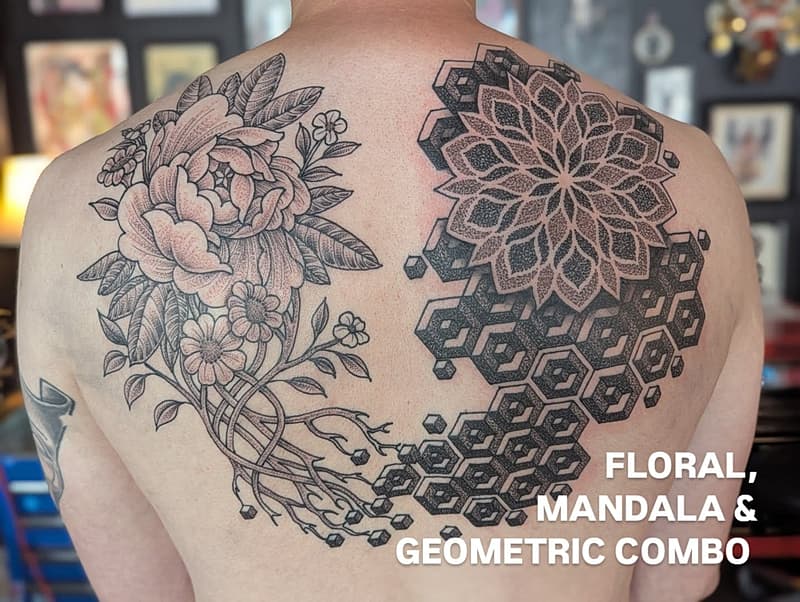
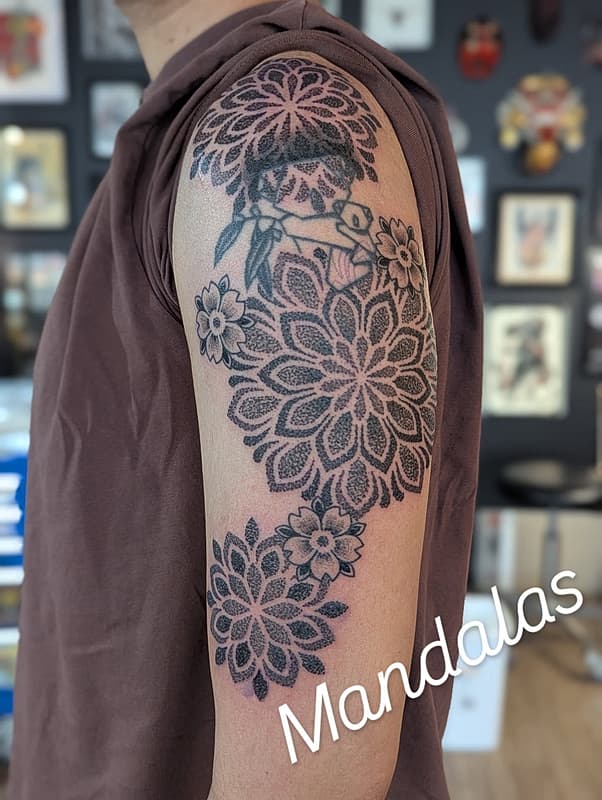
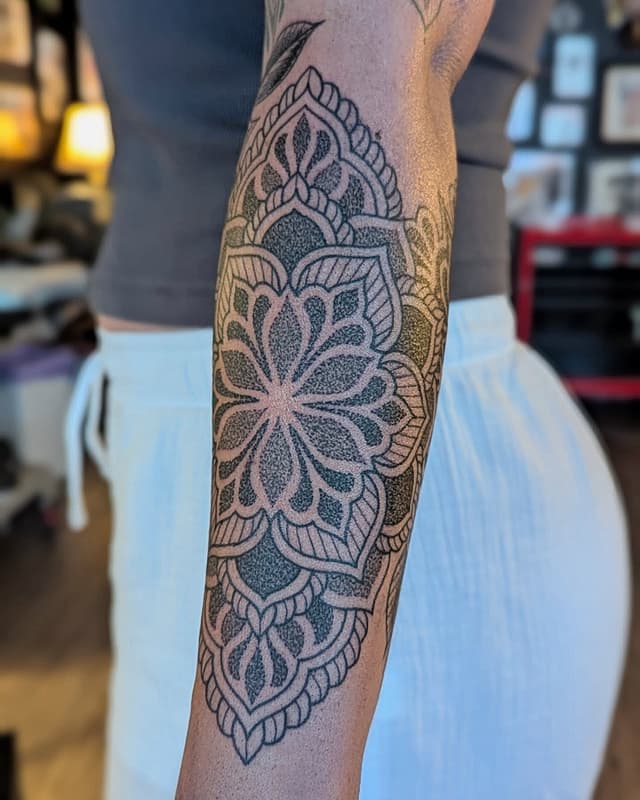
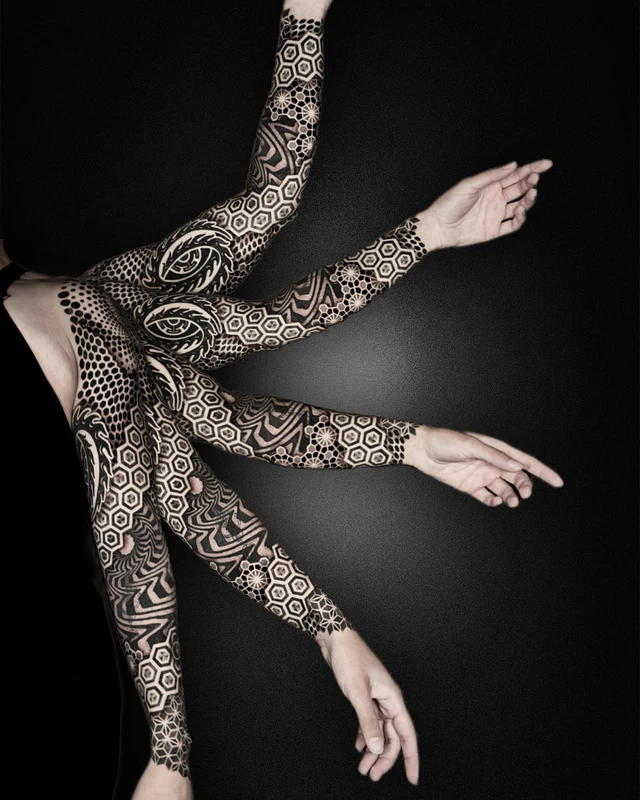
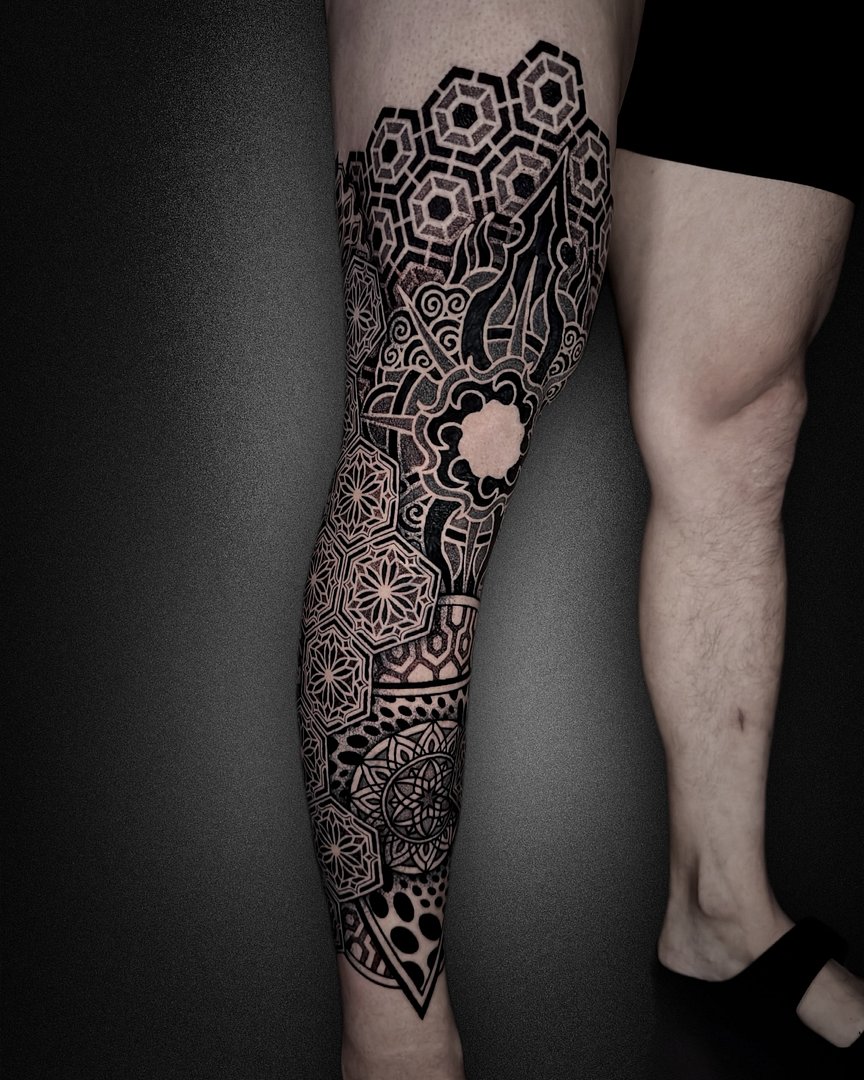
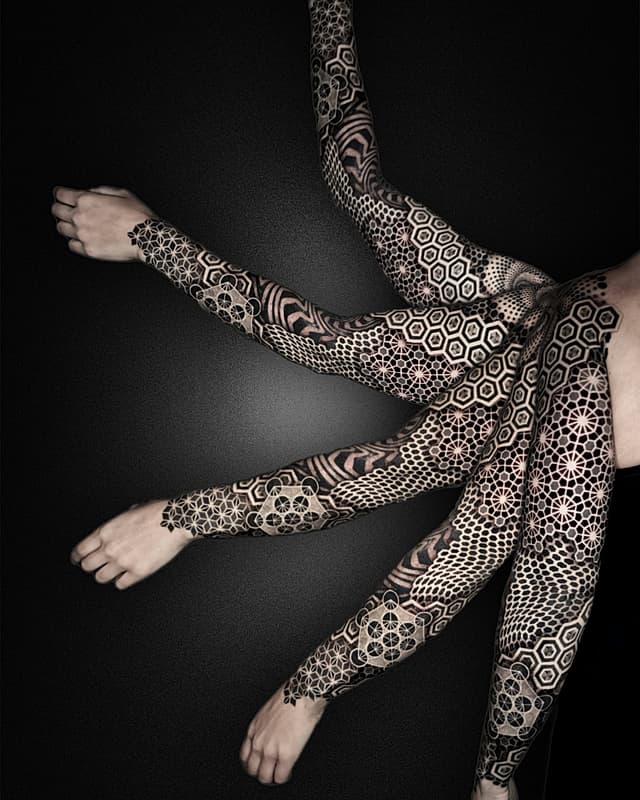
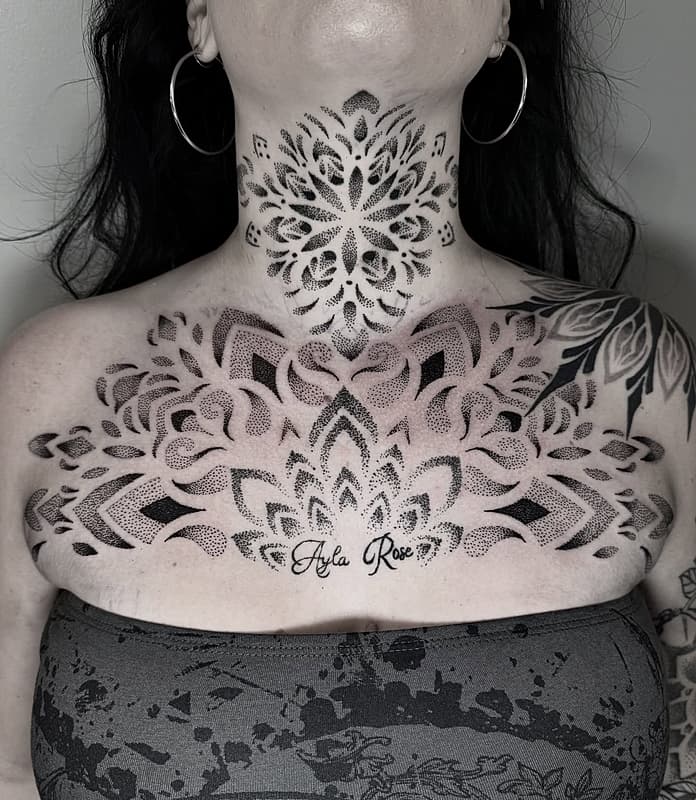
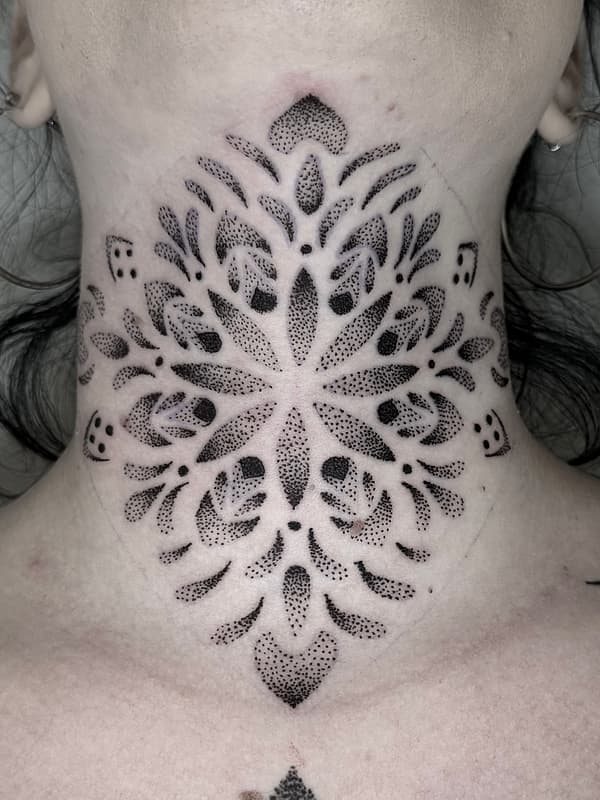
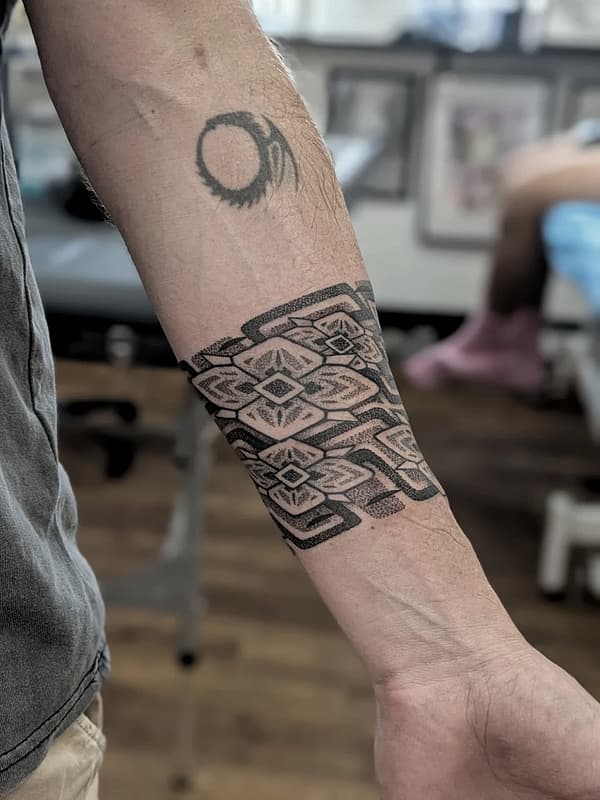
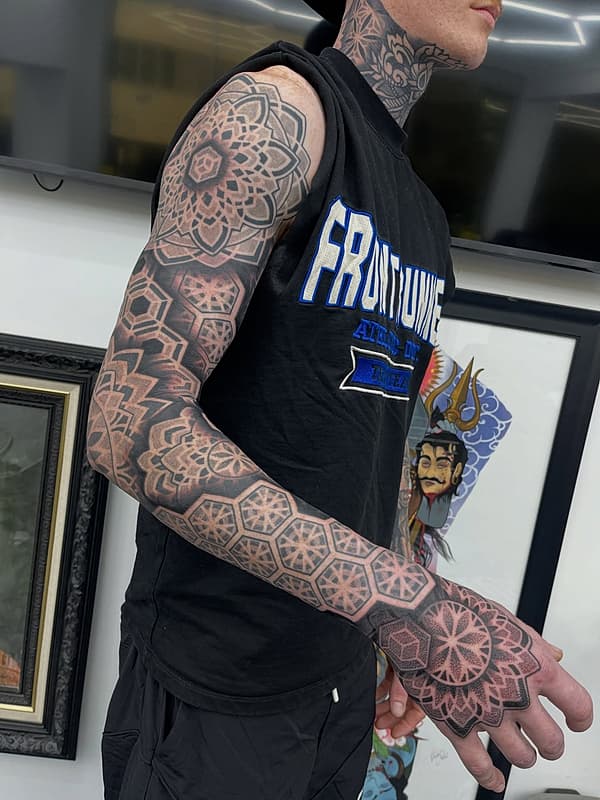
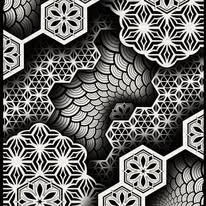
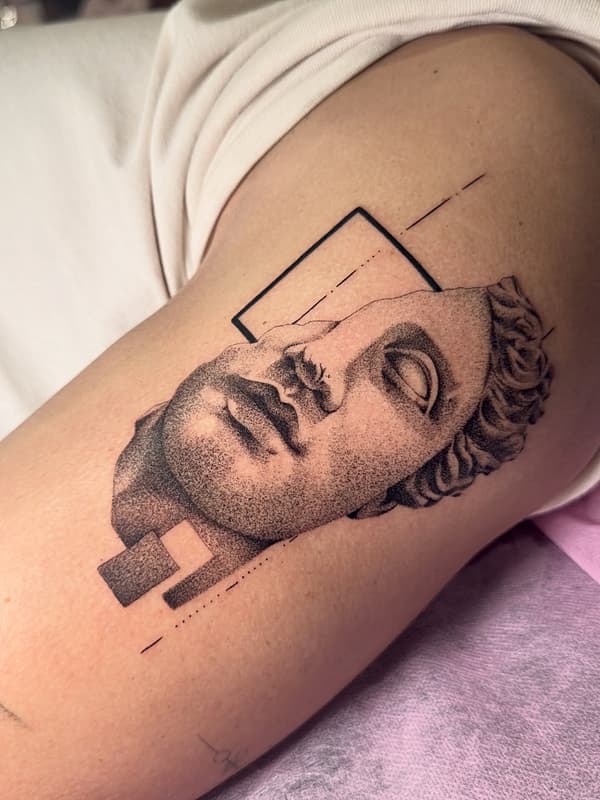
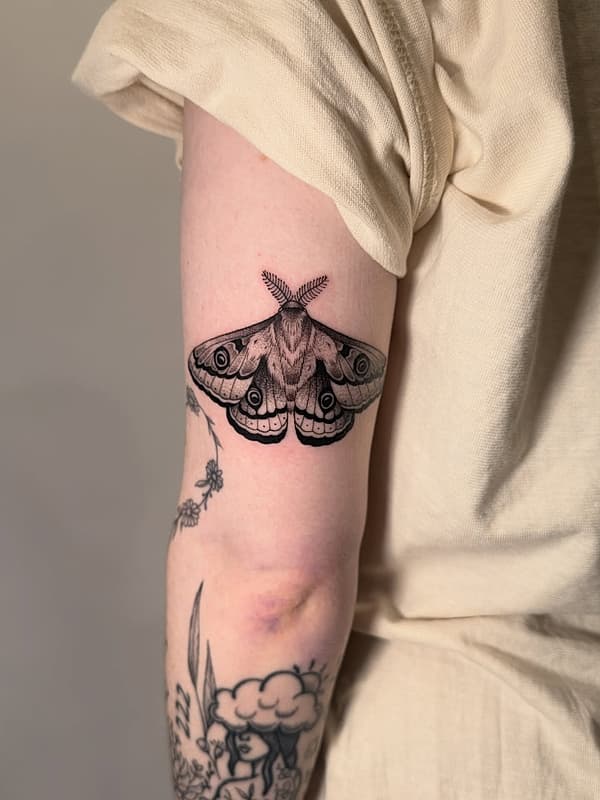
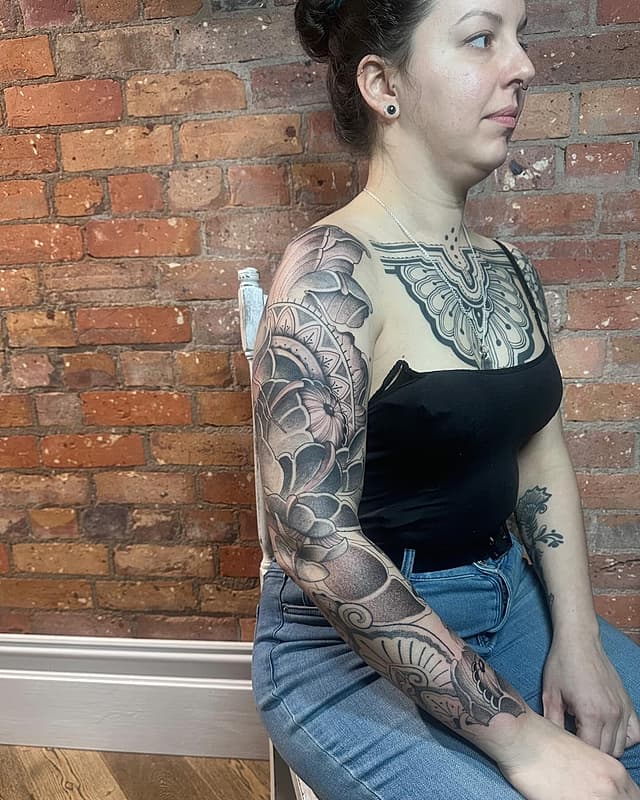
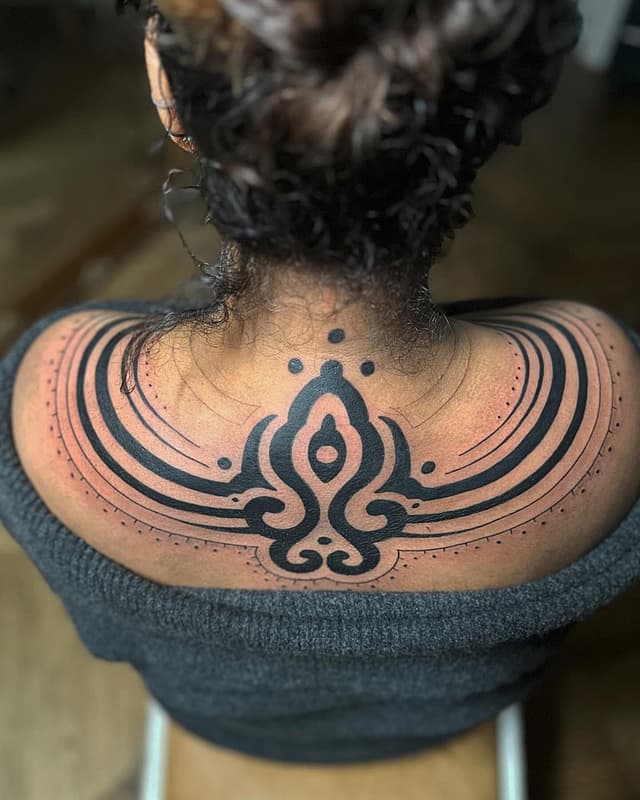
Geometric tattooing builds designs from precise shapes, lines and patterns: mandalas, sacred geometry, ornamental structures. Dotwork is a technique often used to shade them, building tone from thousands of individual dots (stippling) instead of solid fill or grey wash. They show up together so often that most specialists do both.

The style's defining demand is precision. A wobble in a shaded portrait disappears; a wobble in a straight line or a symmetrical mandala is visible from across the room, forever. That's why geometric work takes longer to design, longer to apply, and rewards a genuine specialist more than most styles.

What the common symbols generally mean

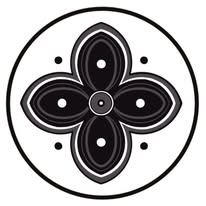
Most people come to this style through a symbol, so here are the usual ones. Mandalas, circular patterns radiating from a centre, are broadly associated with wholeness, balance and meditation. The Flower of Life, overlapping circles in a hexagonal pattern, is linked to creation and the interconnectedness of things. Metatron's Cube, which contains all five Platonic solids, is read as balance between the physical and the spiritual. Fibonacci and golden-ratio spirals reference growth and natural order. The unalome, a spiral rising into a straight line, represents the winding path toward clarity, and is often paired with a lotus.
These are general associations, not dictionary definitions, and plenty of people choose geometric work purely for how it looks, which is a perfectly good reason. One caution worth taking seriously: some mandala forms are explicitly religious, like Tibetan deity yantras, and tattooing those as decoration is where the cultural-appropriation criticism lands. A stylised original design avoids the issue entirely; if you want imagery from a living tradition, talk it through with an artist who knows that tradition.
Pain, and the hand-poke question

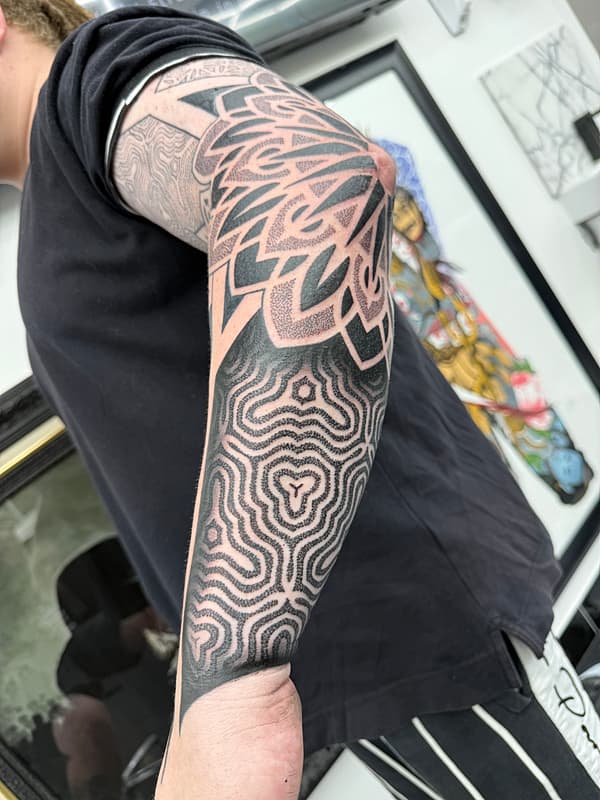
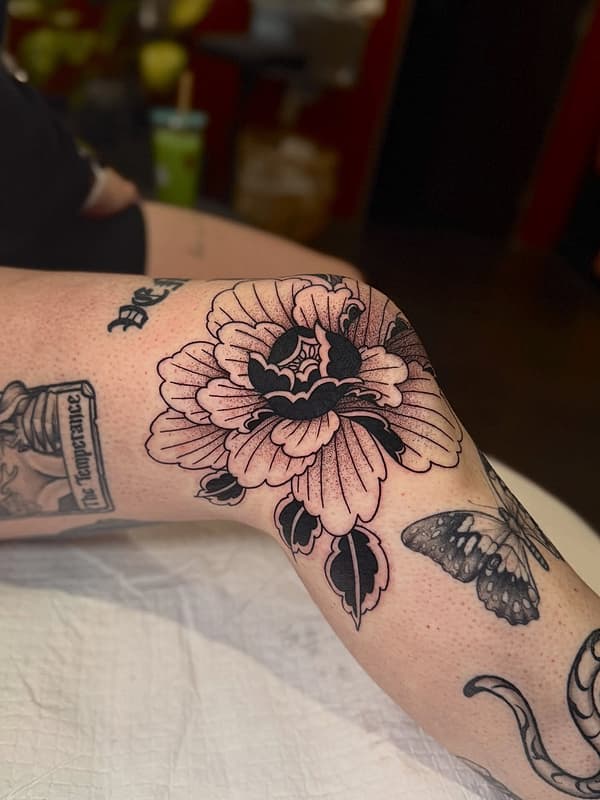
Machine dotwork feels much like any other tattooing, though sessions run long because dots are slow. The style-specific pain question is placement: circular designs suit knees and elbows beautifully, and both are high-pain spots with thin skin over bone. Budget your tolerance accordingly.

Some dotwork is done by hand-poke, no machine, one dot at a time. Reports are consistent: sharper per poke and much slower, with more swelling during the session, but gentler on the skin overall, often healing in one to two weeks instead of three or more. Neither is better; machine work is faster and more common, hand-poke is quieter and some people find the experience itself part of the appeal.

How geometric work ages

Better than its delicate look suggests. The rumour that dotwork fades fast has it backwards: black ink is the most stable pigment, and spaced dots have somewhere to go as ink spreads over the years, so stippled shading holds its gradation where fine solid lines can blur. Well-executed dotwork at ten years still reads clearly.

The real aging risks are specific. Perfect symmetry is unforgiving of blowouts, so depth control matters more than in looser styles. Joints and high-flex areas distort patterns as skin moves and ages. And fingers, palms and feet shed skin too fast for dots to survive. Keep the precision work on stable skin, keep sun off it, and this style goes the distance.

Cost, sessions and finding a specialist

In Australia, expect roughly $200 to $250 an hour in Sydney and Melbourne, with deposits commonly $200 to $500 for larger projects. Small geometric pieces run about $150 to $400, half sleeves $800 to $2,500, and a full sacred-geometry sleeve is a 25 to 35 hour, multi-session project typically quoted at $3,500 to $6,000. Dotwork is slow by nature, so the hours add up faster than the visual complexity suggests.

Vetting is the usual drill with one extra test: zoom in on symmetry. In a specialist's healed work, mandala segments match, long lines stay true across curved skin, and dot density is even. Check that the portfolio has depth in geometric work specifically rather than one striking piece, and favour artists who design custom rather than transferring a flat image onto a curved body part. Browse geometric and dotwork specialists by city on REAP's discover pages to compare.

Geometric artists on REAP

Real geometric work from artists you can book right now.

Got a tattoo in mind?

Post a tattoo request and let artists come to you. Describe what you want, and artists who suit it will reach out.

Frequently Asked Questions

Does dotwork hurt more than normal tattooing?+

Machine dotwork feels similar to other tattooing, just slower. Hand-poked dotwork is sharper per poke but gentler overall and typically heals faster, in one to two weeks. Placement drives pain more than technique: knees and elbows suit mandalas but sit right over bone.

Do dotwork tattoos fade or blur together?+

Dotwork ages unusually well. Black ink is the most stable pigment and the spacing between dots absorbs the slight ink spread that happens over the years, so stippled shading keeps its gradation. The exceptions are high-friction spots like fingers, palms and feet, which are poor placements for any fine work.

What does a geometric tattoo mean?+

It depends on the symbol. Mandalas are associated with balance and wholeness, the Flower of Life with creation and interconnection, Metatron's Cube with physical and spiritual balance, and the unalome with the path toward clarity. These are general associations rather than rules, and choosing geometric work purely for the aesthetics is common and completely valid.

Will a mandala warp on my knee or elbow?+

Circular designs suit joints visually, but skin there flexes constantly and patterns distort more over time than on flat areas. A good geometric specialist designs for the body part rather than transferring a flat image, which is most of the fix. If perfect symmetry forever matters to you, choose a stable placement like the forearm, thigh or back.

How much does a geometric tattoo cost in Australia?+

Roughly $200 to $250 an hour with the major-city specialists. Small pieces land around $150 to $400, half sleeves $800 to $2,500, and full sacred-geometry sleeves $3,500 to $6,000 across multiple sessions. Geometric work carries real design time before the needle starts, which is part of what you're paying for.

Are mandala tattoos cultural appropriation?+

It's genuinely debated. The broad consensus: stylised, original mandala designs are widely accepted, while tattooing explicitly religious forms, like Tibetan deity yantras, as pure decoration is where criticism is strongest. If the imagery comes from a living tradition, research it and work with an artist who understands it.

Find Artists Near You

SydneyNSWMelbourneVICBrisbaneQLDPerthWAAdelaideSAGold CoastQLDNewcastleNSWCanberraACTHobartTASDarwinNT

Find Geometric Artists Near You

Geometric in SydneyGeometric in MelbourneGeometric in BrisbaneGeometric in PerthGeometric in AdelaideGeometric in Gold CoastGeometric in NewcastleGeometric in CanberraGeometric in HobartGeometric in Darwin
Browse artists on the map →