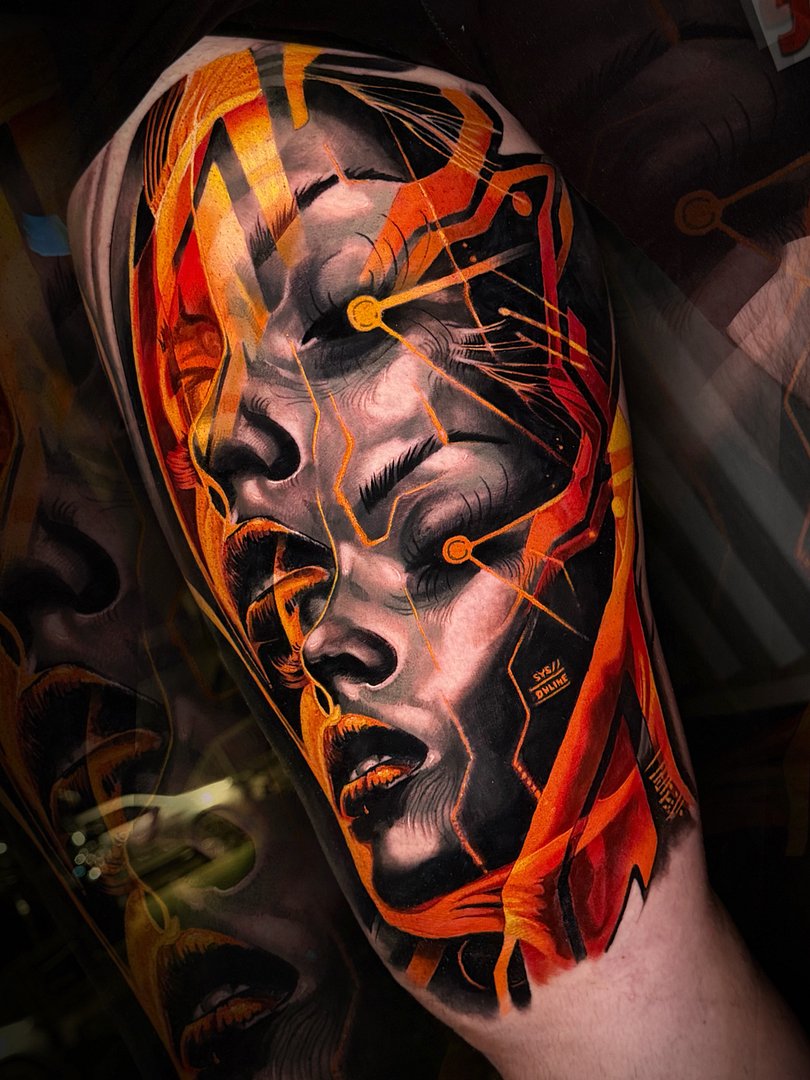
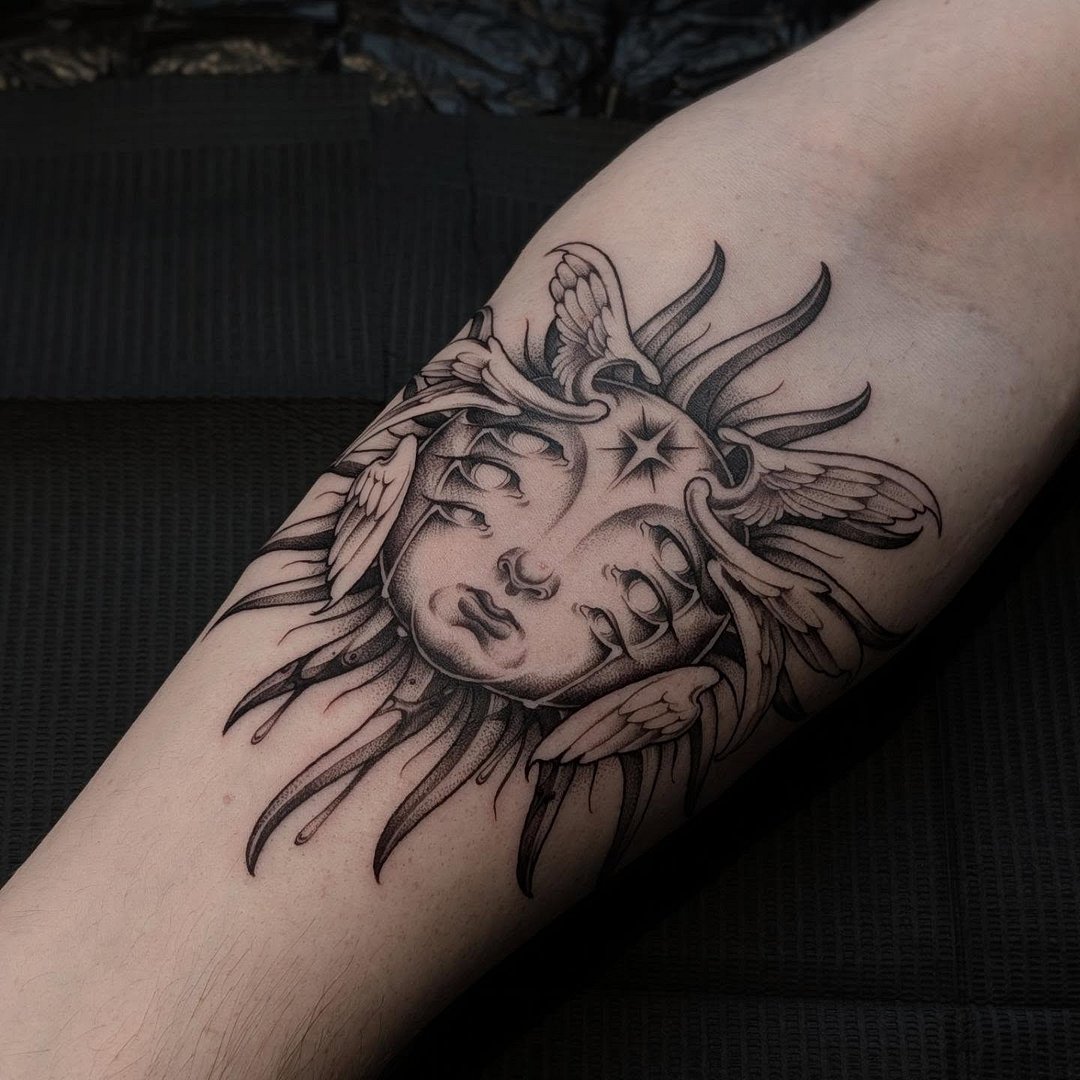
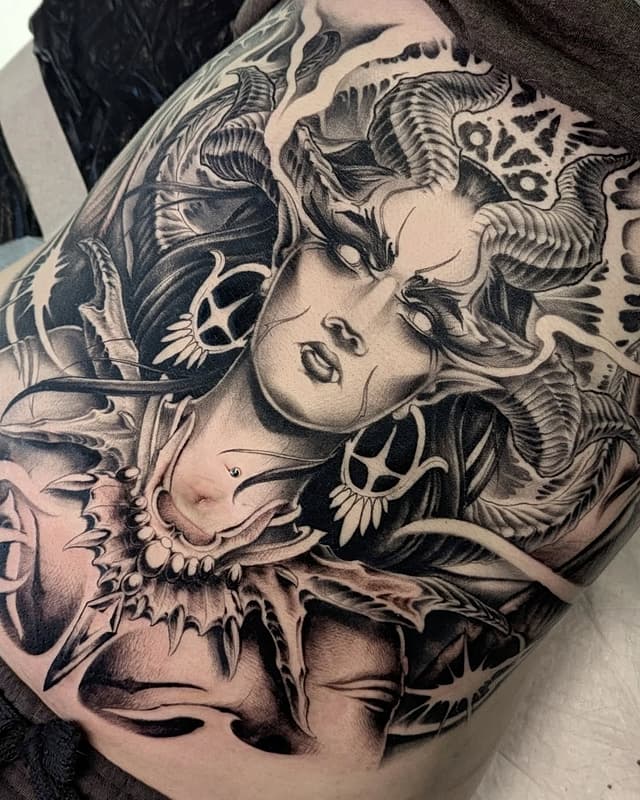
DMs, booking forms, or in person
Booking methods vary by artist, not by convention. Some run everything through Instagram DMs. Some use a booking form on their website or on REAP. Some only take bookings in person at the studio, or during a set booking window a few times a year. Check the artist's bio or profile before assuming. Showing up with the wrong method wastes your time and theirs.
DMs work fine for smaller studios and independent artists but get chaotic fast if the artist is popular. Your message can get buried under hundreds of others. A booking form is slower to fill in but gives the artist everything at once, in order, which usually means a faster and more useful reply.
What to include in your first message
Be specific. Vague enquiries get vague or no responses. Include: what you want (a sentence or two, not an essay), rough size in centimetres or inches, placement on the body, whether it's colour or black and grey, and two or three reference images that show the vibe you're after, not images you expect to be copied.
Also mention any scheduling constraints up front, like an overseas trip or an event you need it healed for. Artists plan sessions around this, and finding out at the consultation stage instead of the first message just costs everyone a round trip.
Deposits
Almost every professional artist requires a deposit to lock in a booking, typically $100 to $250 depending on the piece and the artist, and sometimes more for large projects. This is standard, not a scam. It covers the artist's design time and protects them against no-shows and last-minute cancellations, which cost them a paid session.
Deposits are usually non-refundable but come off the final price of the tattoo. Read the cancellation policy before paying. Most artists allow one reschedule with reasonable notice (48 to 72 hours is common) but forfeit the deposit for no-shows or late cancellations. If a policy isn't stated, ask before you pay.
The consultation
For anything beyond a small flash piece, expect a consultation before the tattoo day itself, sometimes in person, often a phone call or messages back and forth. This is where size, placement, and design direction get locked in. Come with reference images, but stay open to the artist's input on how to make it actually work as a tattoo rather than as a flat picture.