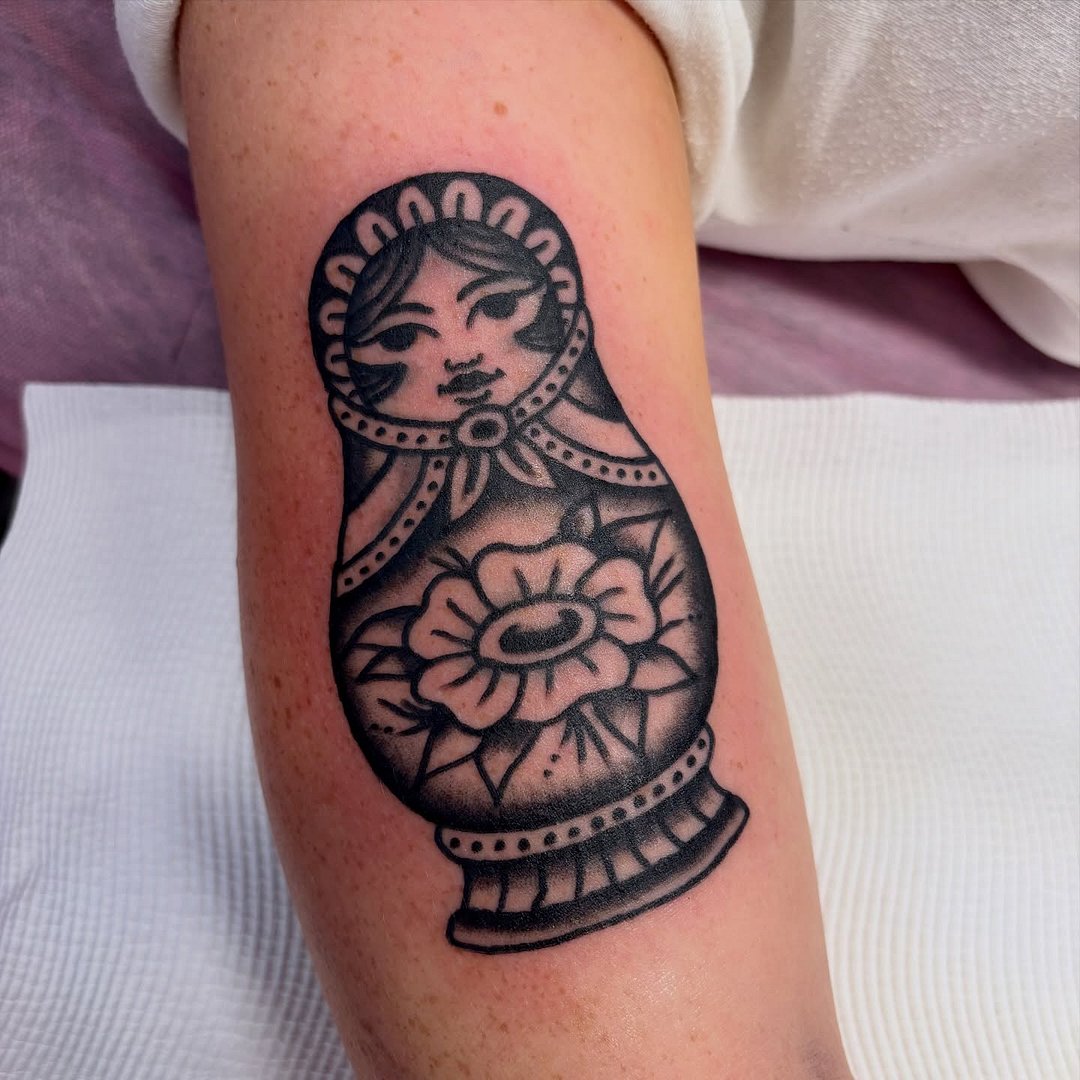
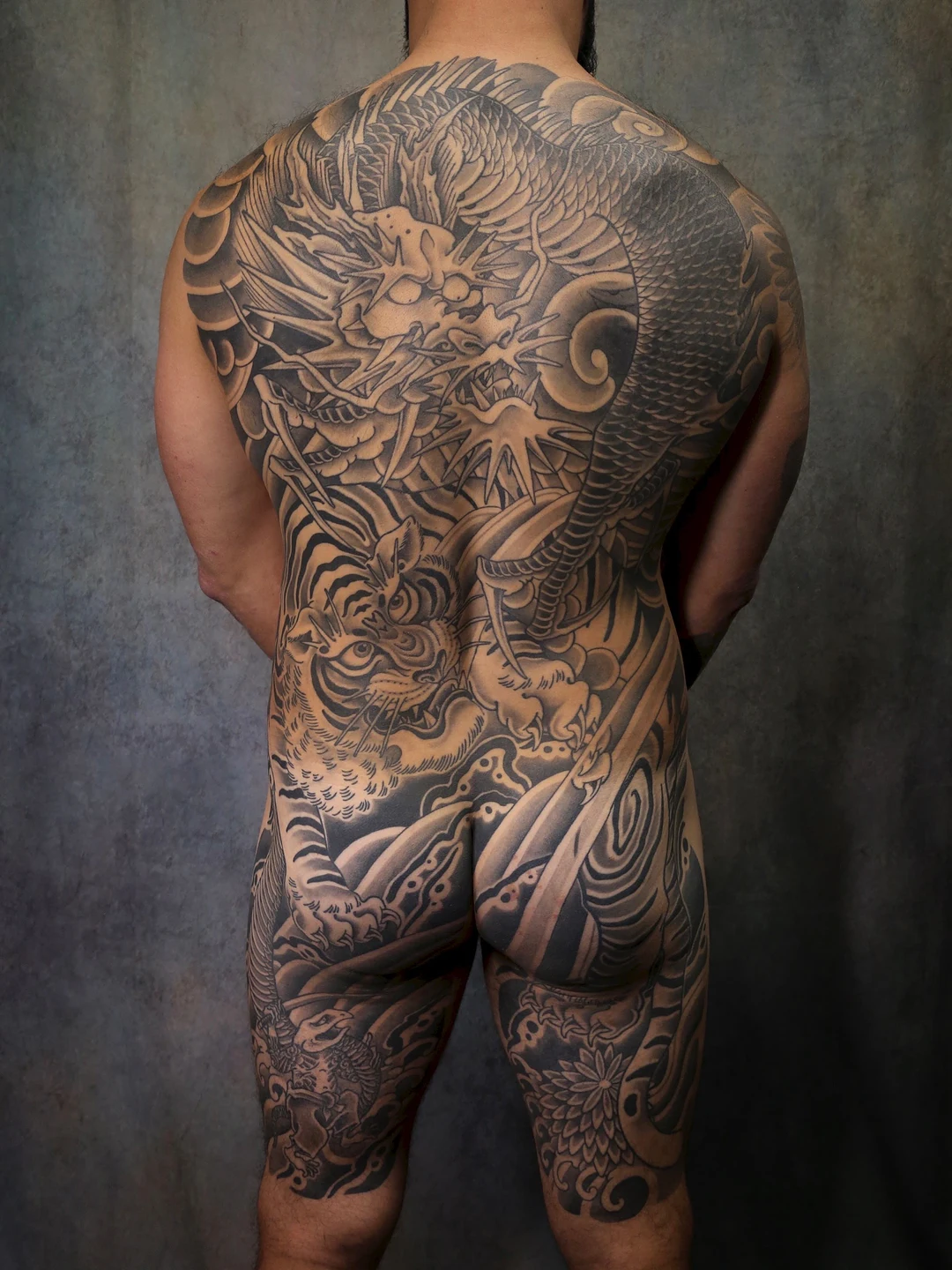
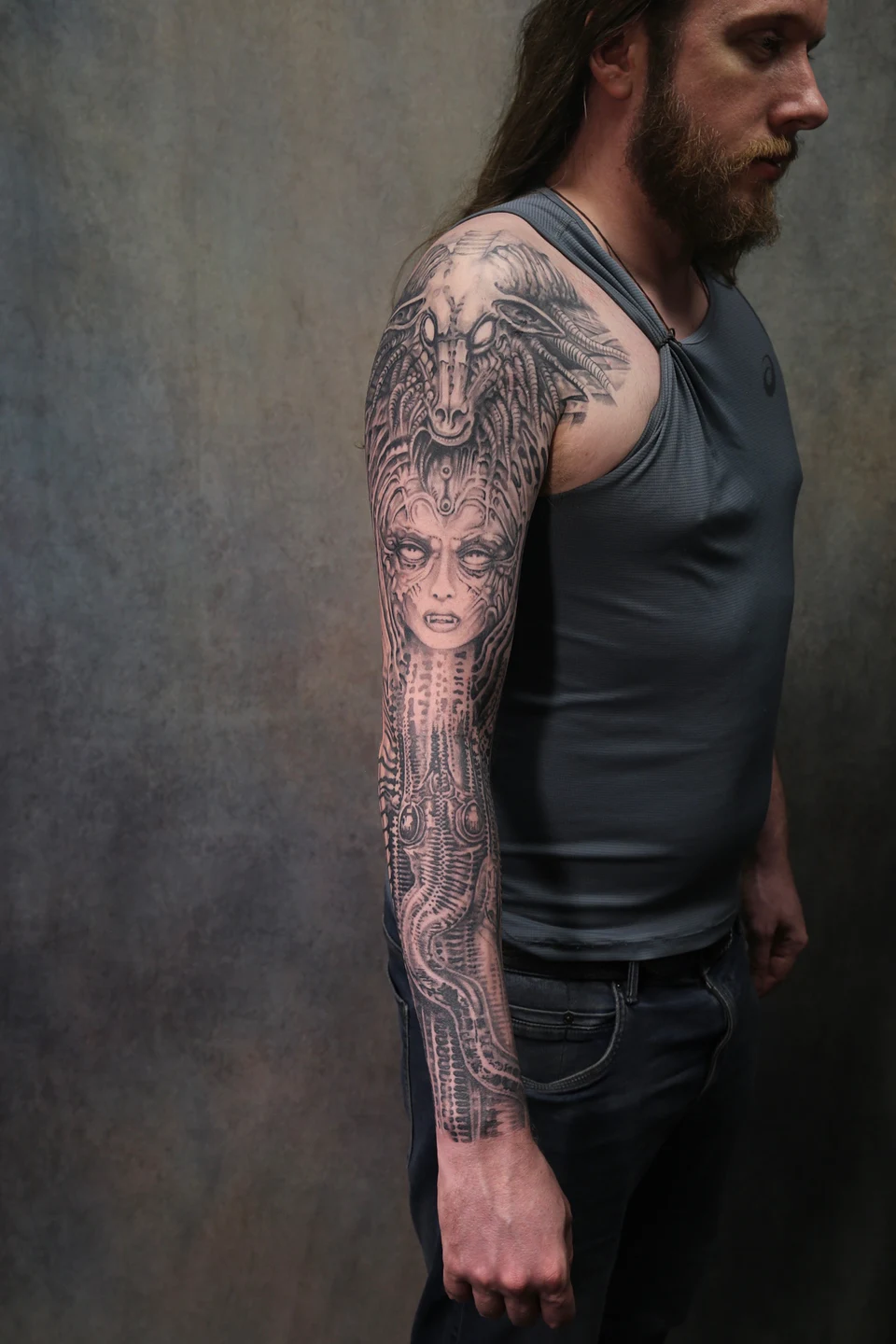
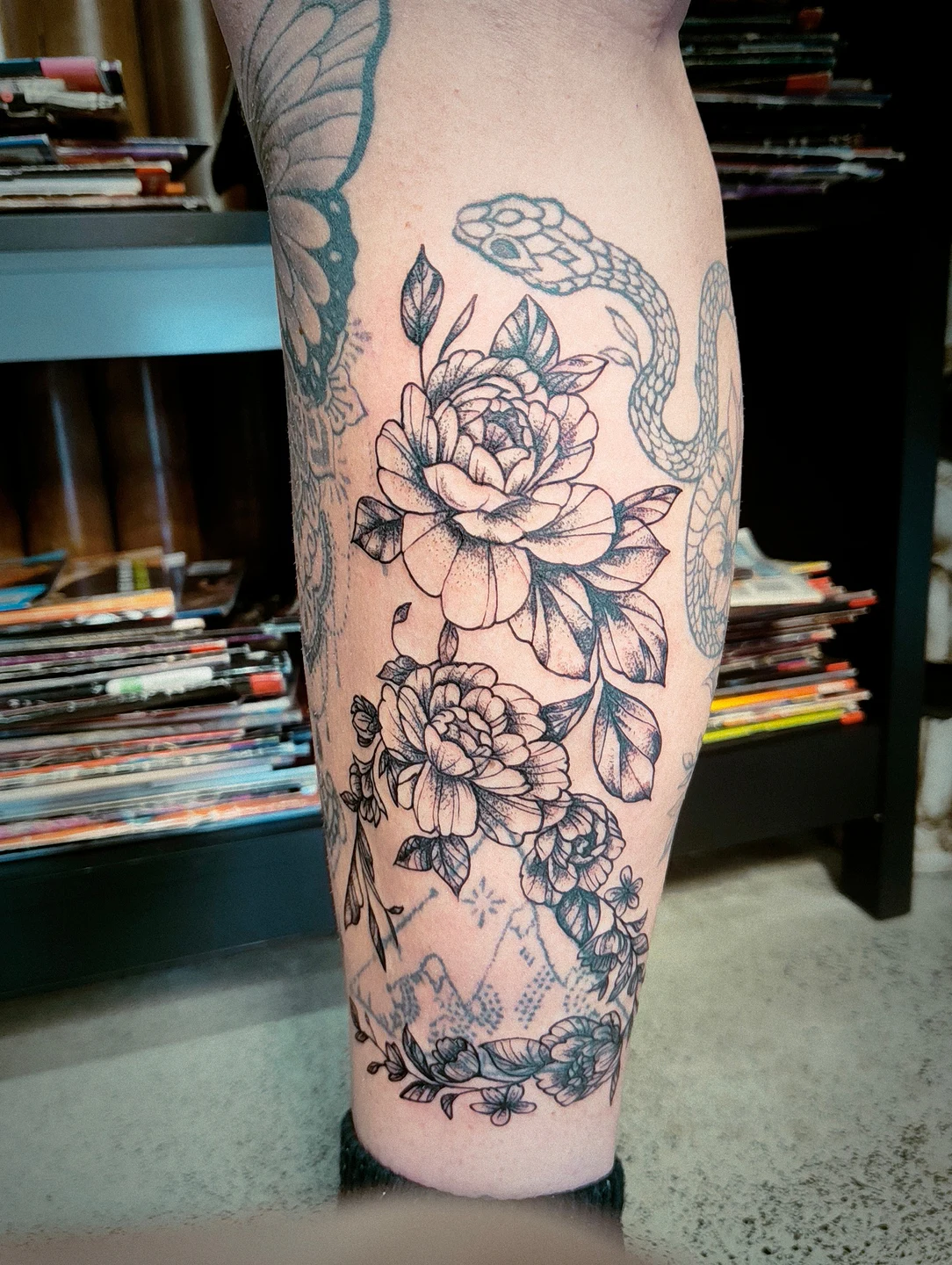
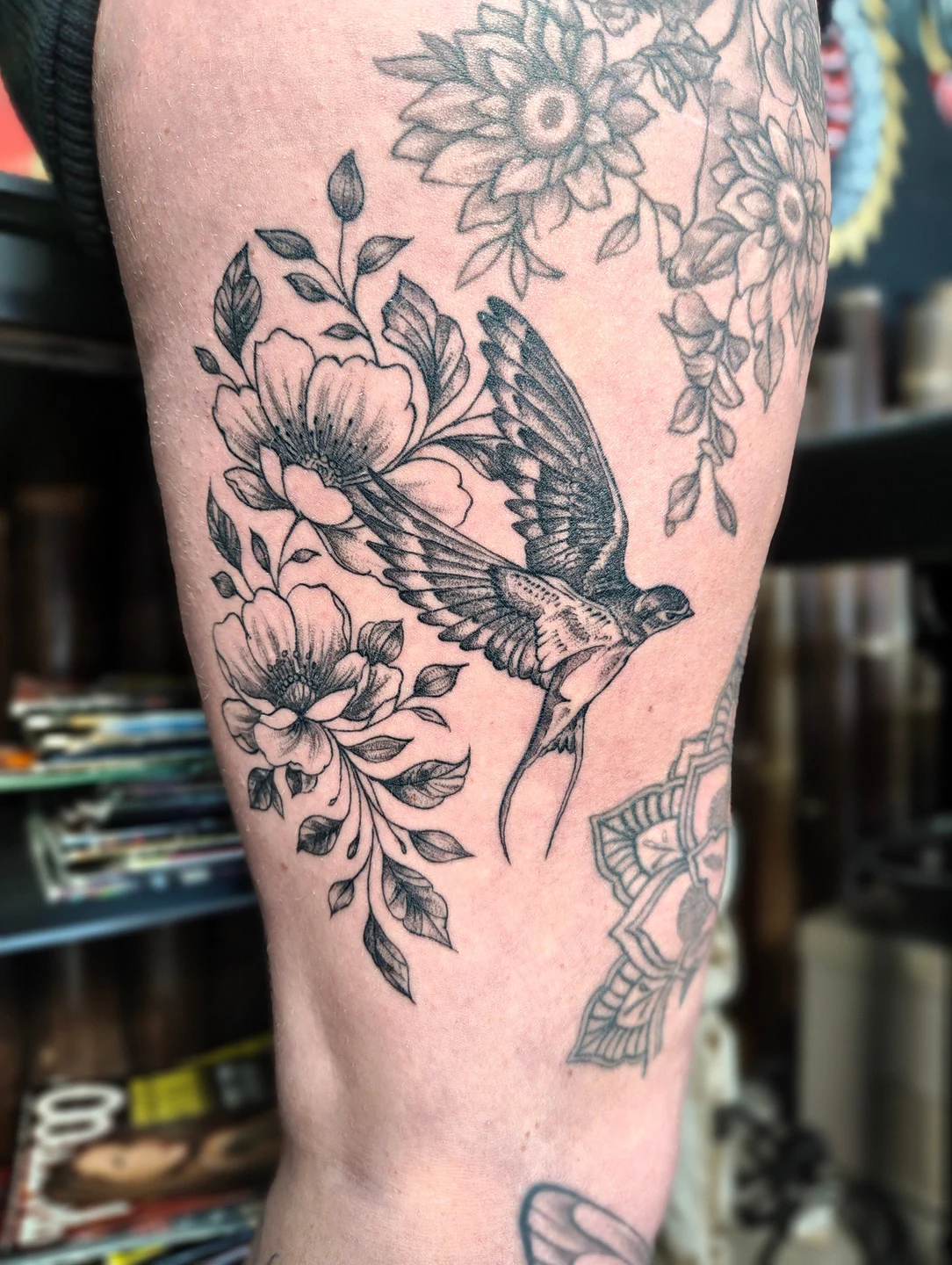
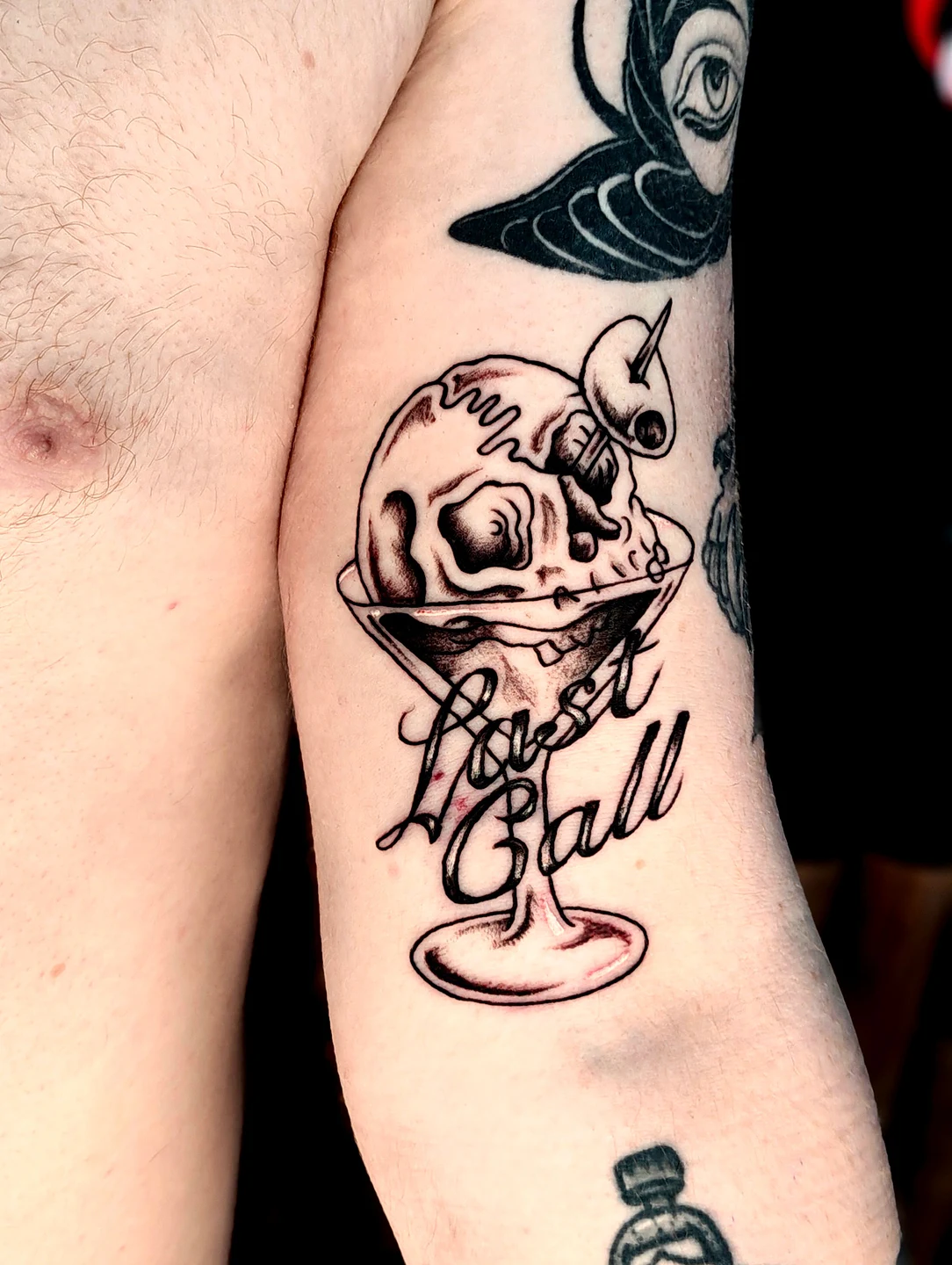
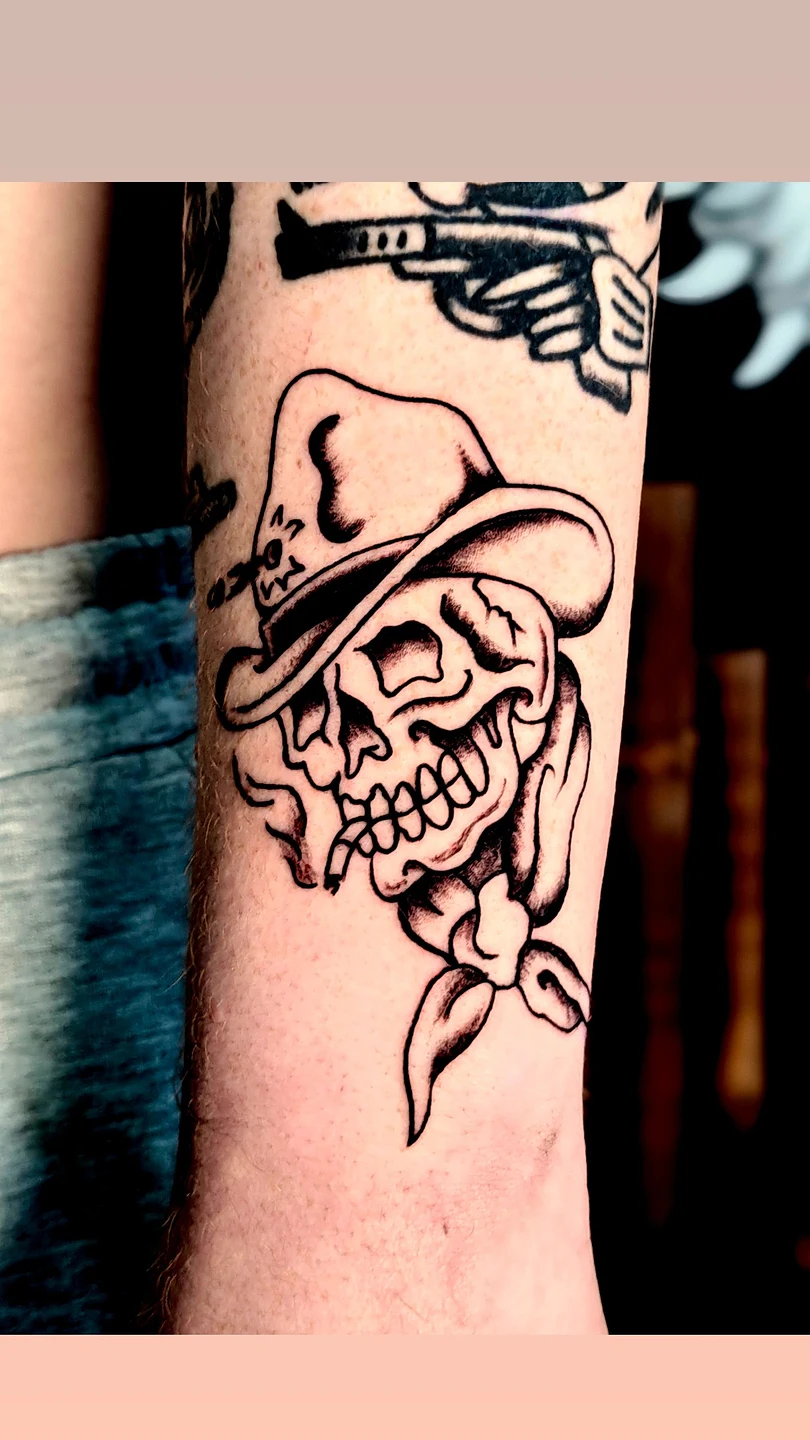
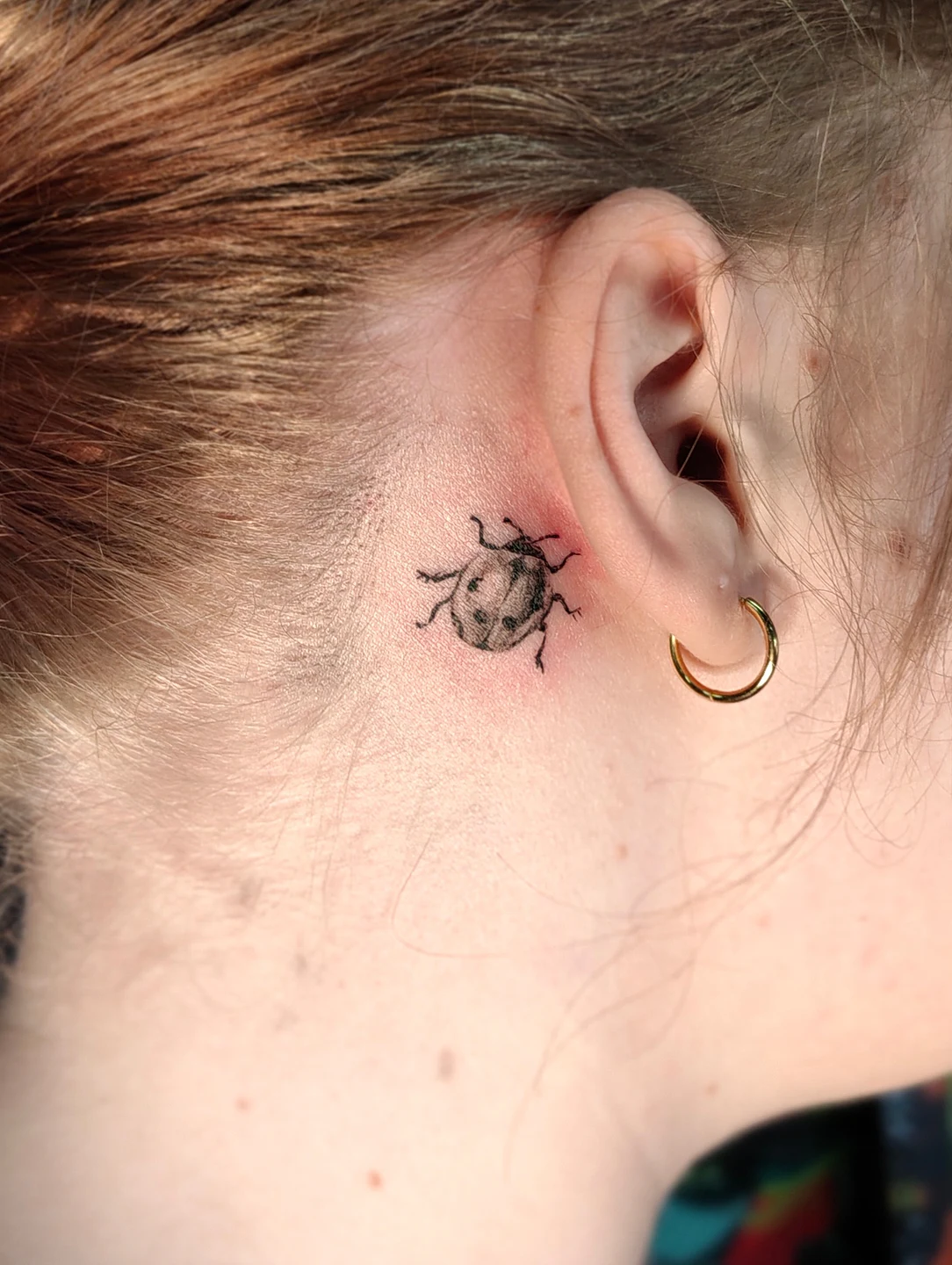
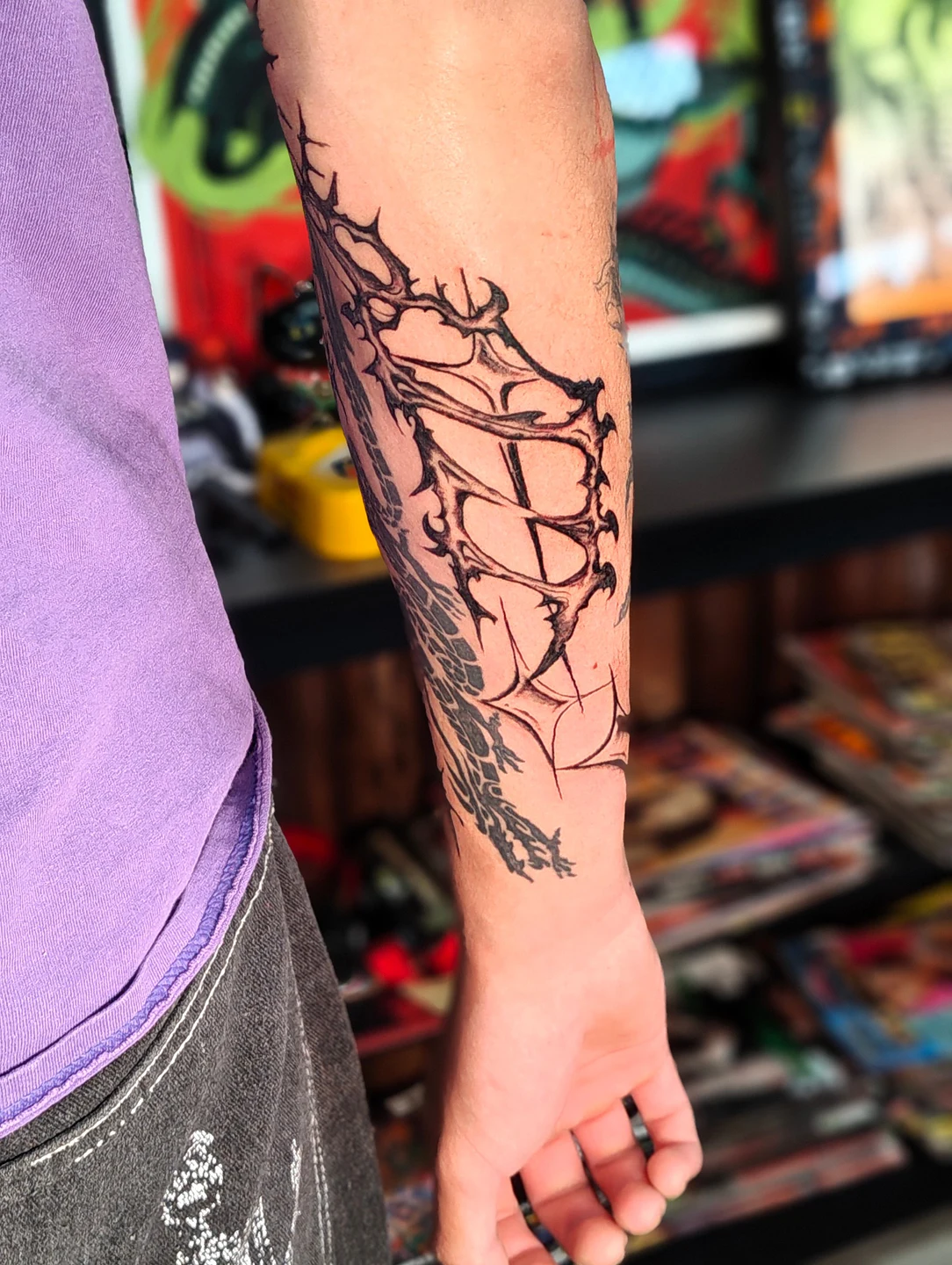
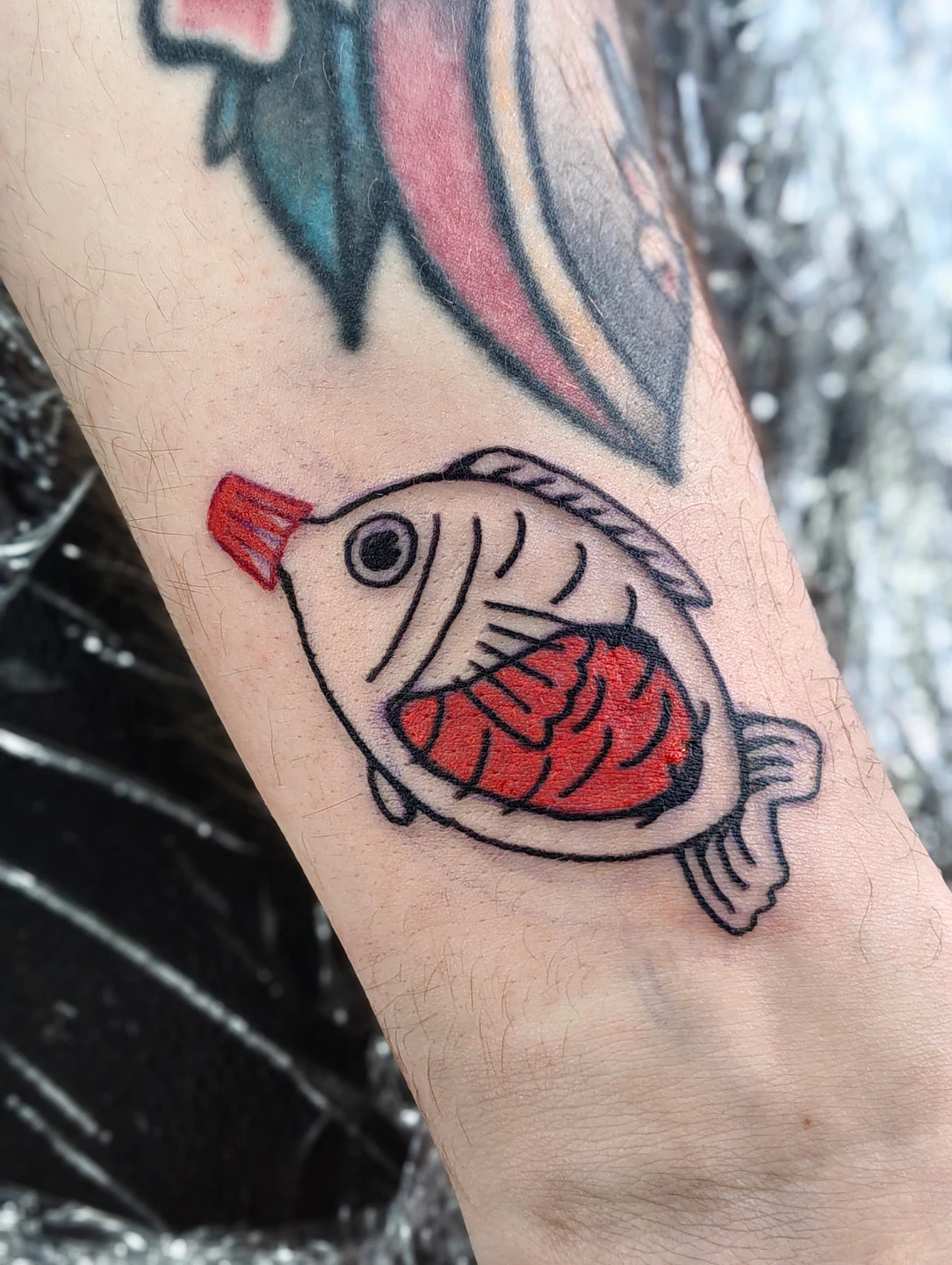
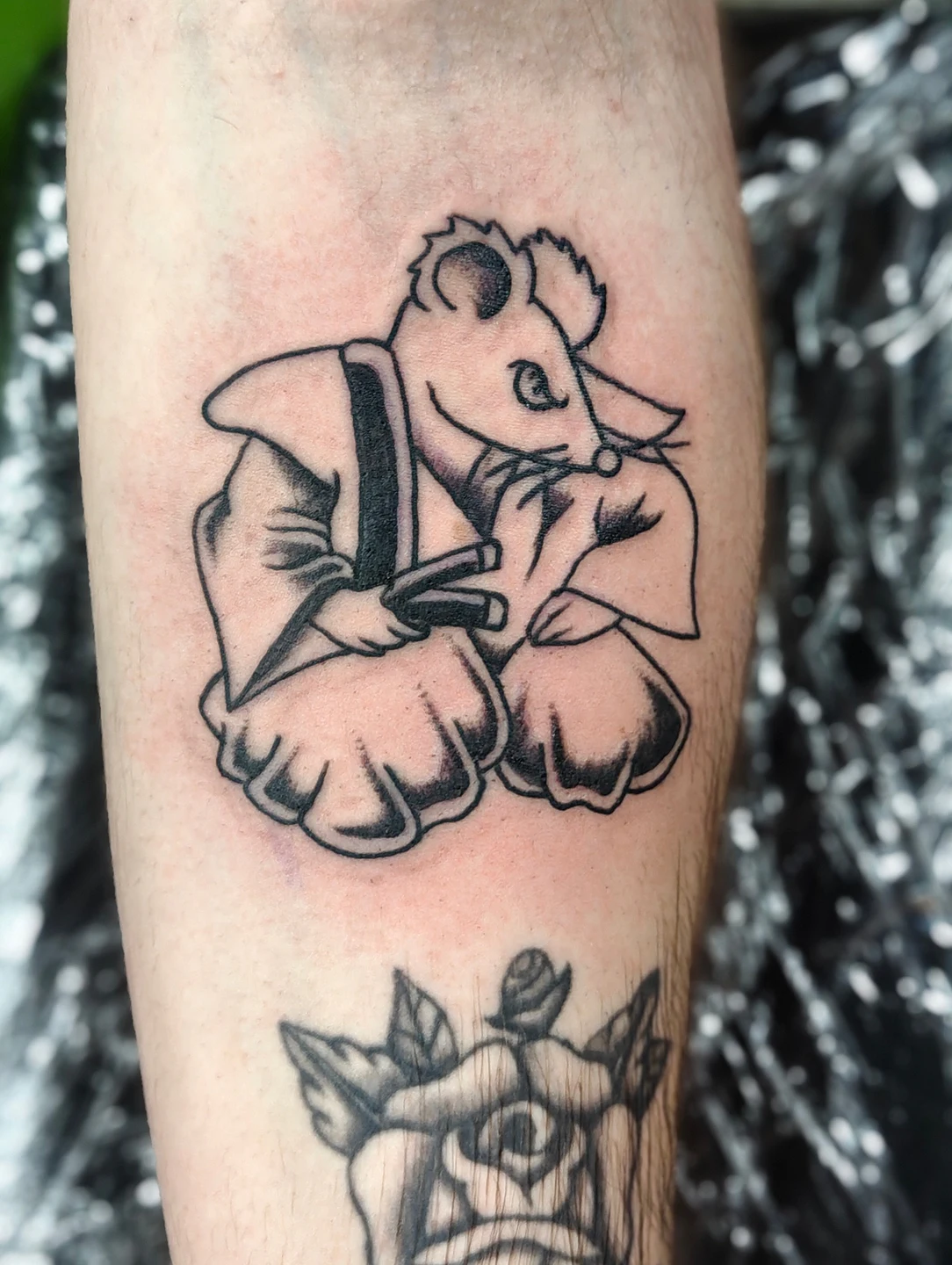
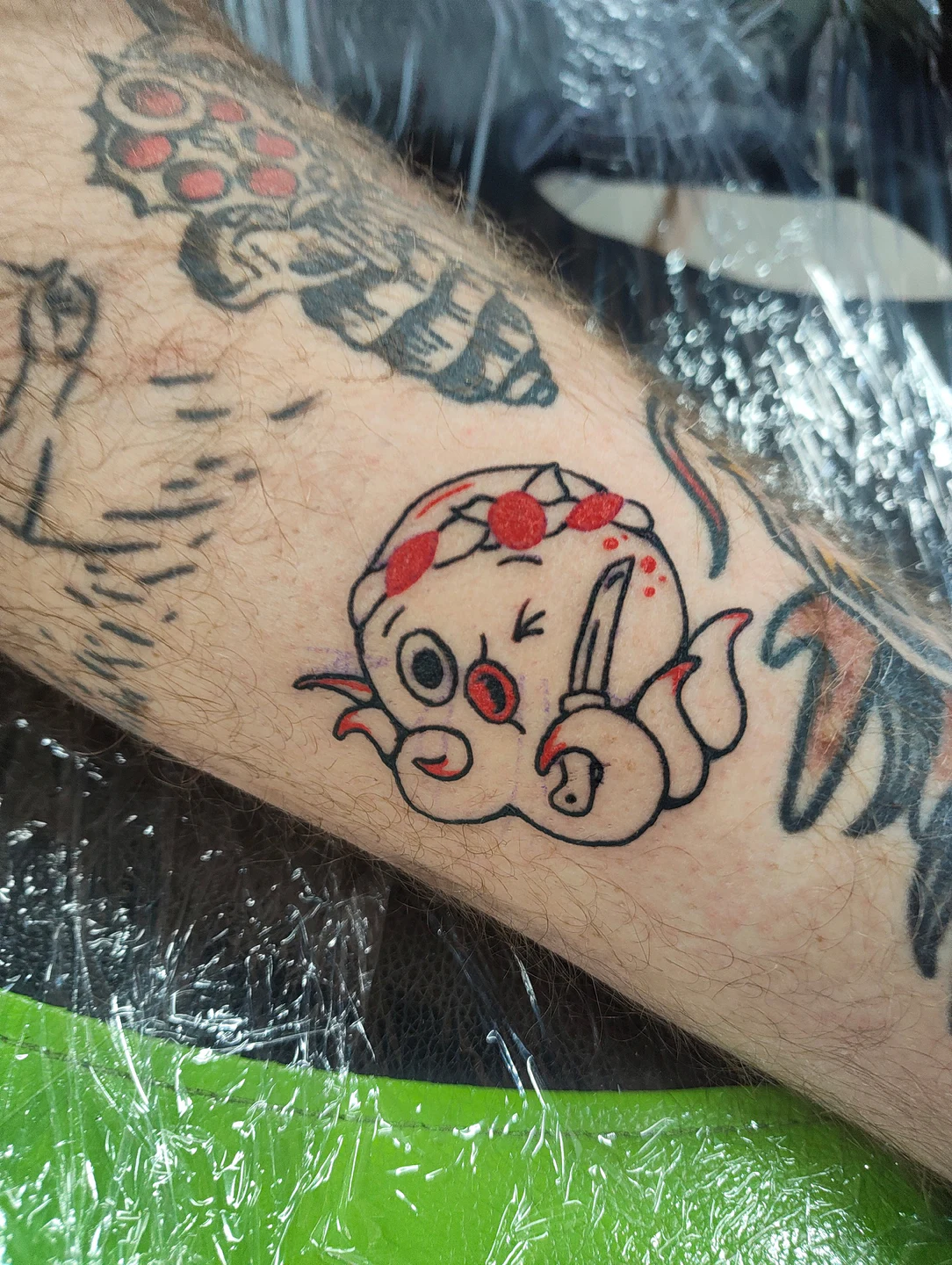
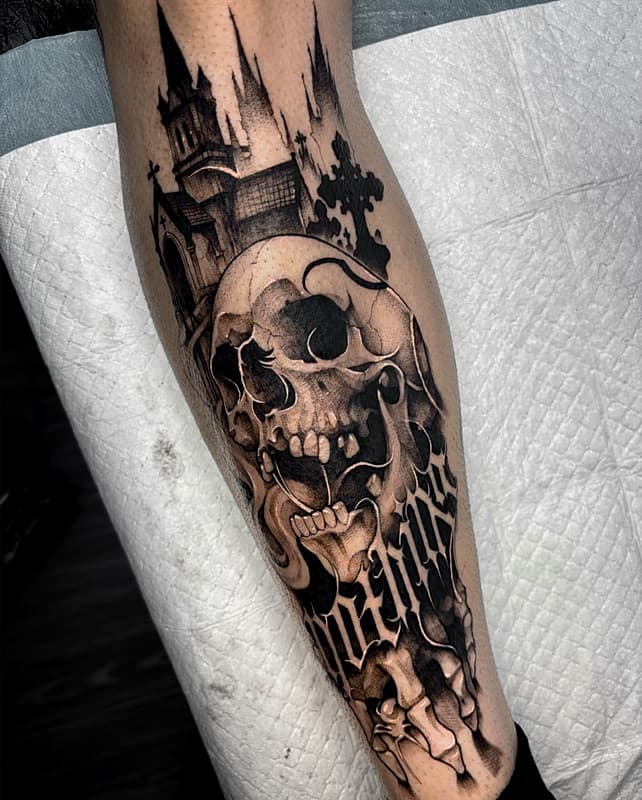
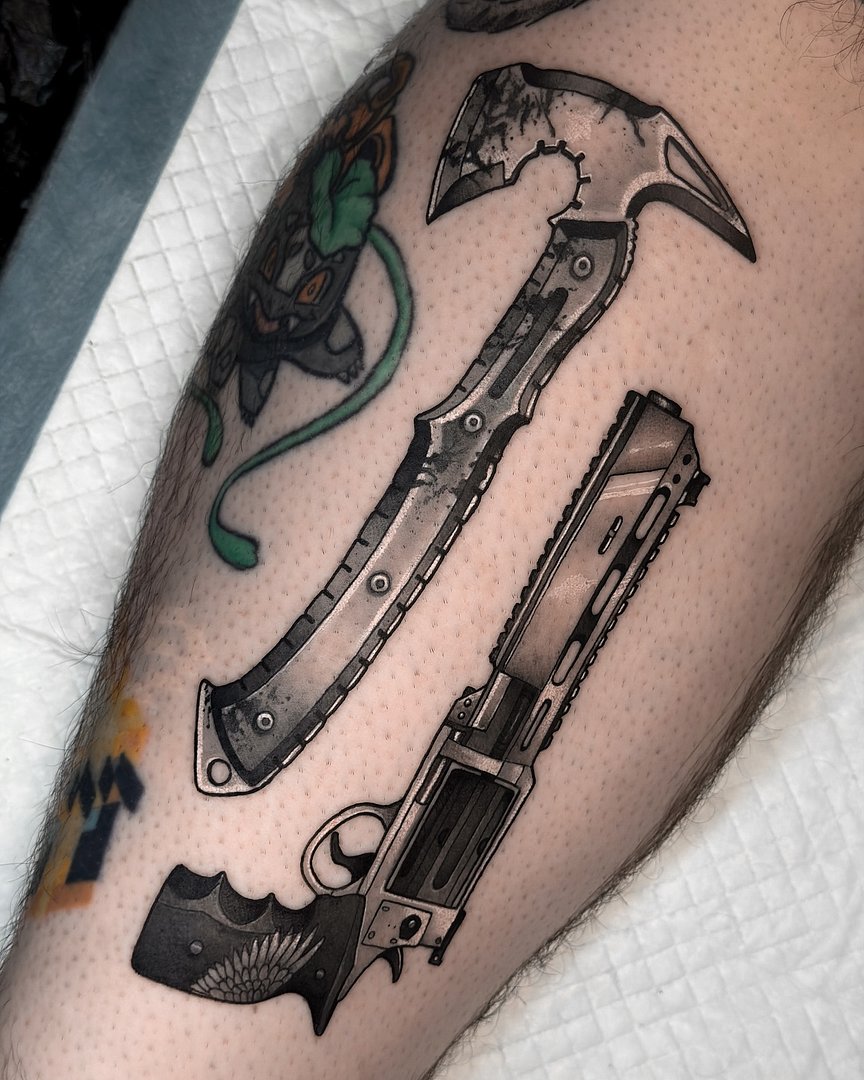


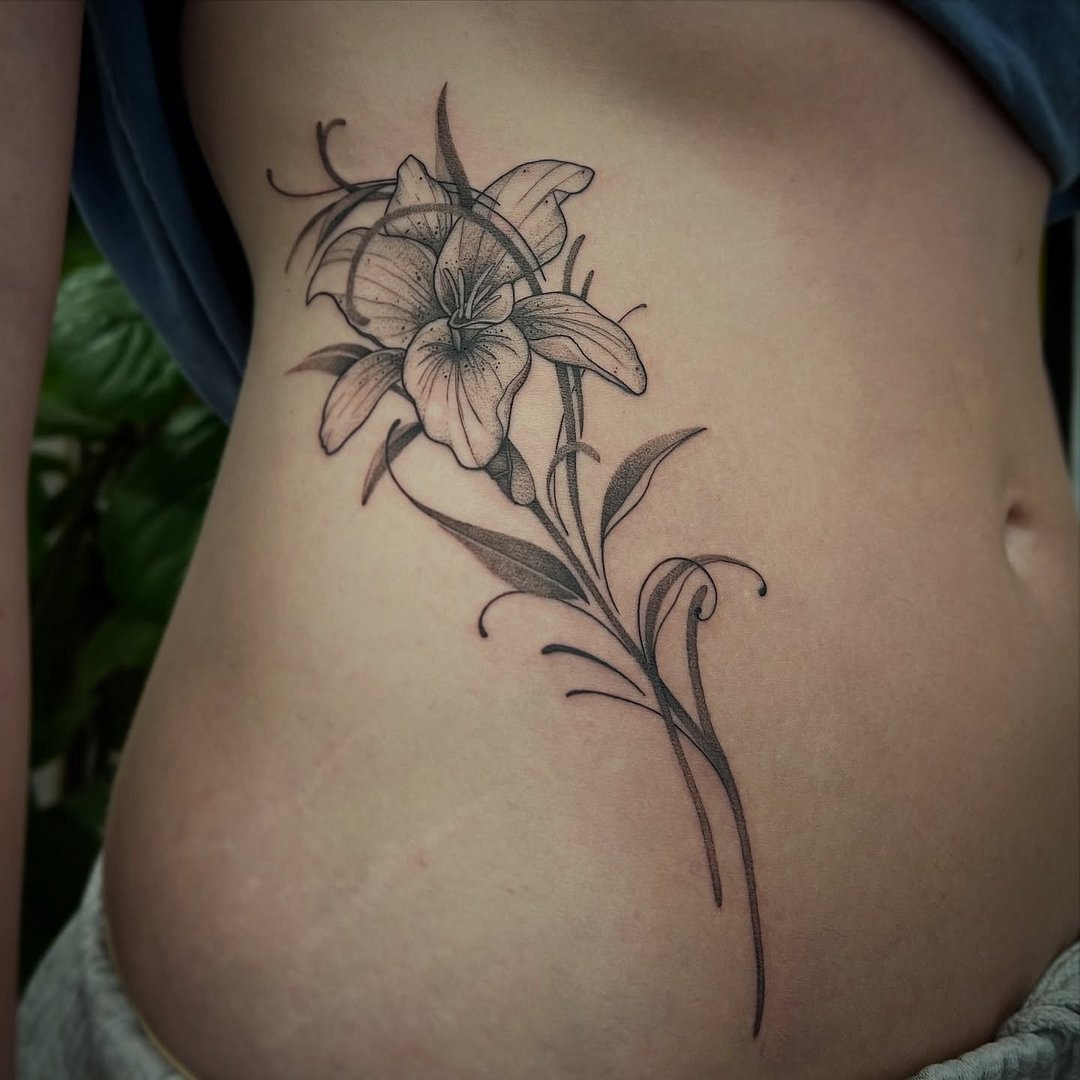
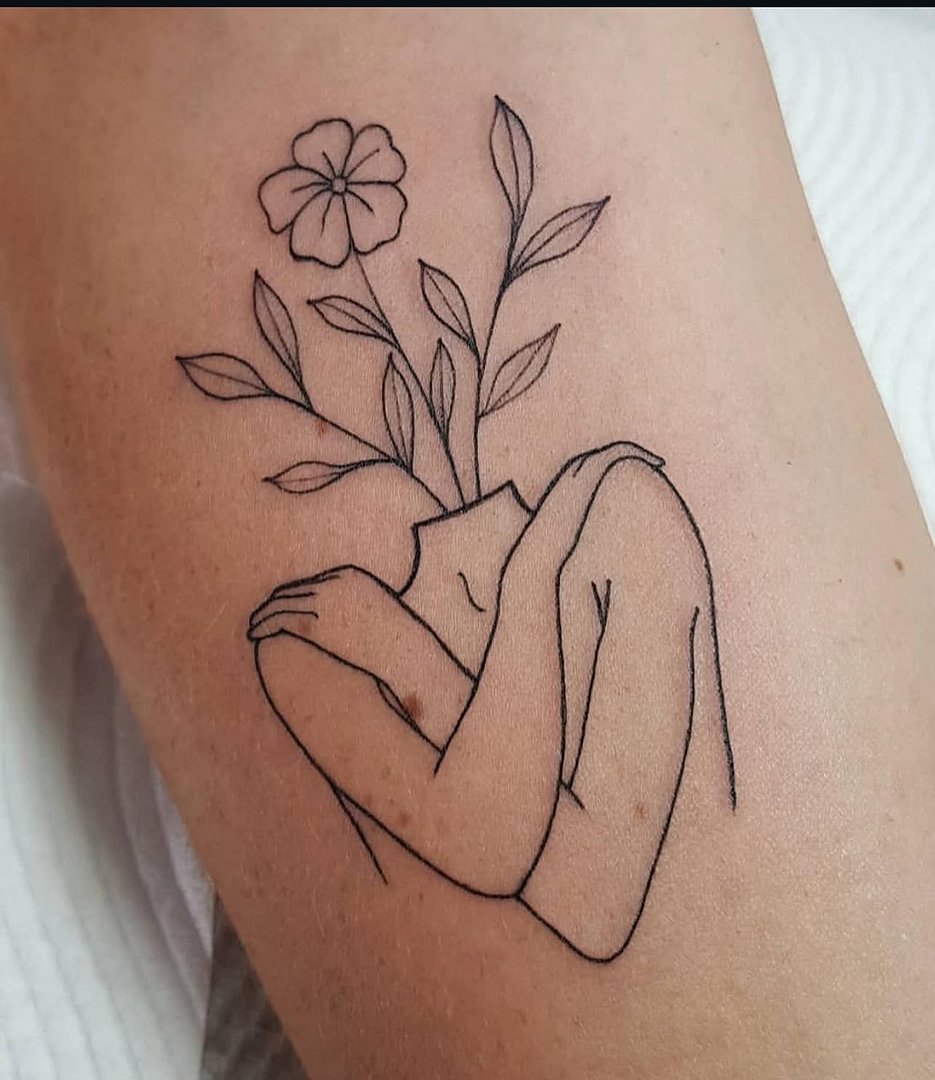

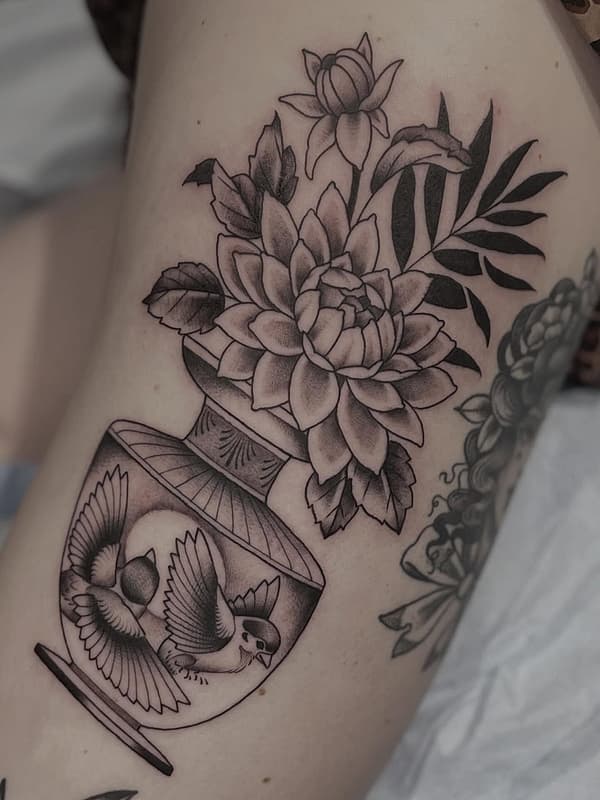
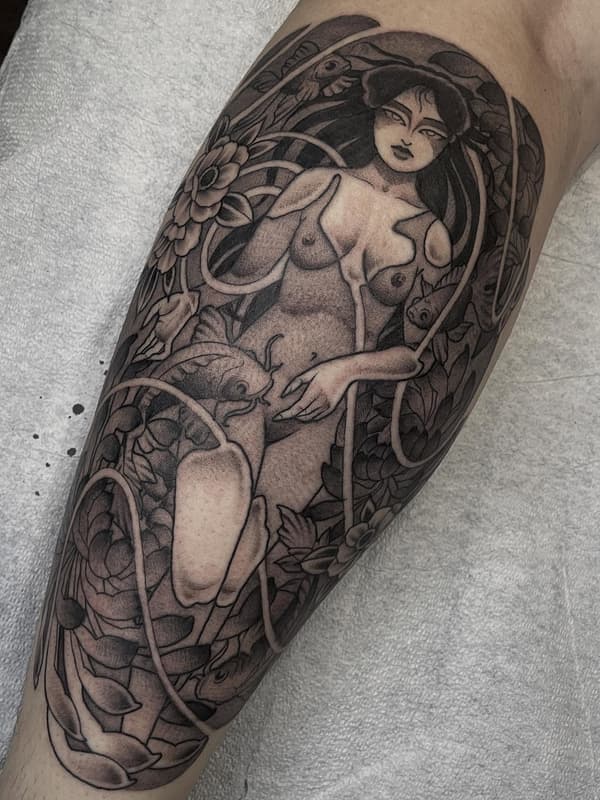
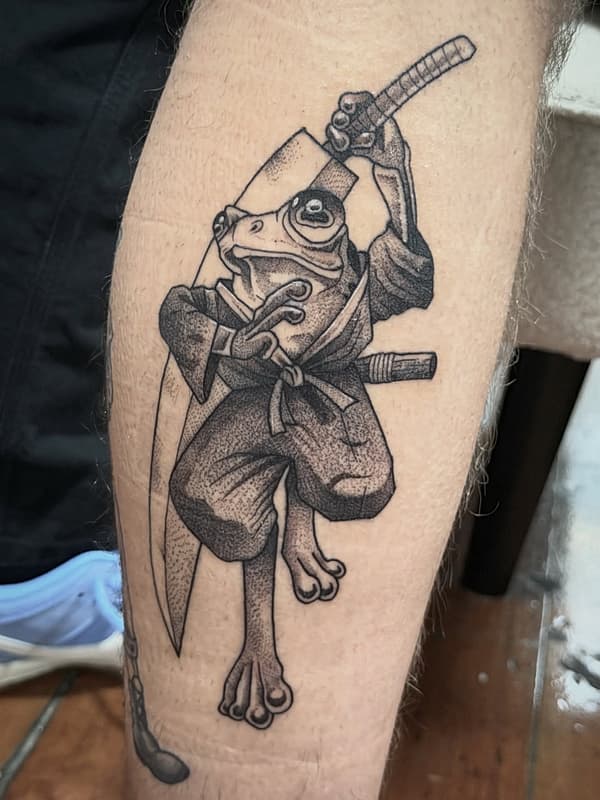

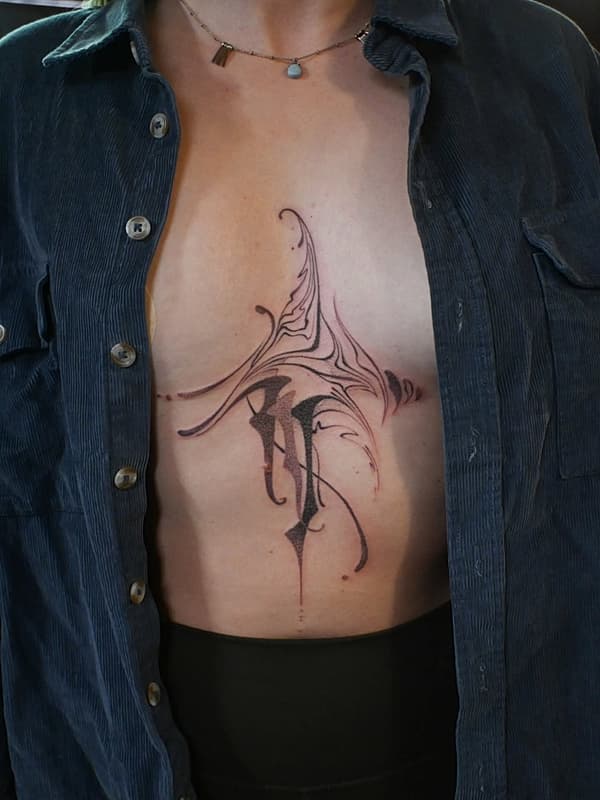
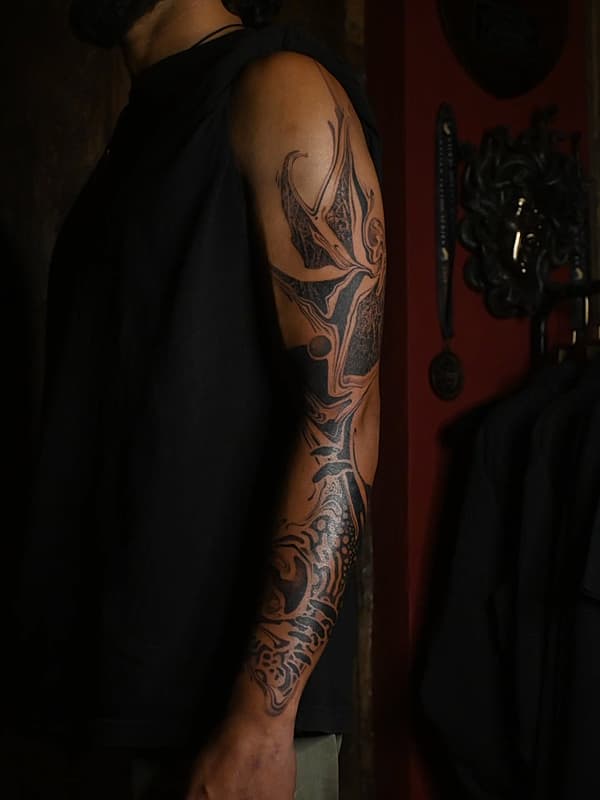
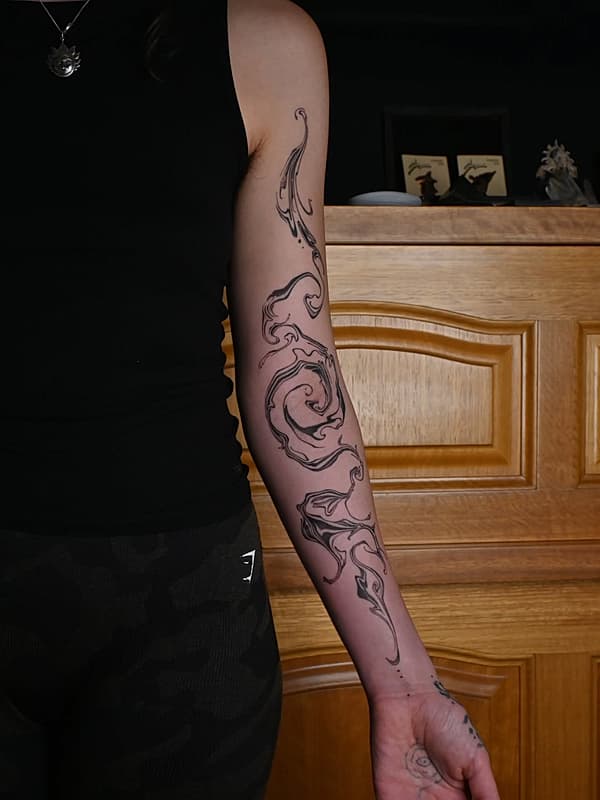
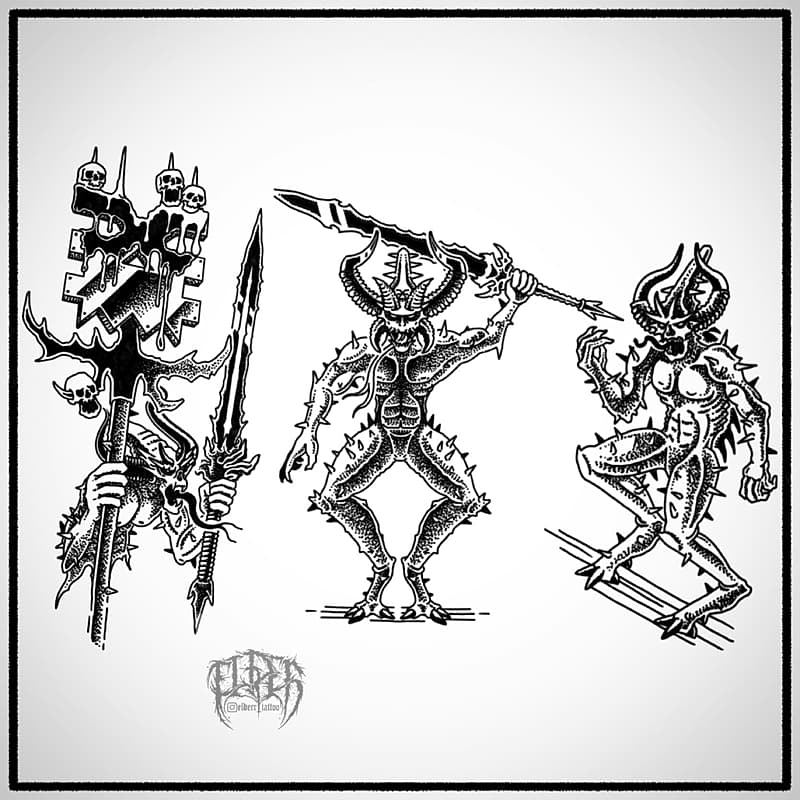
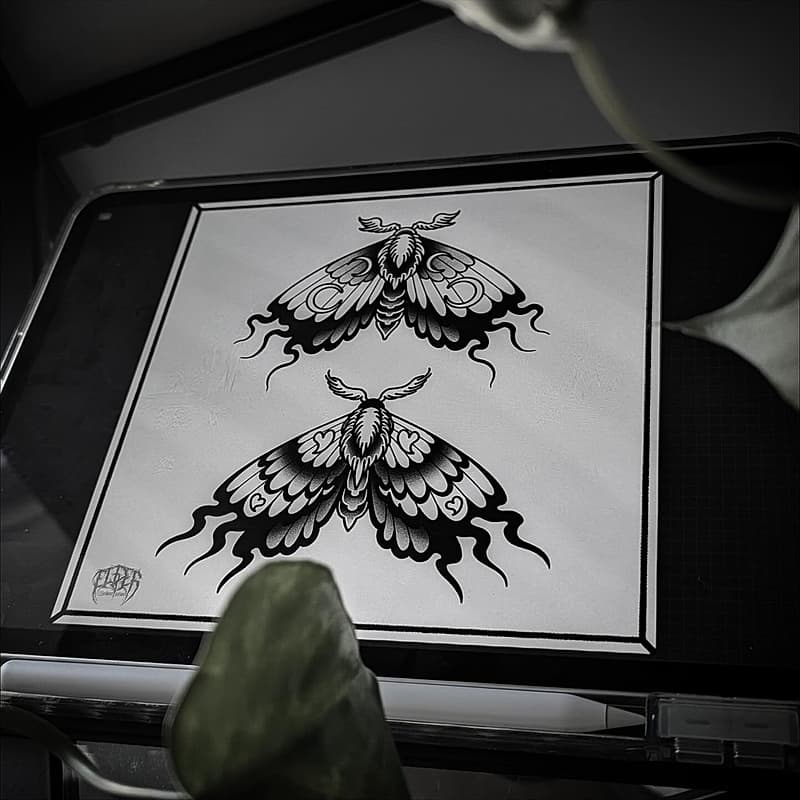
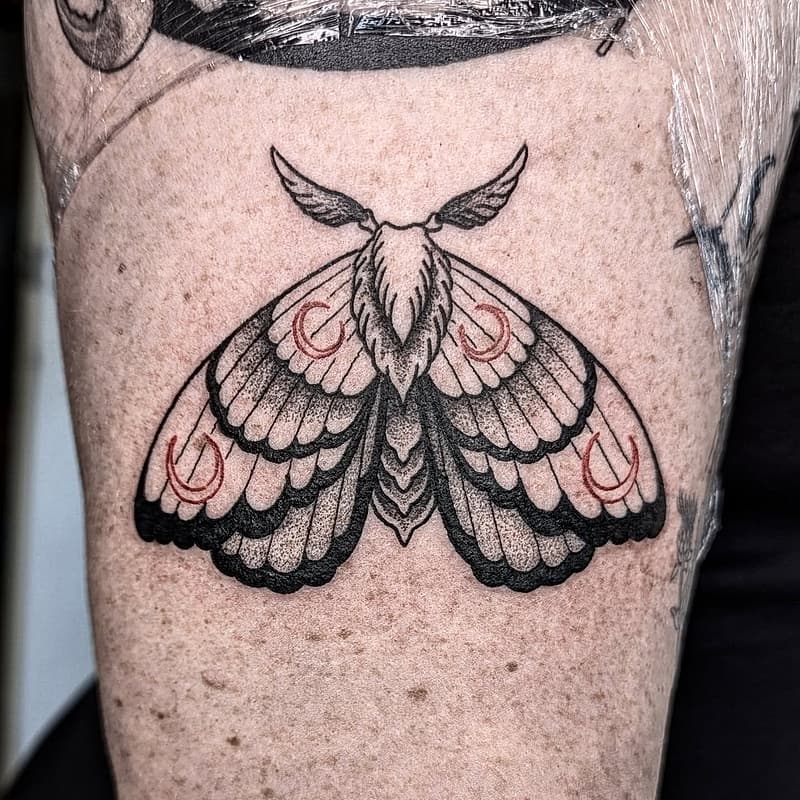
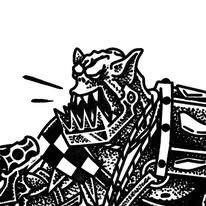
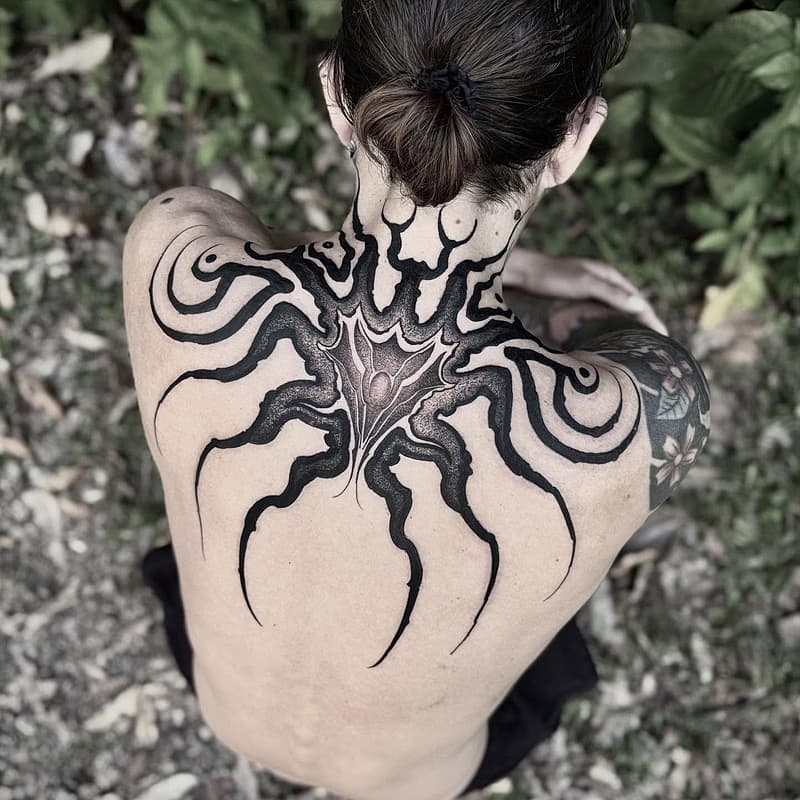
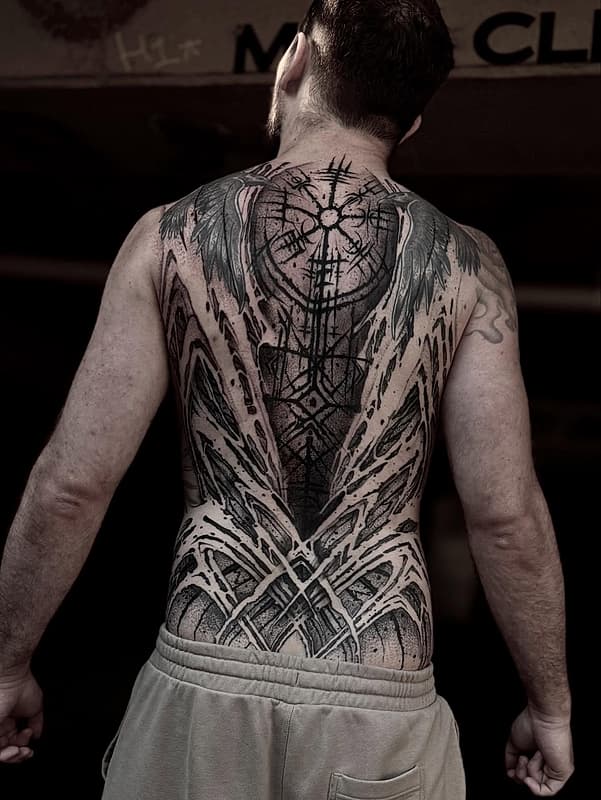
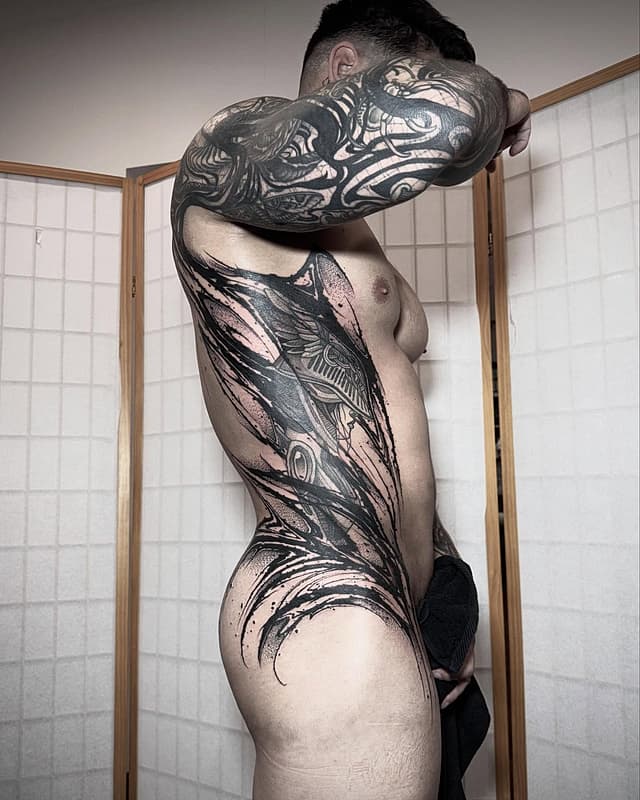

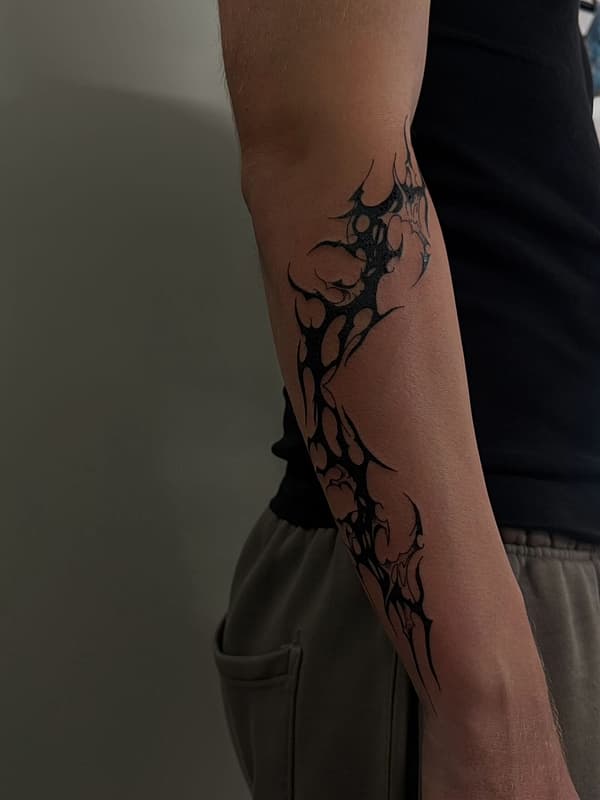

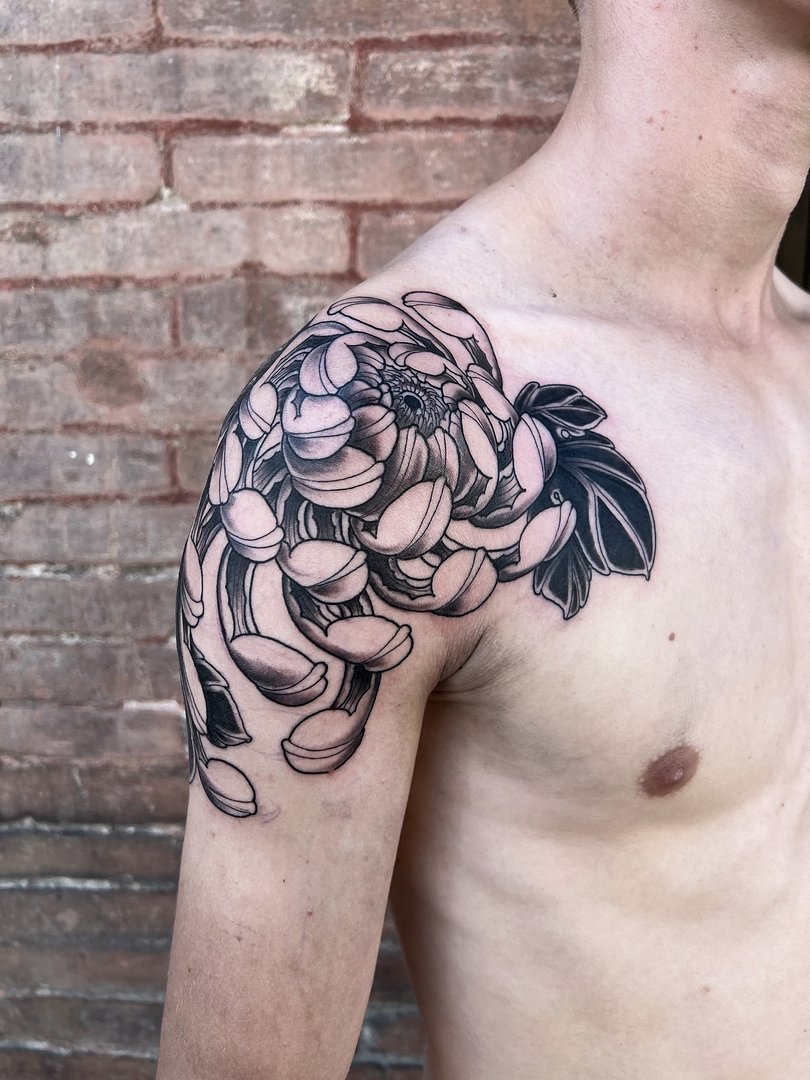
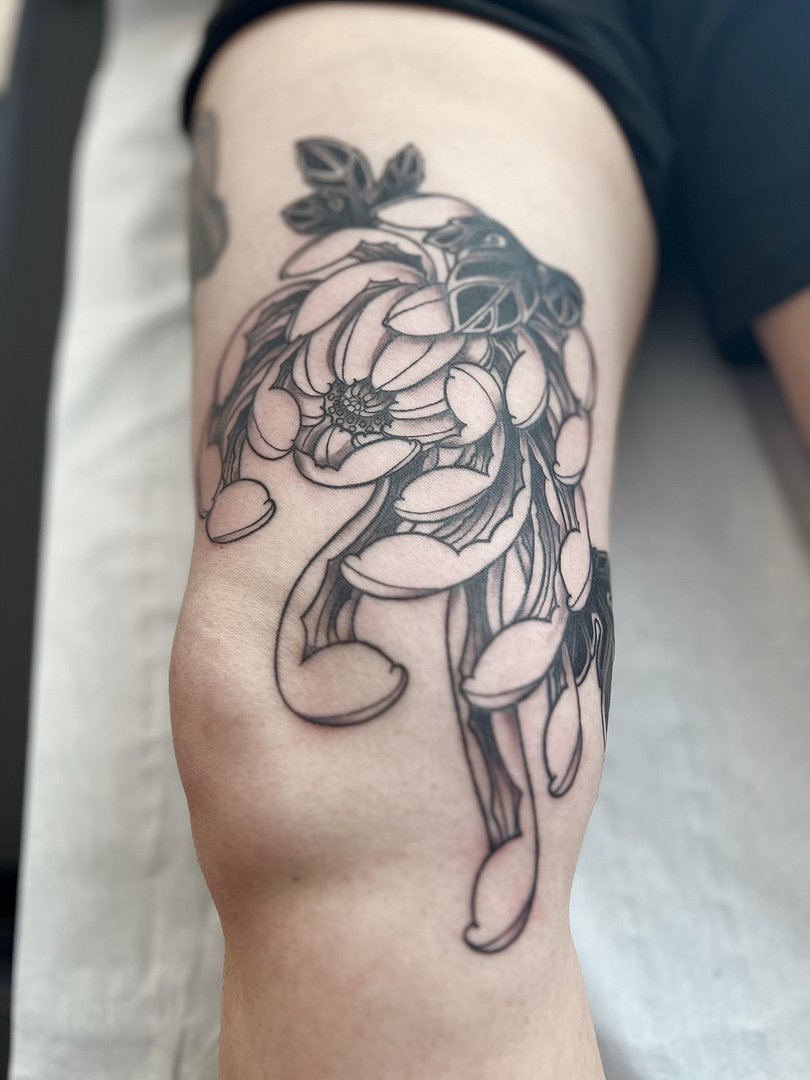
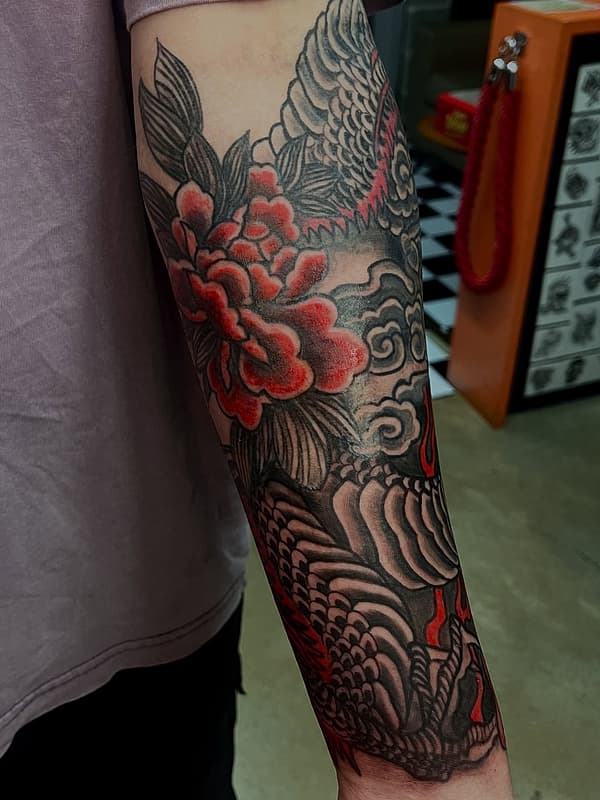
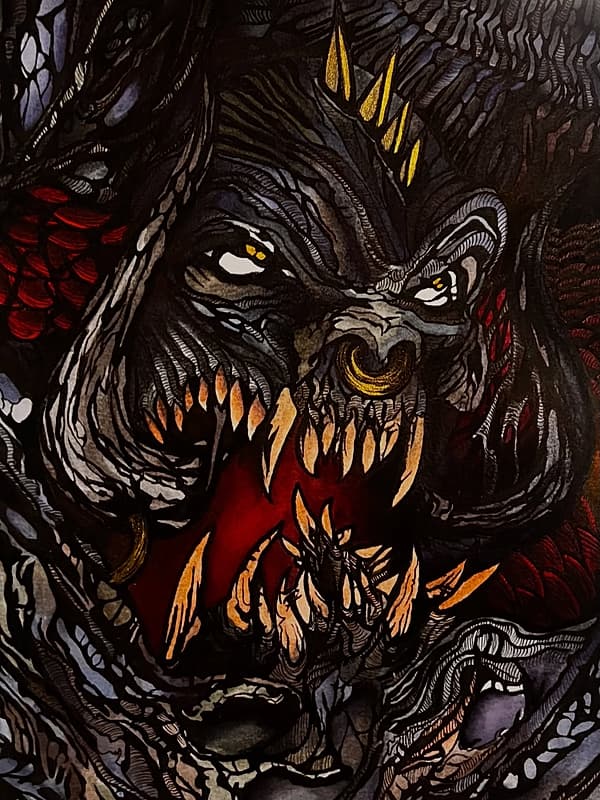
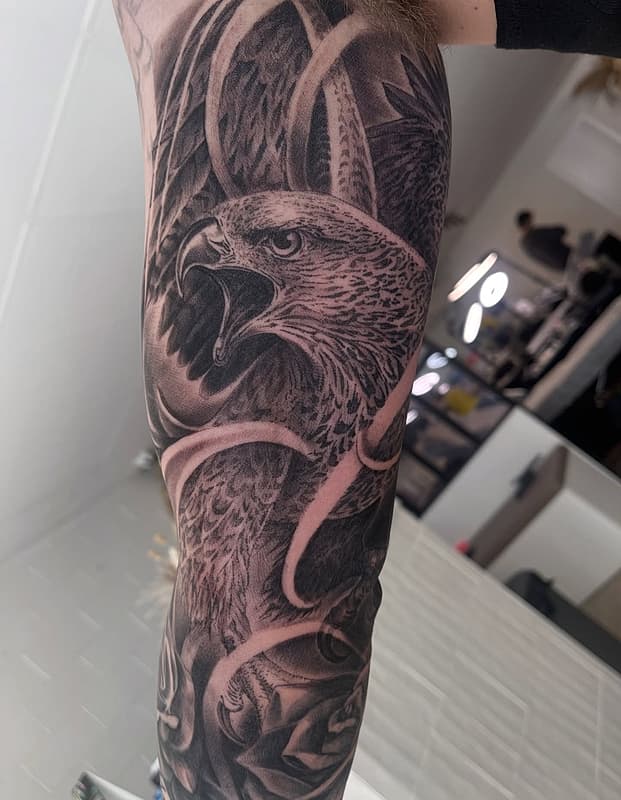
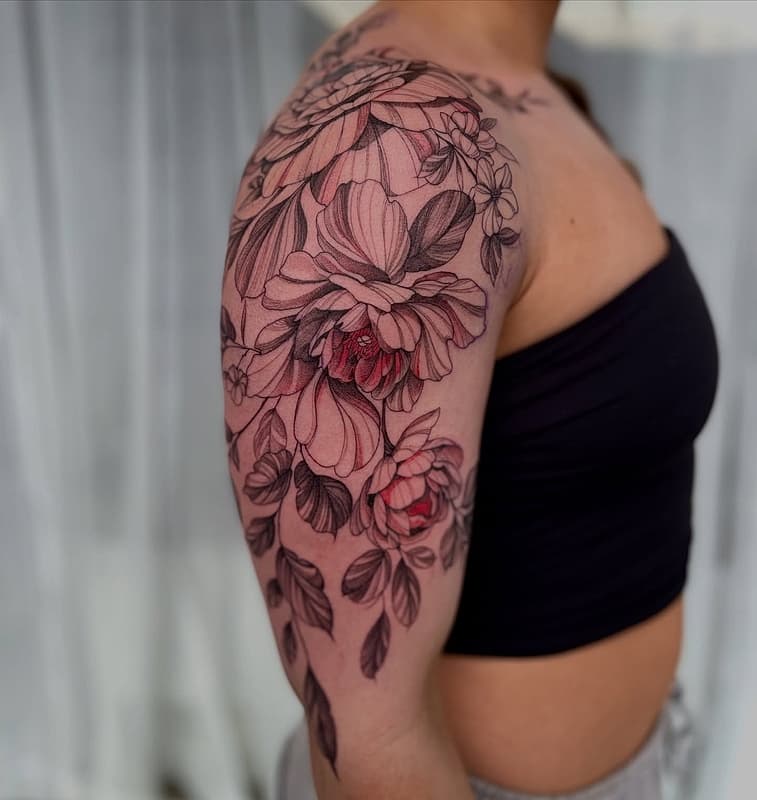
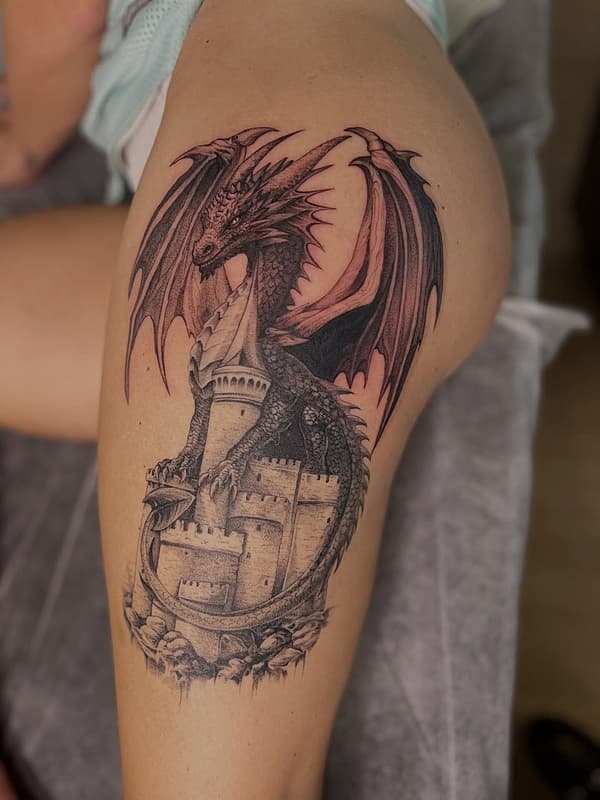

Bold solid black designs using heavy saturation, negative space, and graphic patterns for striking visual impact.
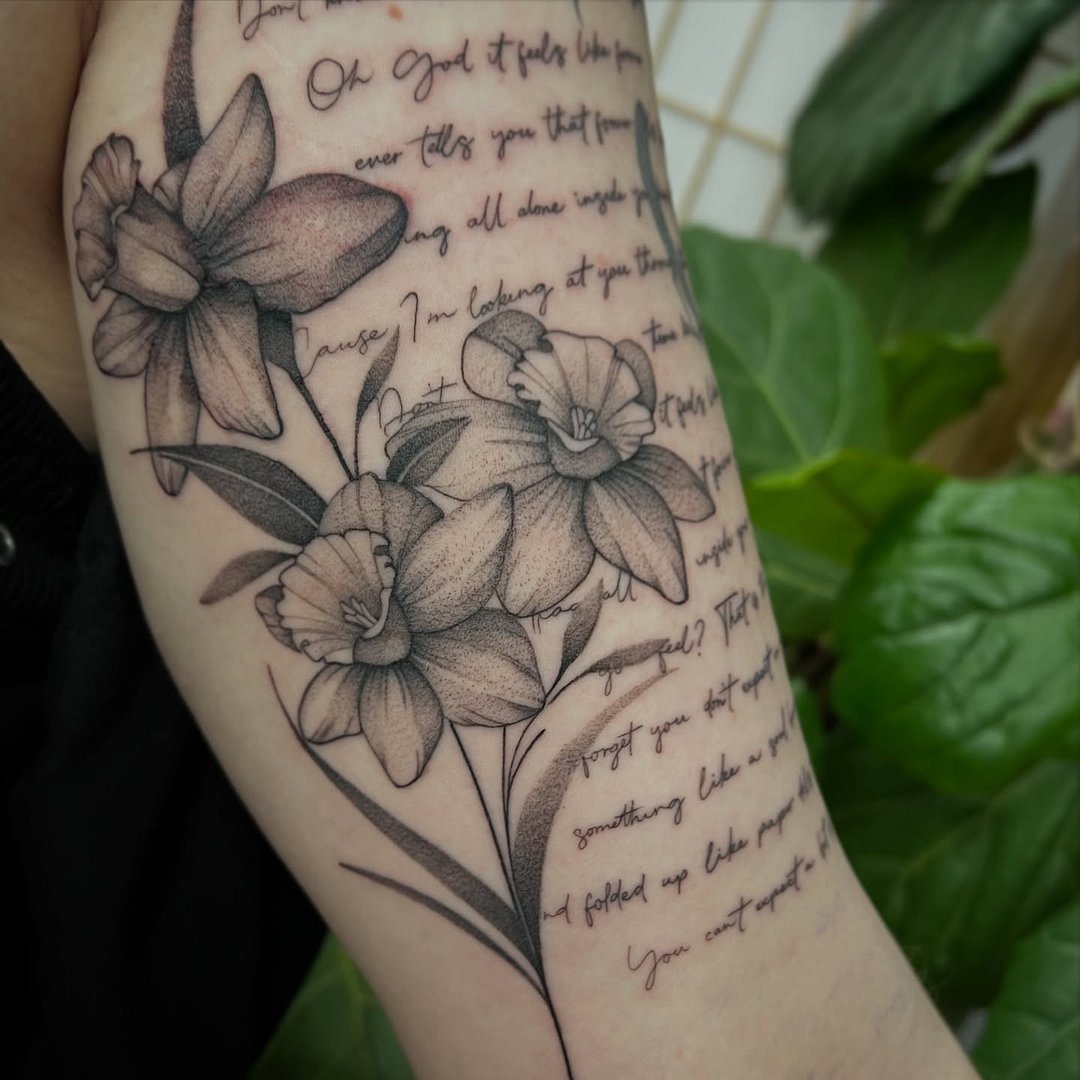
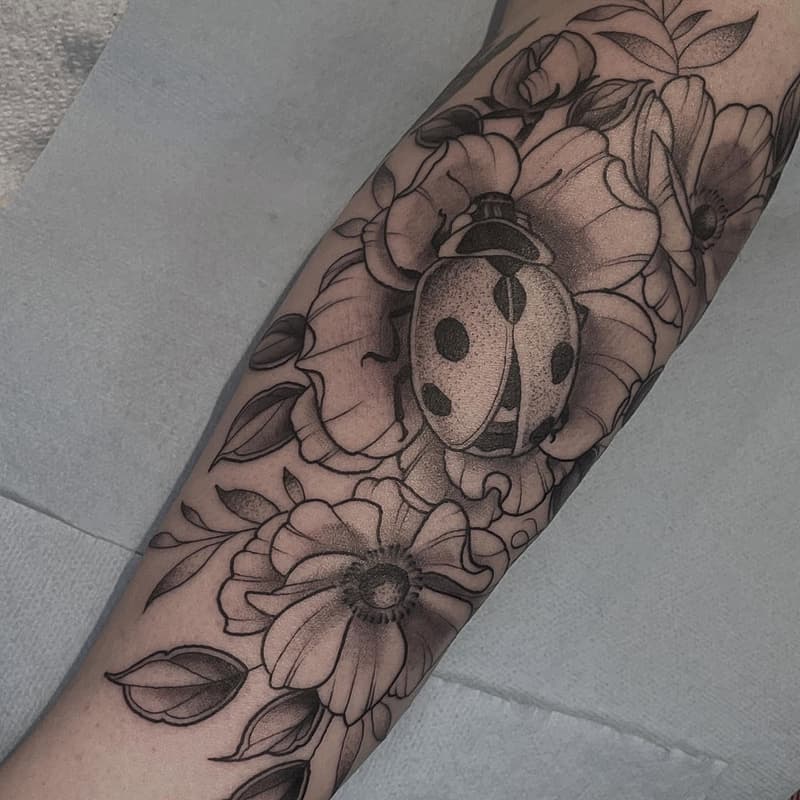
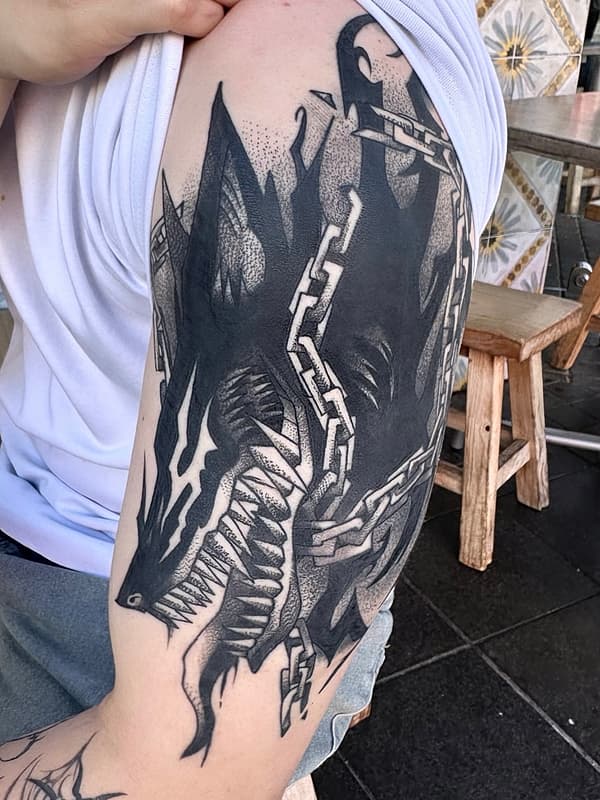
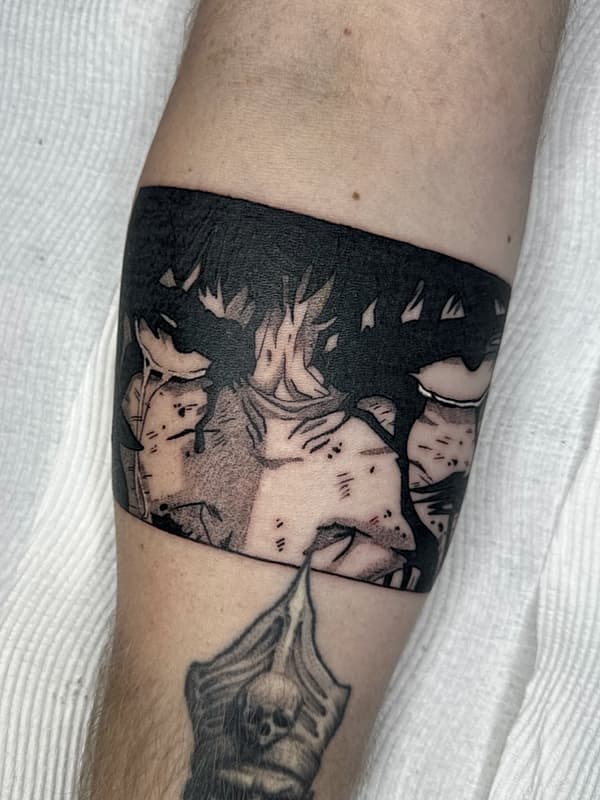
Blackwork tattooing encompasses a range of styles united by their use of solid black ink as the primary or sole medium. This can range from densely packed solid black coverage (sometimes called blackout) to intricate patterns using black ink at various densities to create texture and contrast. Blackwork includes tribal inspired patterns, geometric designs, ornamental flourishes, and illustrative pieces rendered entirely in black. The style has roots in various cultural tattooing traditions, from Polynesian and Maori work to Southeast Asian Sak Yant, but has evolved into a contemporary movement with its own aesthetic principles. Modern blackwork artists push the medium in creative directions, using negative space, skin breaks, and varying line weights to create depth and visual interest without colour. The appeal lies in the graphic boldness and the way well executed blackwork interacts with the natural tones of skin. Blackwork tends to age exceptionally well due to the heavy ink saturation, making it a practical choice as well as an aesthetic one.
What to look for: In blackwork, consistency is paramount. Look for even saturation in solid areas with no patchiness or gaps. Line work should be crisp and confident. Pay attention to how the artist uses negative space and skin breaks, as this is where creativity and skill really show. Check healed work photos to ensure the black stays solid over time.
190 artists specialising in Blackwork across Australia
Blackwork tattoo timing varies dramatically depending on the specific approach. Solid blackout coverage, where large areas are filled entirely with black ink, can be surprisingly quick per square centimetre but adds up for large coverage. A blackout sleeve might take 15 to 30 hours across multiple sessions. Intricate pattern based blackwork or detailed illustrative blackwork can take longer despite covering less area due to the precision required. Small to medium blackwork pieces might take two to six hours, while larger work involving complex patterns could require multiple long sessions. The style often involves heavy coverage, which can be tiring for both artist and client, so sessions might be split into manageable chunks.
Blackwork can be more intense than lighter styles because achieving proper saturation requires thorough coverage of each area. For solid blackout work, the artist needs to go over the same area multiple times to ensure even, dense ink deposit. This extended work on individual areas can be uncomfortable, particularly on sensitive body parts. However, the perception of pain in blackwork varies. Some people find the consistent, predictable sensation easier to handle than the varying intensity of detailed shading work. Larger blackwork sessions can be tiring due to cumulative discomfort. The key is working with an experienced artist who understands pacing and can advise on session length based on your tolerance and the areas being covered.
Blackwork pricing depends heavily on the specific approach. Solid blackout work might seem straightforward but requires significant ink and time for coverage, so larger pieces represent substantial investment. Intricate pattern based blackwork demands precision and time, priced accordingly. Hourly rates for quality blackwork artists in Australia range from $150 to $300. Small blackwork pieces might cost $200 to $500, while larger work like half sleeves could run $2,000 to $5,000. Full blackout sleeves, requiring multiple sessions and extensive coverage, might cost $4,000 to $10,000. The style doesn't inherently cost more than others, but the type of blackwork and coverage level significantly affects the final investment.
Blackwork tattoos generally age extremely well, often better than any other style. The heavy ink saturation means there's substantial pigment in the skin to remain visible even as natural fading occurs over decades. Solid black work tends to soften slightly with age, developing a slightly blue or grey tone, but remains bold and readable. Fine line blackwork or intricate patterns may see some softening of details over time, though bold designs maintain their integrity well. The key factors are quality of application (proper depth and saturation) and ongoing sun protection. Many people choose blackwork specifically for its longevity. A well executed blackwork piece from a skilled artist can look striking for a lifetime.