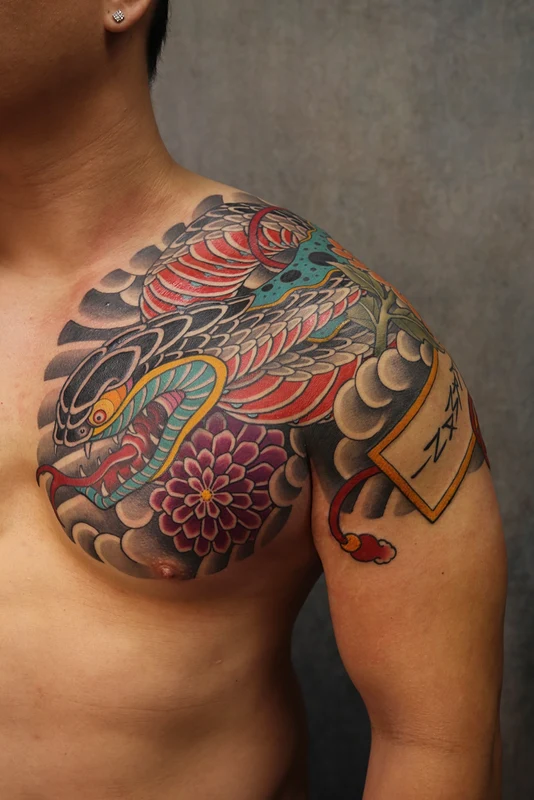
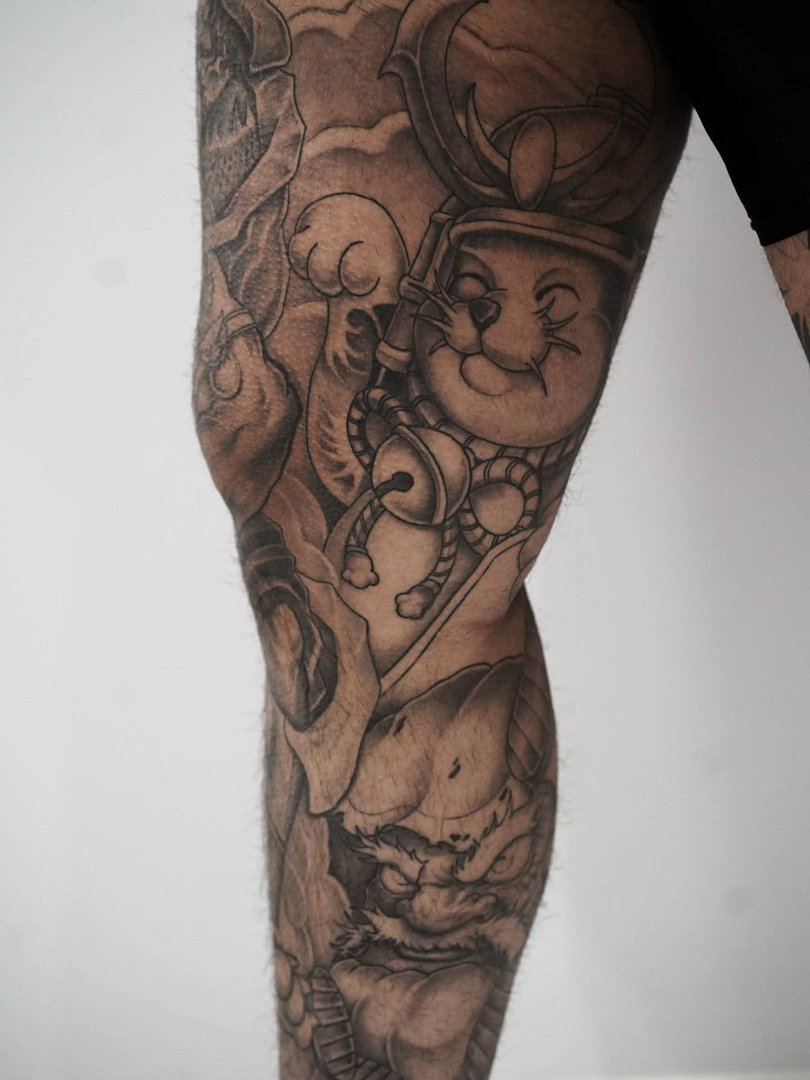
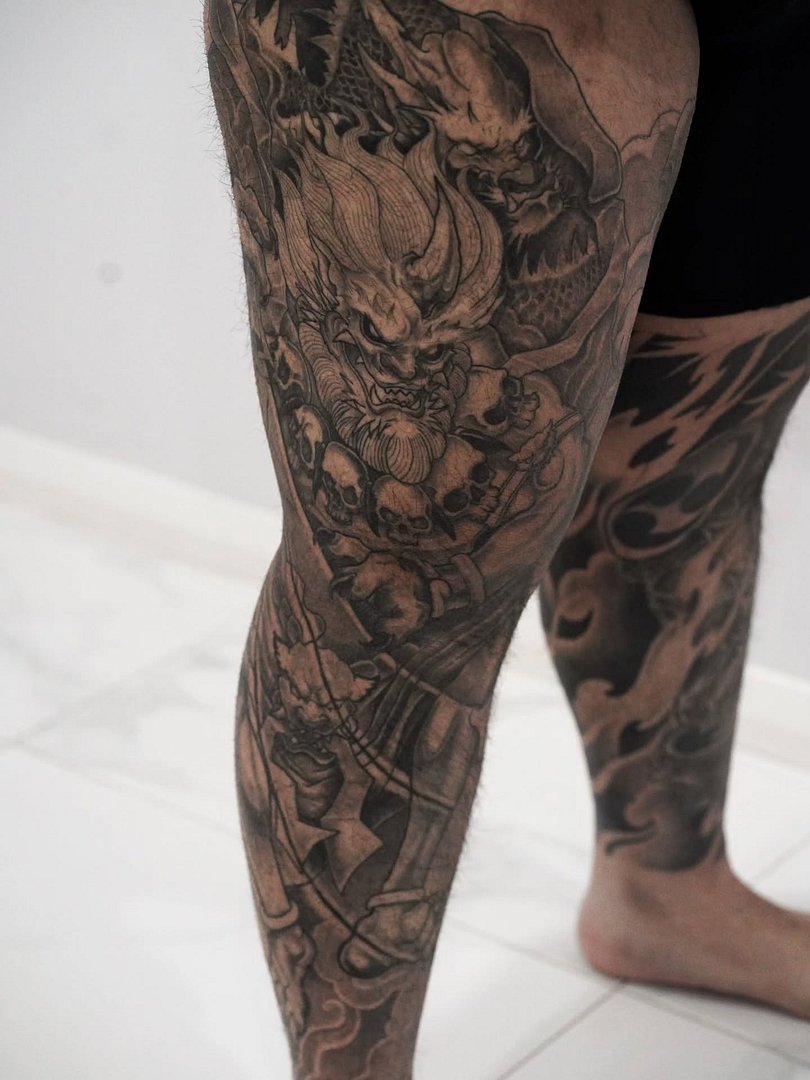
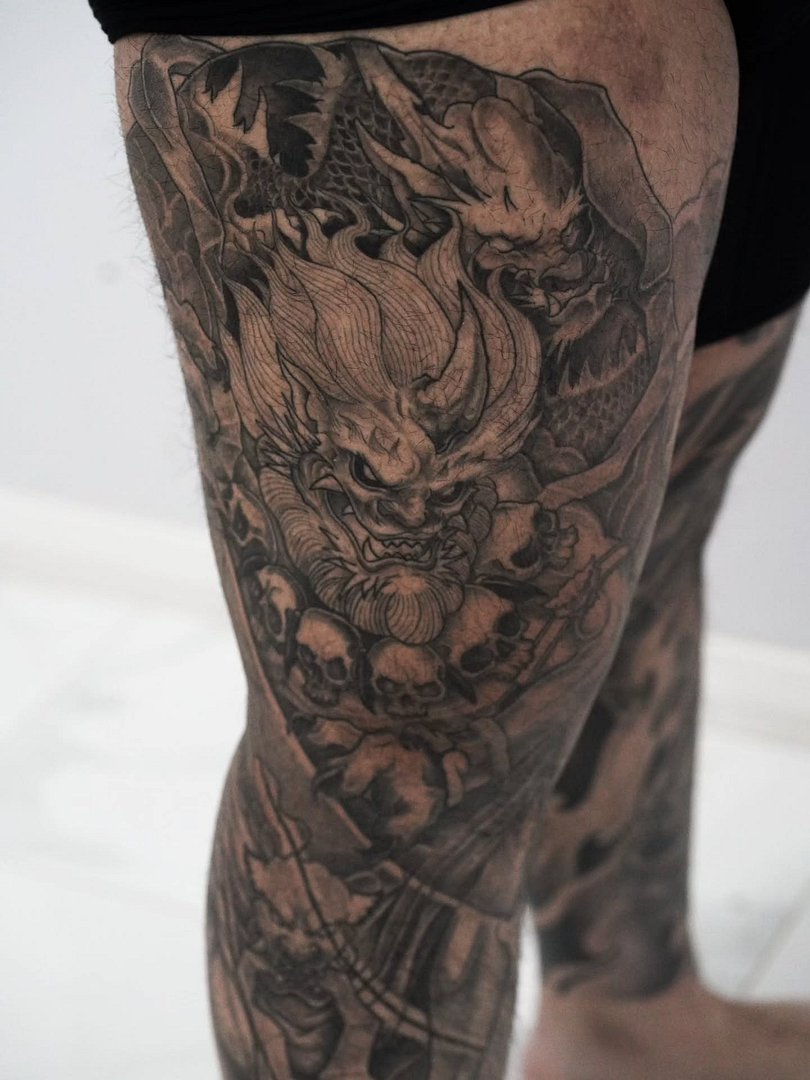
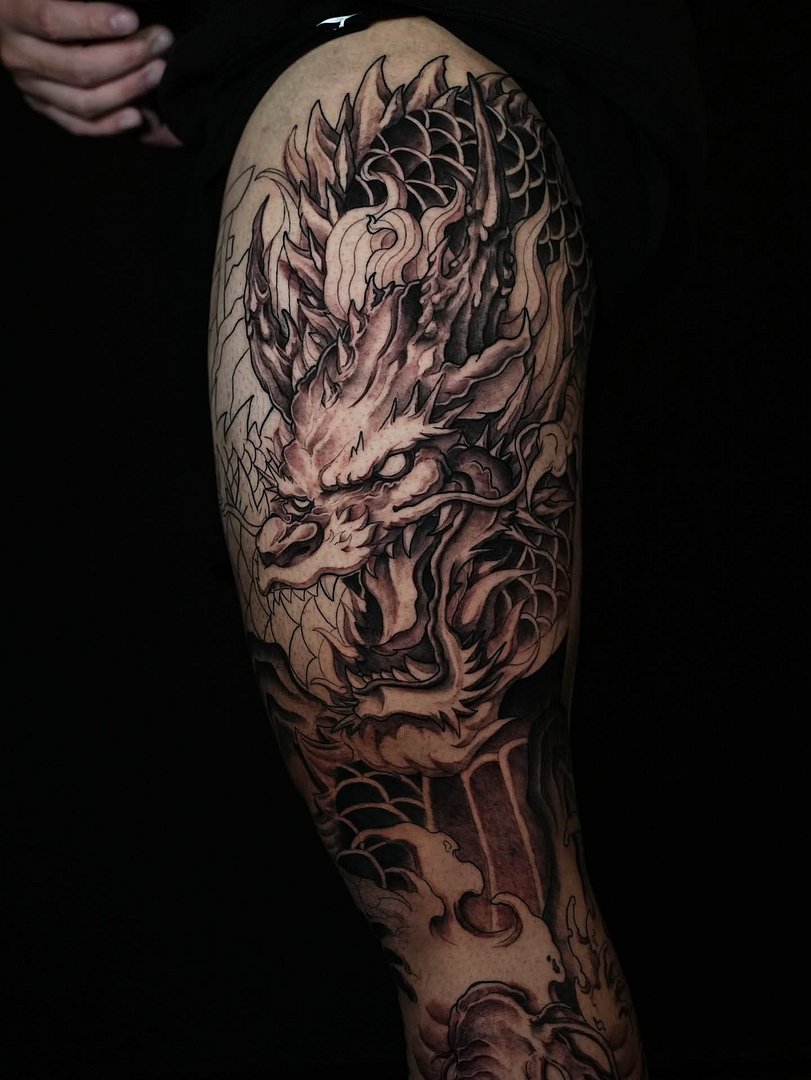
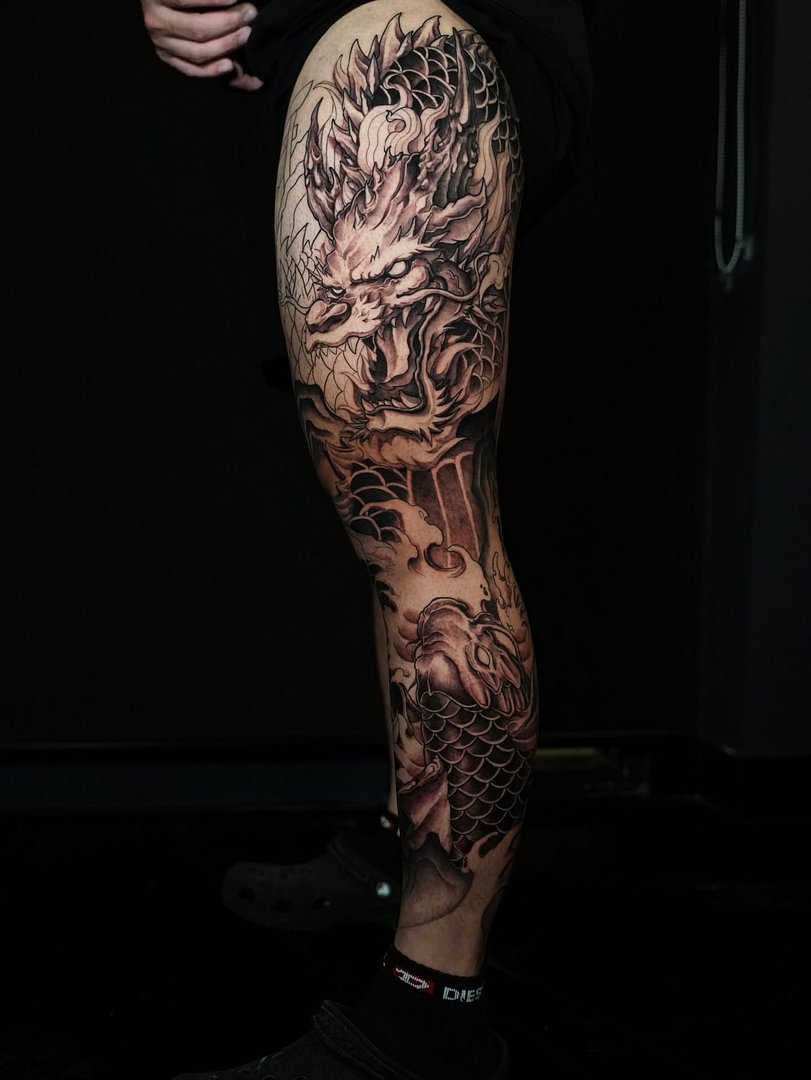
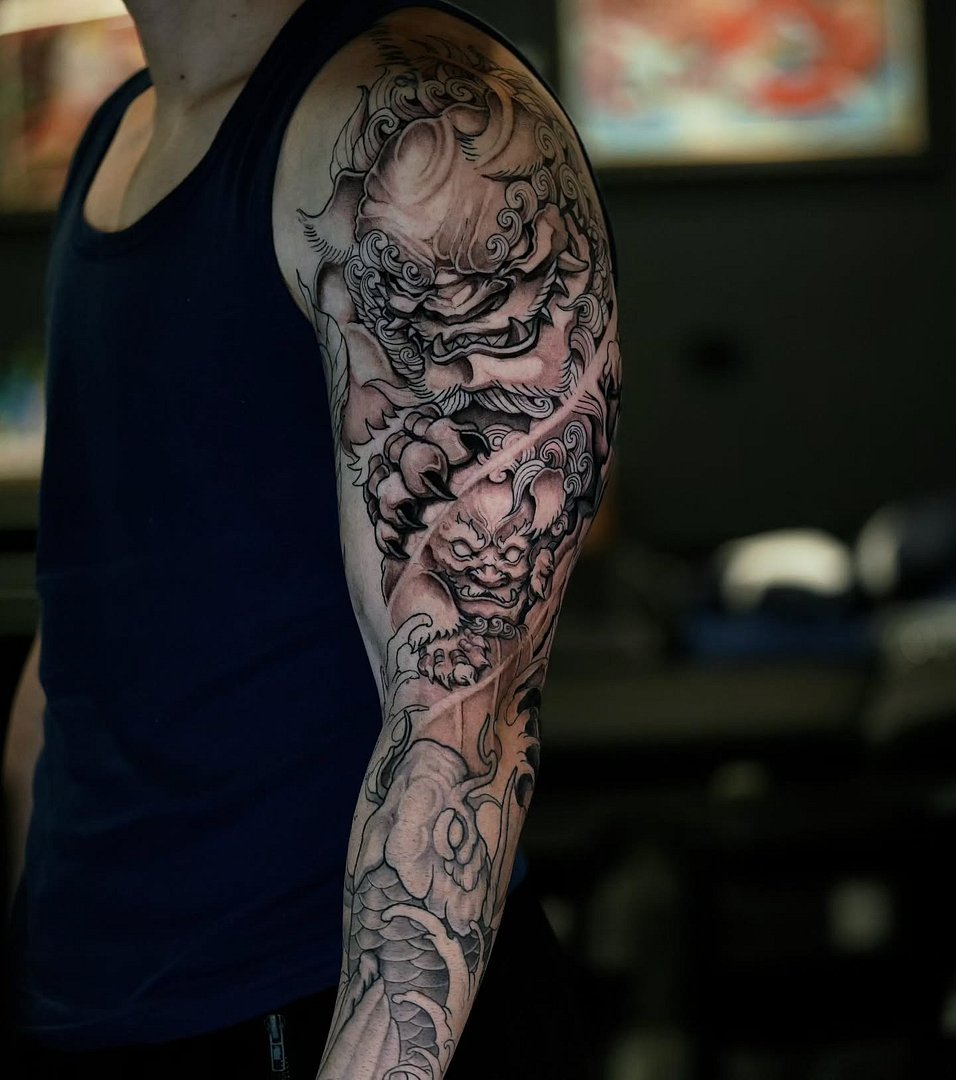
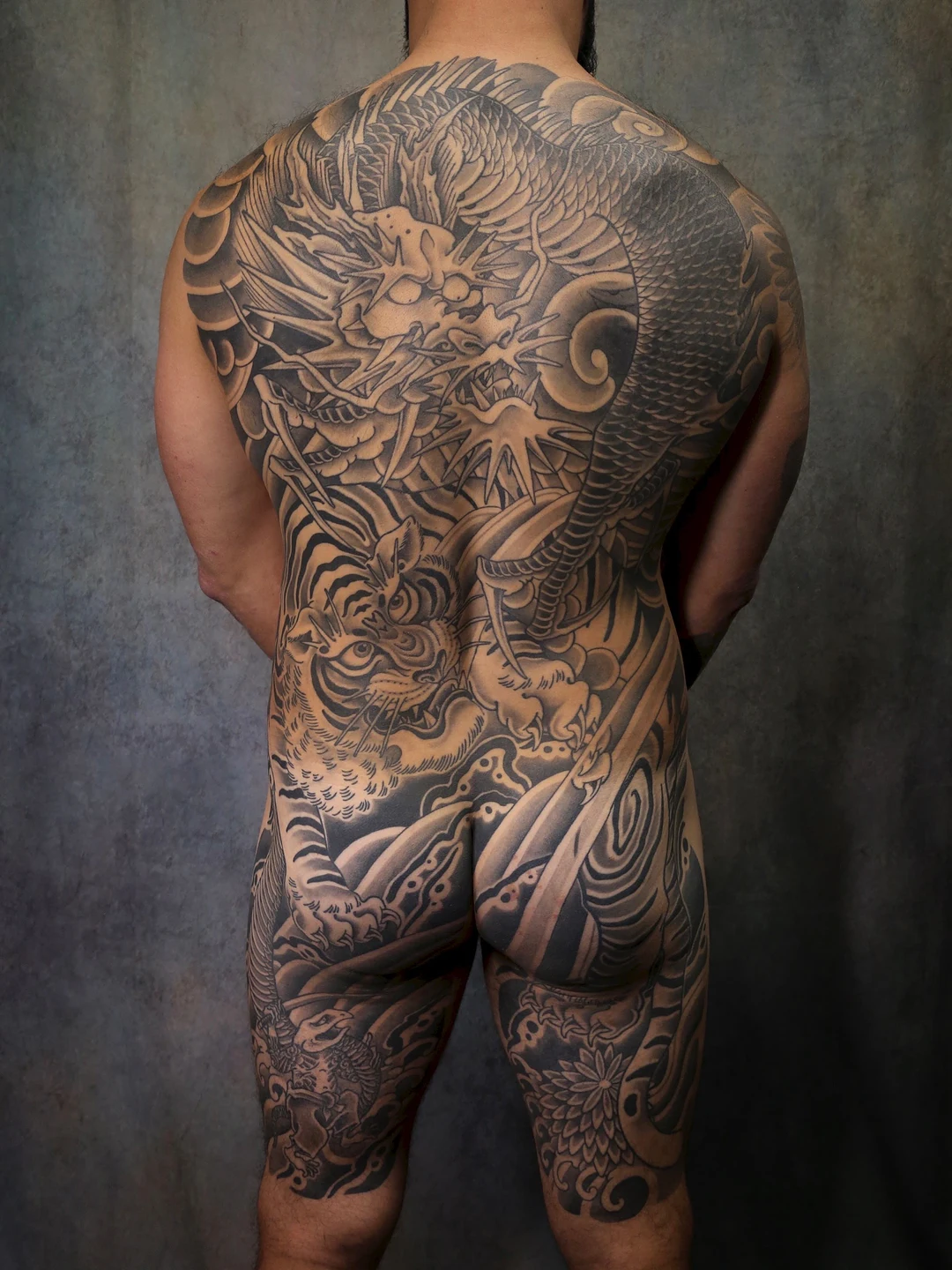
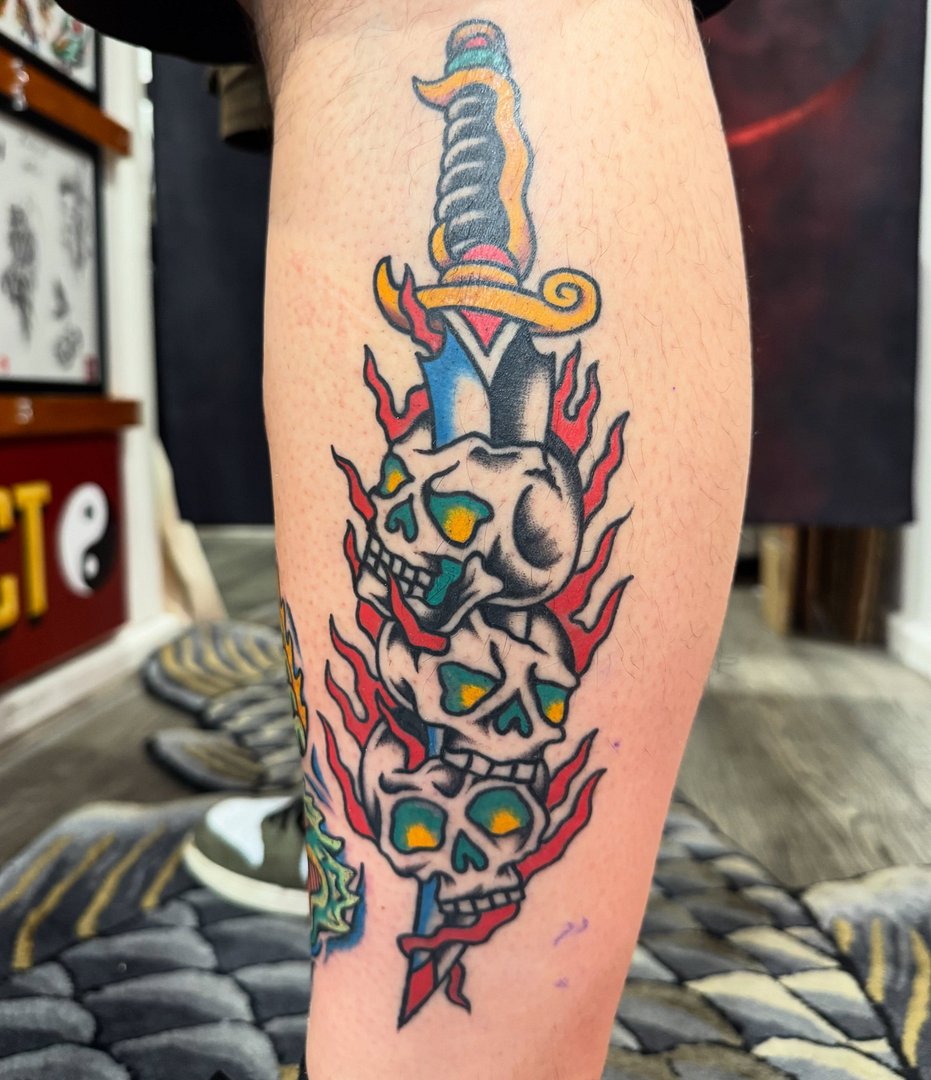
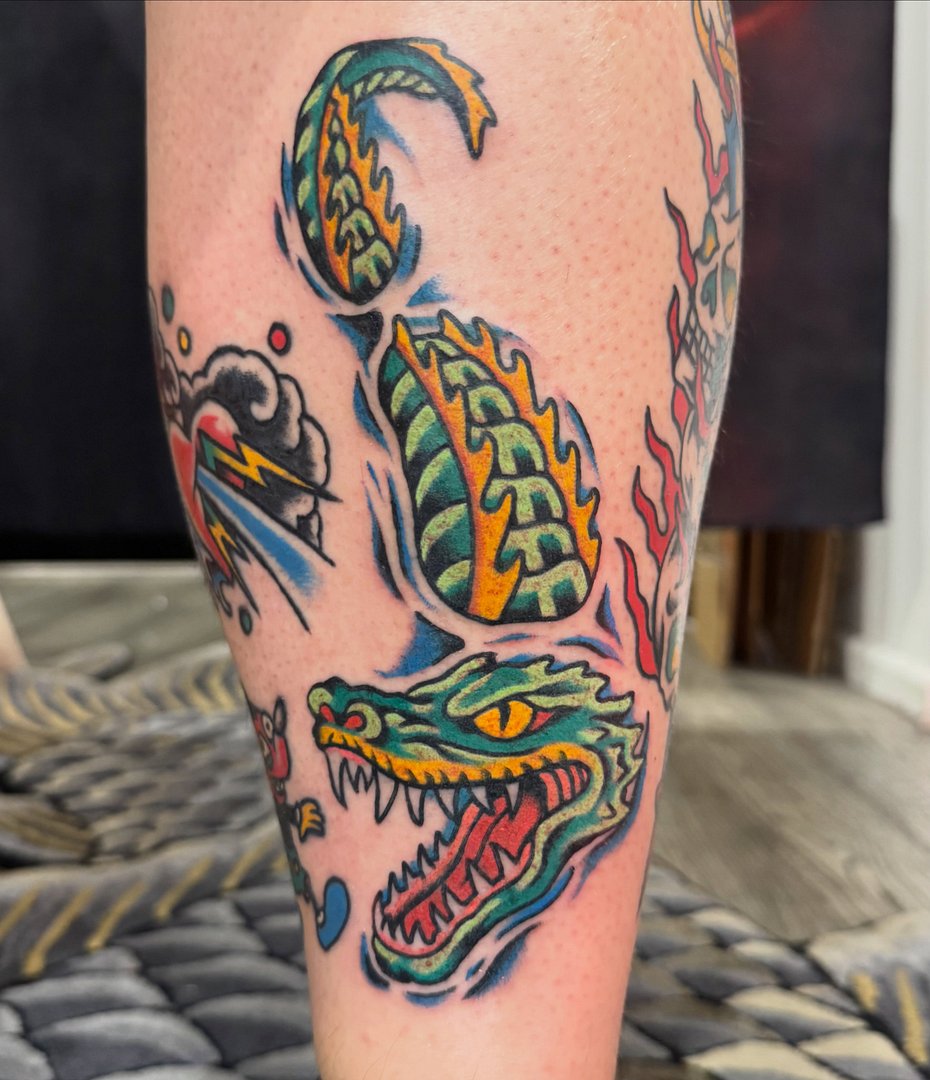
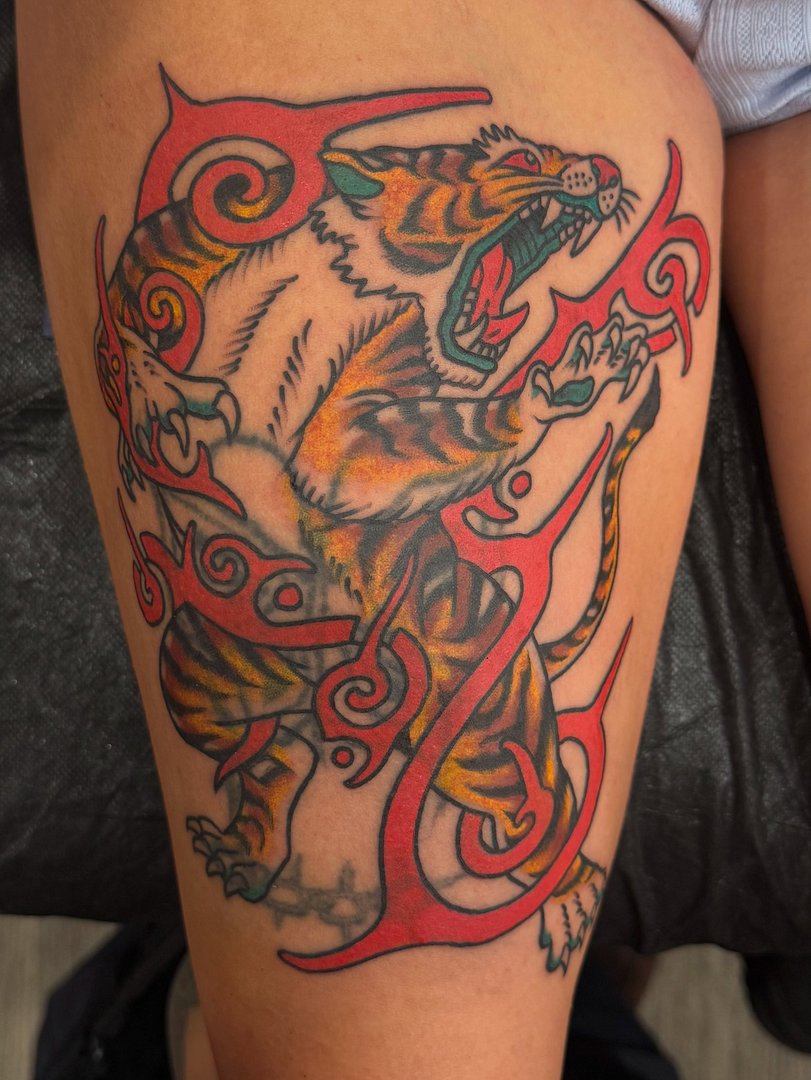
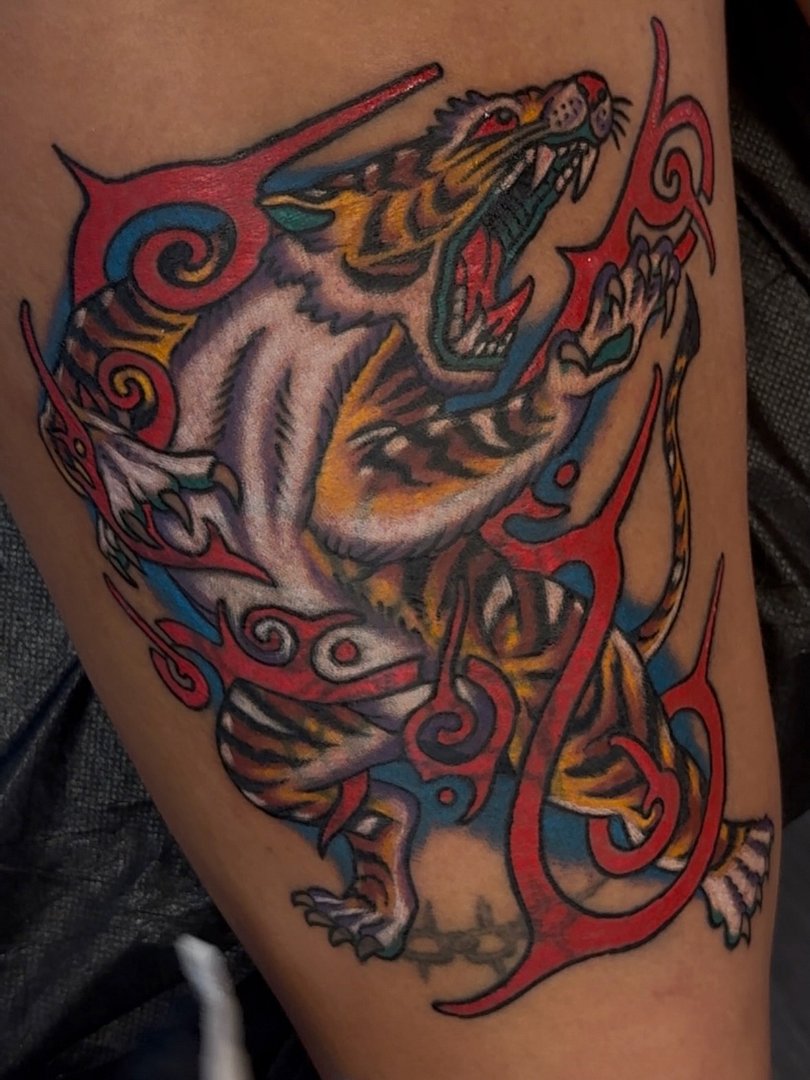
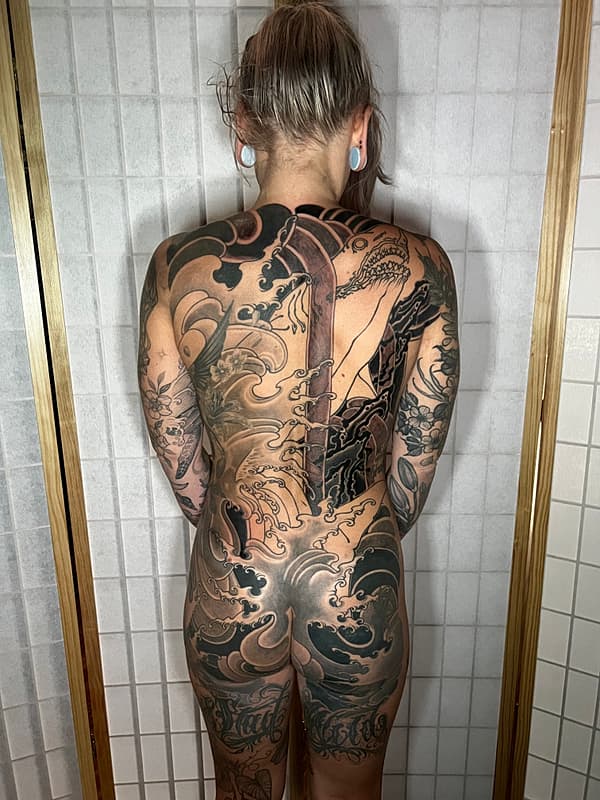
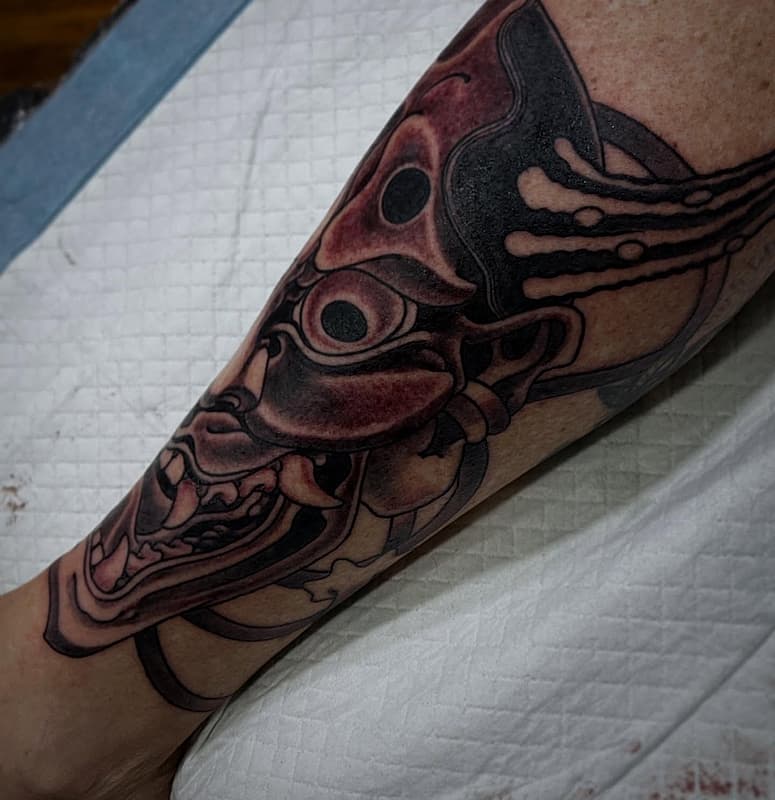
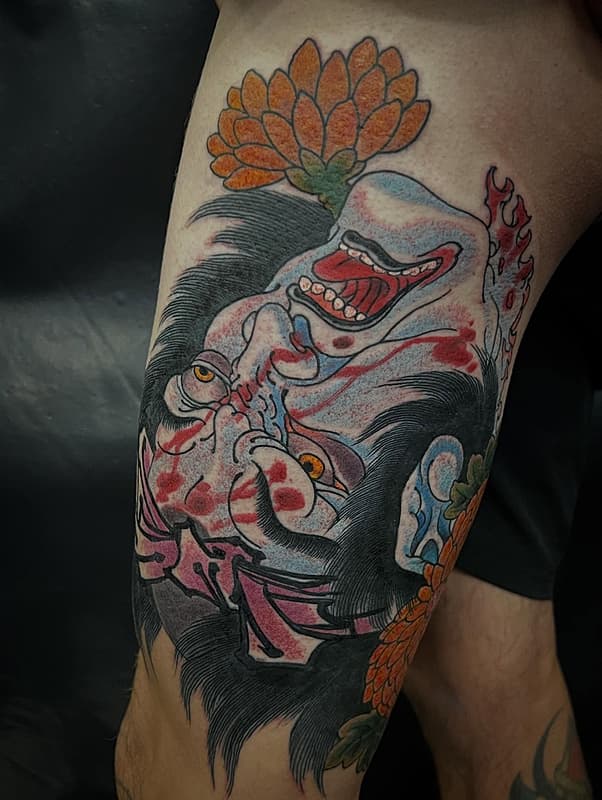
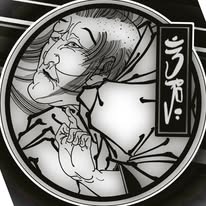
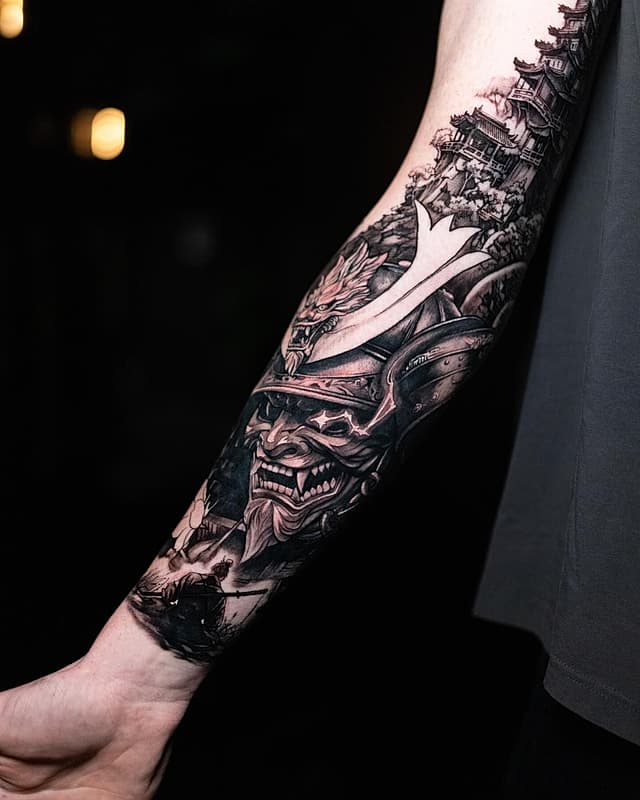
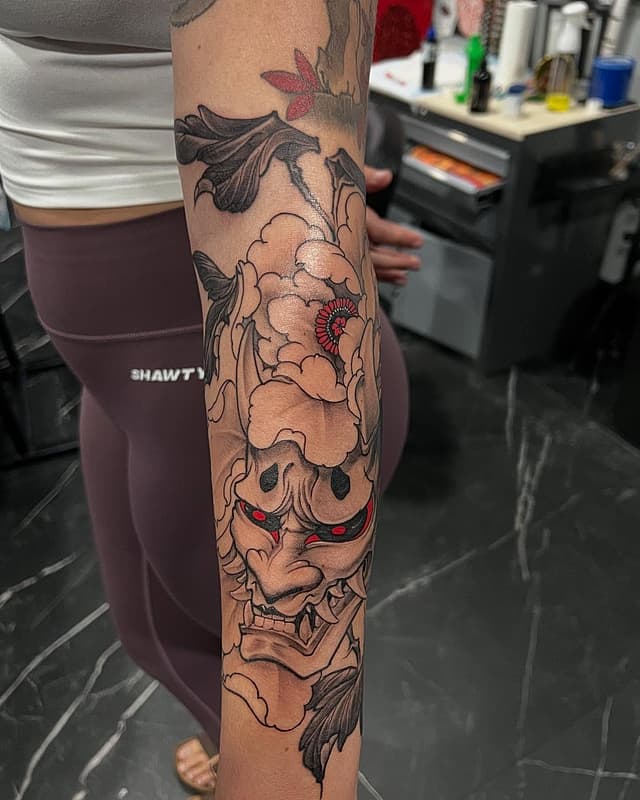
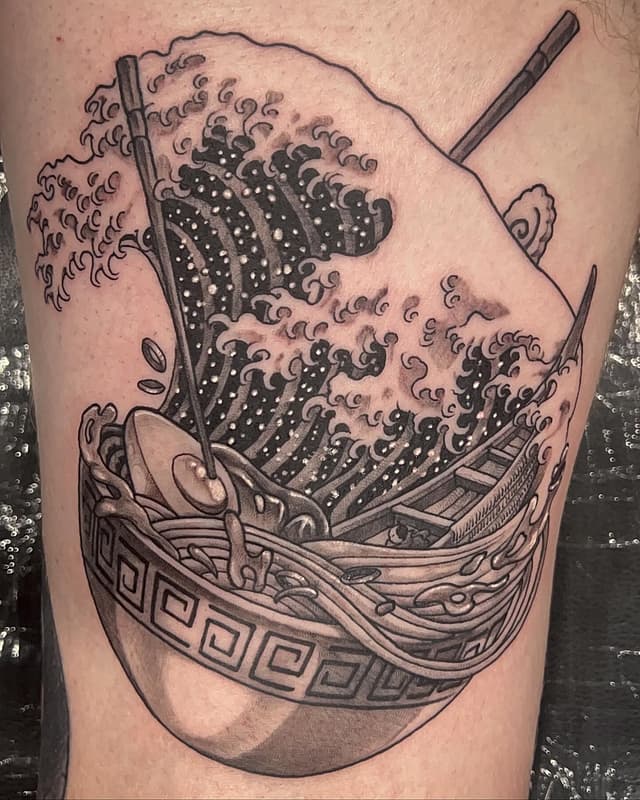

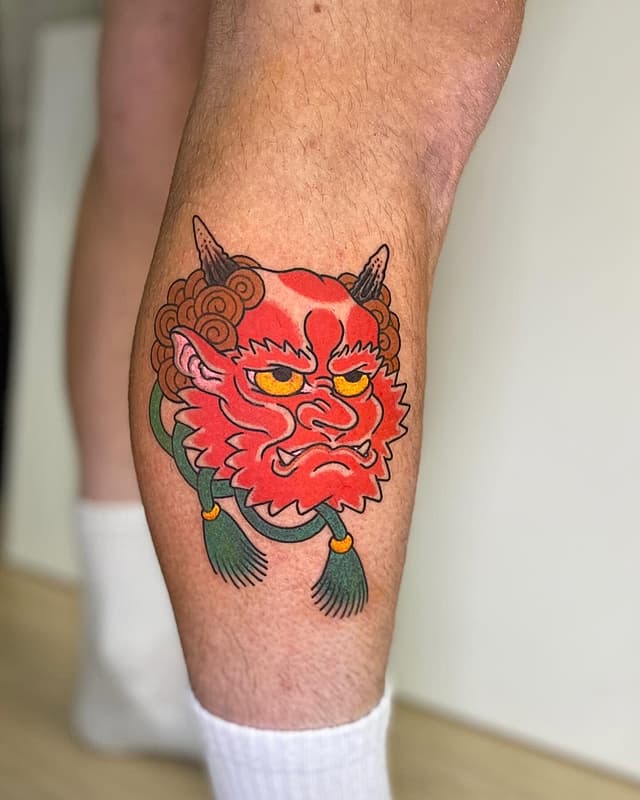
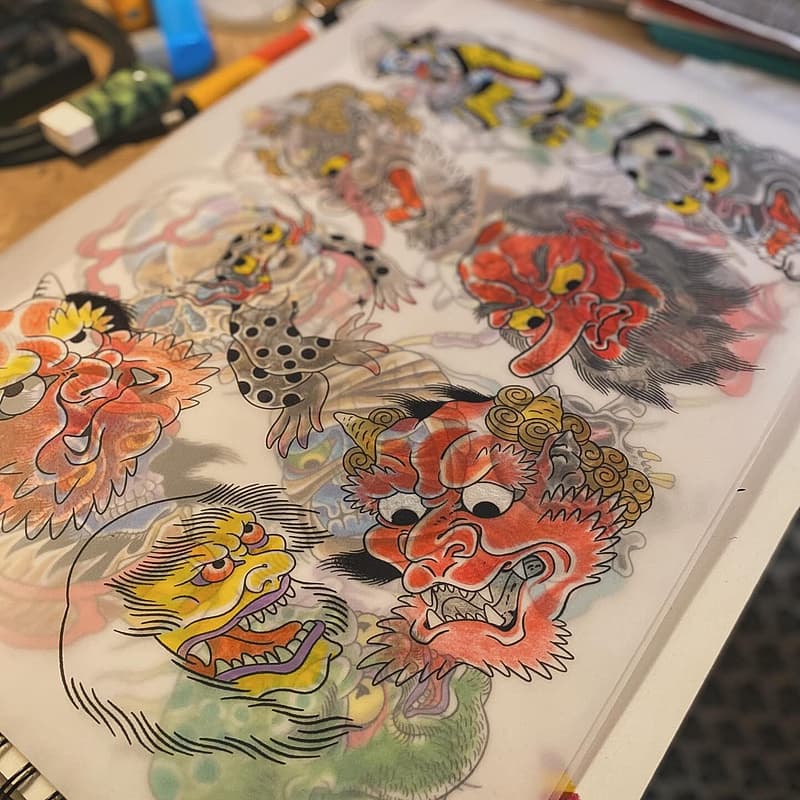
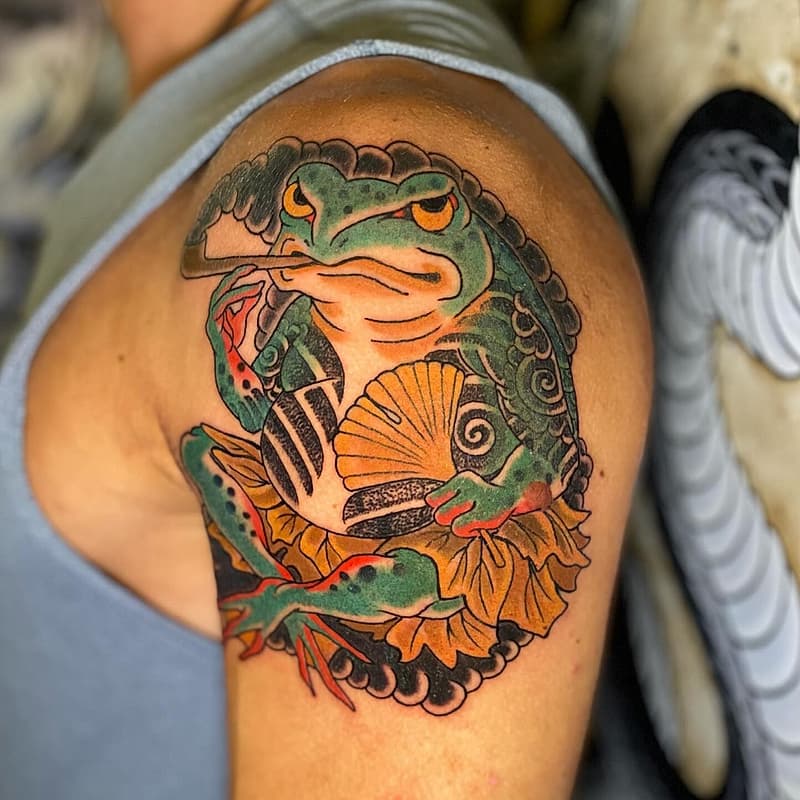

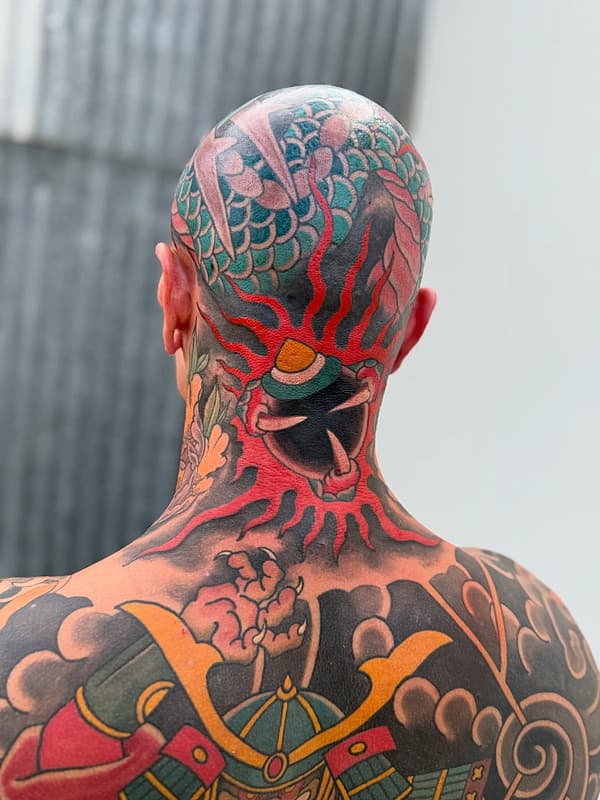
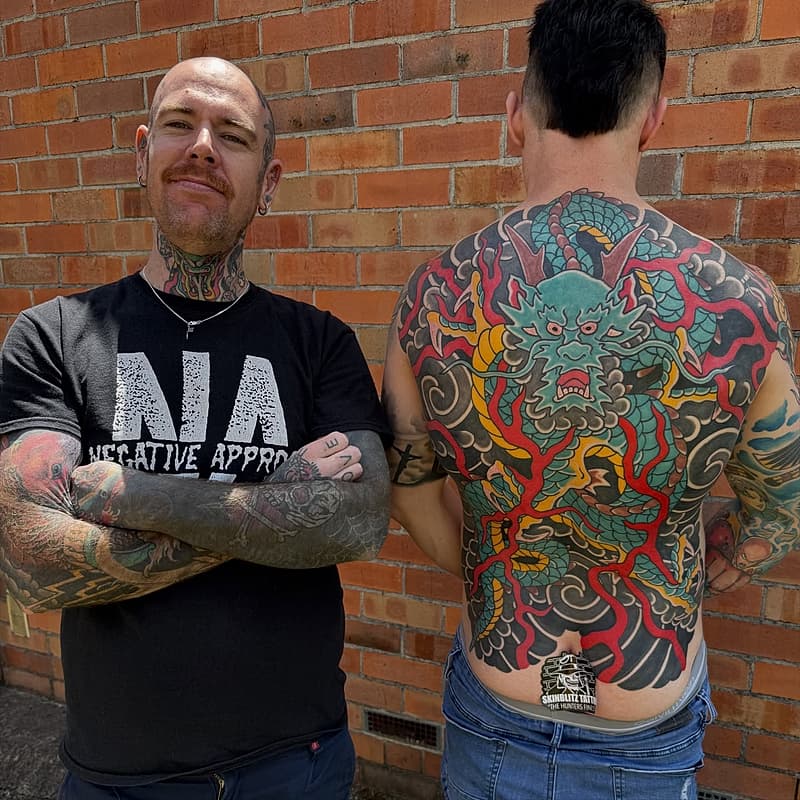
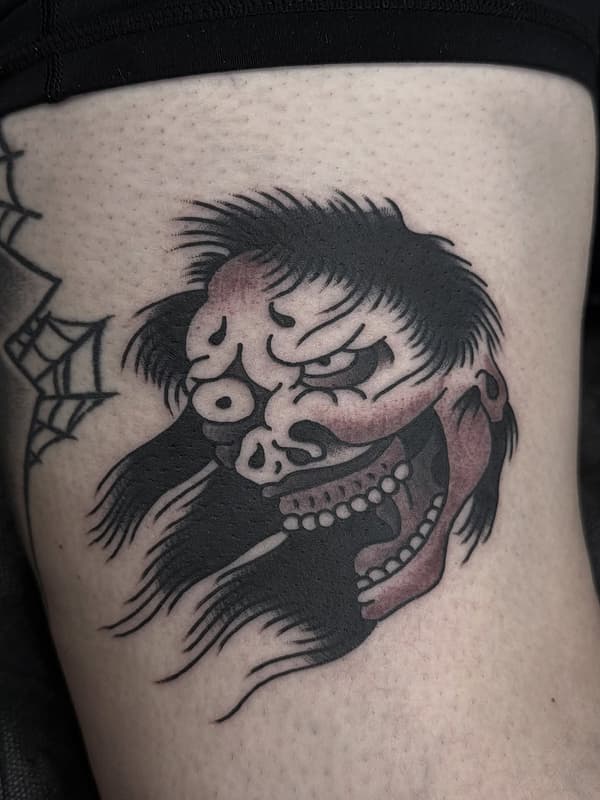
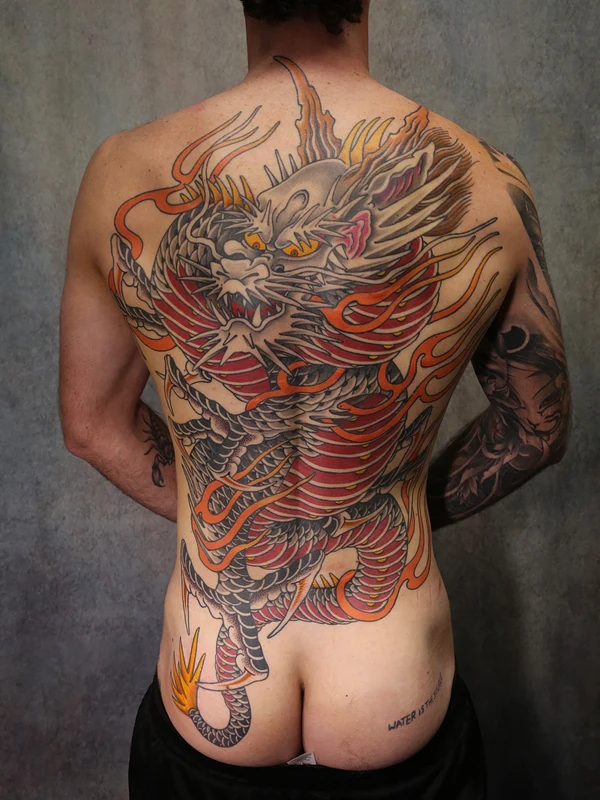
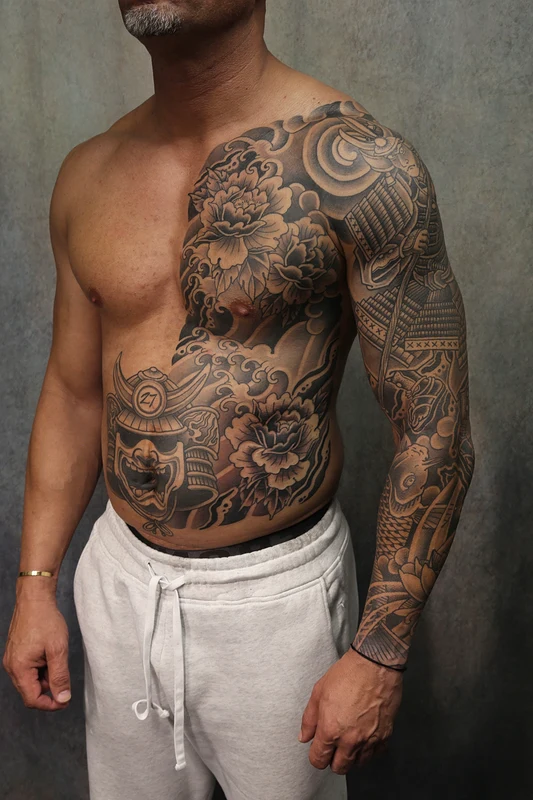
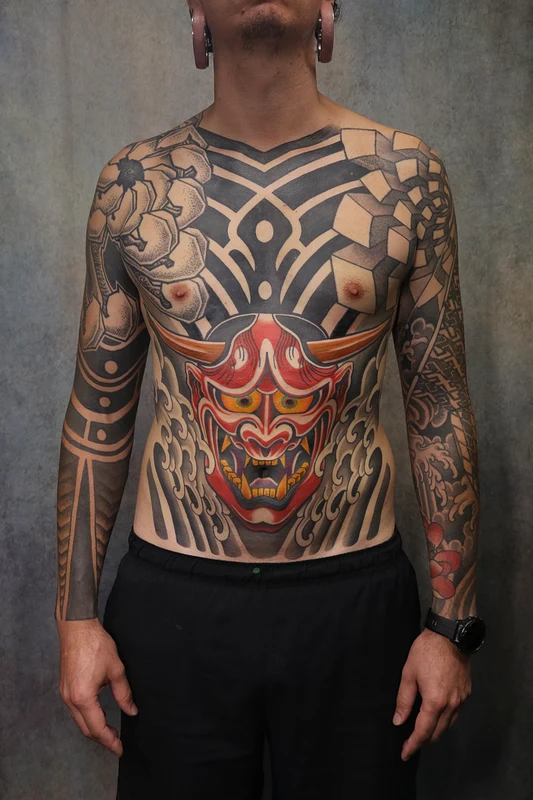
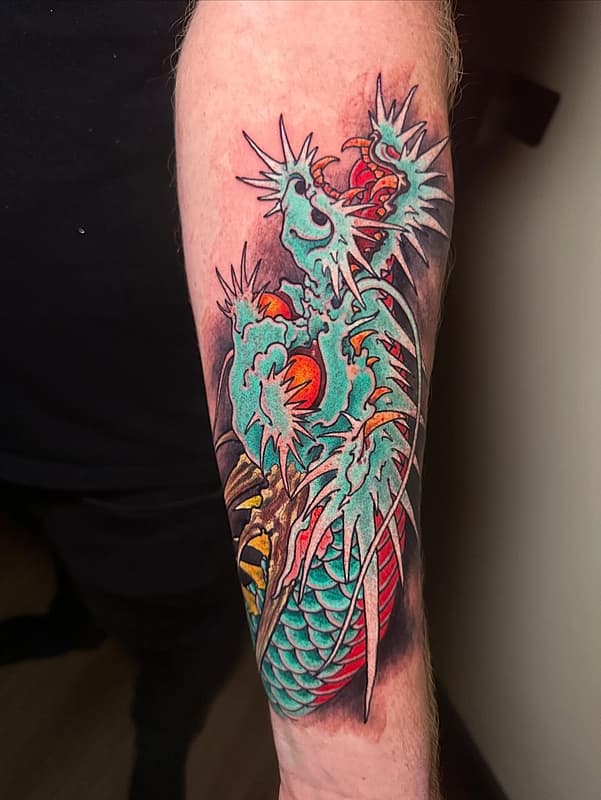
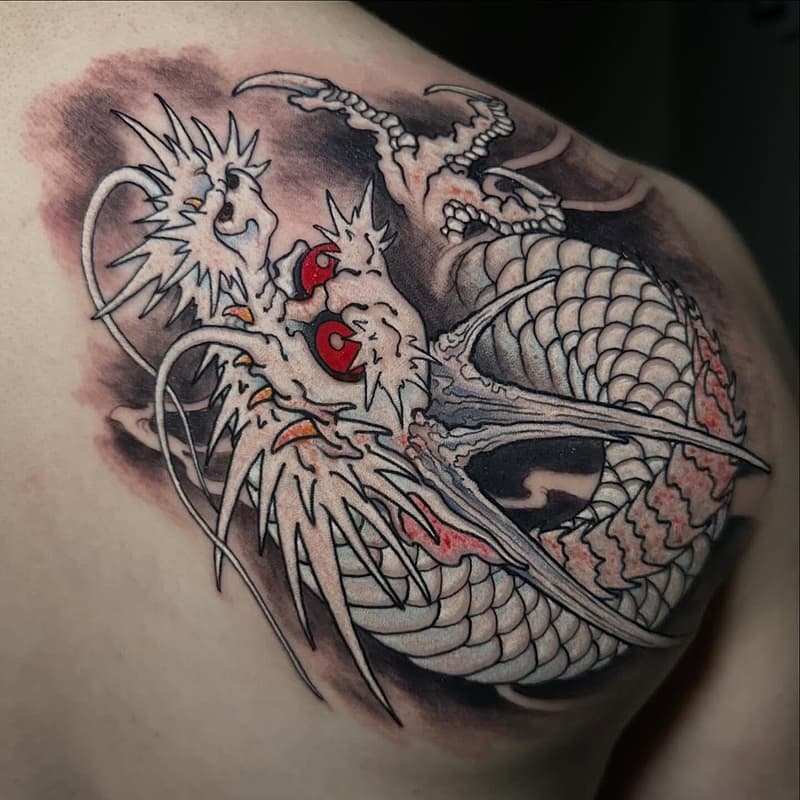
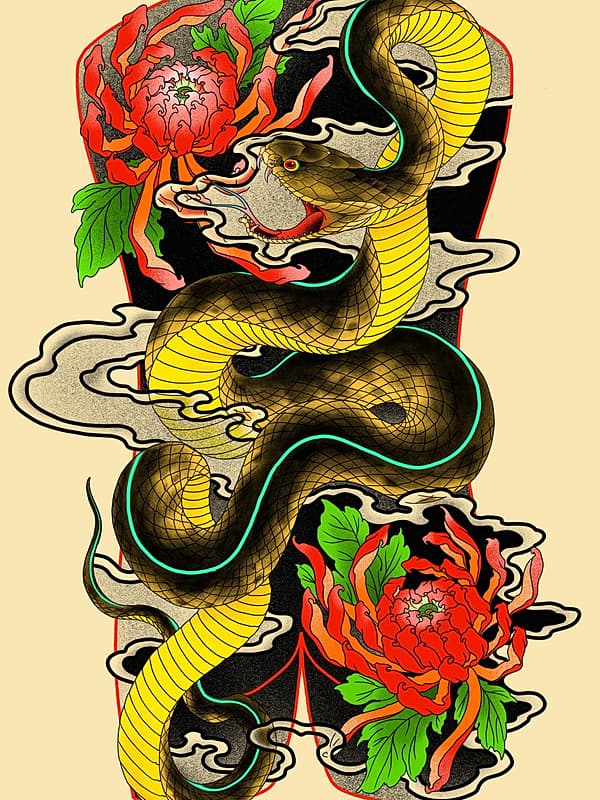
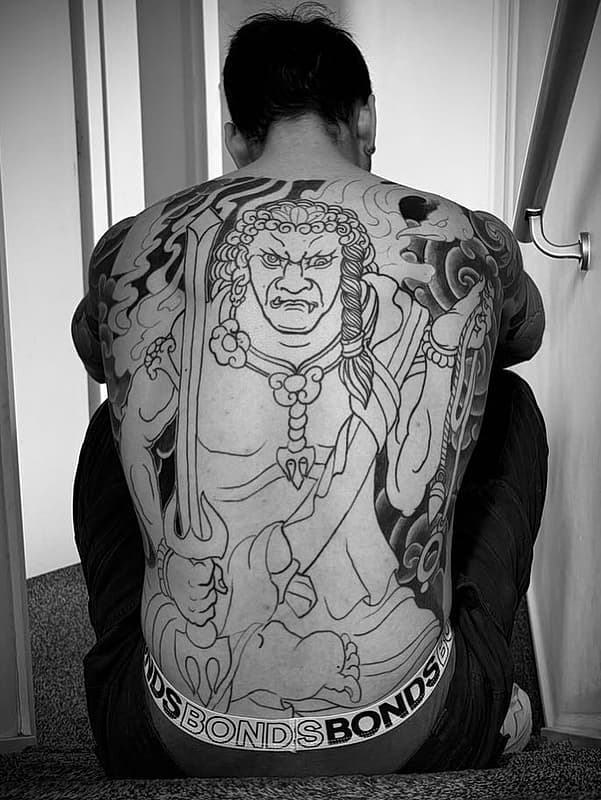
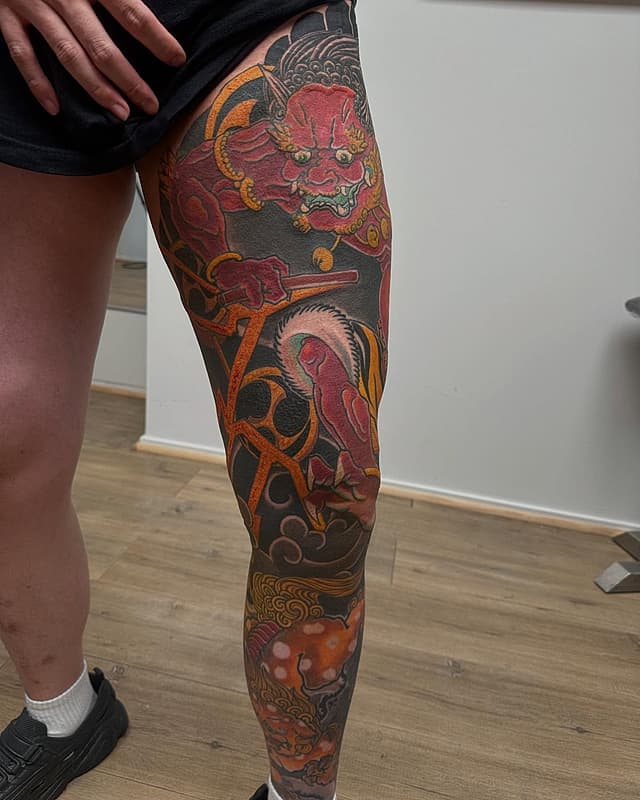
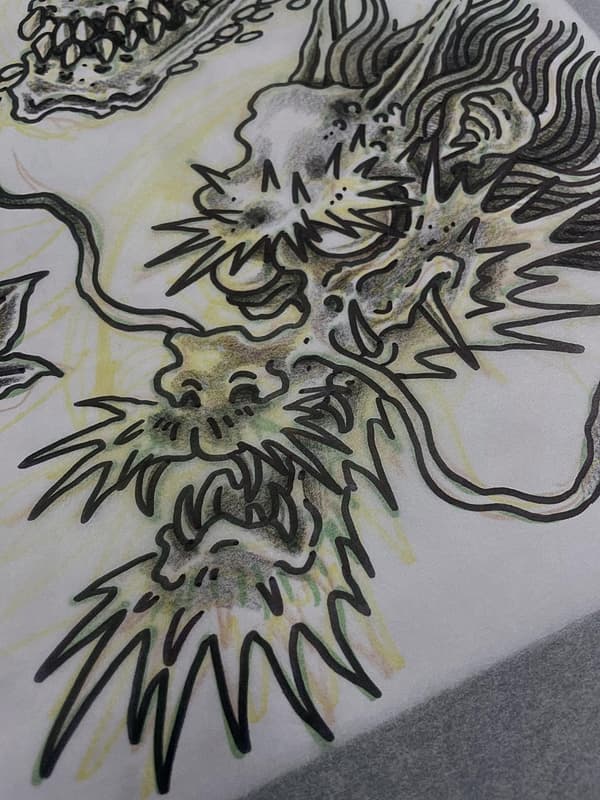


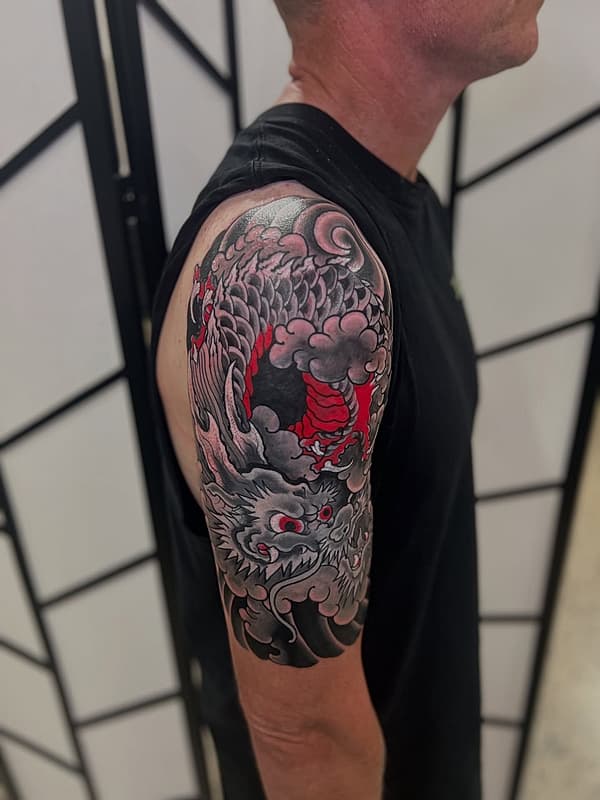

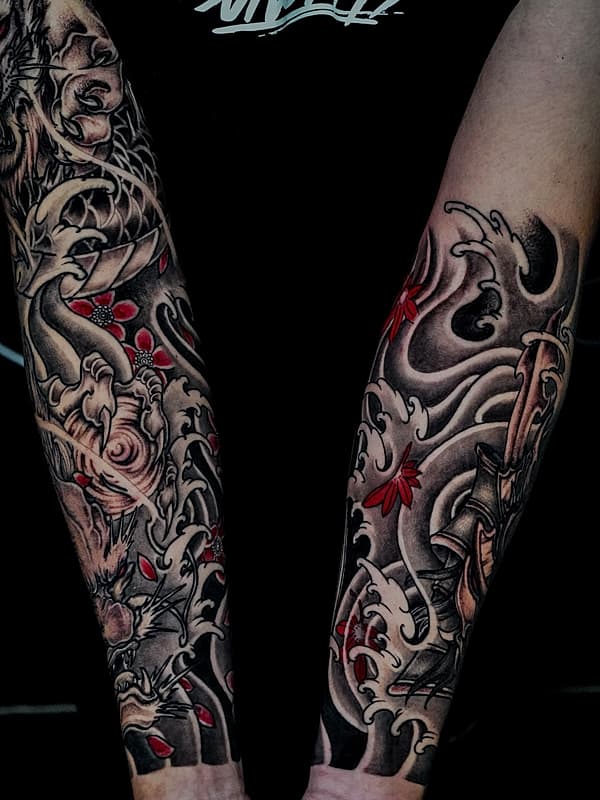
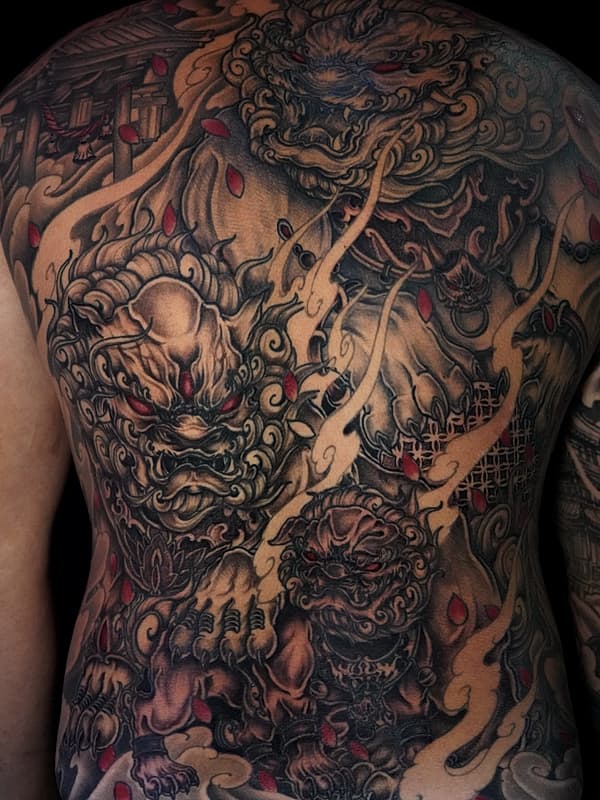
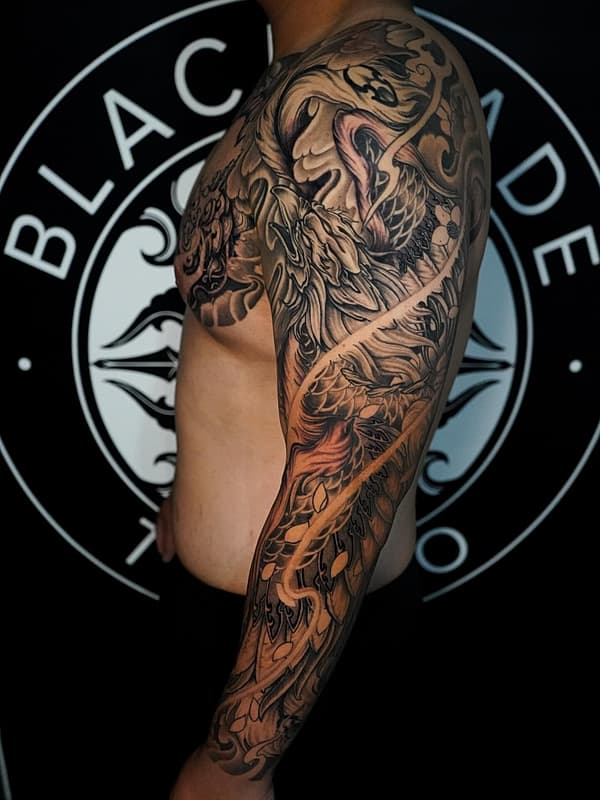
Traditional Japanese tattoo art featuring dragons, koi fish, cherry blossoms, and mythological imagery with rich cultural symbolism.
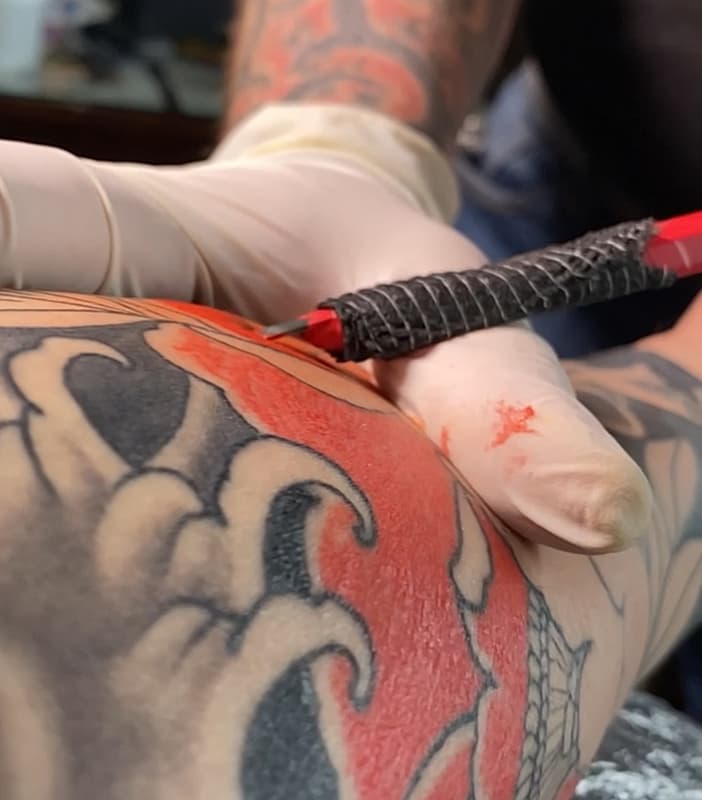
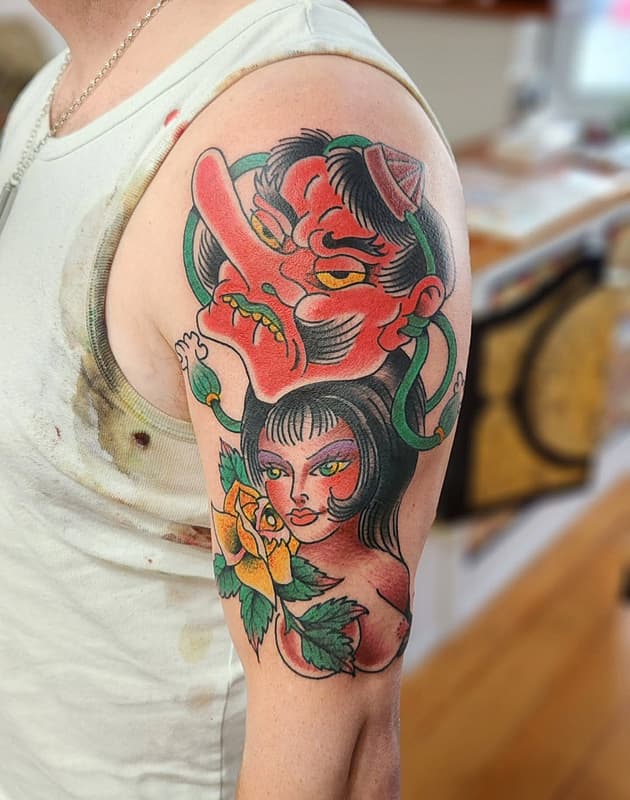
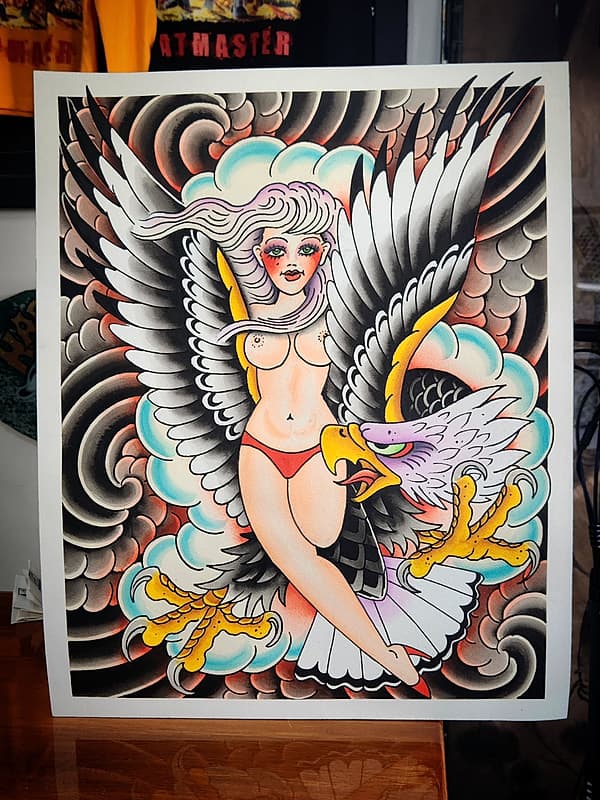
Japanese tattooing, known as Irezumi, represents one of the oldest and most sophisticated tattoo traditions in the world. The style is characterised by large scale compositions that flow with the body's natural contours, incorporating iconic imagery such as dragons, koi fish, phoenixes, cherry blossoms, waves, and characters from Japanese folklore and mythology. Traditional Japanese tattooing follows strict compositional rules, with background elements like wind bars, clouds, and water filling spaces between primary subjects to create cohesive full body suits. The colour palette is rich but considered, often featuring deep blacks, vibrant reds, and subtle gradients. Modern Japanese style tattooing can range from traditional Tebori (hand poked) work to machine executed interpretations that maintain the aesthetic principles while adapting techniques for contemporary practice. The style demands significant commitment, as Japanese tattoos are designed to be large scale, often covering entire limbs, backs, or full body suits built over years. This is tattooing as a long term artistic collaboration between artist and collector.
What to look for: Japanese tattooing requires specialised knowledge beyond general tattoo skills. Look for artists with dedicated Japanese portfolios showing understanding of compositional rules, correct use of traditional imagery, and proper background integration. The best Japanese artists understand the cultural significance of the imagery and can explain the symbolism behind design choices.
72 artists specialising in Japanese (Irezumi) across Australia
Japanese tattoos are among the most time intensive styles due to their large scale and comprehensive coverage. Even a medium sized piece like a half sleeve might require 20 to 40 hours across multiple sessions. Full sleeves typically range from 30 to 60 hours, while larger work such as back pieces or body suits can take 100 to 300 hours completed over several years. Traditional Japanese tattooing is approached as a long term project rather than individual pieces. Many collectors work with the same artist for years, gradually building a cohesive body suit. Sessions might be scheduled monthly or quarterly, with the tattoo evolving over an extended timeline. This commitment is part of the tradition.
Japanese tattoos aren't inherently more painful than other styles, but the extended sessions and comprehensive coverage mean more cumulative time under the needle. Large scale work like back pieces or body suits covers sensitive areas including ribs, stomach, and inner arms, which are notoriously uncomfortable. The shading techniques used in Japanese tattooing, including the whip shading for backgrounds, can be intense. However, experienced Japanese tattoo artists understand pacing and will work with you on session length and breaks. Traditional Tebori (hand poked) work has a different sensation than machine tattooing, often described as less sharp but more penetrating. Pain is individual, and breaking large projects into manageable sessions makes even extensive work achievable.
Japanese tattooing represents a significant investment due to the scale, time, and specialist skill required. Hourly rates from quality Japanese specialists in Australia range from $200 to $400. Because Japanese work is large scale, you're typically looking at multi session projects. A half sleeve might cost $4,000 to $8,000, full sleeves $8,000 to $15,000, and back pieces $10,000 to $25,000 or more. Full body suits, built over years, can represent investments of $50,000 or more. Some traditional Japanese artists work on day rates or project pricing rather than hourly rates. The cost reflects years of specialist training, deep cultural knowledge, and the artistic skill required to execute this demanding style correctly.
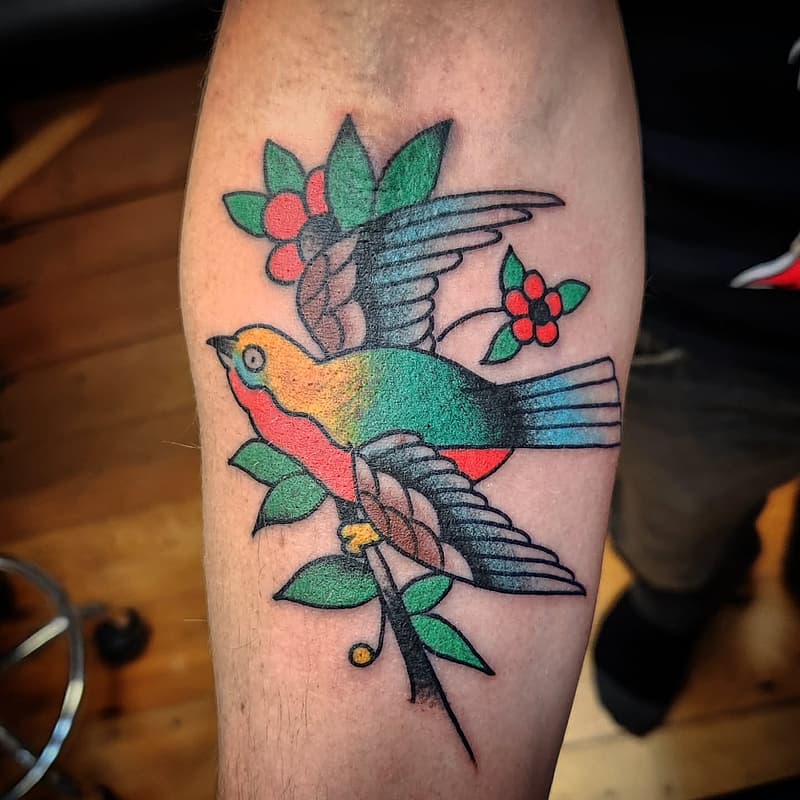
Japanese tattoos are specifically designed for longevity, which is one reason the style has endured for centuries. The bold outlines contain the design elements, the solid colour saturation maintains vibrancy, and the large scale means details remain readable even as the skin ages. Background elements like wind bars and clouds provide visual separation that prevents different elements from blending together over time. Traditional Japanese colour choices are also selected for how they age. Well executed Japanese work from skilled artists can look stunning after decades. The style actually develops a certain character with age, the colours mellowing into a rich patina that many collectors appreciate. Sun protection remains important for preserving colour work.