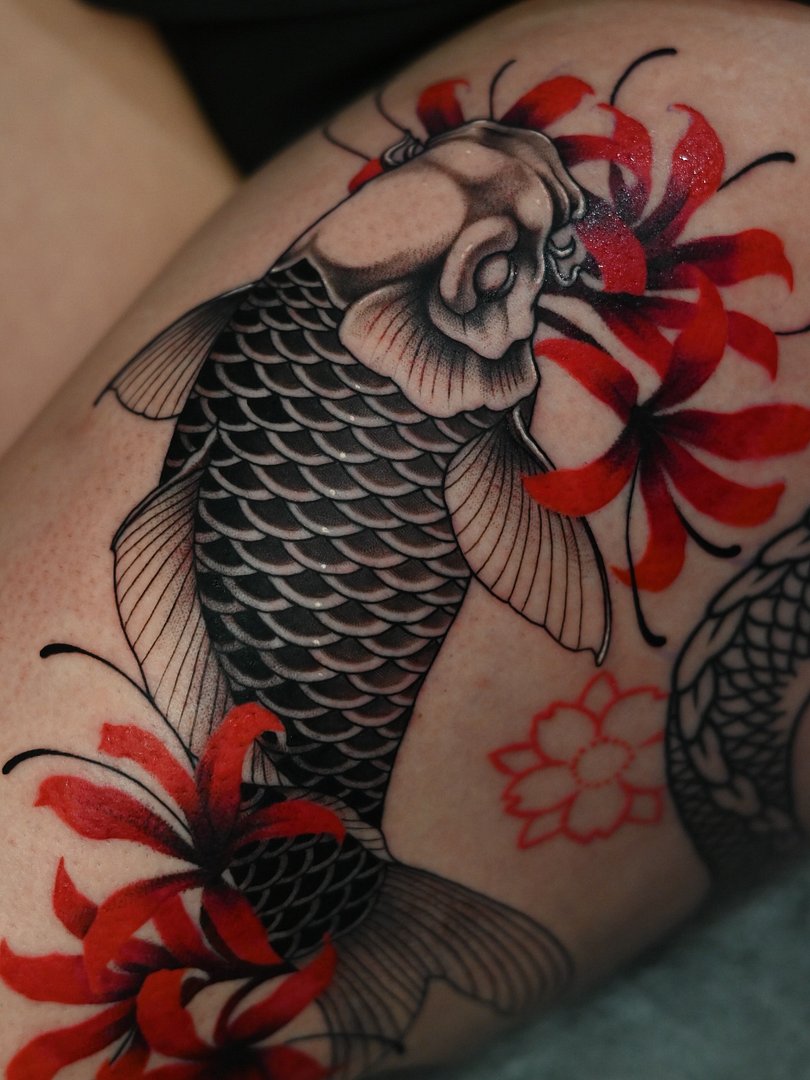
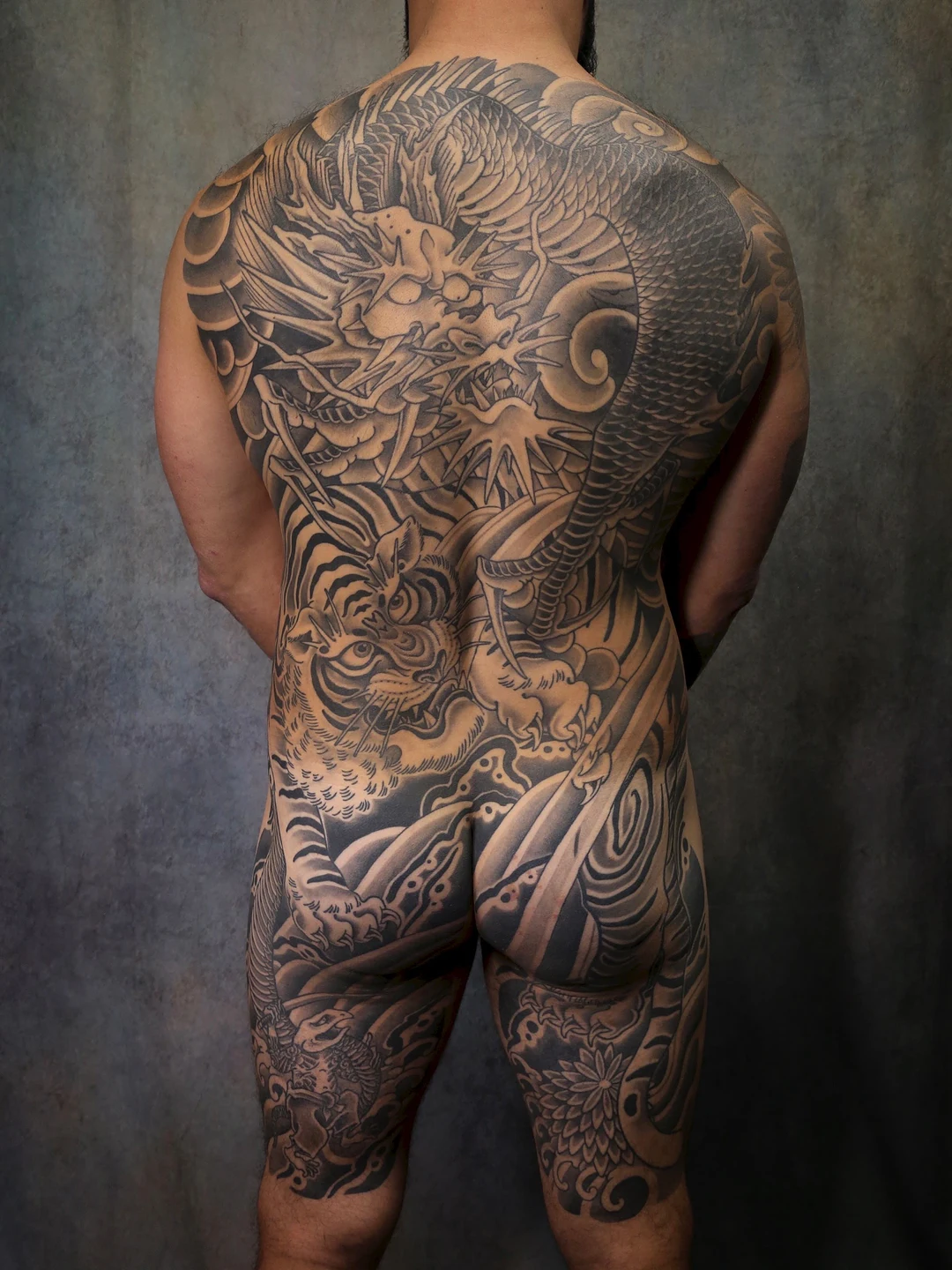
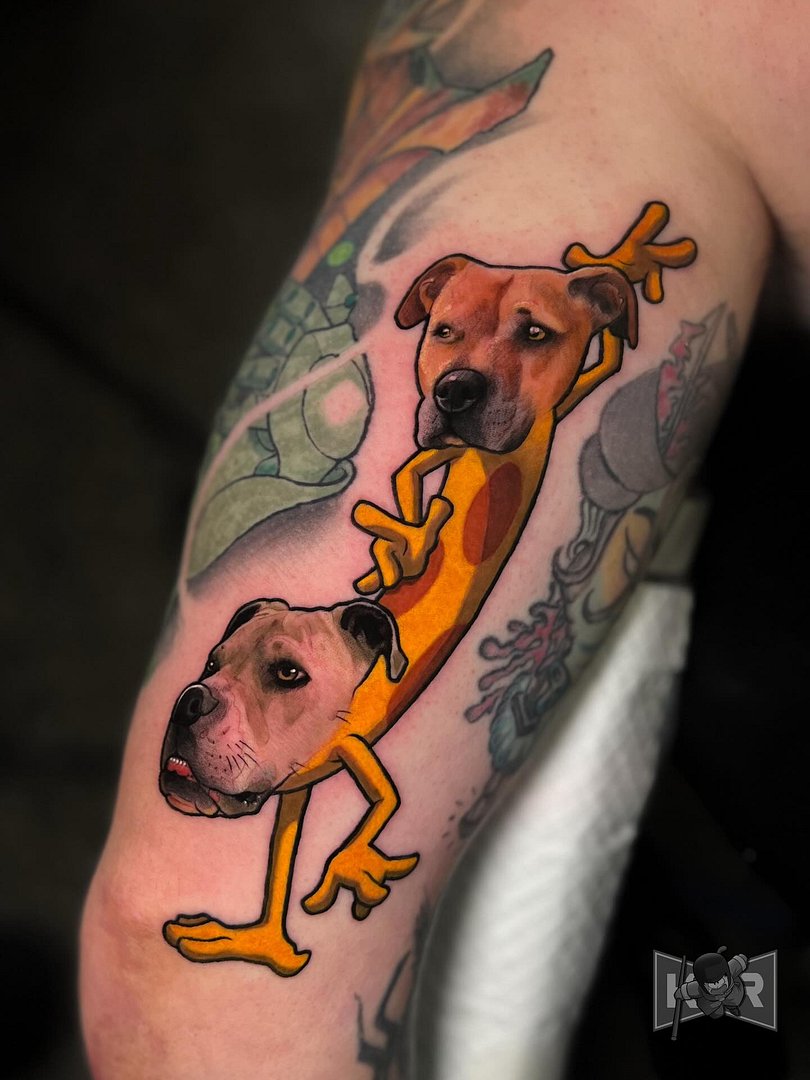
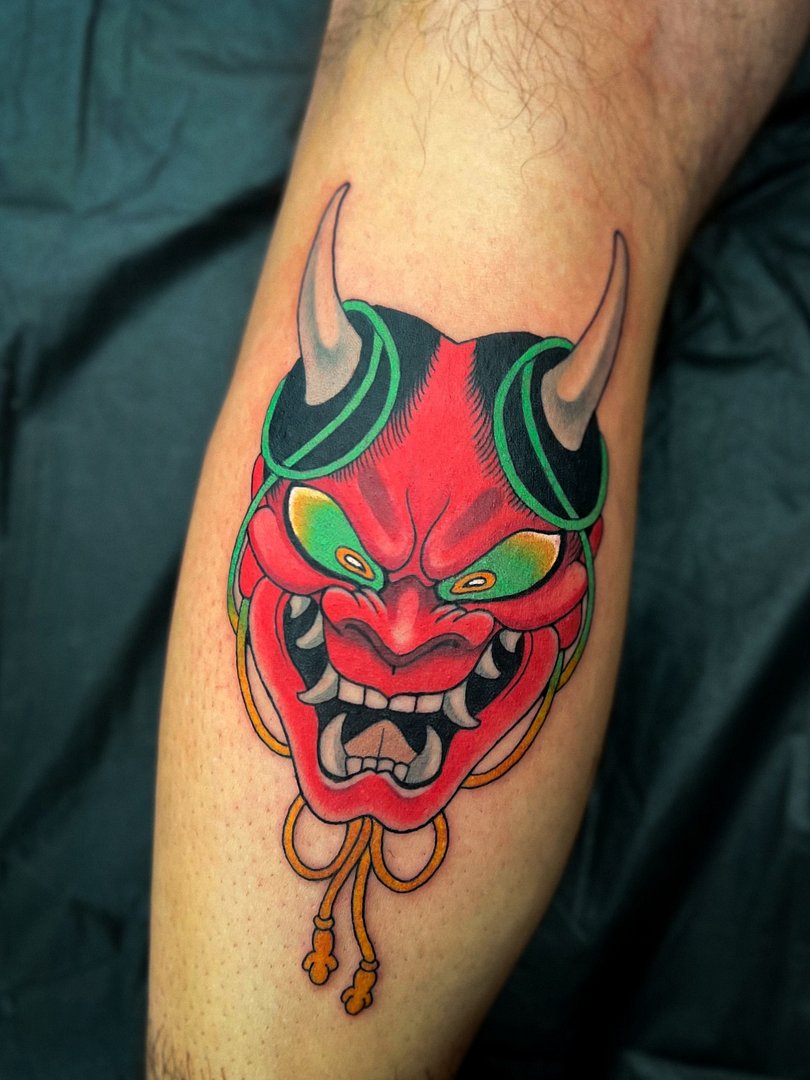
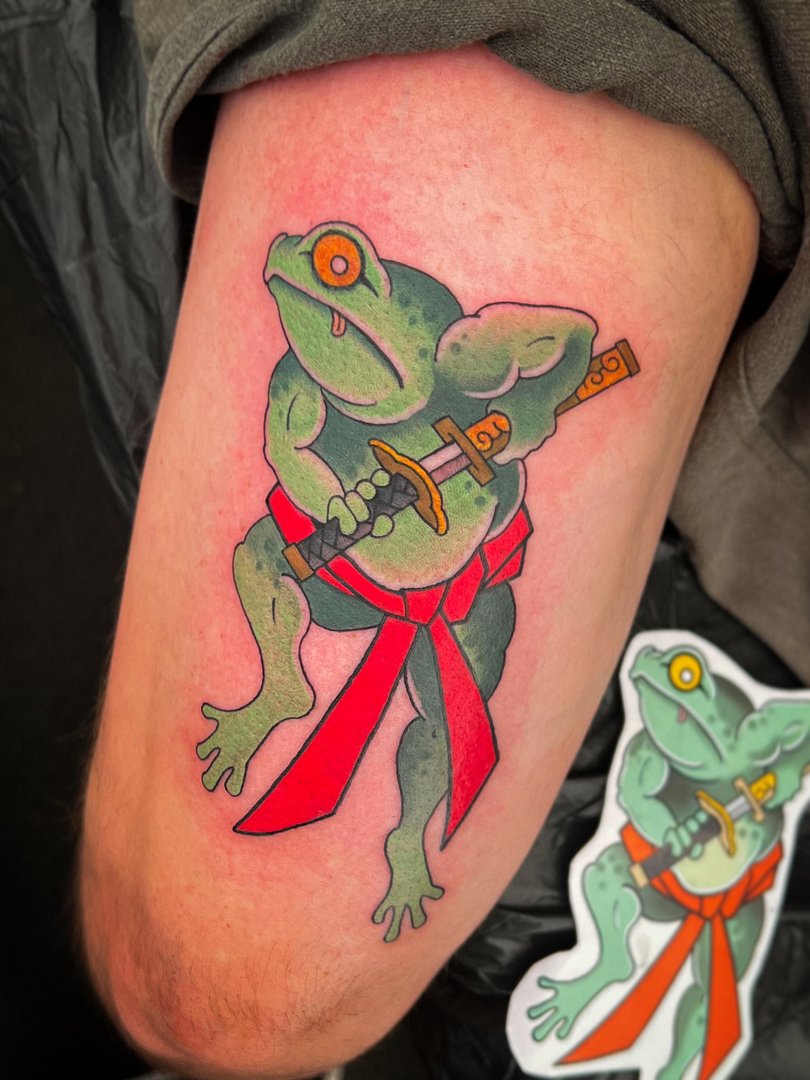
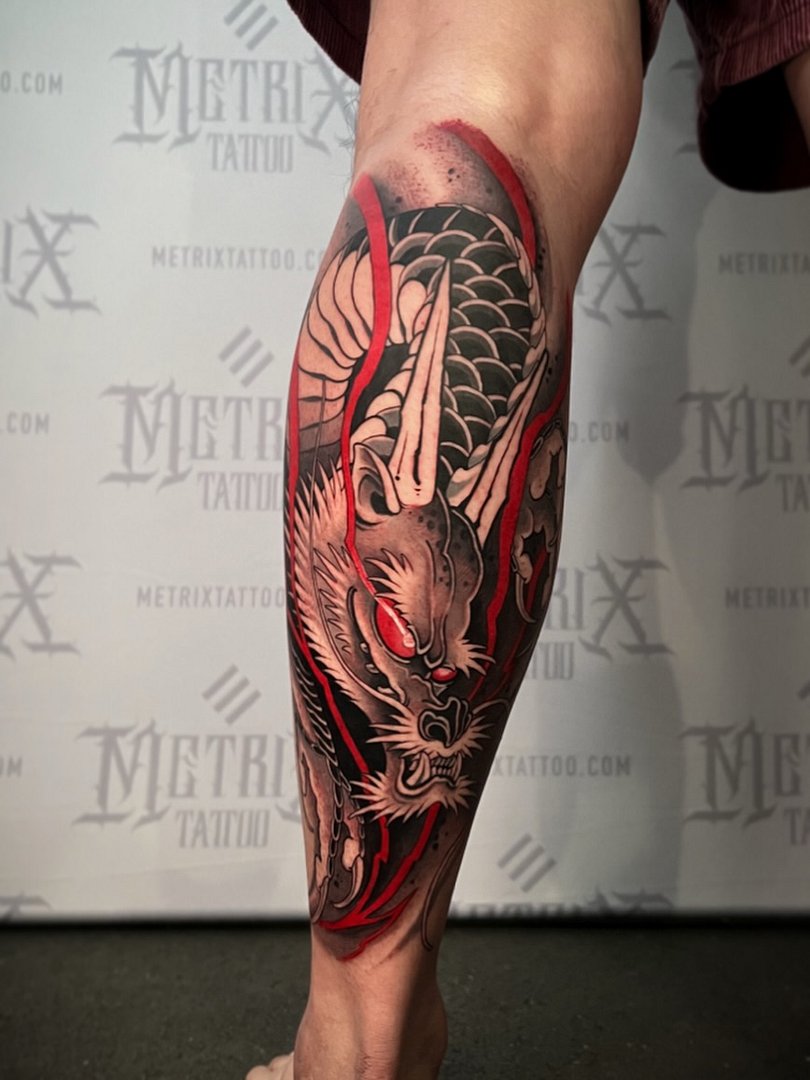
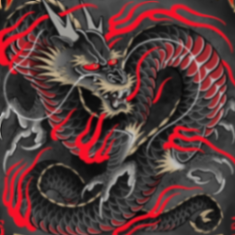
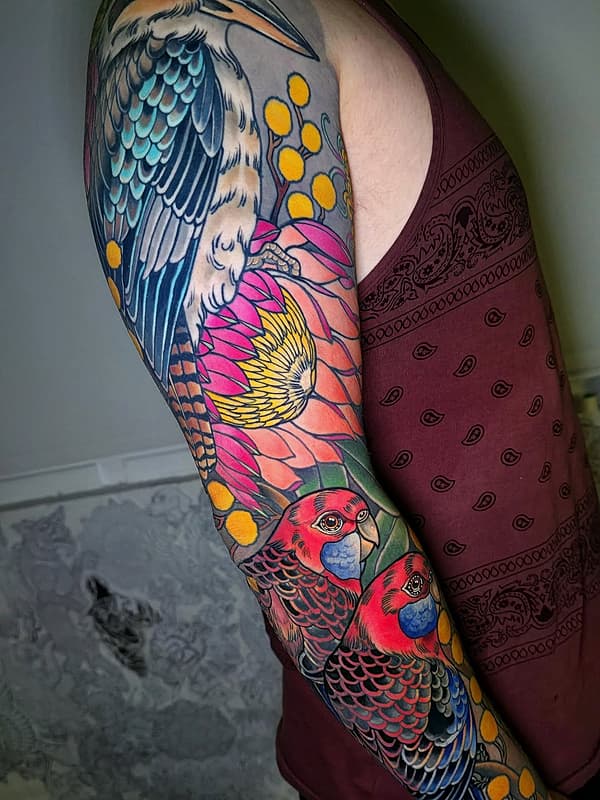
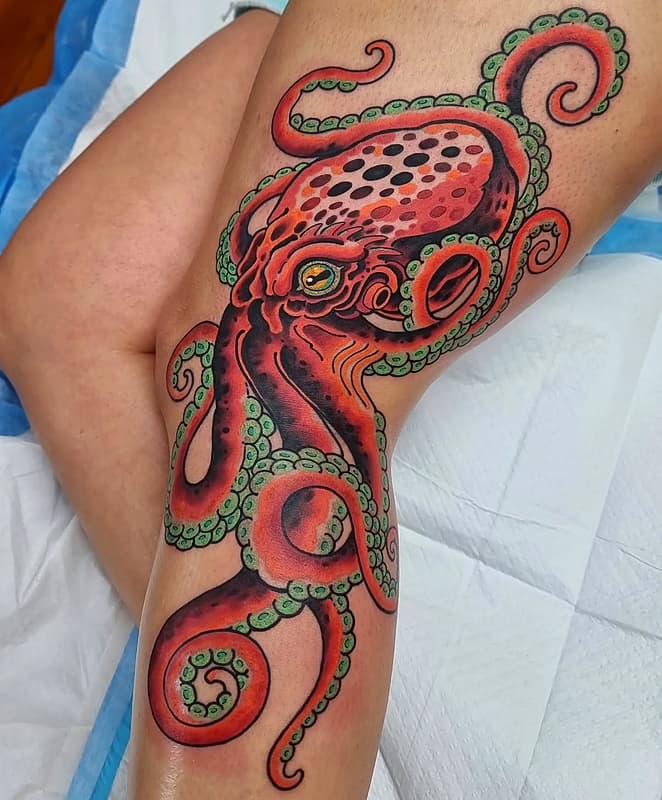
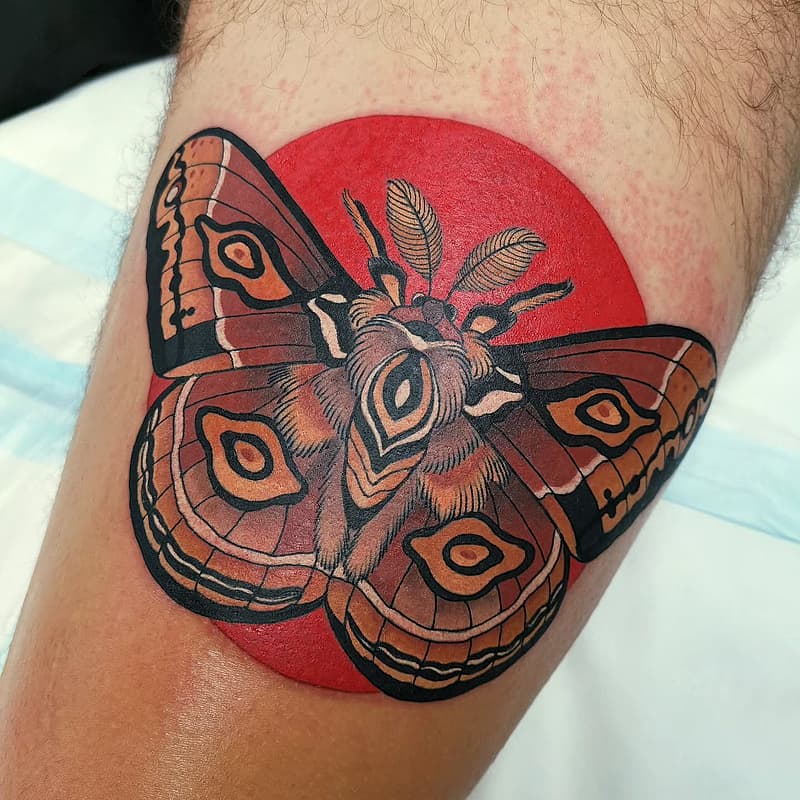

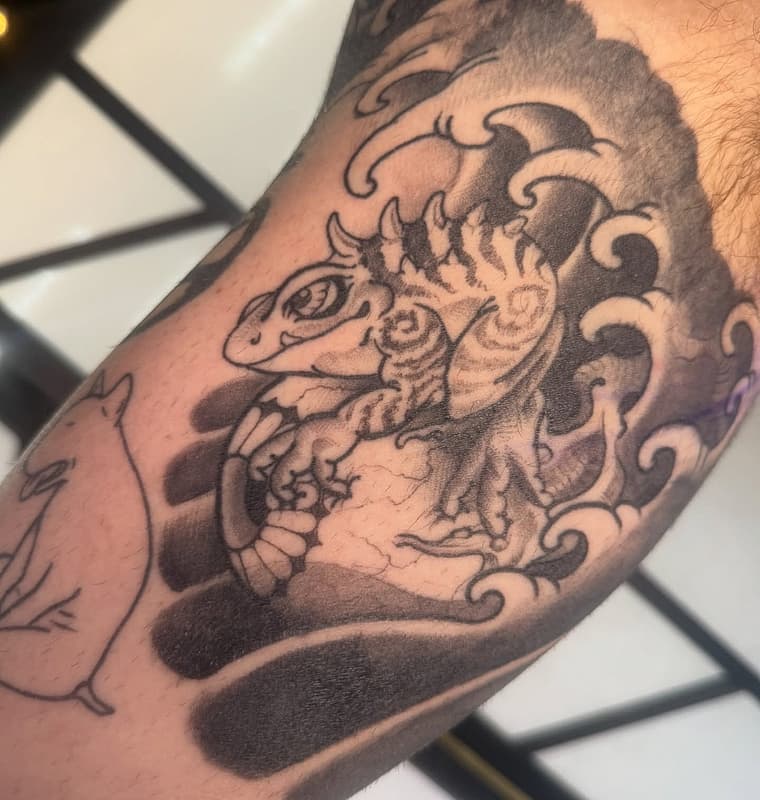
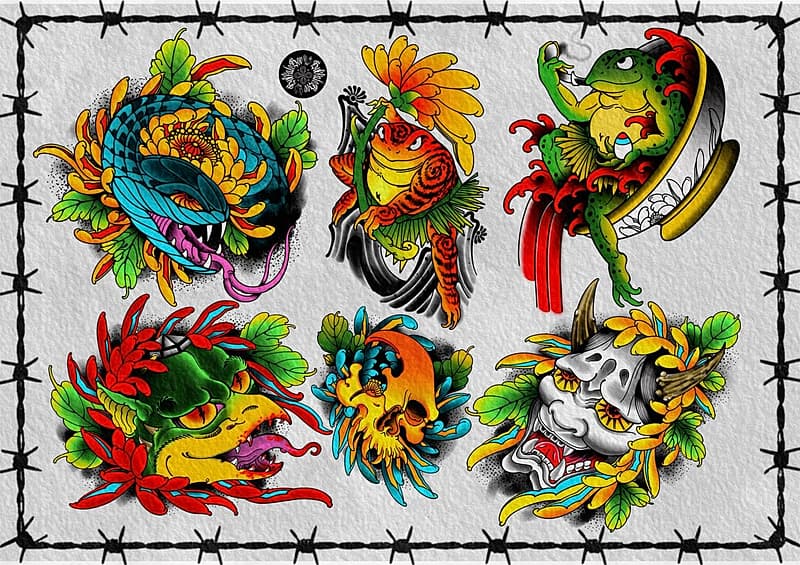
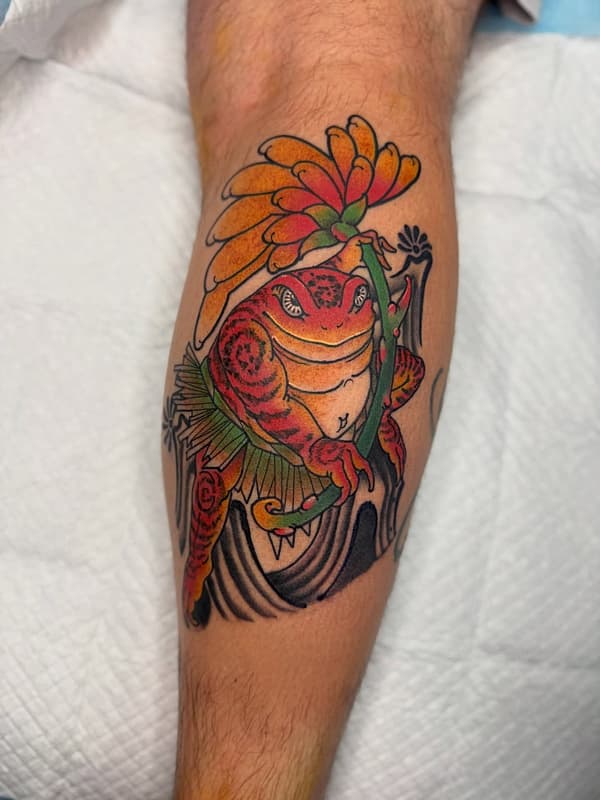
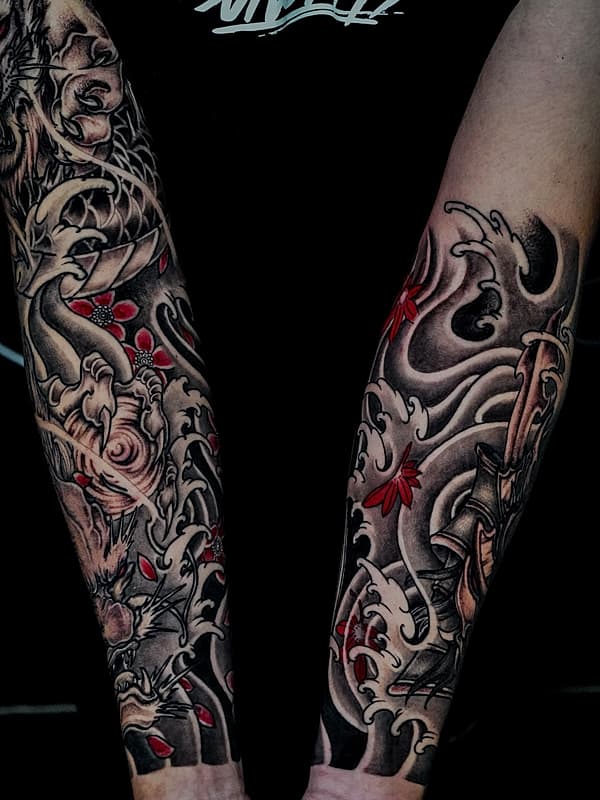
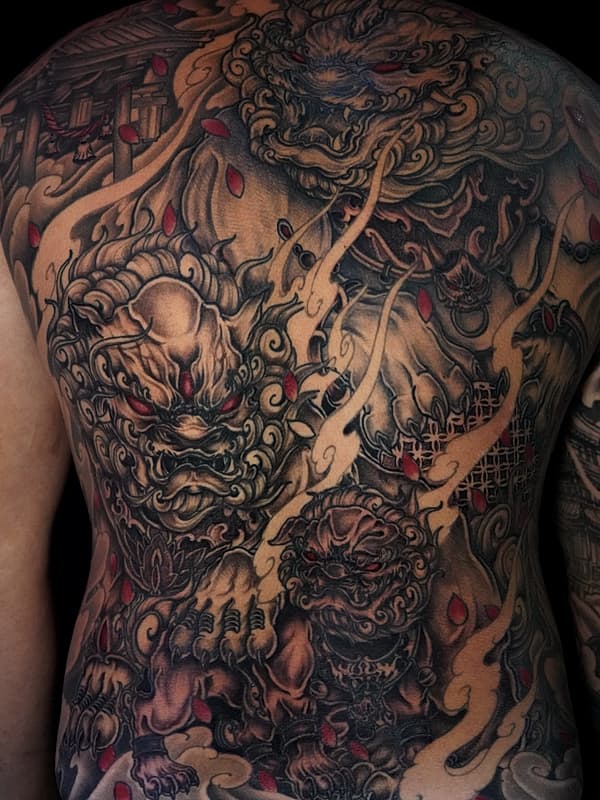
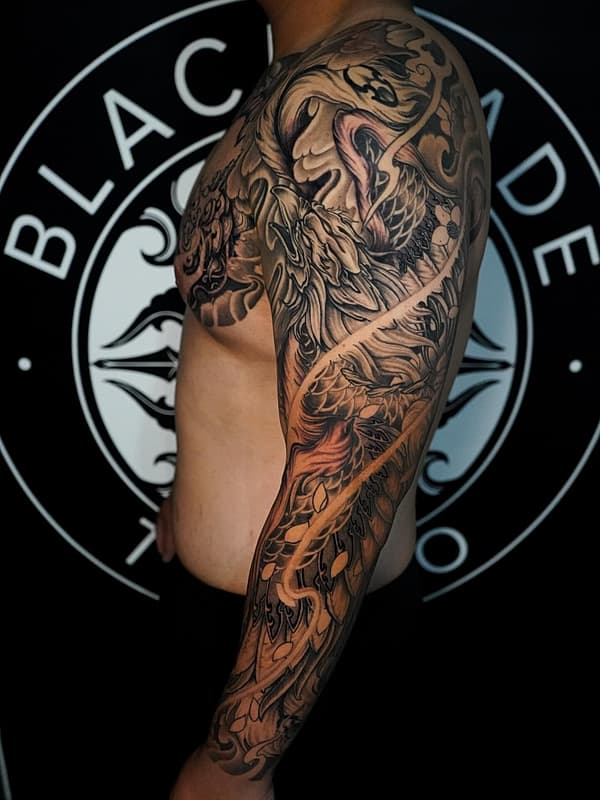
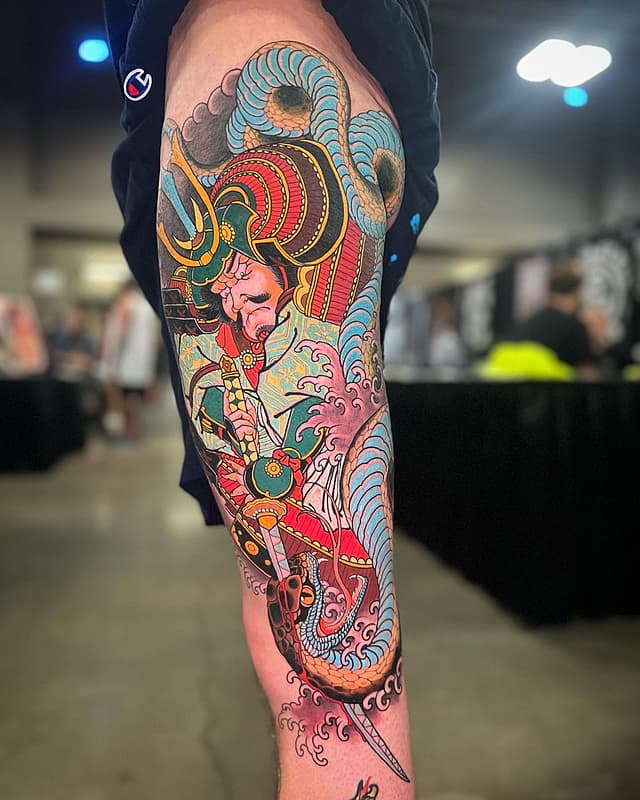
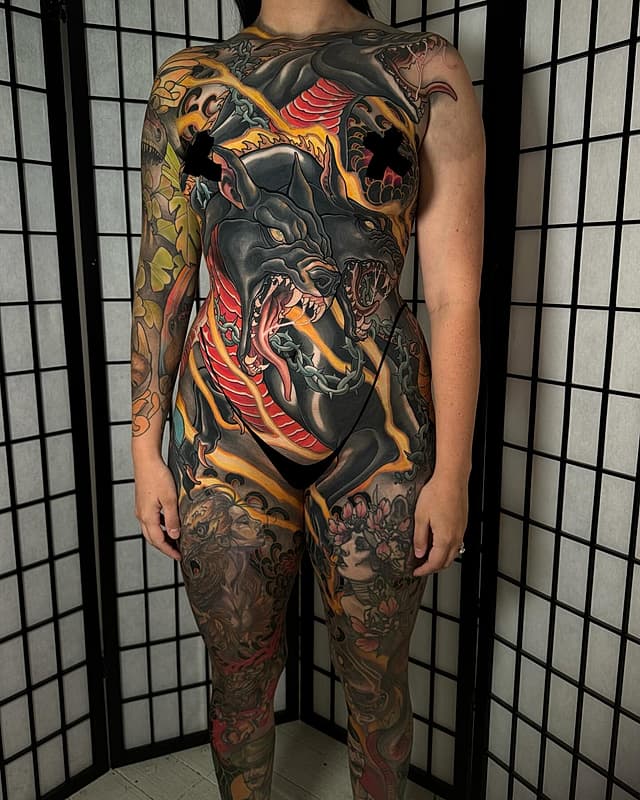
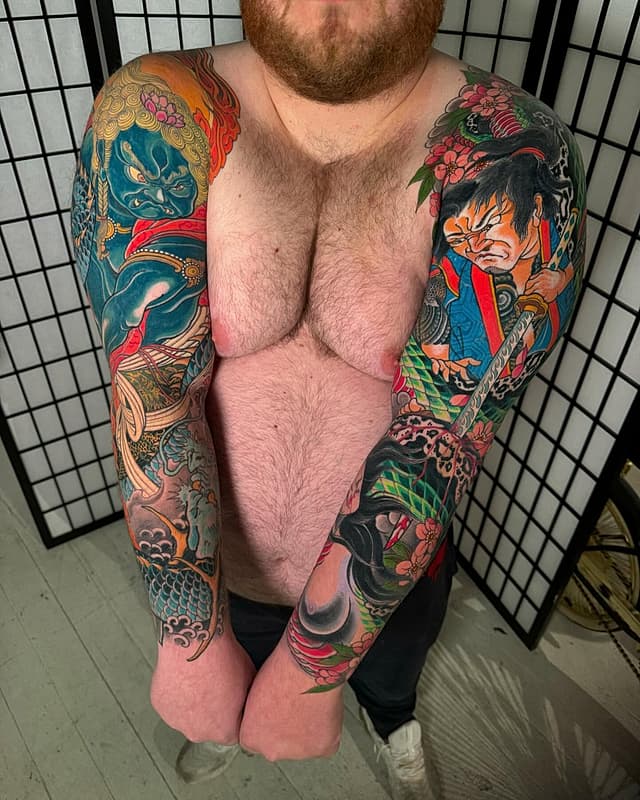
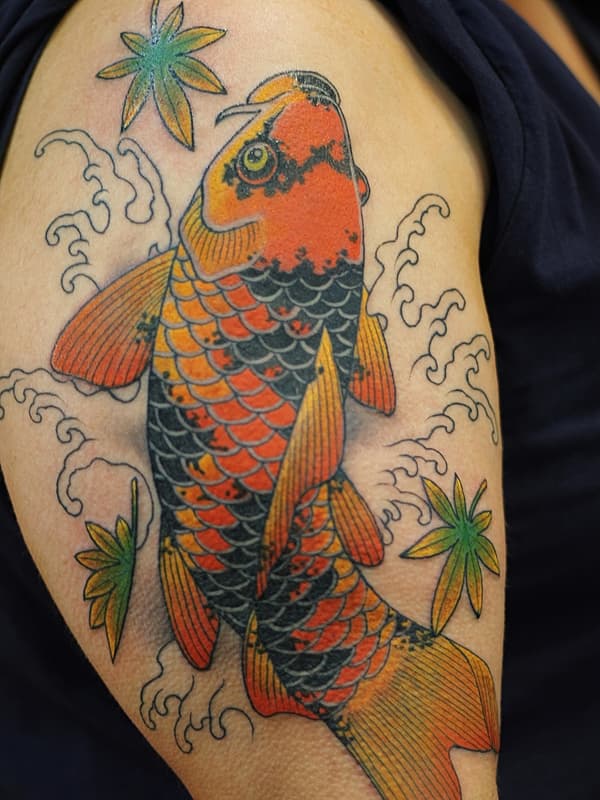
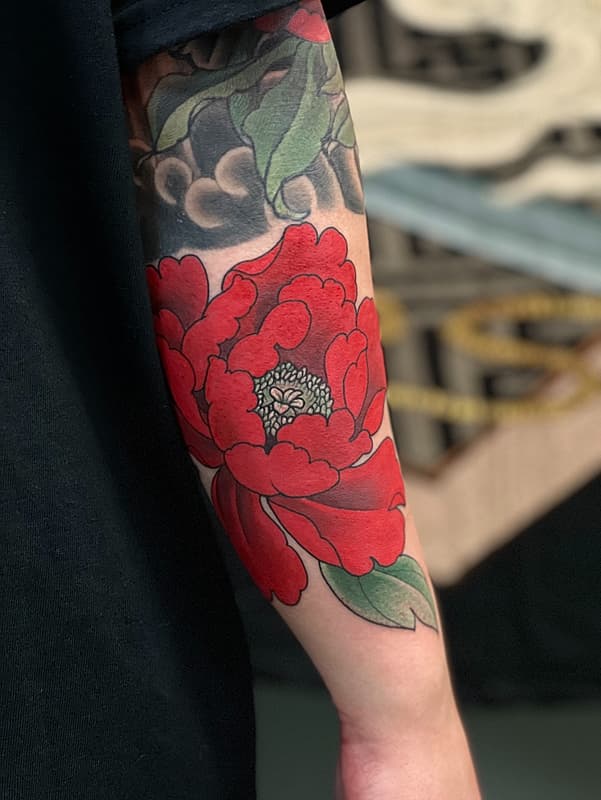
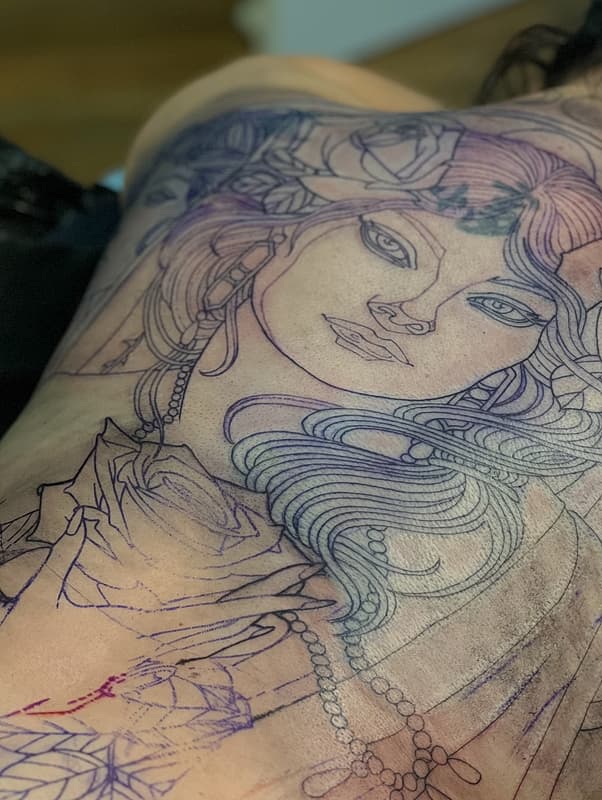
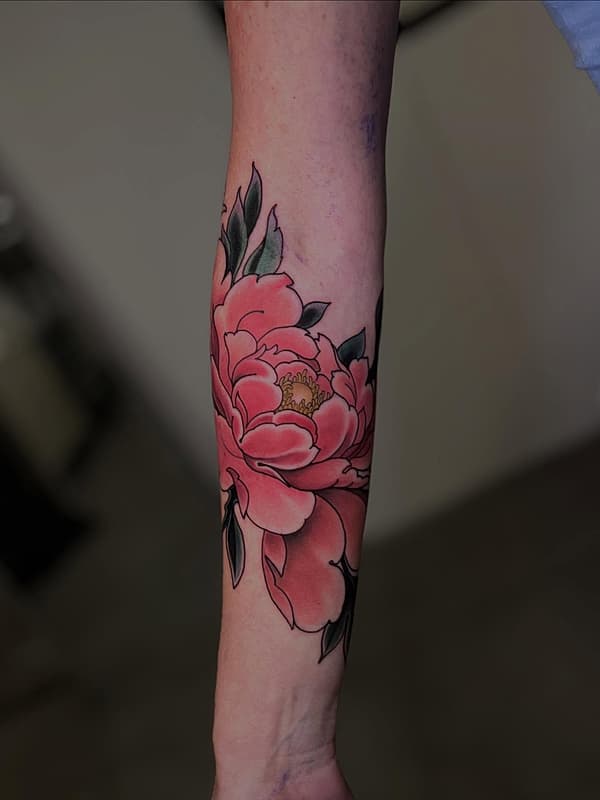
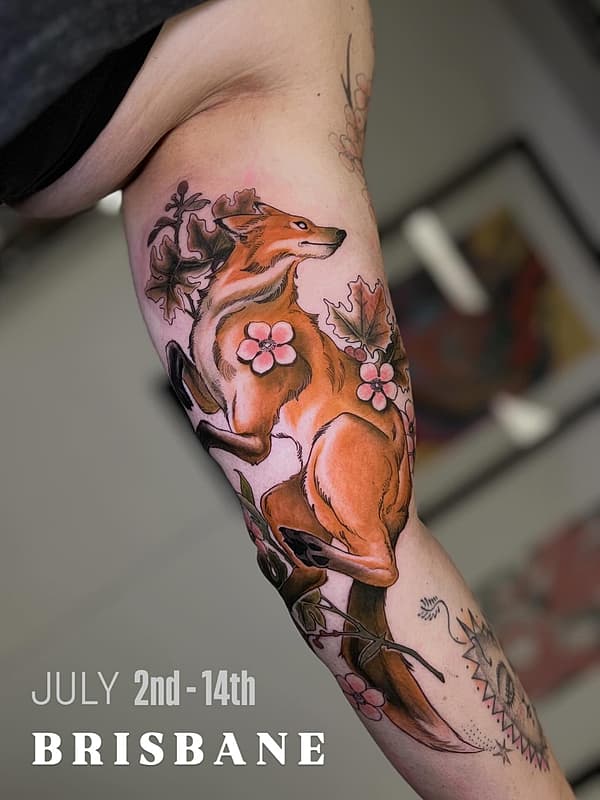
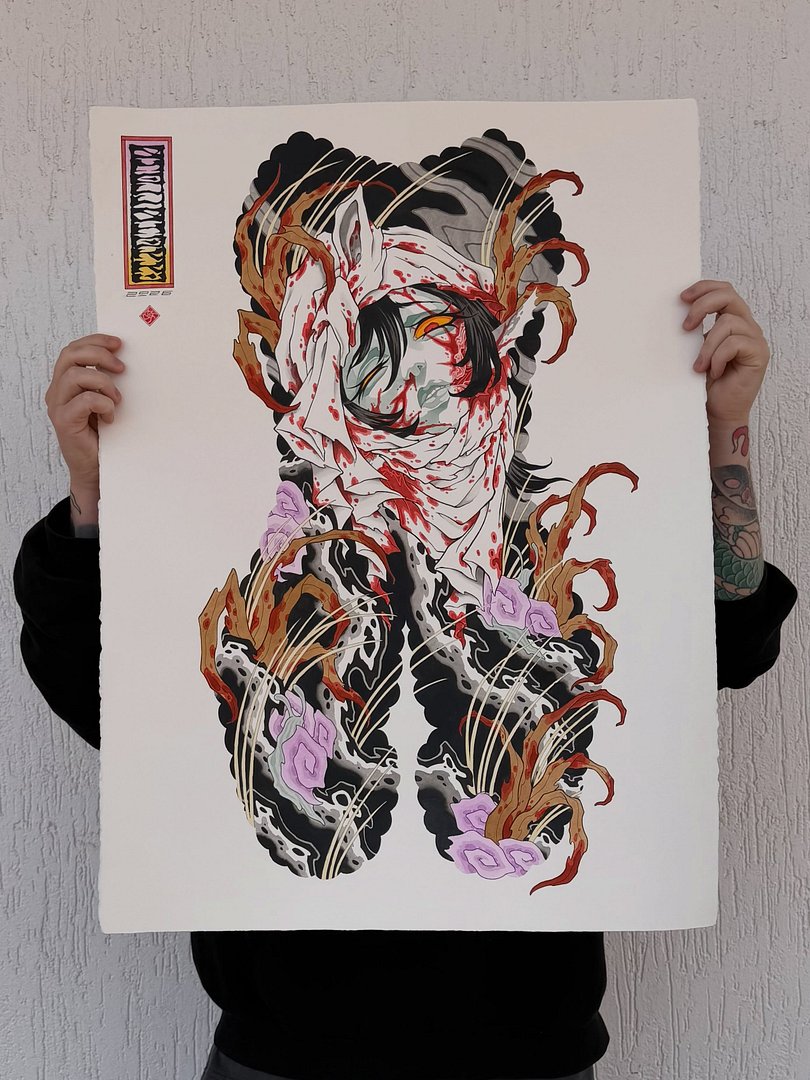
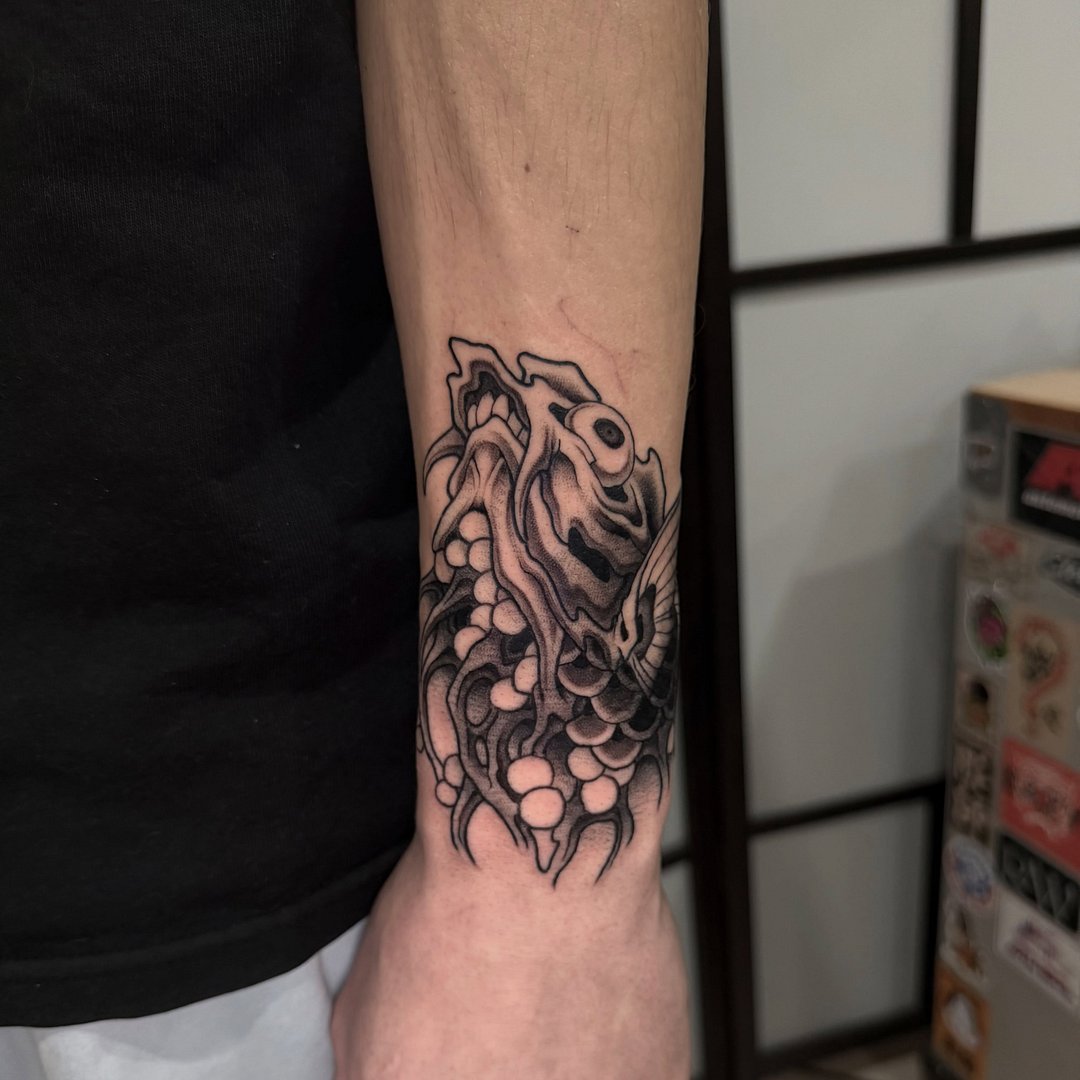
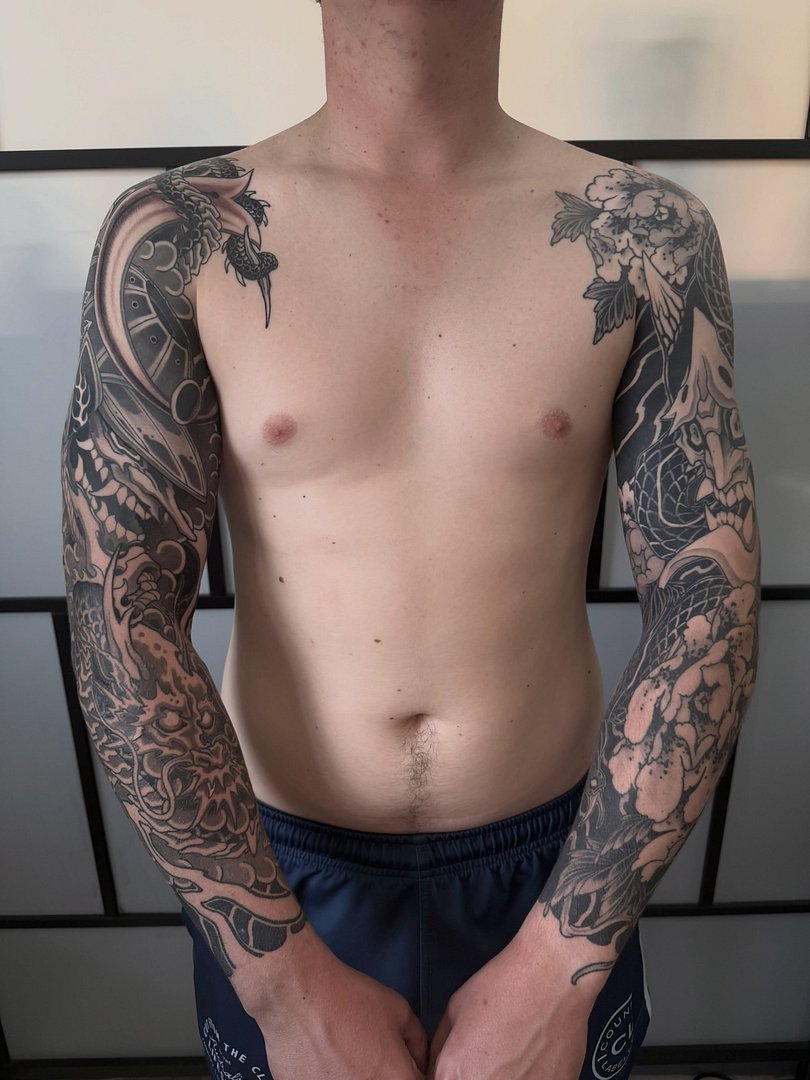
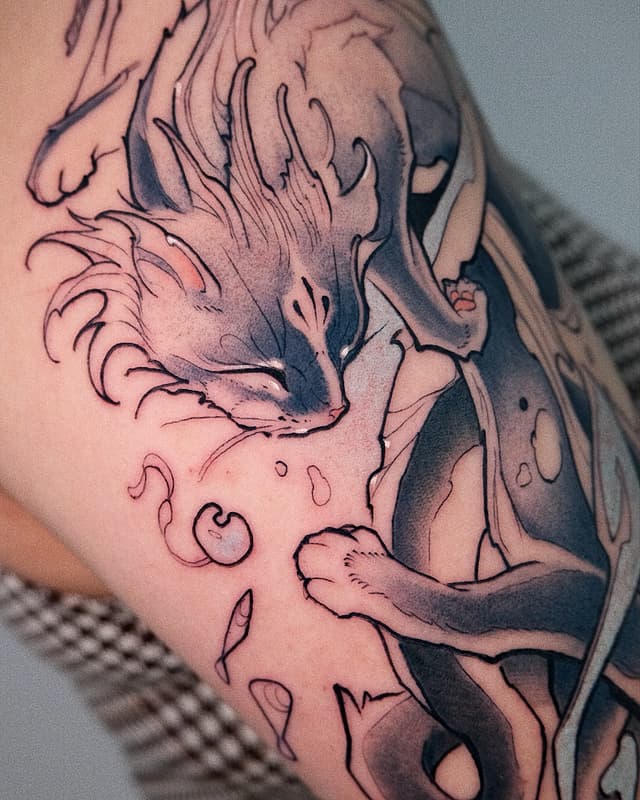
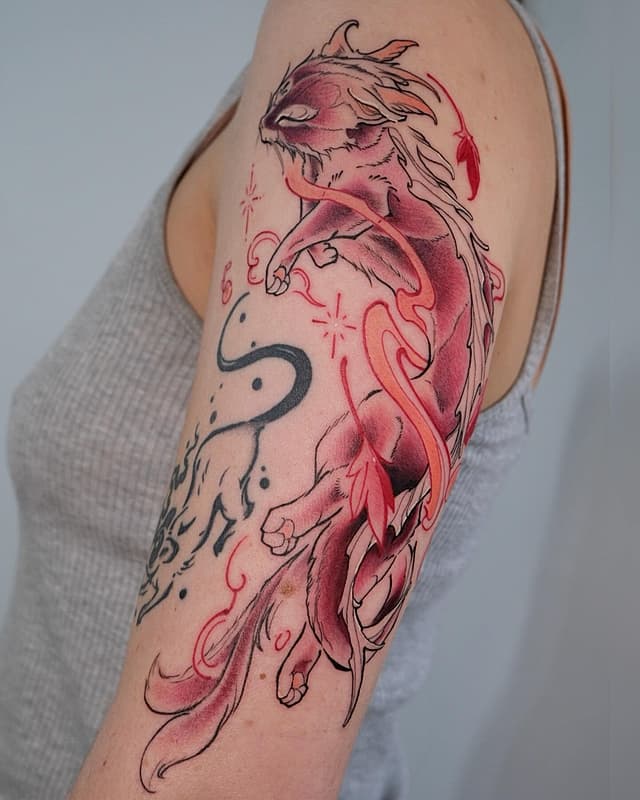
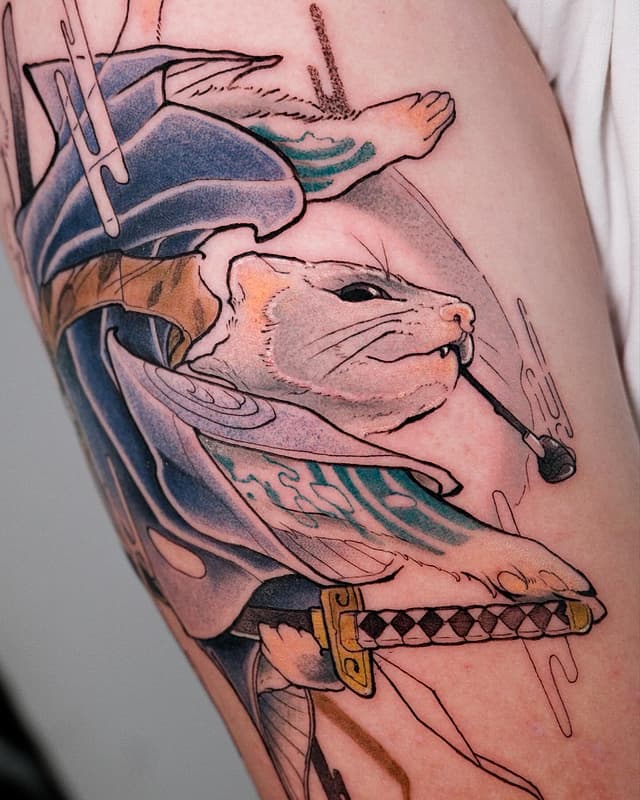
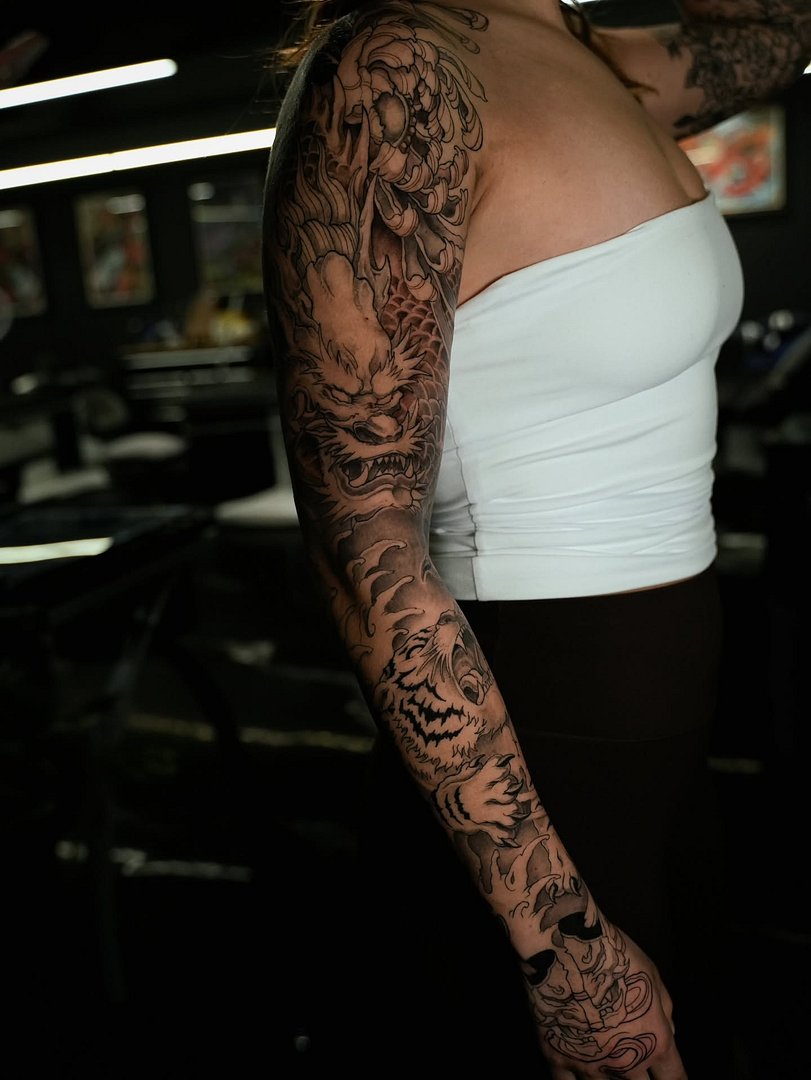
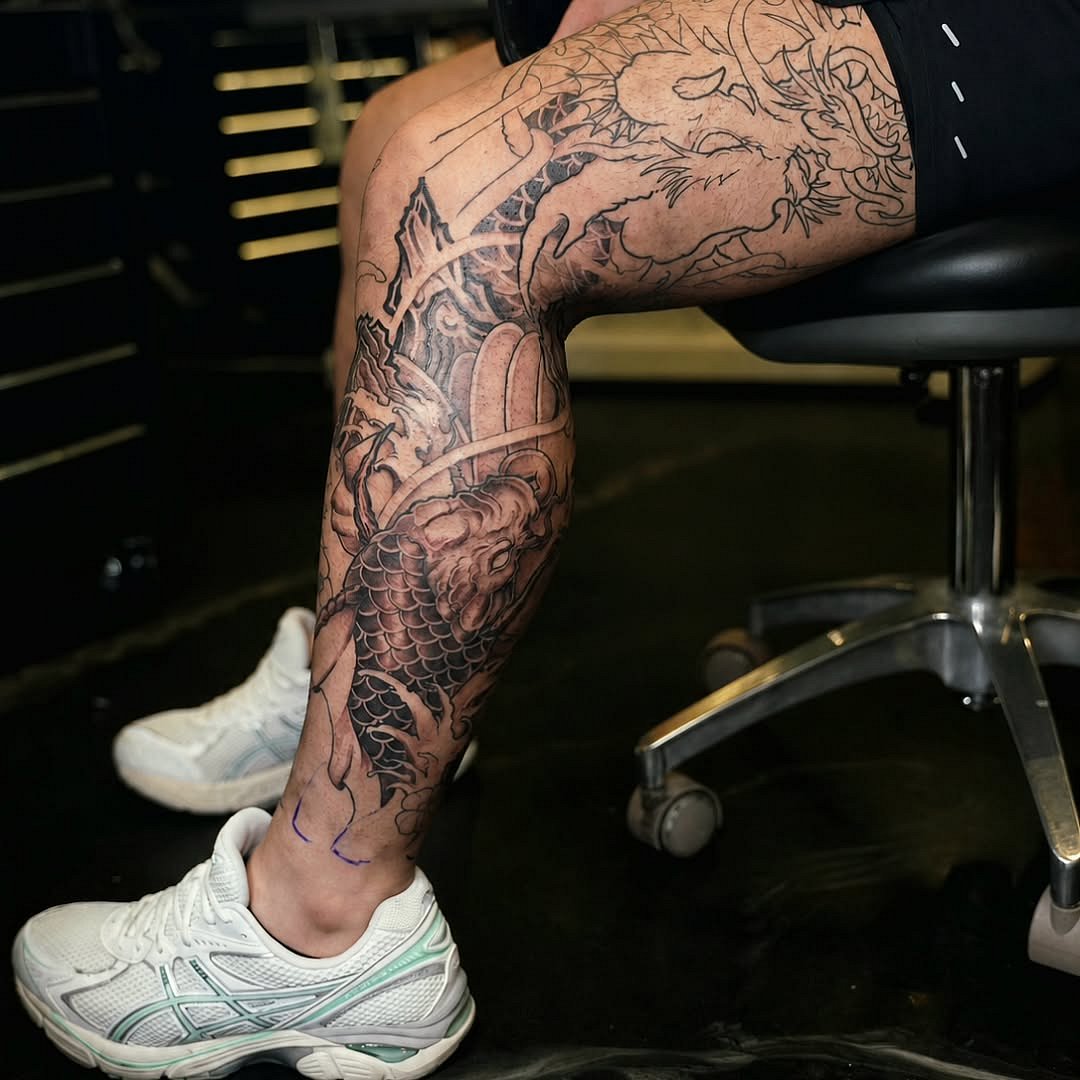
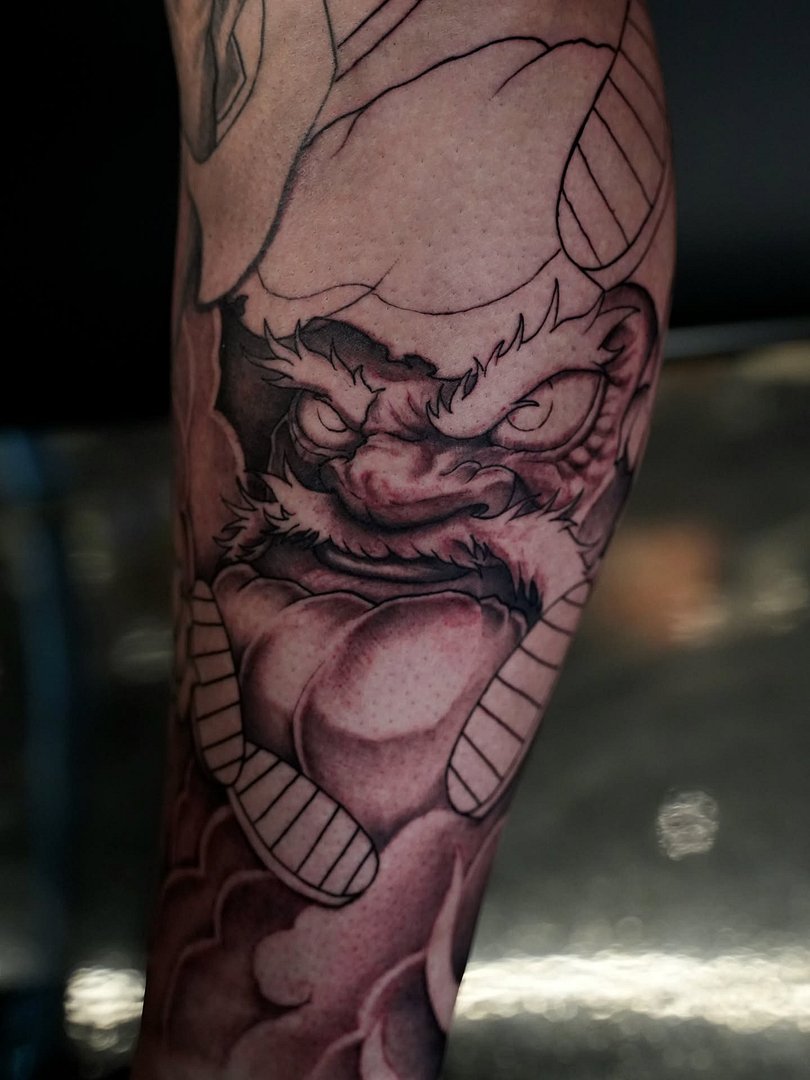


Neo Japanese tattooing takes the imagery and compositional rules of traditional Irezumi and reinterprets them with contemporary techniques and sensibilities. The classic subjects remain: dragons, koi, hannya masks, peonies, chrysanthemums, waves and wind bars. What changes is the execution. Neo Japanese artists bring in modern colour palettes, softer gradients, realism influenced shading, and looser compositions that don't always follow the strict framing conventions of traditional bodysuits. The result sits somewhere between Irezumi and illustrative work, honouring the source material while giving artists room for personal interpretation. Backgrounds might be sparser or absent entirely, and single subjects often stand alone rather than being woven into full coverage. The style suits collectors who love Japanese imagery but want something that reads as contemporary rather than strictly traditional. Because the imagery carries centuries of symbolism, good neo Japanese artists still study the traditional rules before bending them. Knowing why a koi swims upstream matters even when you're rendering it in an unconventional palette.
What to look for: Look for artists who clearly understand traditional Japanese composition even when departing from it. Subjects should flow with the body the way Irezumi does, and imagery pairings should make sense symbolically. Check for smooth, confident shading and colour transitions. A portfolio mixing large scale work with standalone pieces shows the artist can adapt the style to different projects.