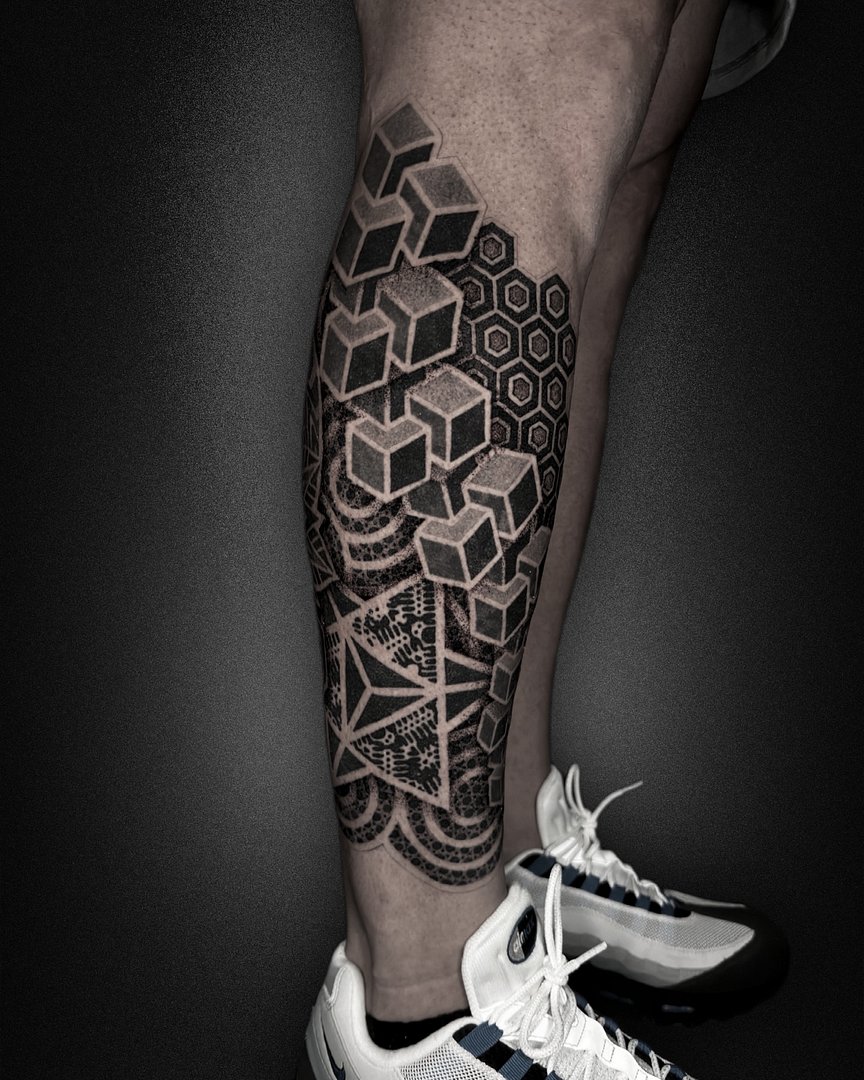
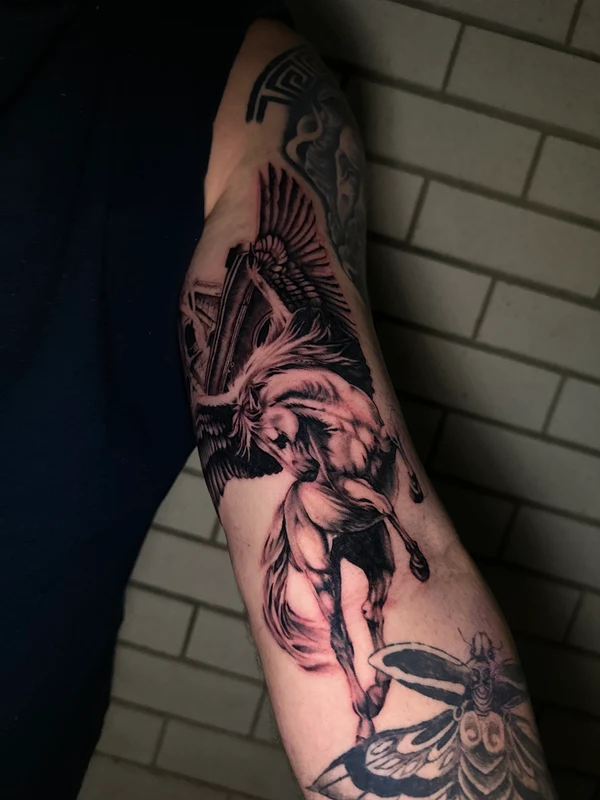
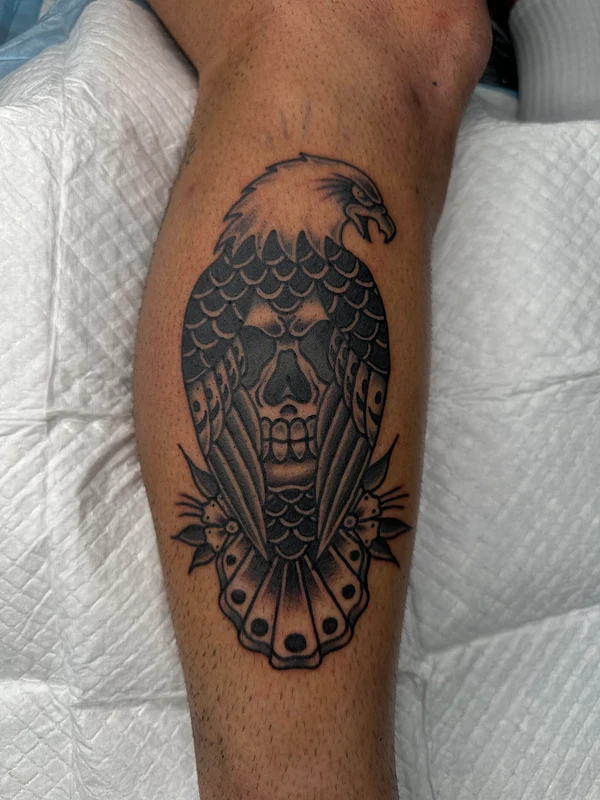
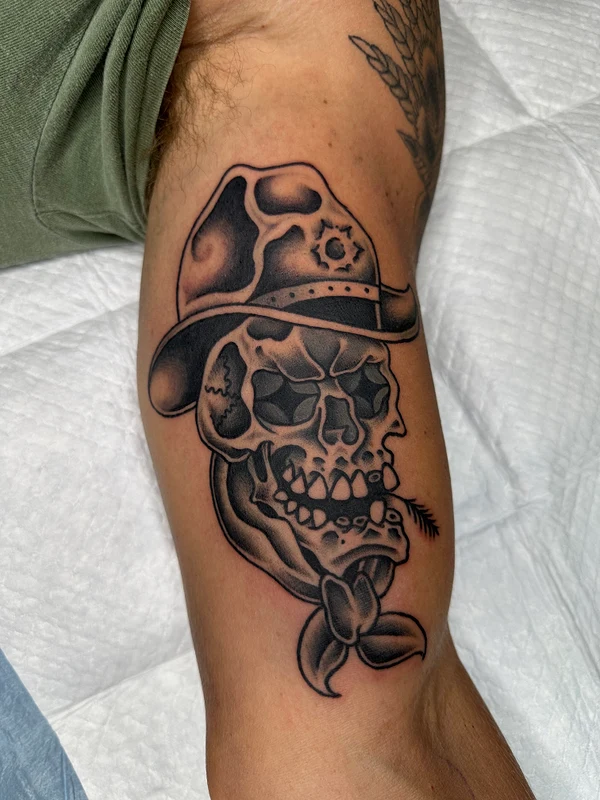
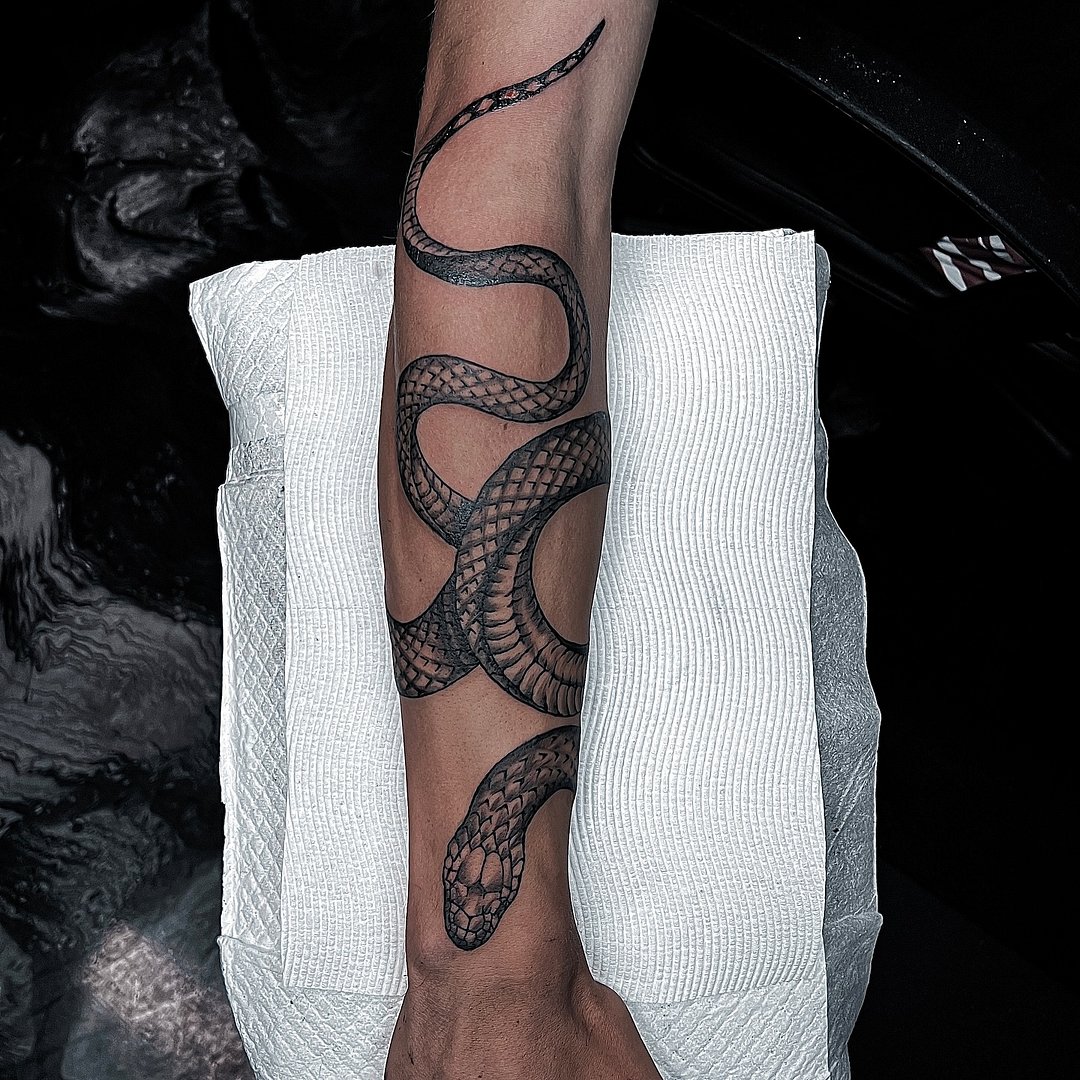
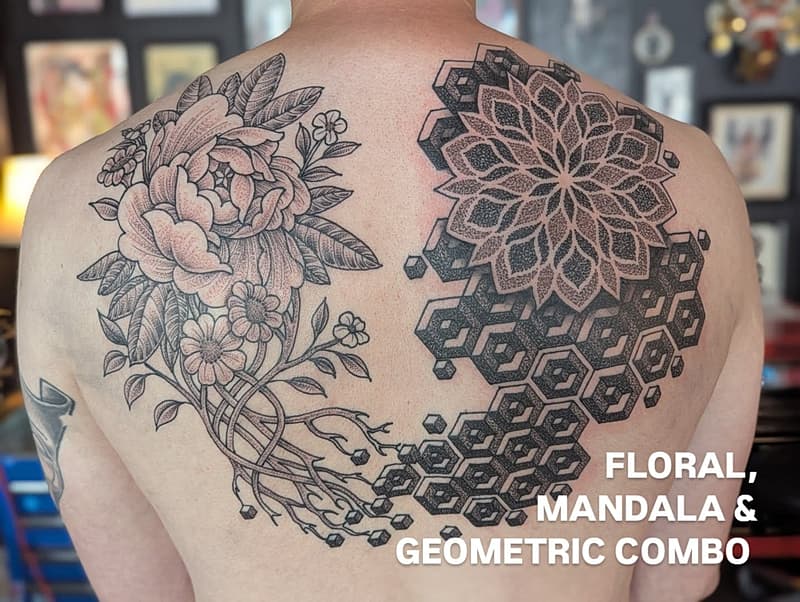
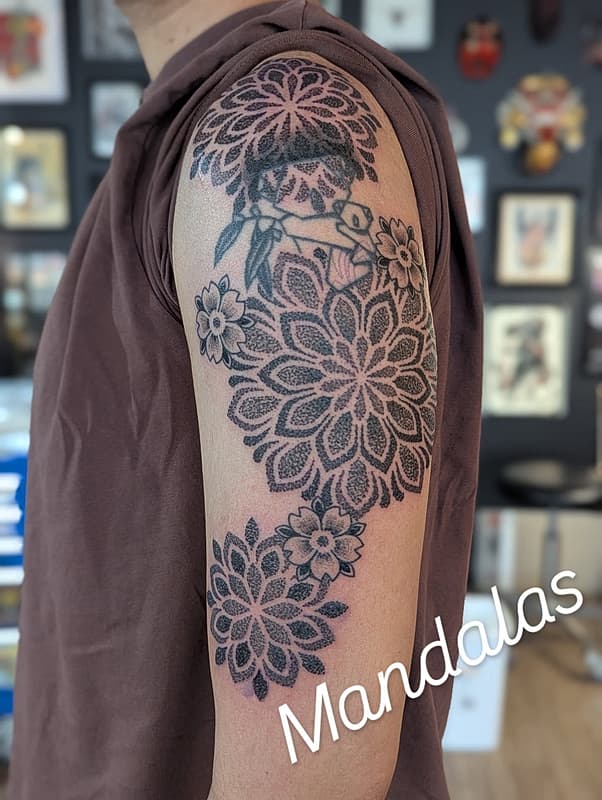
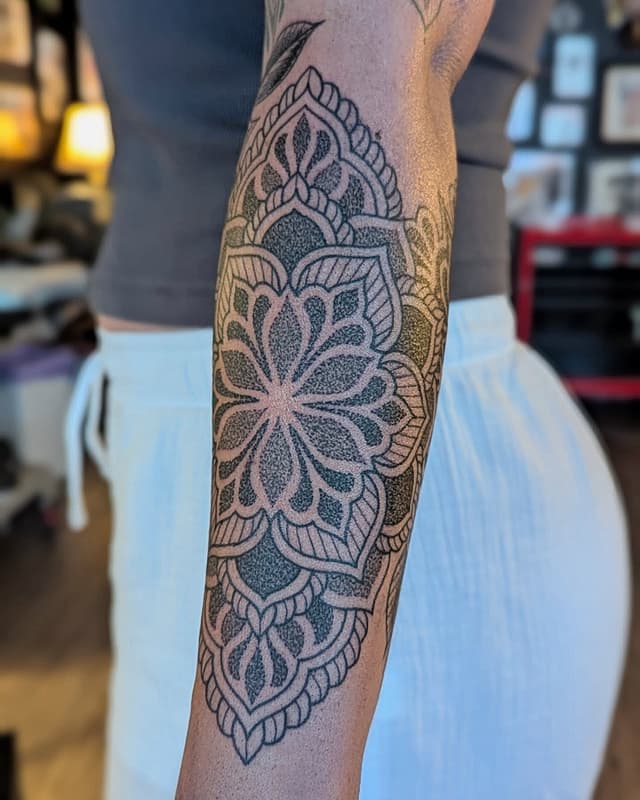
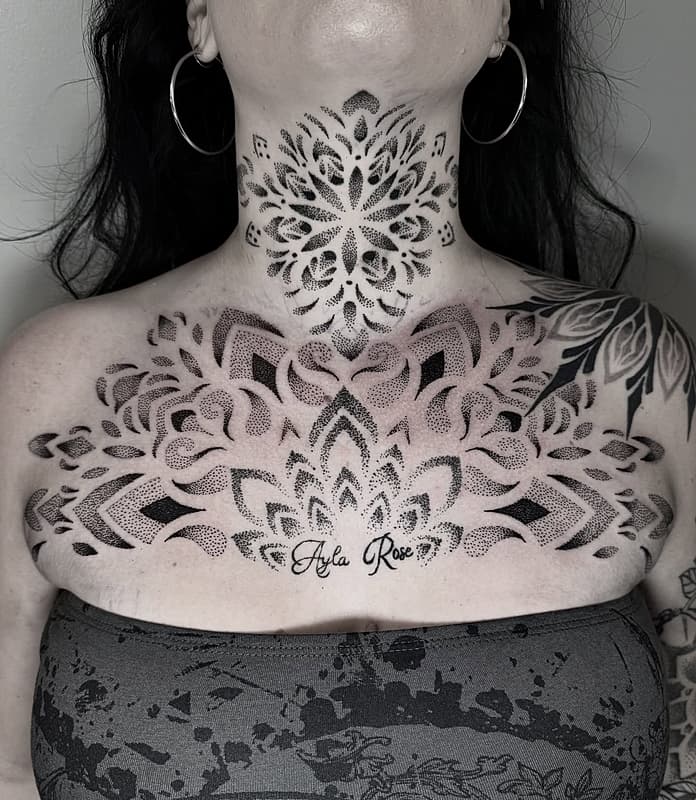
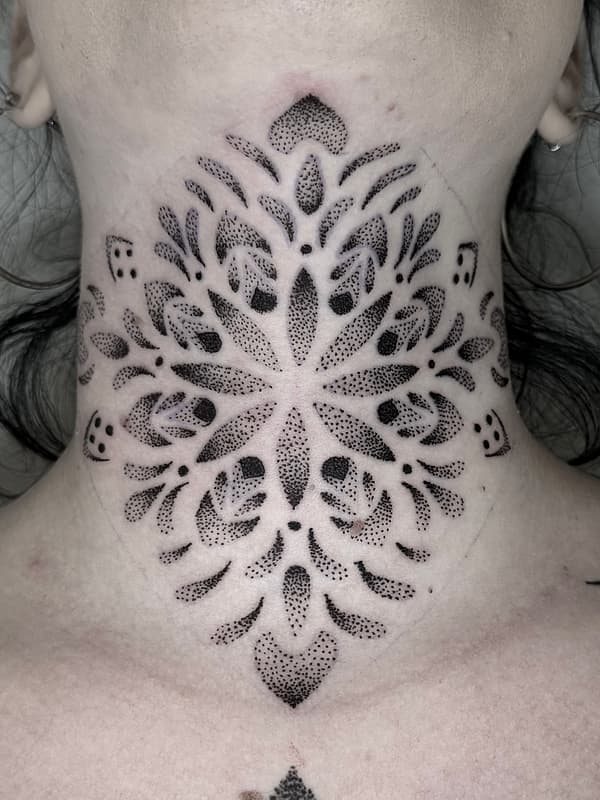

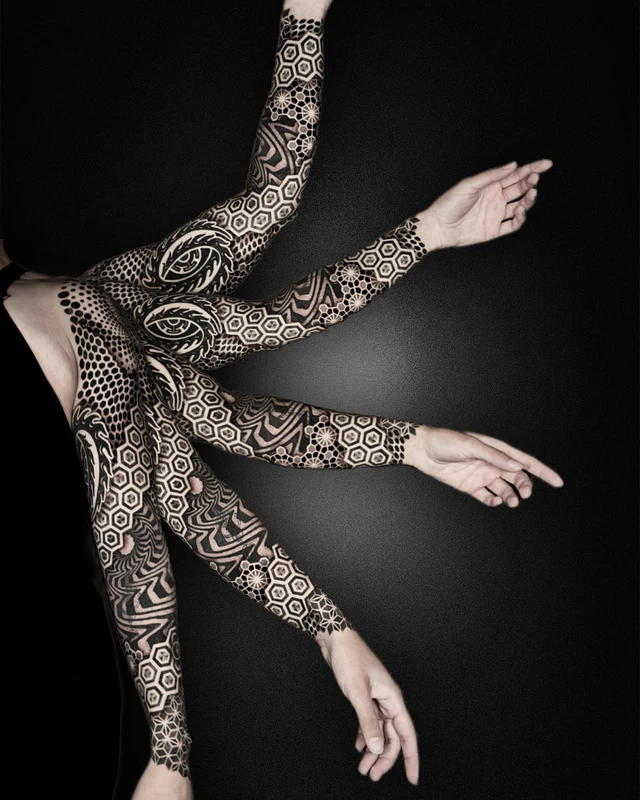
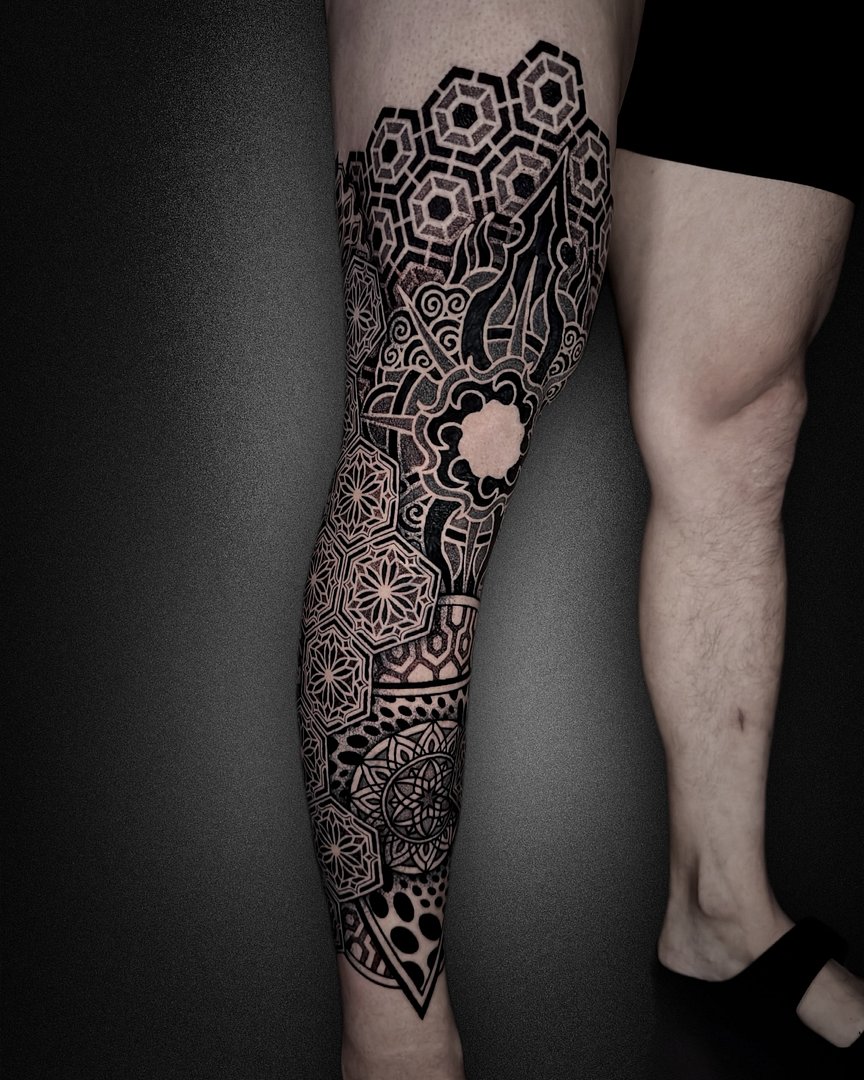
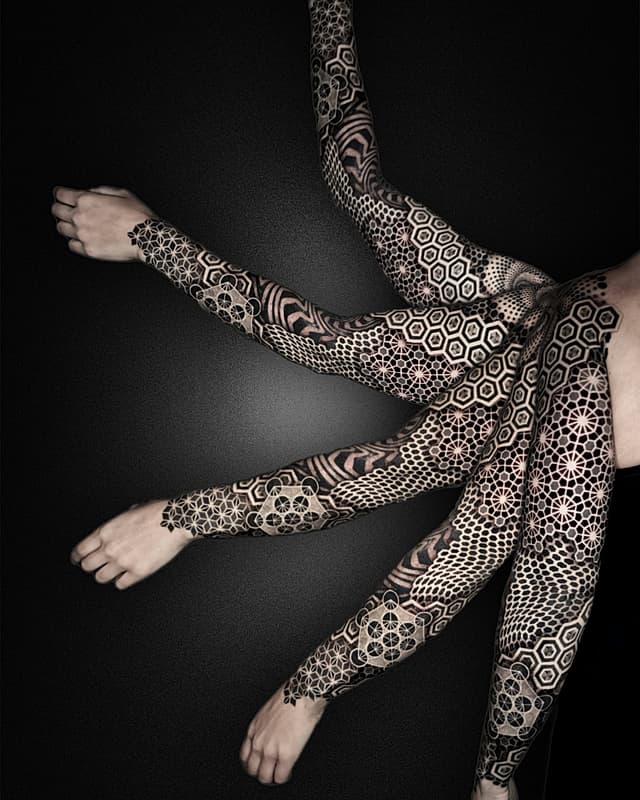
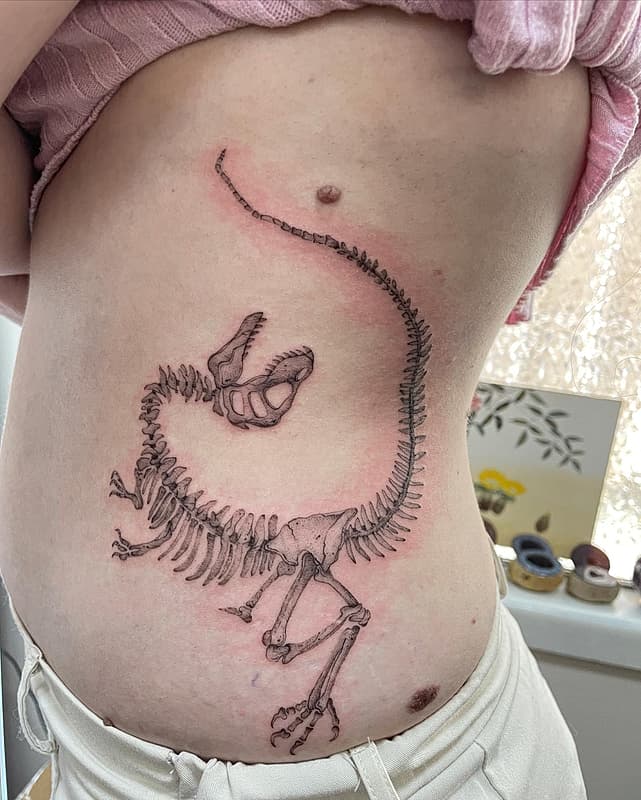
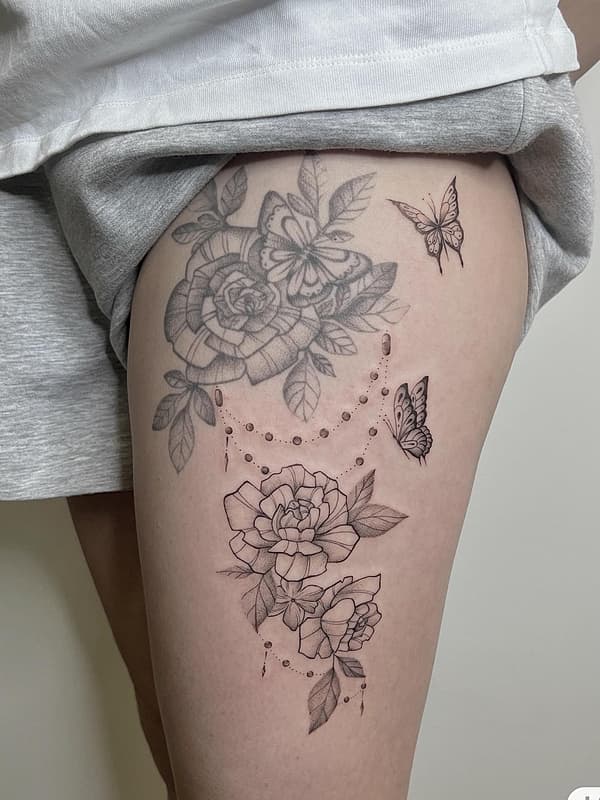






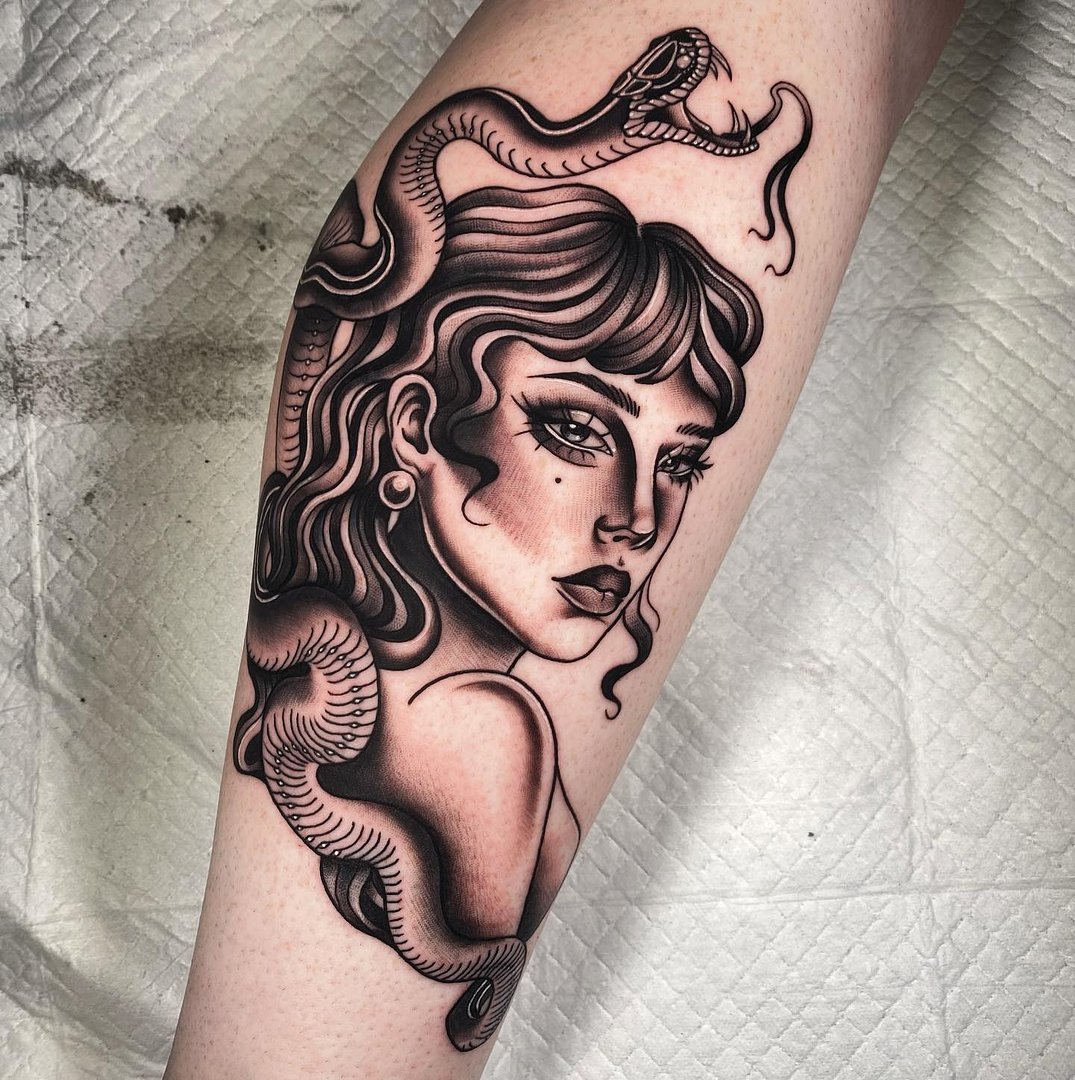

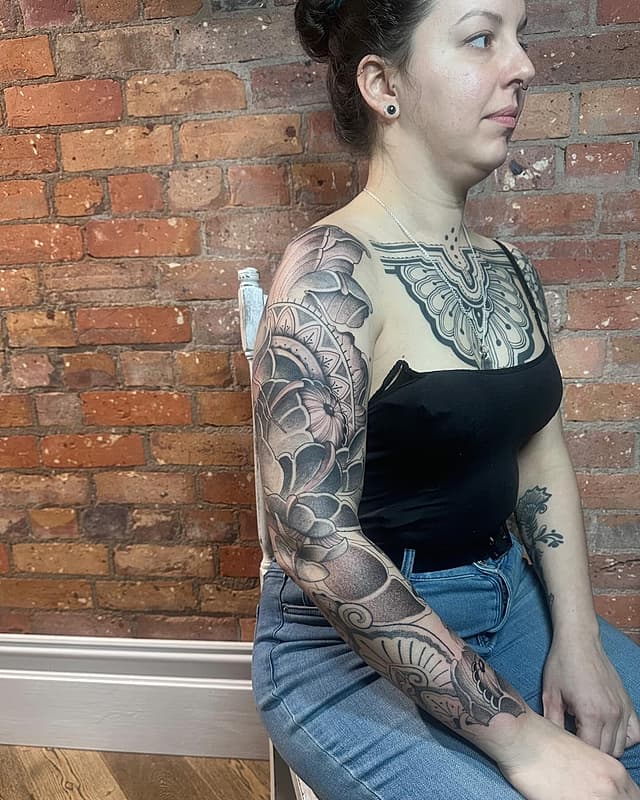
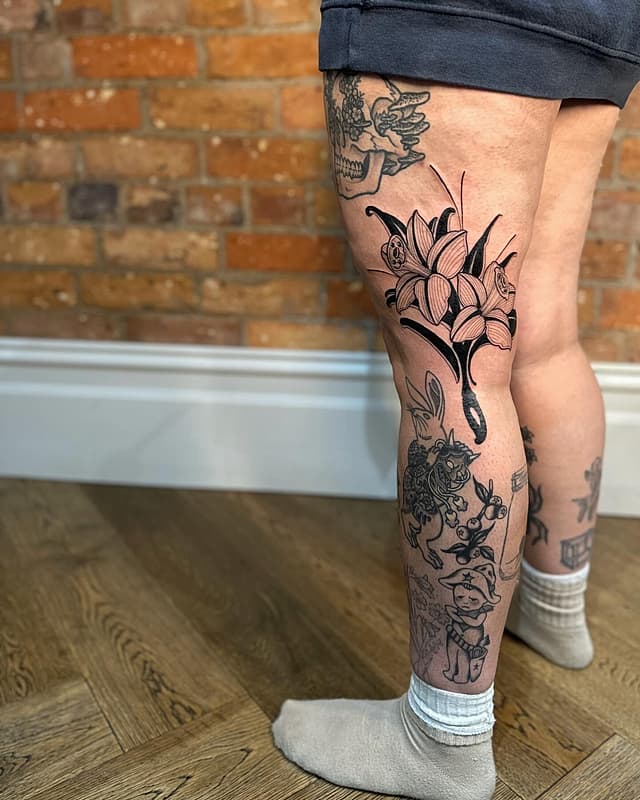
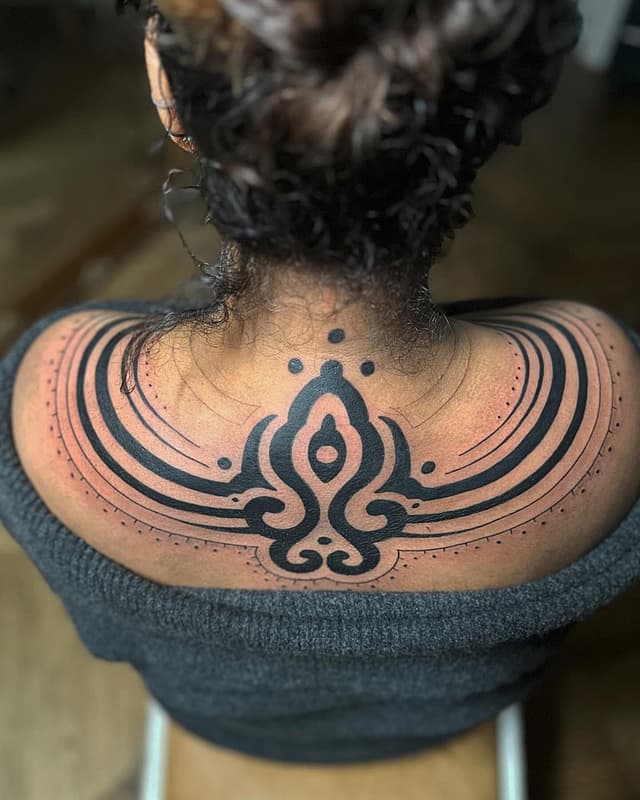
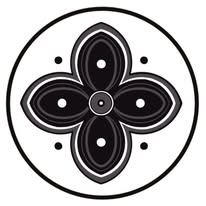
Precise geometric patterns, sacred geometry, and mathematical designs with clean lines and symmetrical compositions.
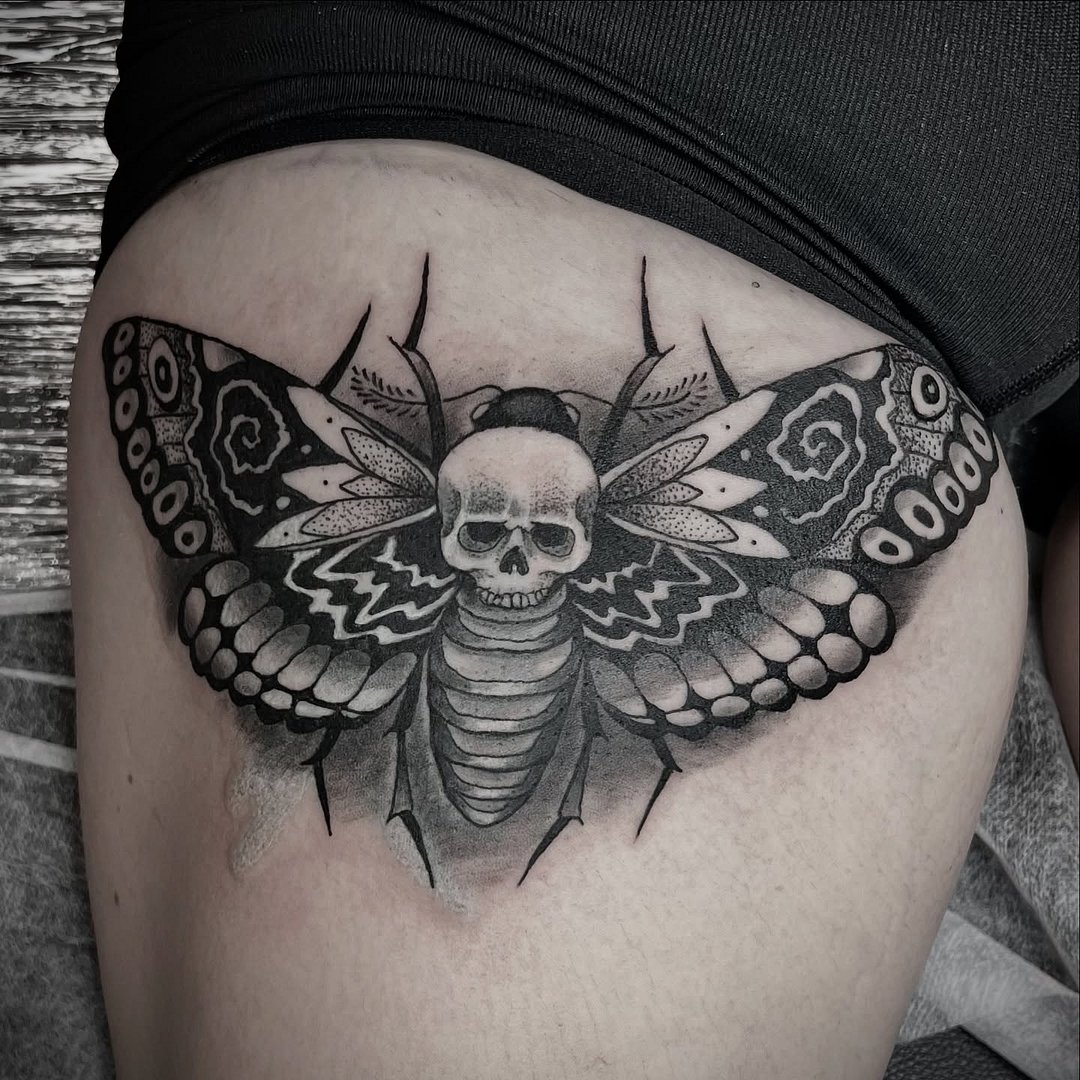
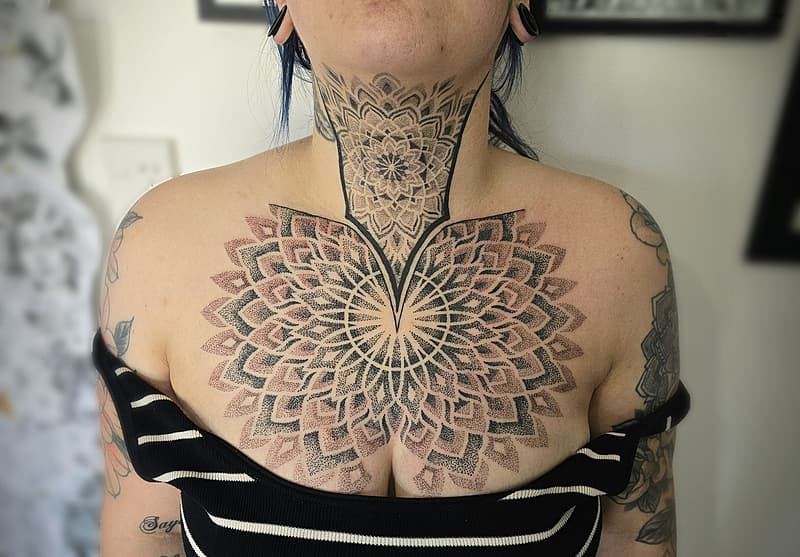
Geometric tattooing centres on precise mathematical patterns, shapes, and symmetrical designs. The style encompasses everything from simple triangles and circles to complex sacred geometry, mandalas, and abstract compositions built from geometric elements. Precision is the defining characteristic. Clean lines, perfect circles, straight edges, and accurate symmetry separate good geometric work from mediocre attempts. The style often incorporates elements of dotwork, blackwork, and ornamental approaches, blending seamlessly with these related aesthetics. Geometric tattoos can be purely abstract or can use geometric frameworks to depict representational subjects like animals, landscapes, or portraits, rendered through a geometric lens. The appeal lies in the visual harmony and mathematical beauty of well executed geometric work. Many geometric designs carry symbolic meaning, drawing from sacred geometry traditions that assign spiritual significance to particular shapes and proportions. Whether abstract or meaningful, geometric tattooing demands an artist who combines artistic vision with technical precision.
What to look for: Geometric work is unforgiving of errors, so precision is non negotiable. Look for perfectly straight lines, accurate circles, and flawless symmetry. Check how designs flow with body contours rather than fighting against them. Portfolio consistency matters, as geometric precision should be evident across all pieces. Any wobble or inconsistency in line work is a warning sign.
36 artists specialising in Geometric across Australia
Geometric tattoos require careful, precise work that can't be rushed. Simple geometric designs might take one to three hours, but the time increases significantly with complexity and size. Mandala pieces often take four to eight hours depending on intricacy. Geometric sleeve work with complex patterns could require 20 to 40 hours across multiple sessions. The precision demands mean geometric artists often work methodically, measuring and checking alignment throughout. Some artists use stencils and guides extensively, while others work freehand with exceptional skill. Either way, the focus on accuracy means geometric work isn't quick. The time investment ensures the mathematical precision that makes the style impressive.
Geometric tattoos are frequently placed on areas like forearms, shoulders, and backs where their symmetry can be displayed, but they're also popular on bonier spots like wrists, hands, and ribs where they can be more uncomfortable. The style itself doesn't cause more pain than others using similar techniques. Line work for geometric pieces feels similar to any fine to medium line tattooing. Dotwork elements, common in geometric designs, have their own sensation that many find more tolerable than continuous line work. The placement matters most. Geometric work on fleshy areas like outer arms or thighs is very manageable, while the same design over ribs or spine will be significantly more intense. Consider placement carefully.
Geometric tattoo pricing reflects the precision and time required. Hourly rates for quality geometric specialists range from $150 to $300 in Australia. Simple geometric pieces might cost $200 to $400, while complex mandalas or detailed geometric compositions could run $600 to $2,000. Geometric sleeve work often costs $4,000 to $10,000 depending on complexity and coverage. The style can be efficient in terms of visual impact per dollar, as bold geometric designs create striking results without requiring extensive colour work or fine detail shading. However, the precision required means you should invest in a skilled specialist. Poorly executed geometric work is immediately obvious and difficult to fix.
Geometric tattoos age reasonably well when executed properly, though they can be unforgiving of subtle changes. Bold lines and solid black geometric work holds up excellently over decades, maintaining its visual impact. However, very fine lines in geometric designs may soften slightly, and perfect symmetry might shift subtly as skin ages and moves. The mathematical precision that makes geometric work impressive when fresh means any softening can be noticeable to perfectionist eyes. Well designed geometric tattoos account for this, with appropriate line weights and spacing. Experienced geometric artists design with longevity in mind. Sun protection helps maintain crispness. Overall, geometric work ages well compared to many styles, particularly when kept bold rather than overly delicate.