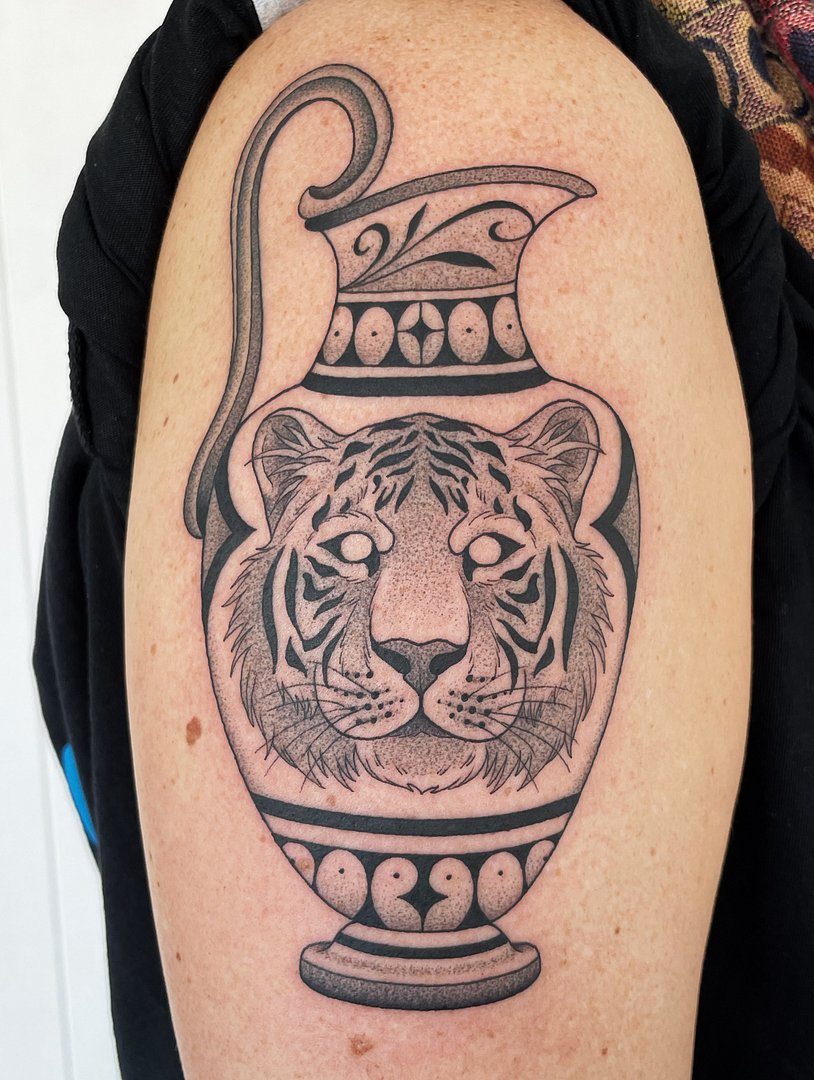
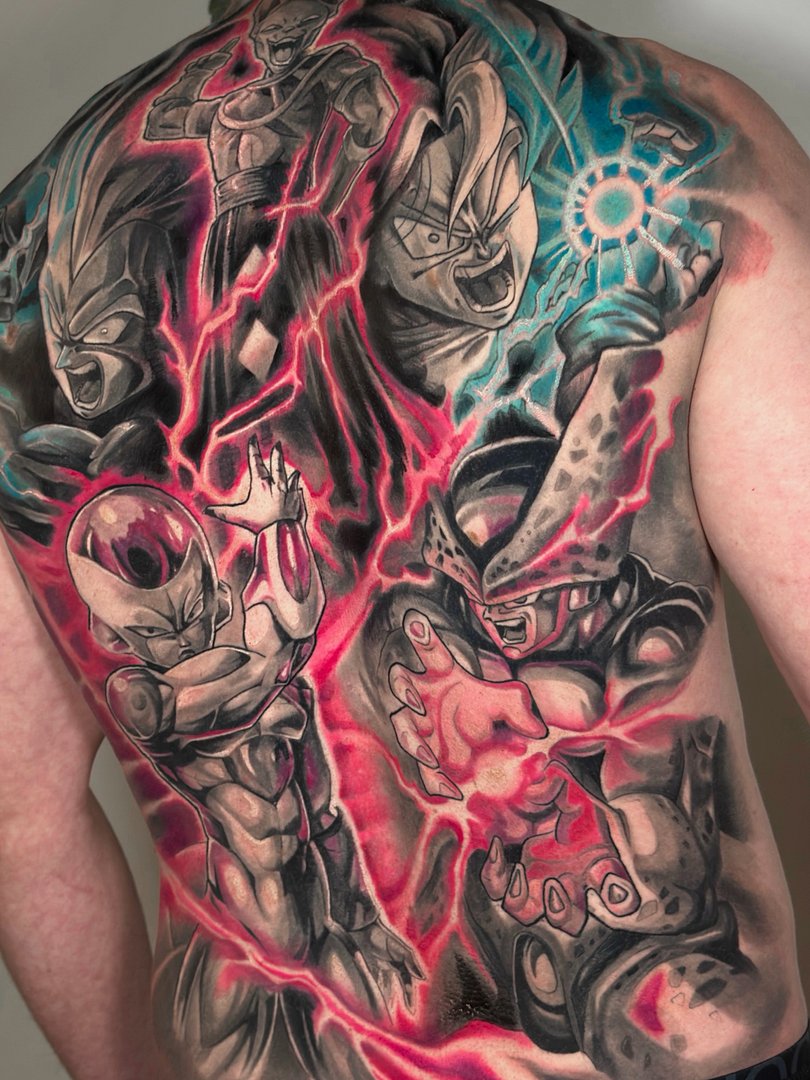
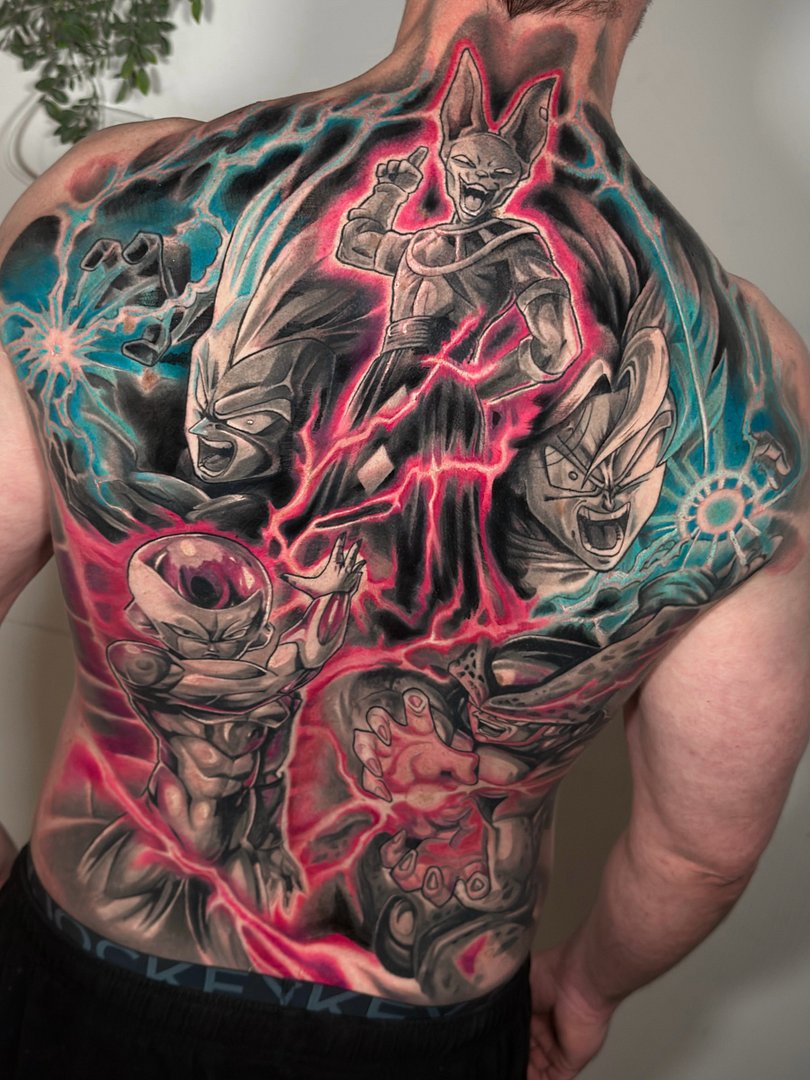
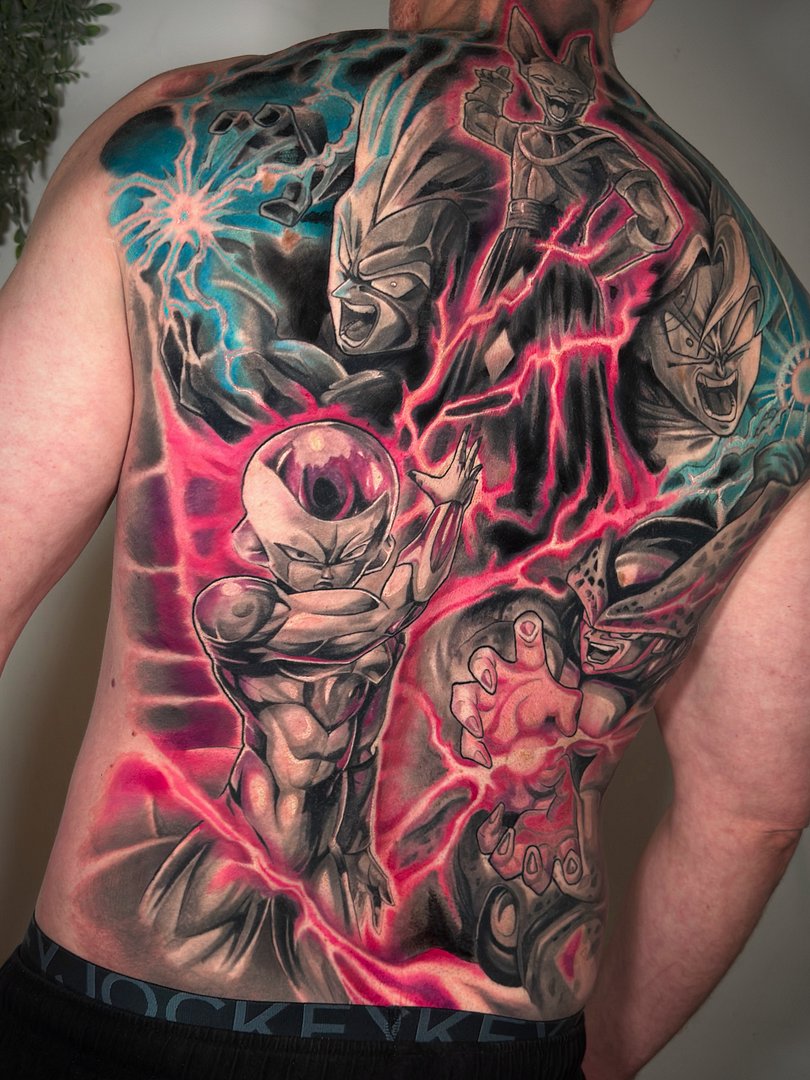
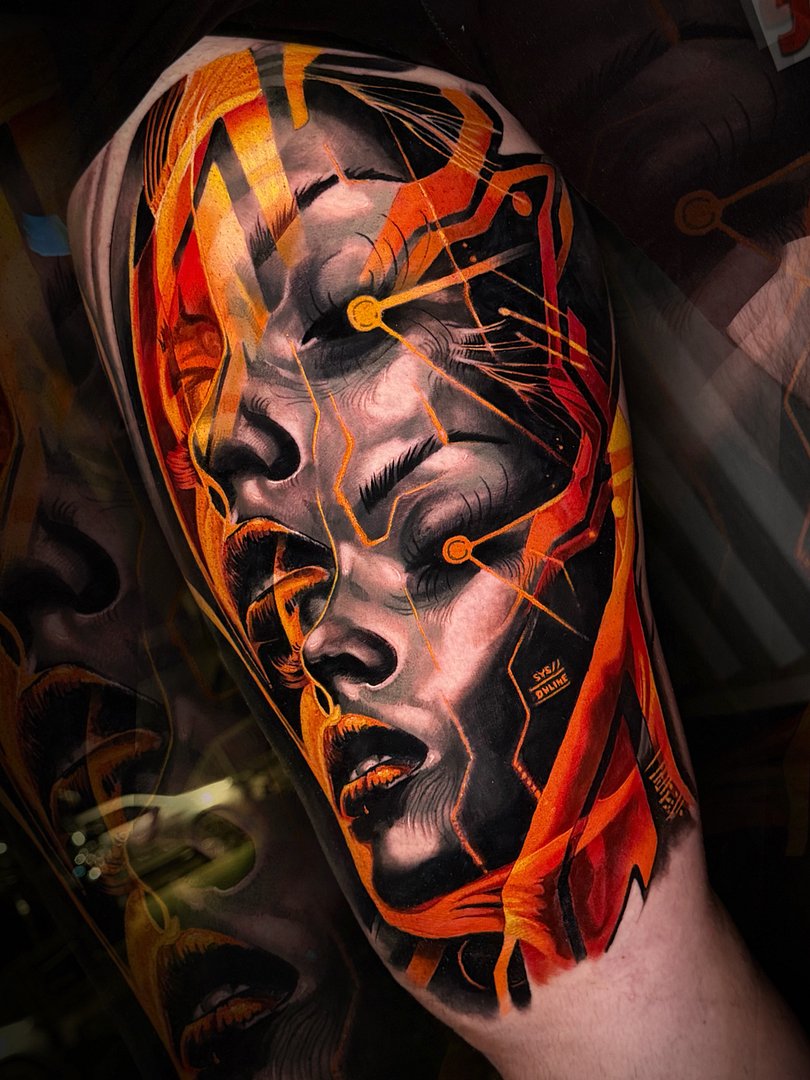
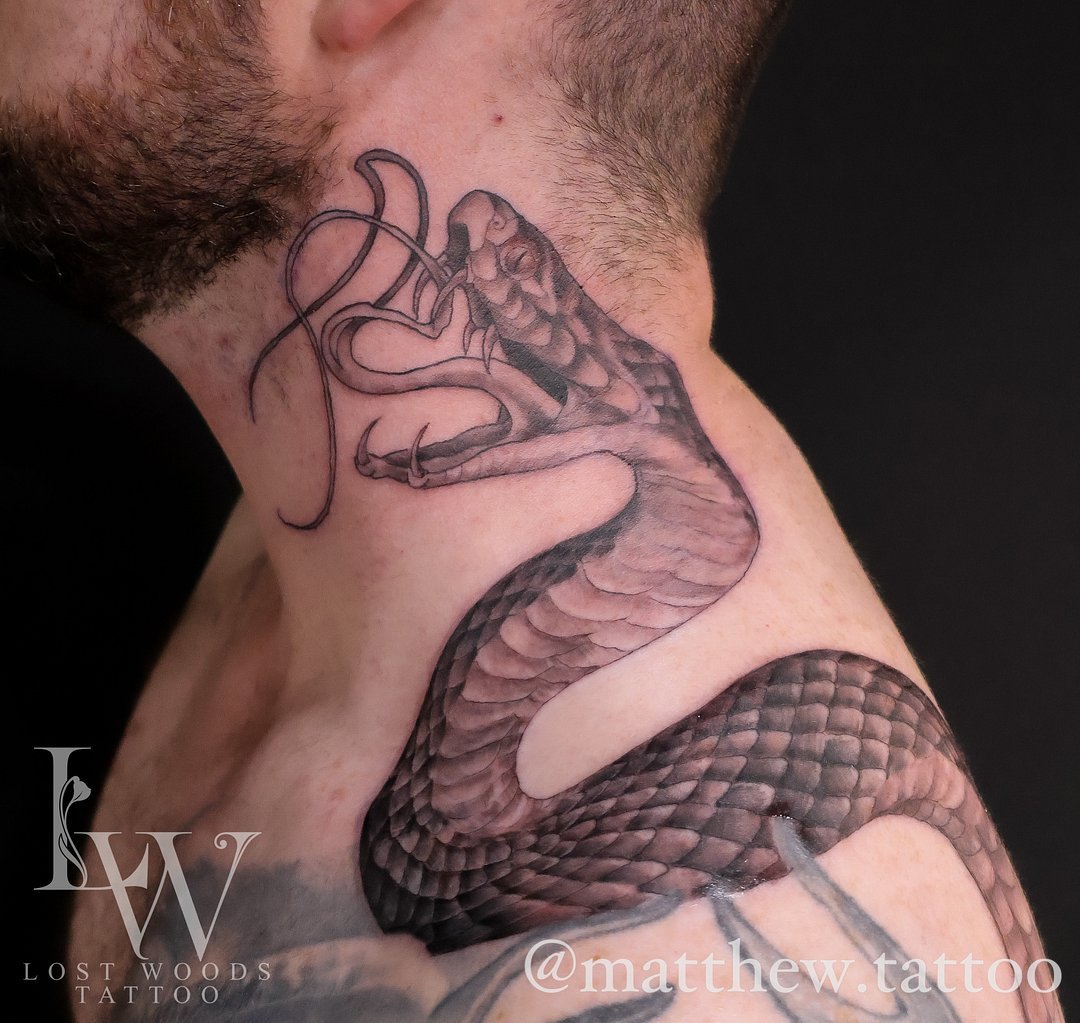
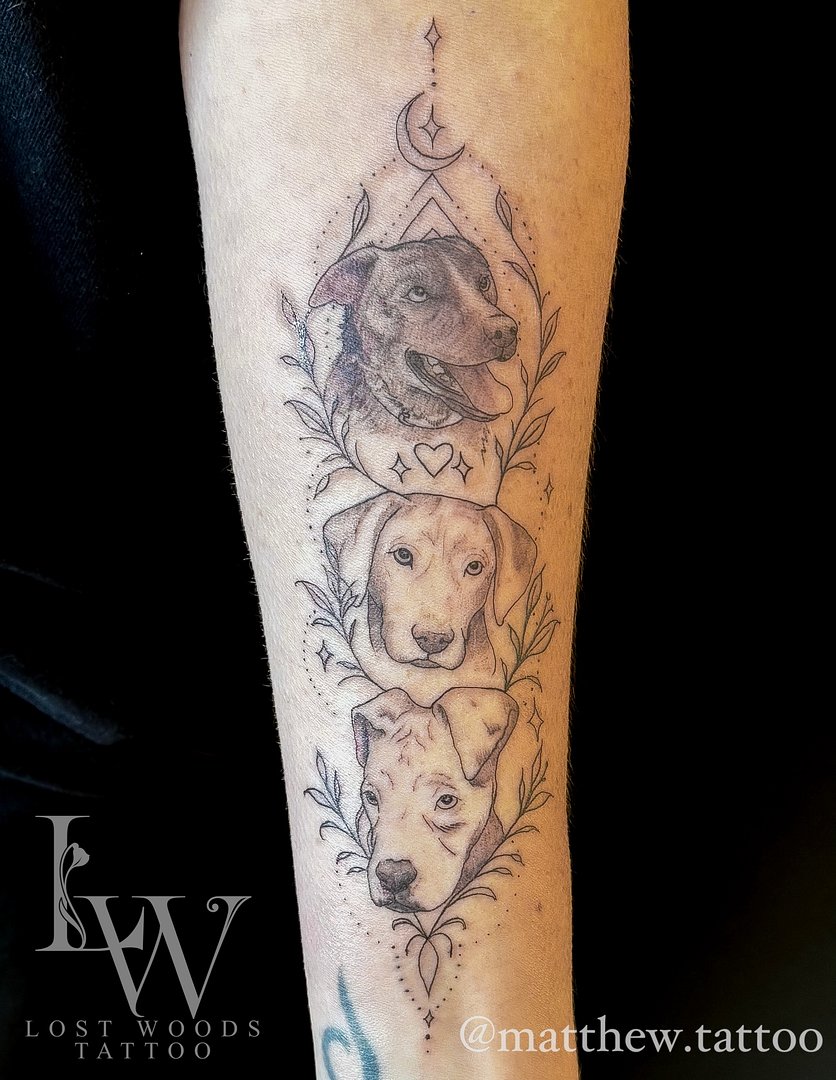
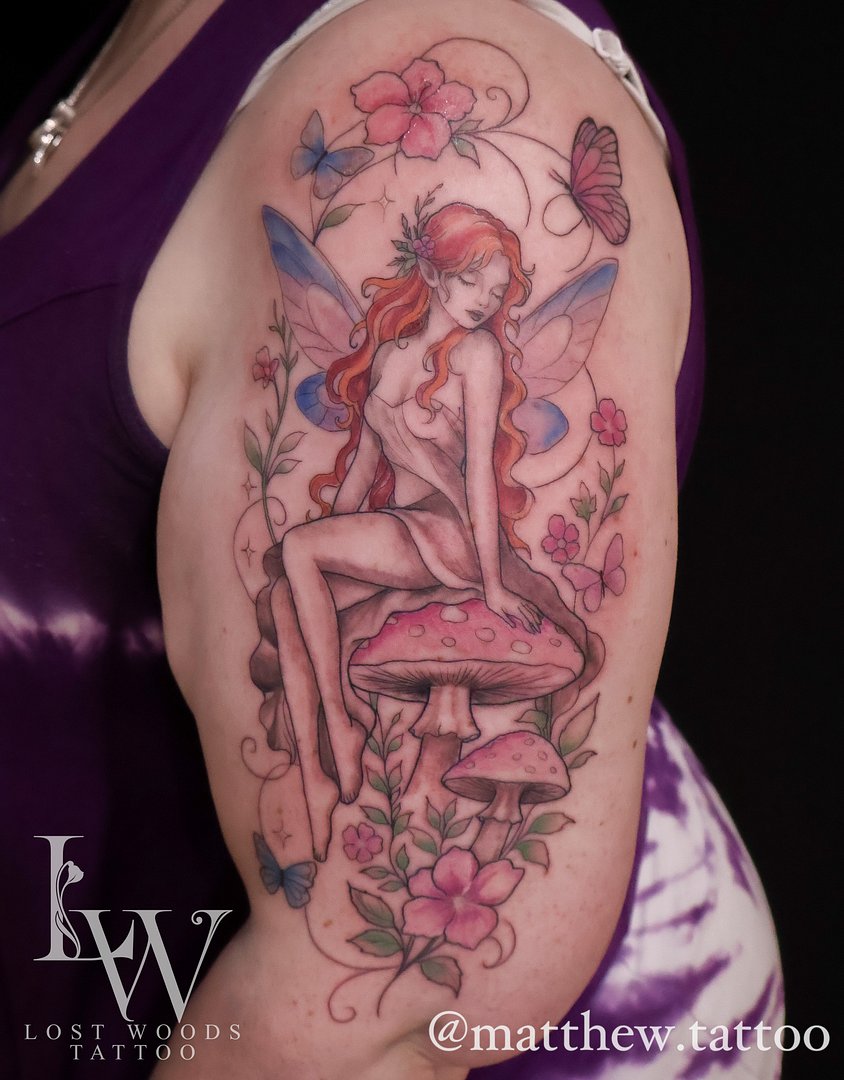
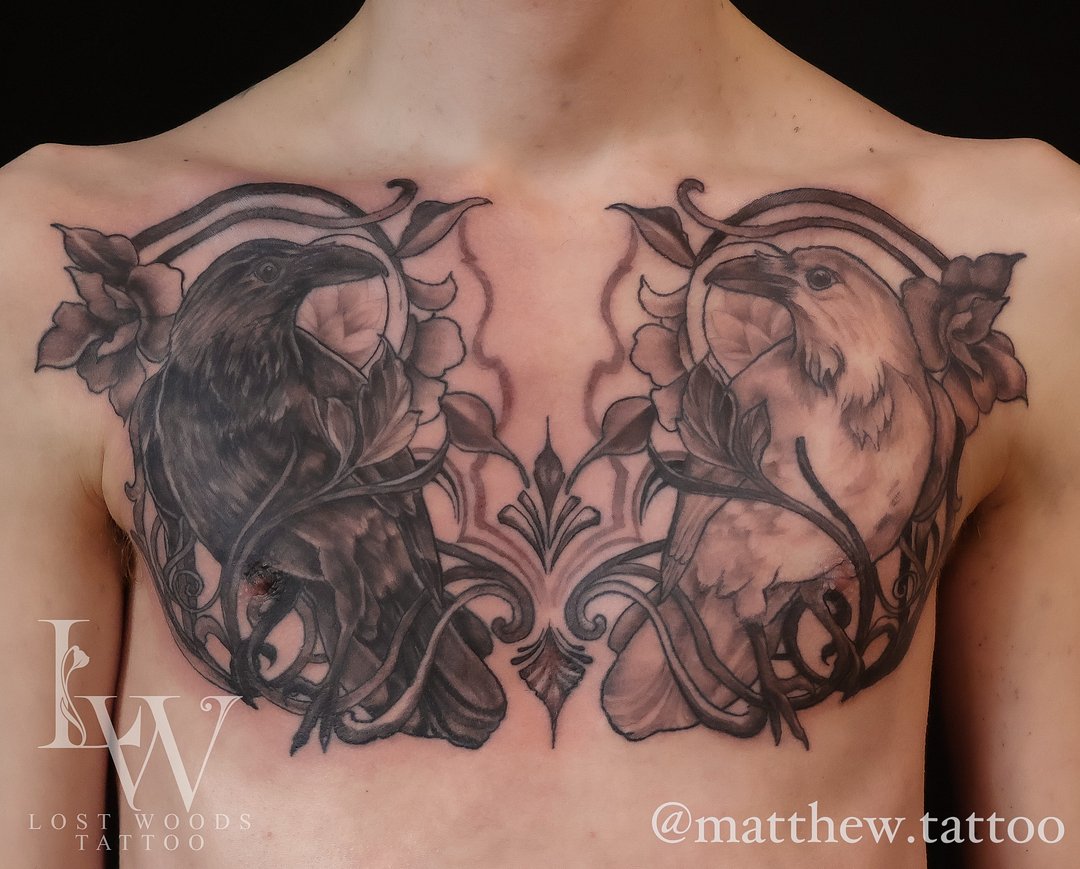
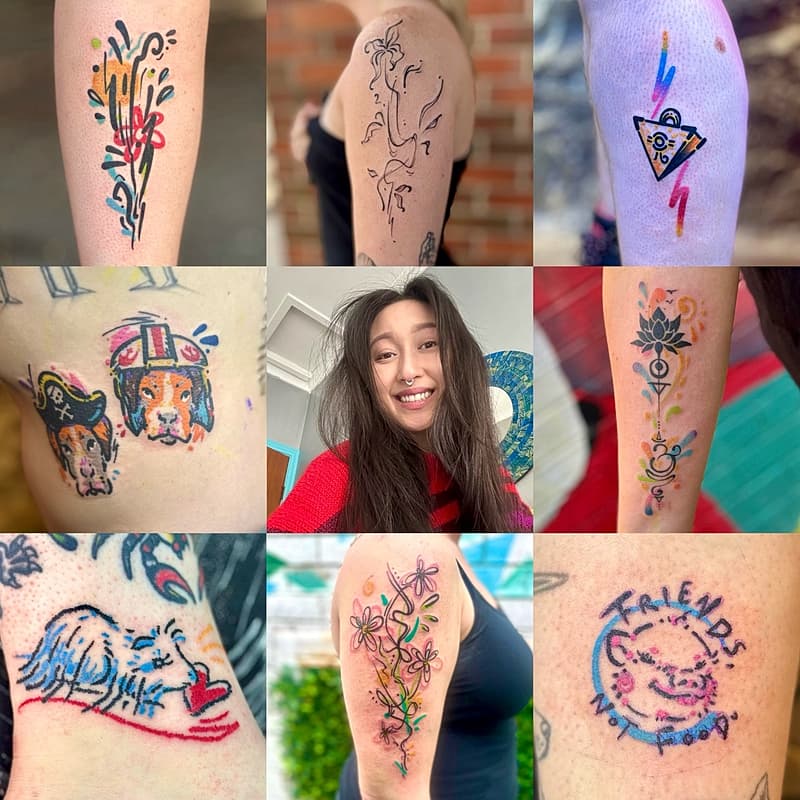
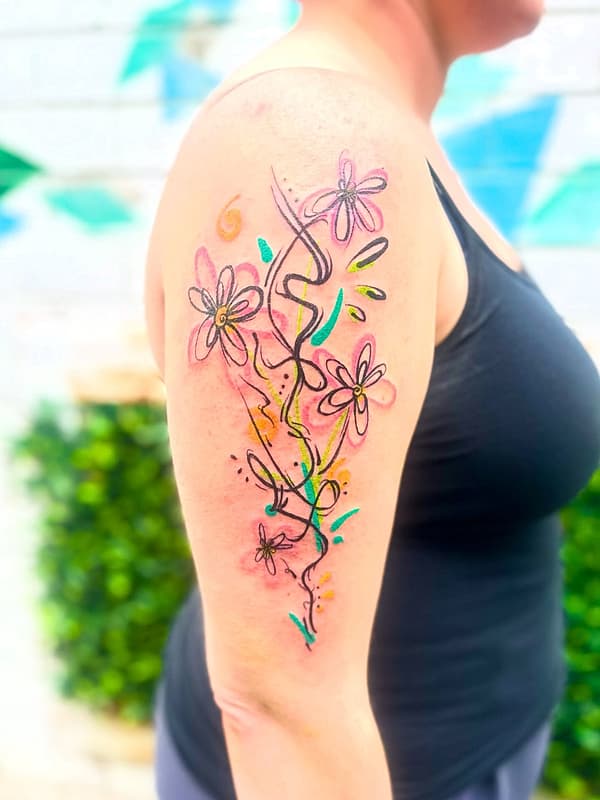
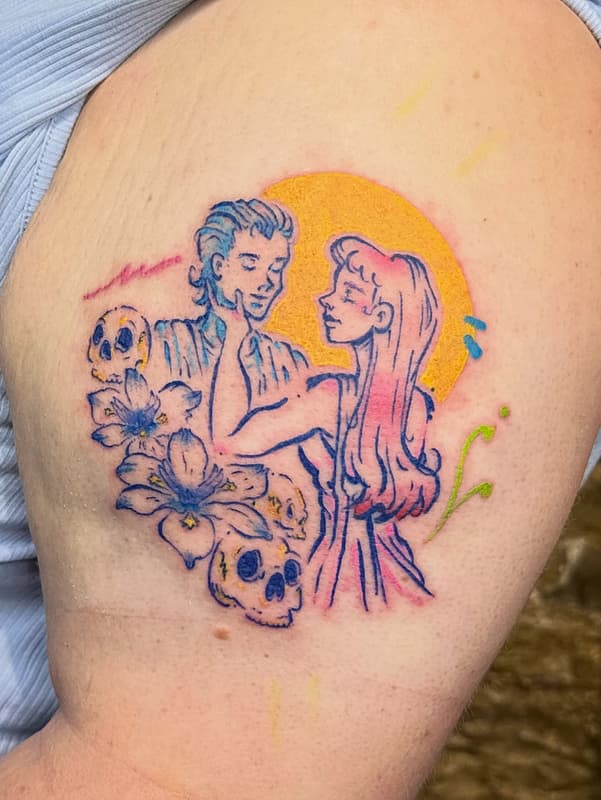

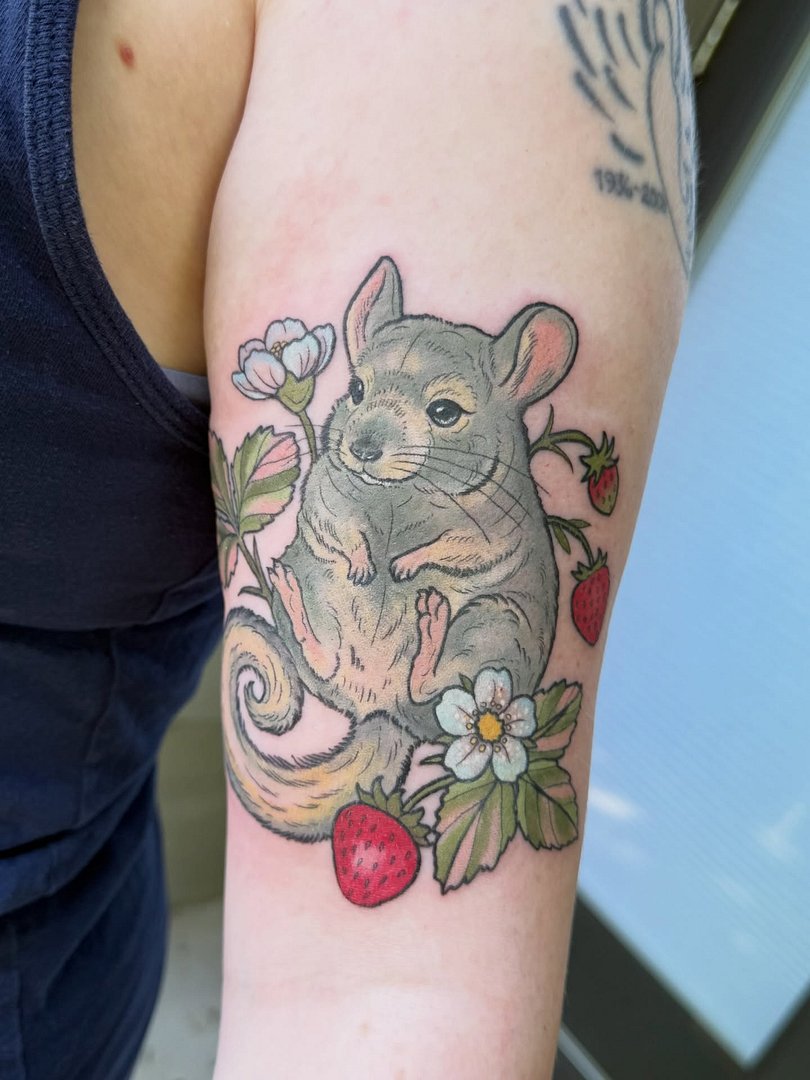
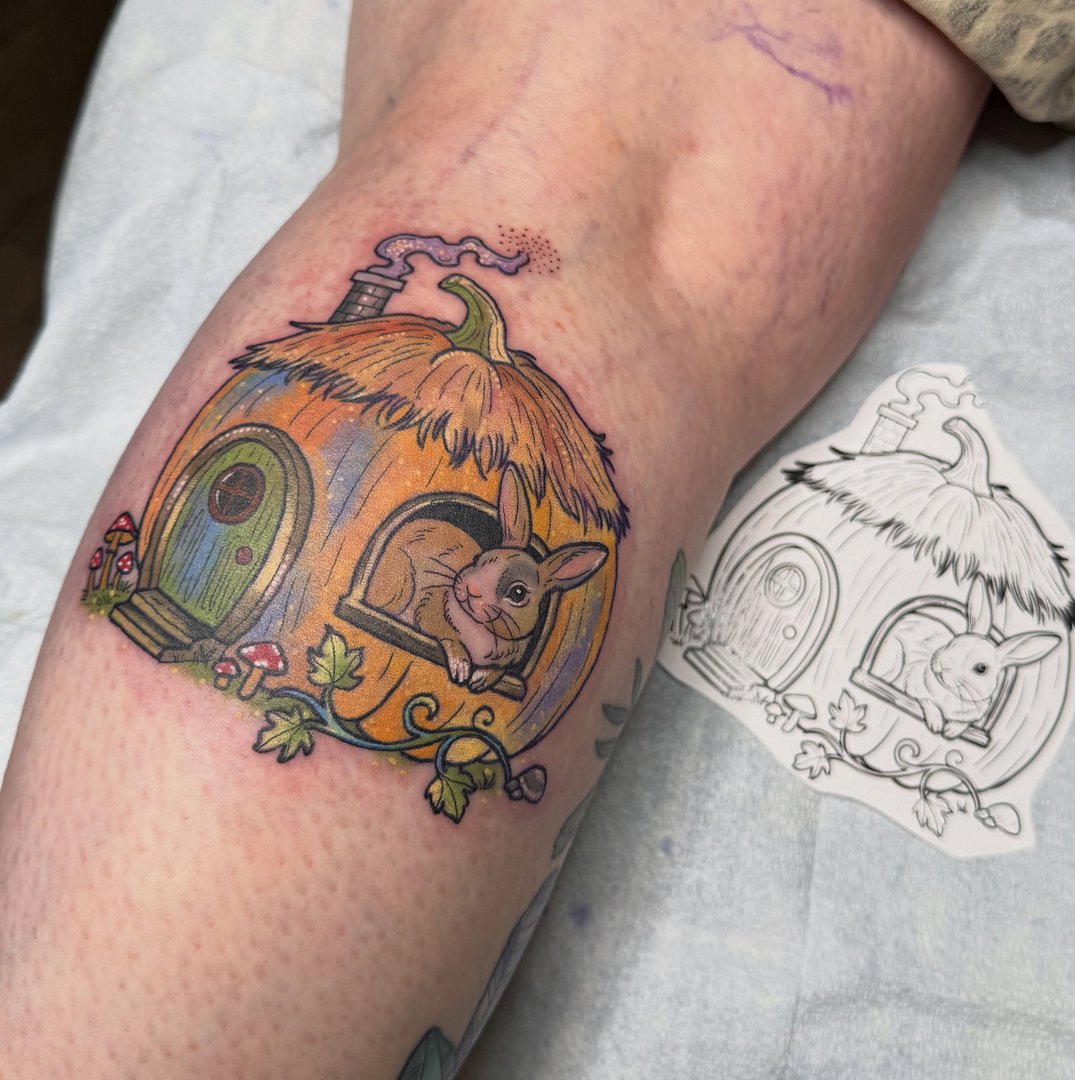
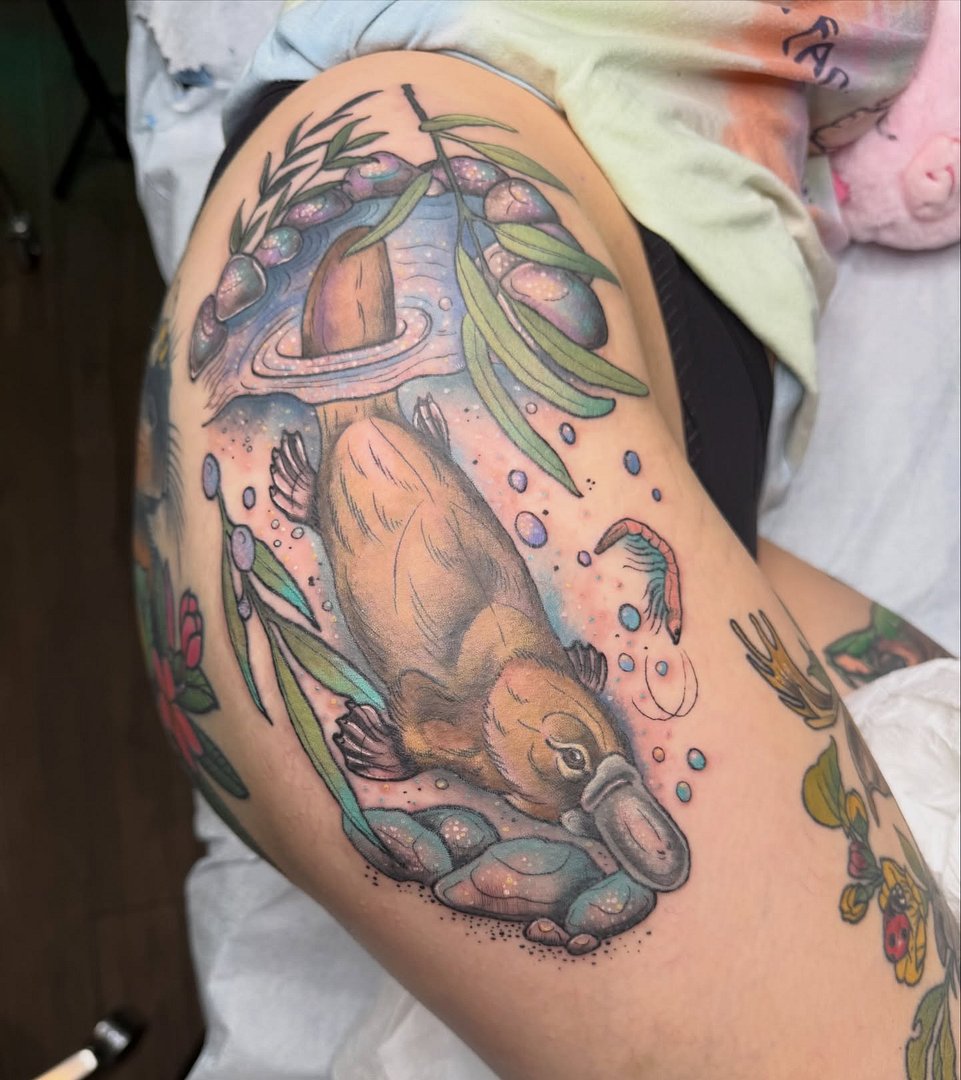

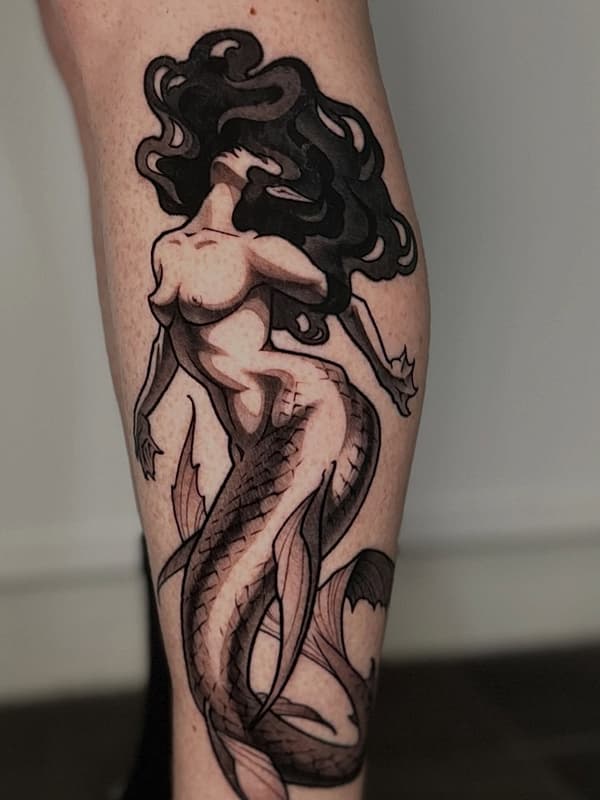
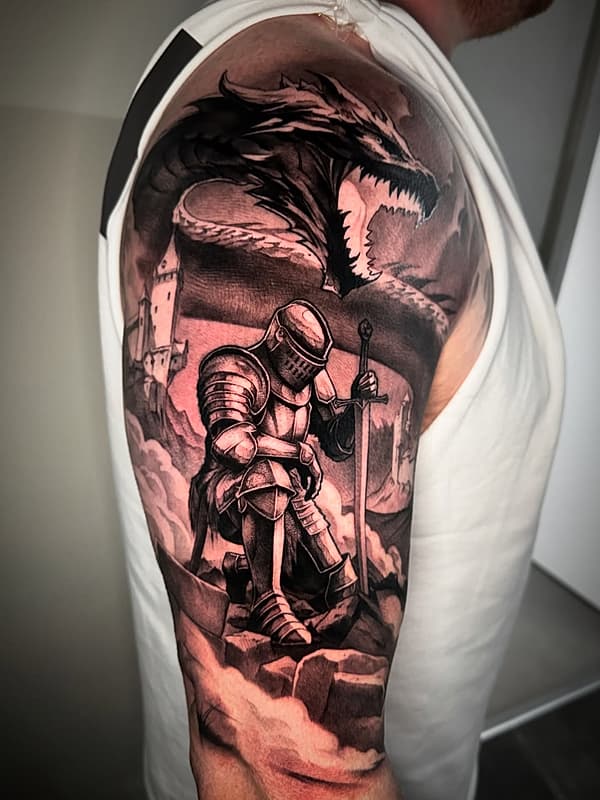
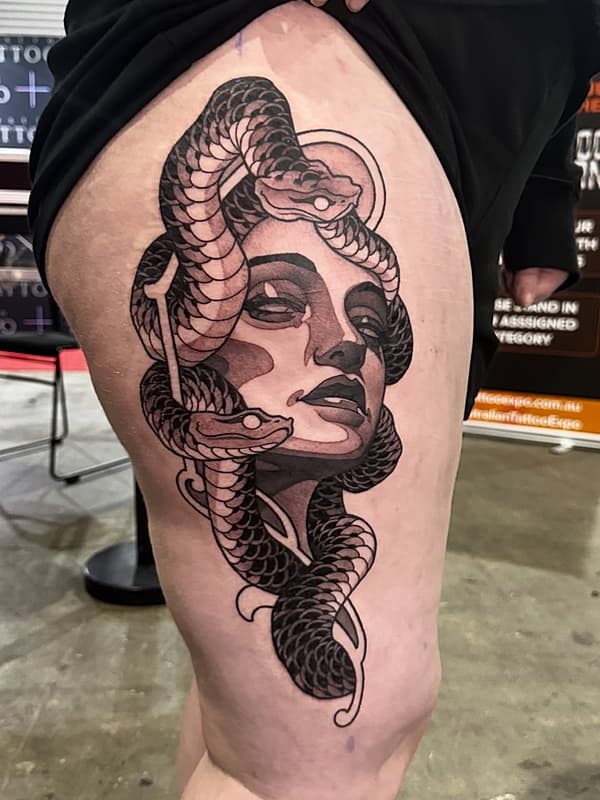

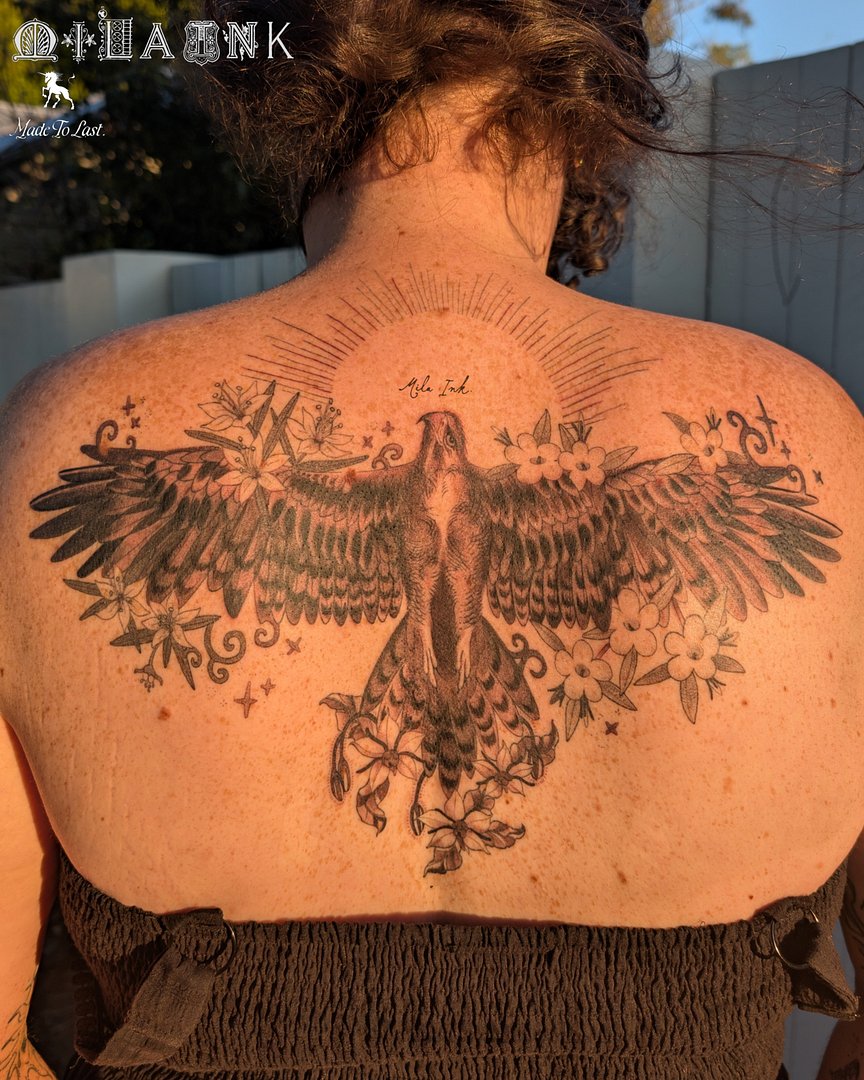
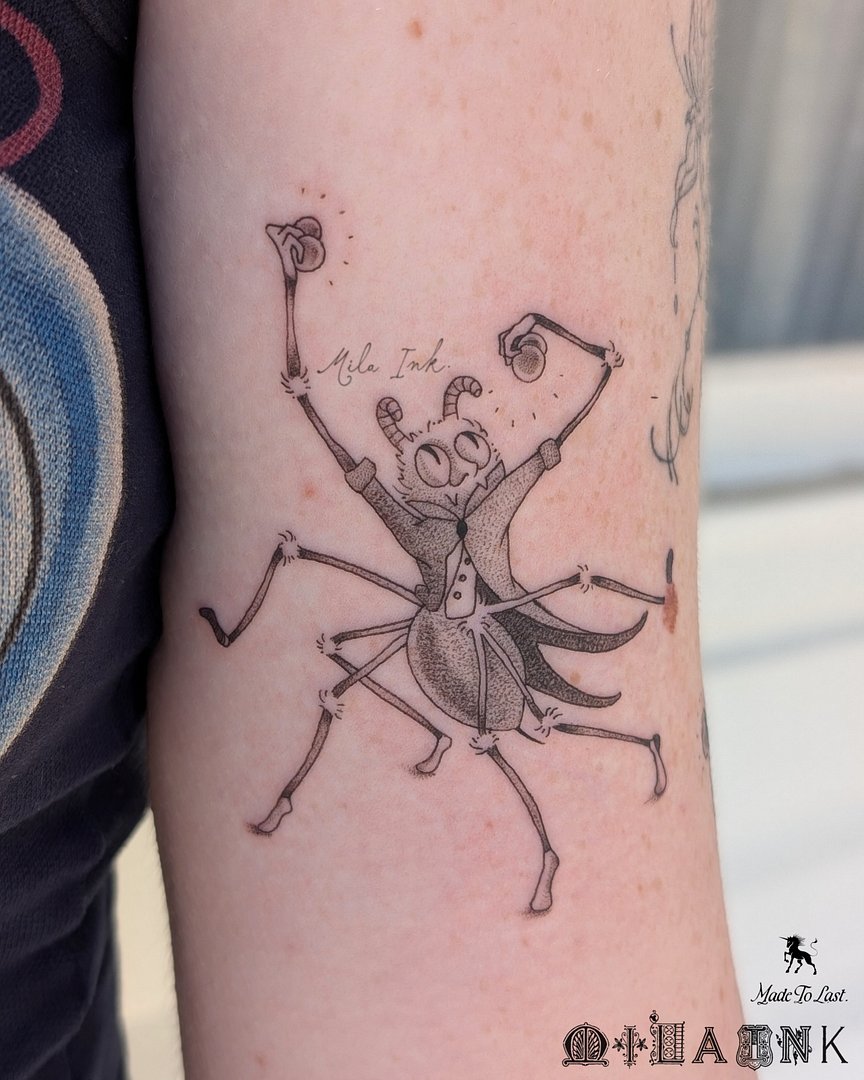
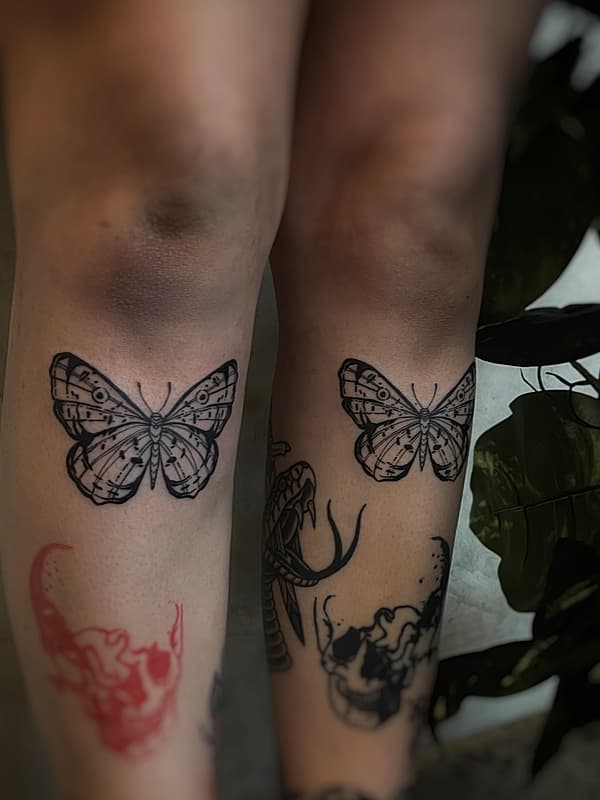
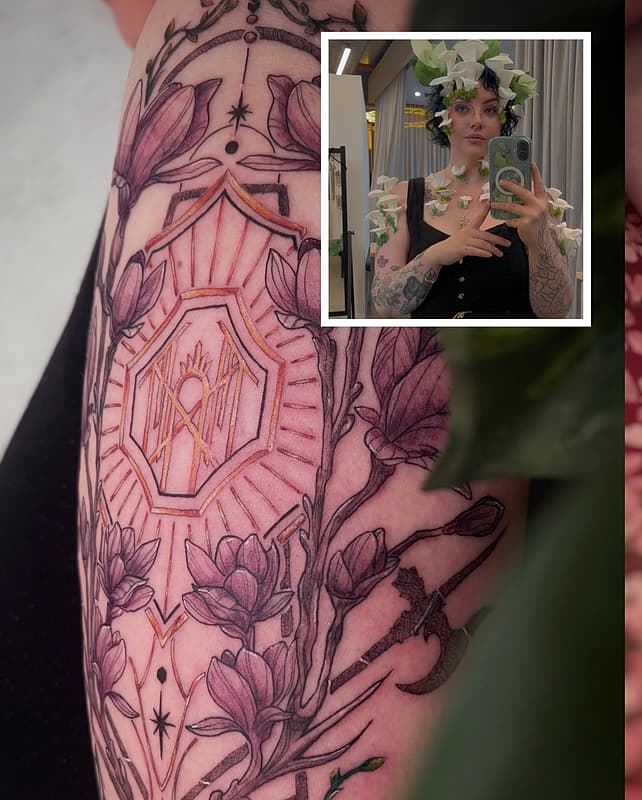
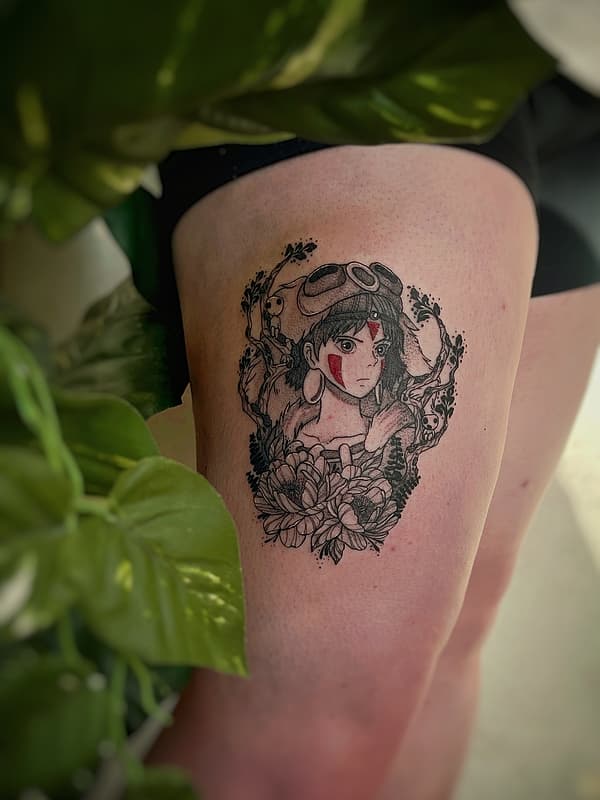
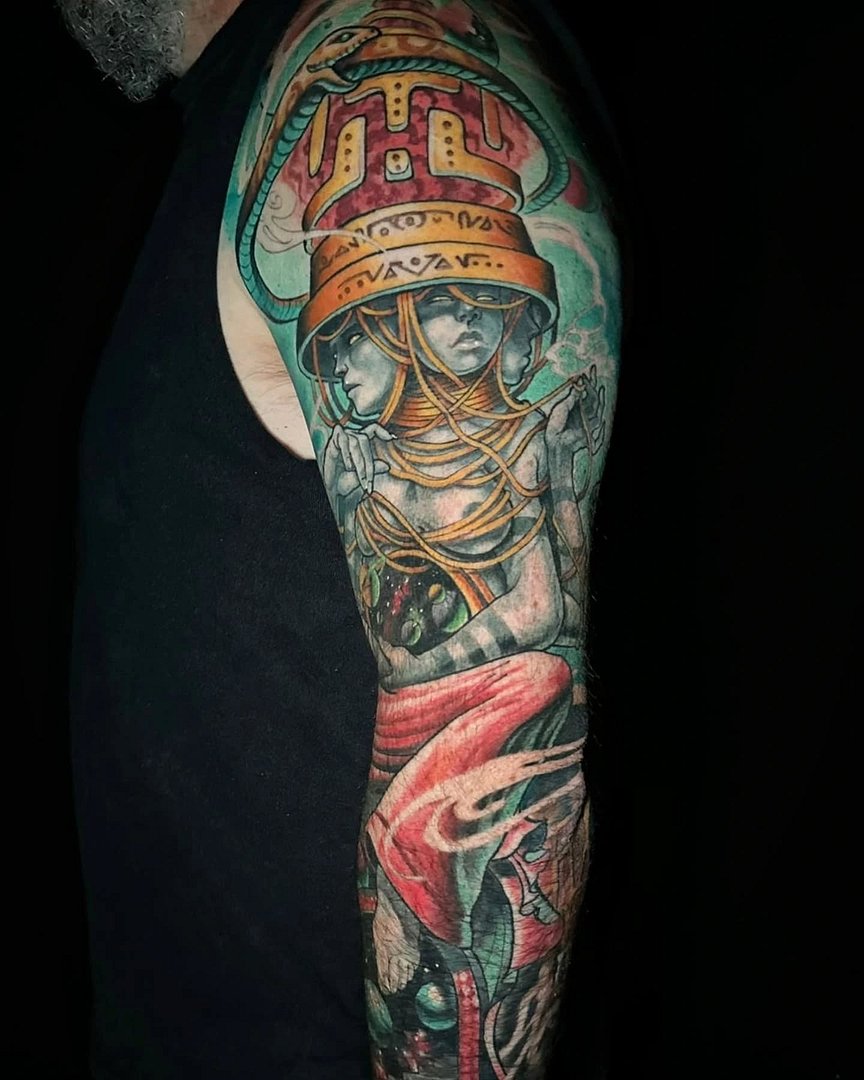
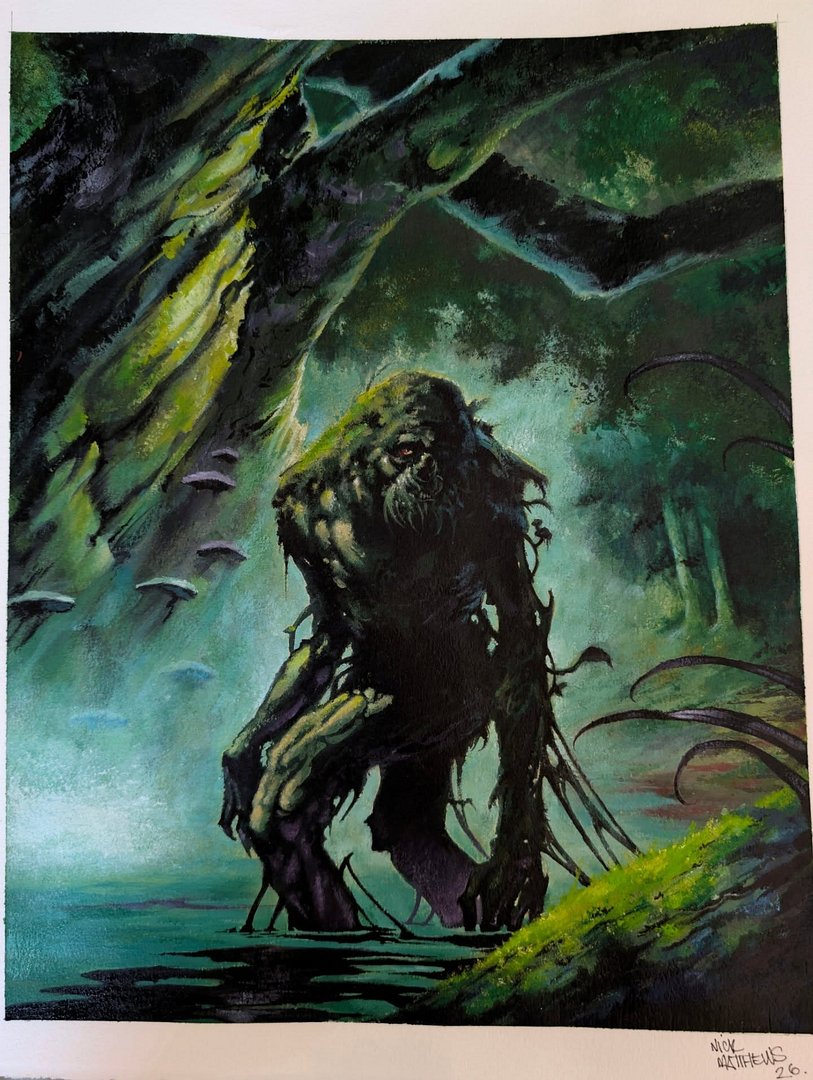
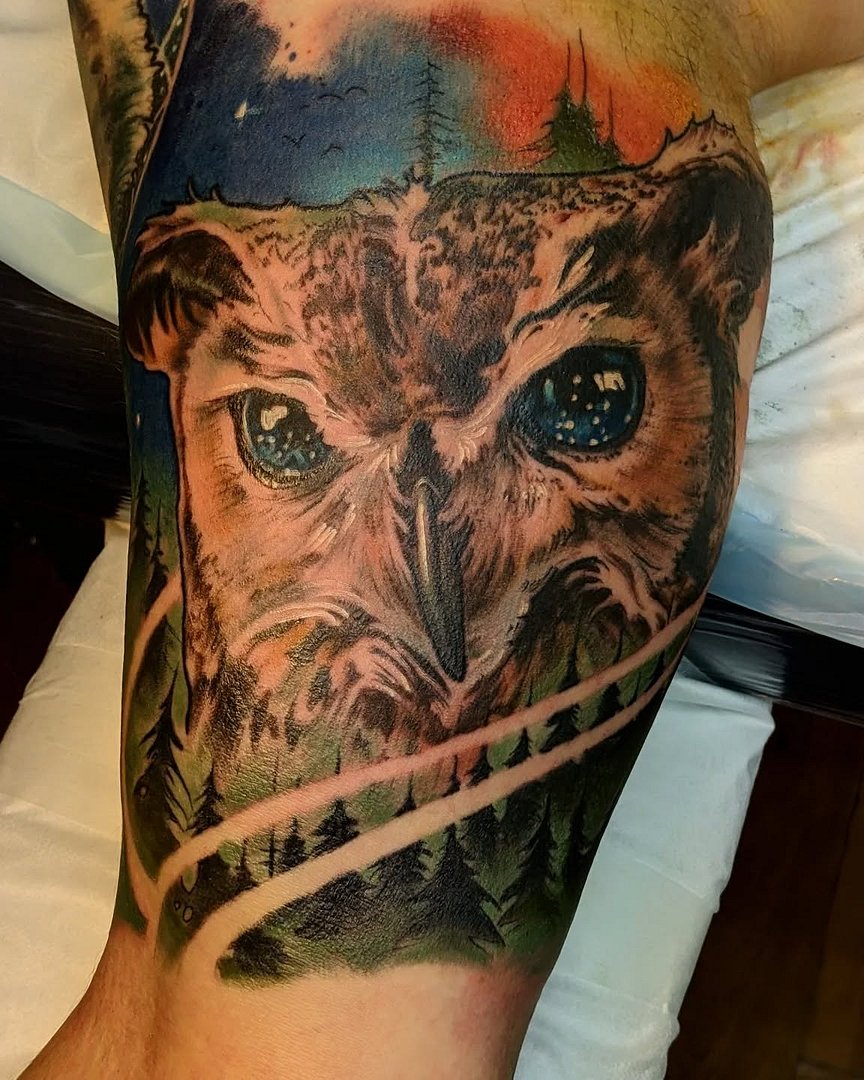

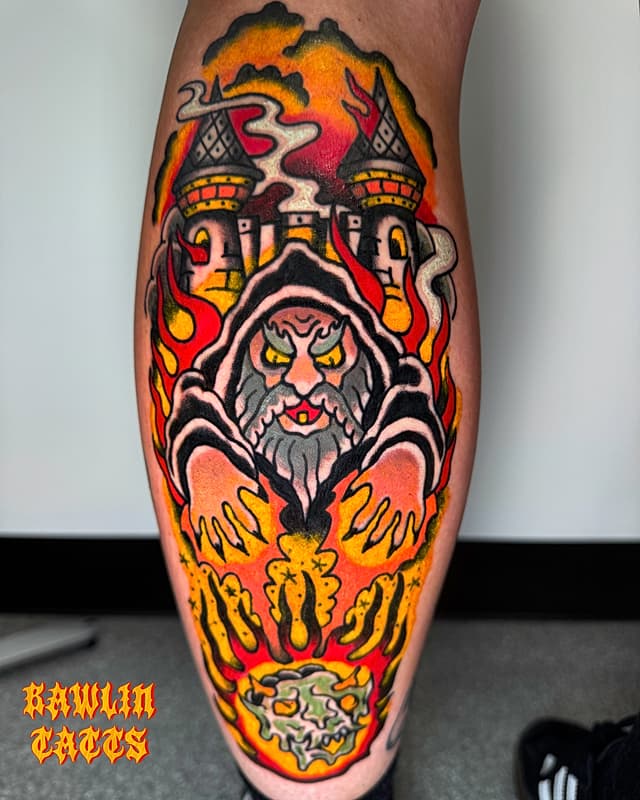
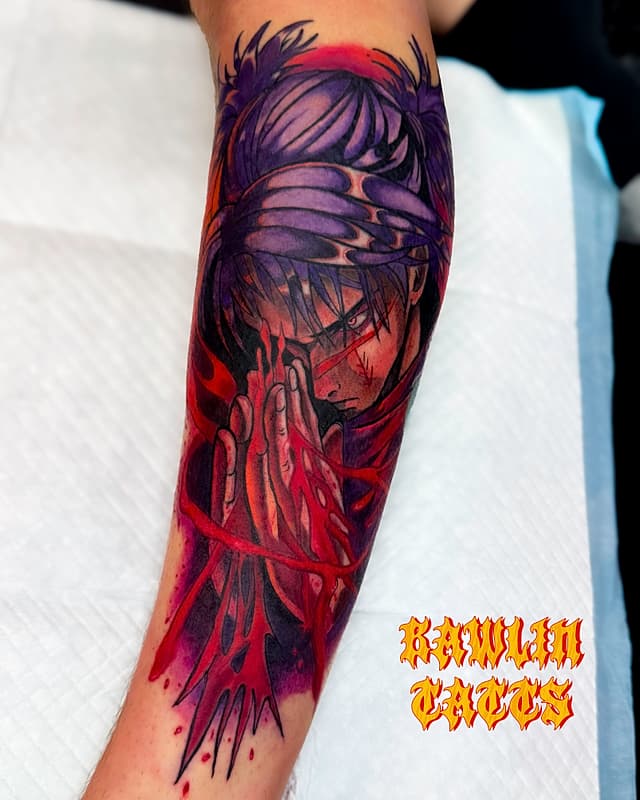
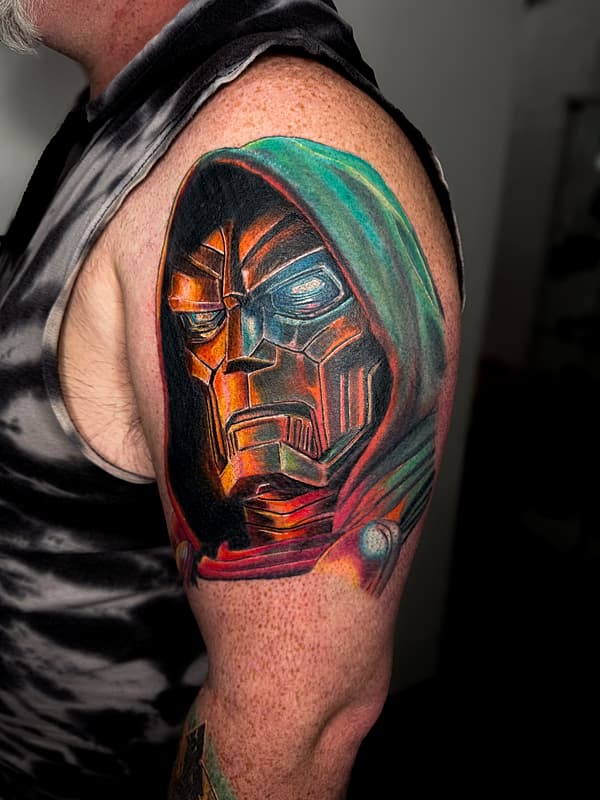
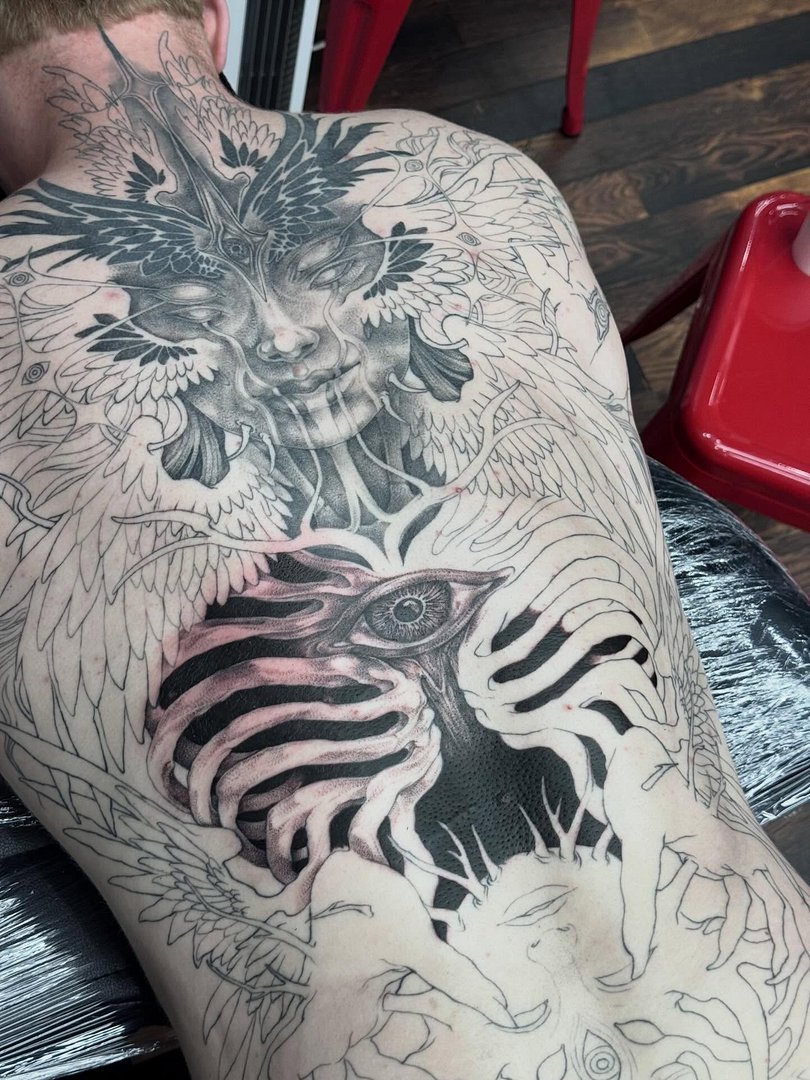
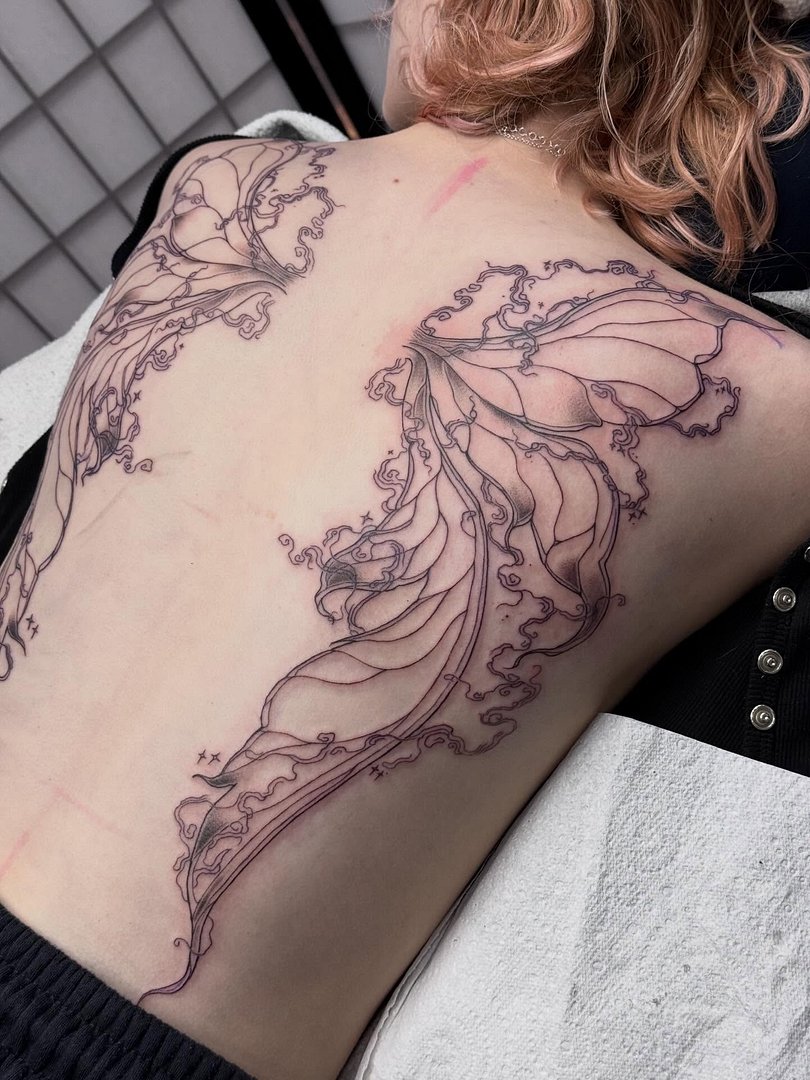
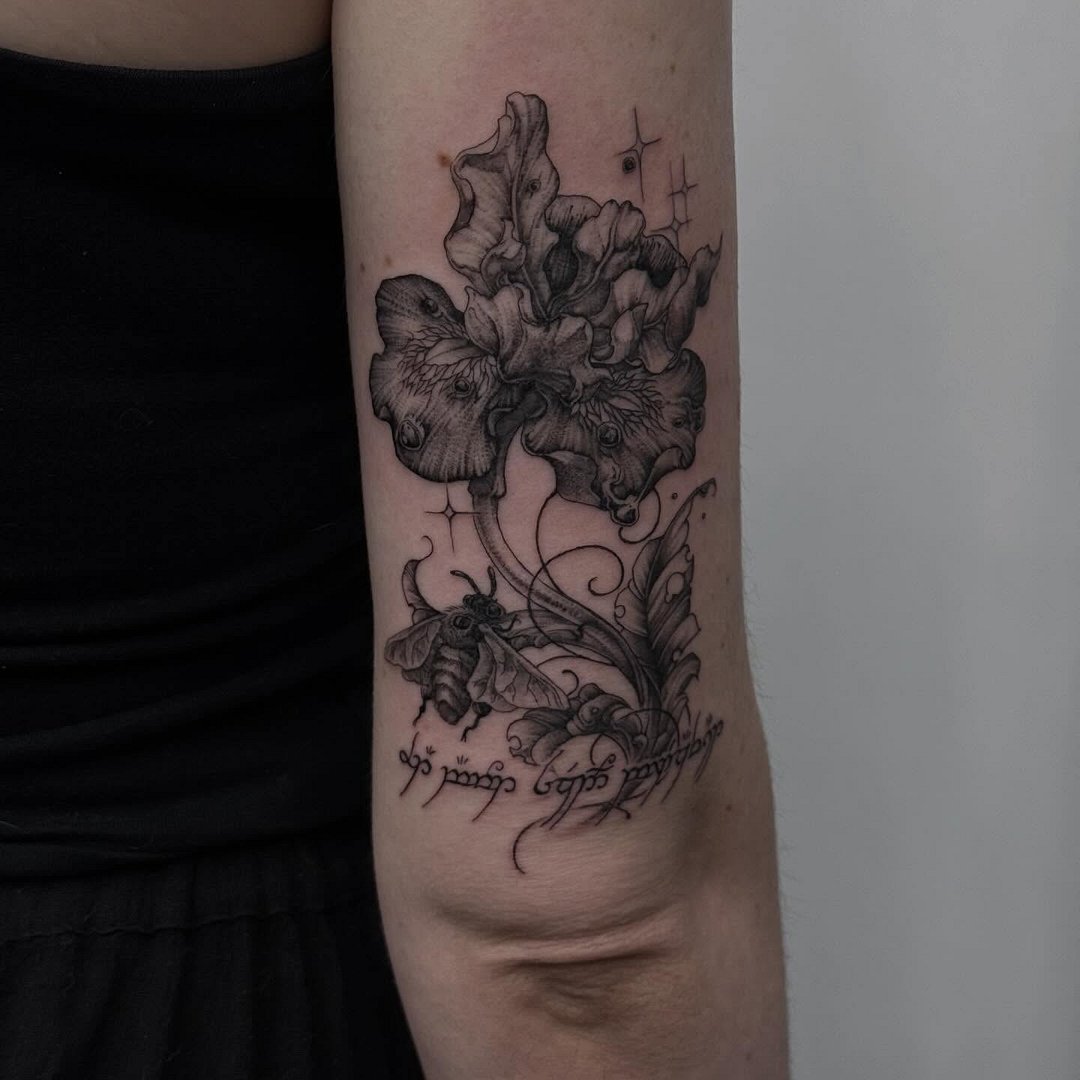
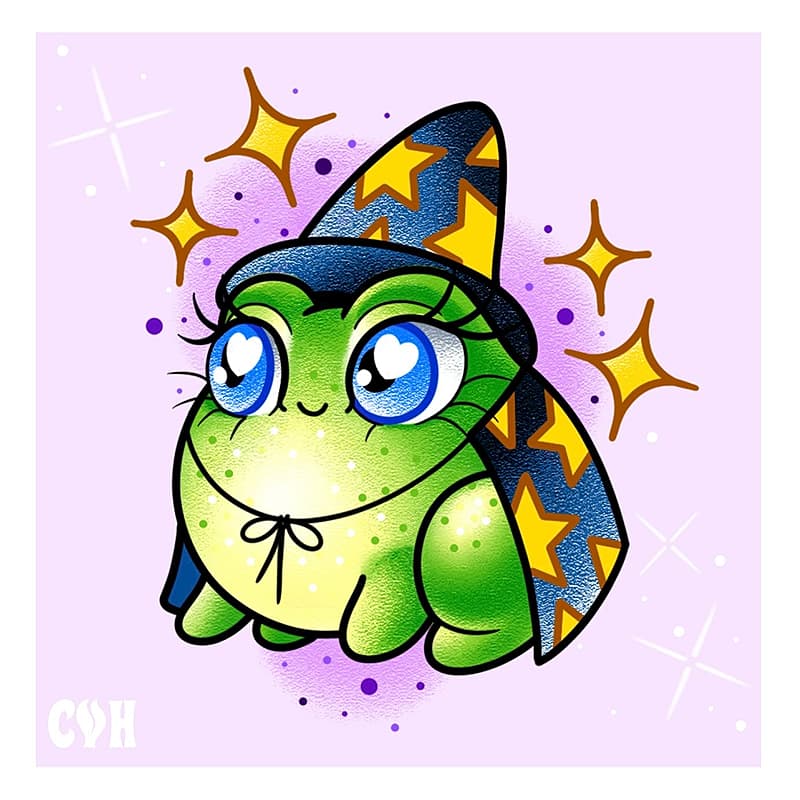
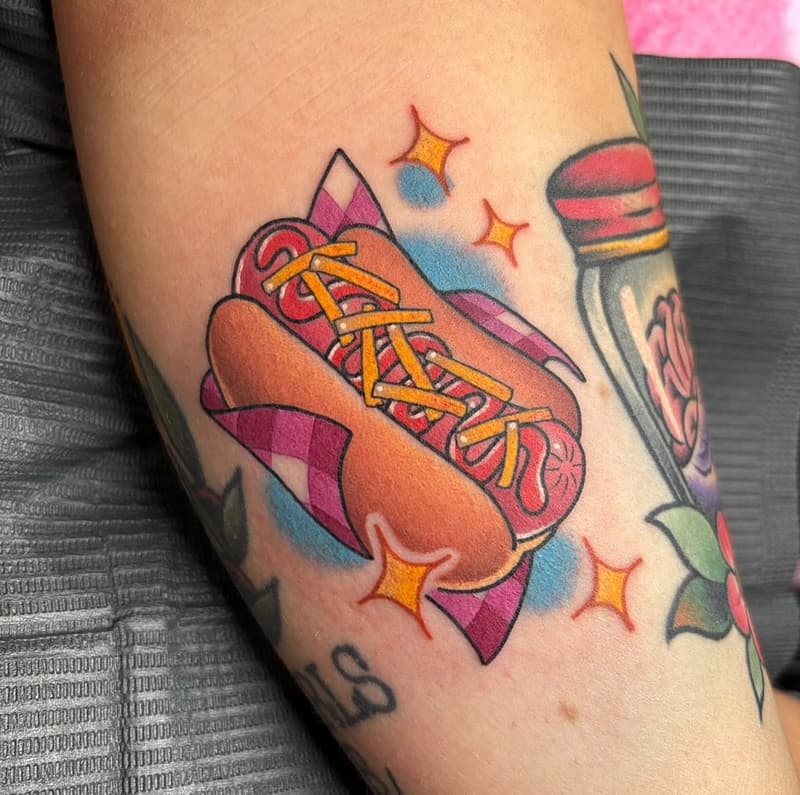
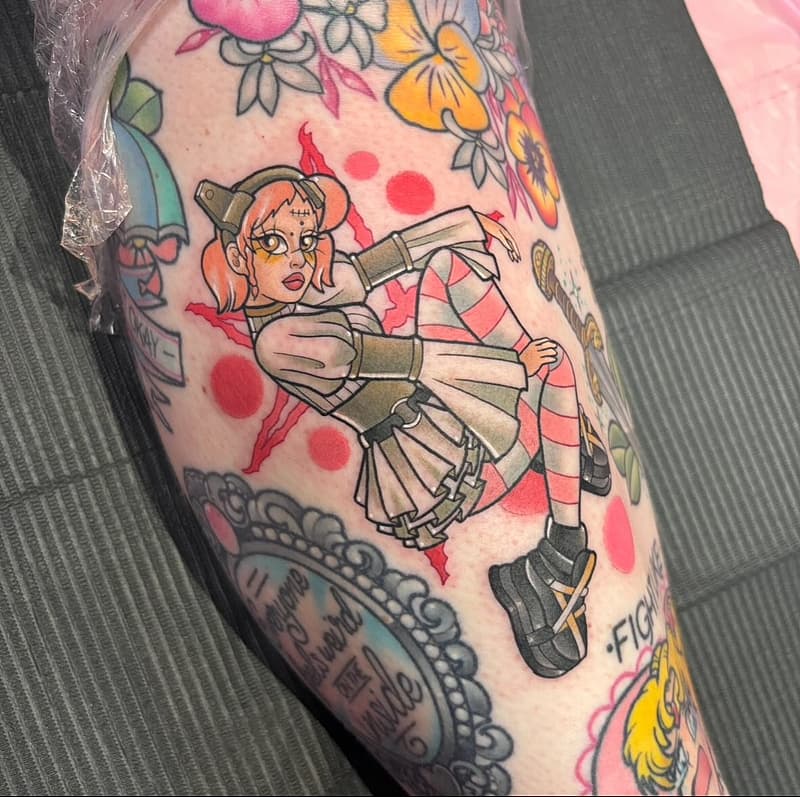

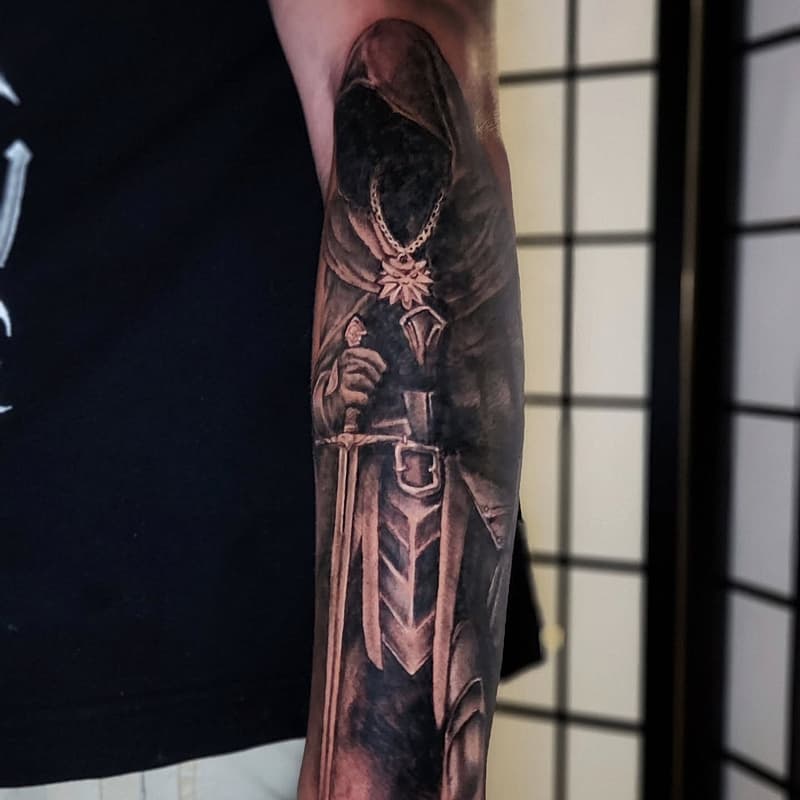
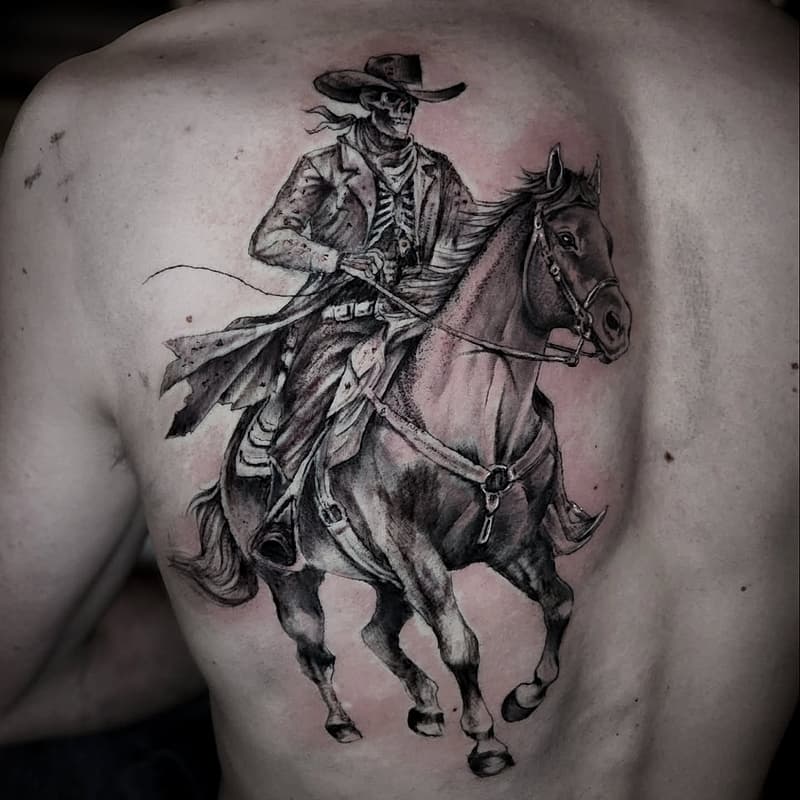
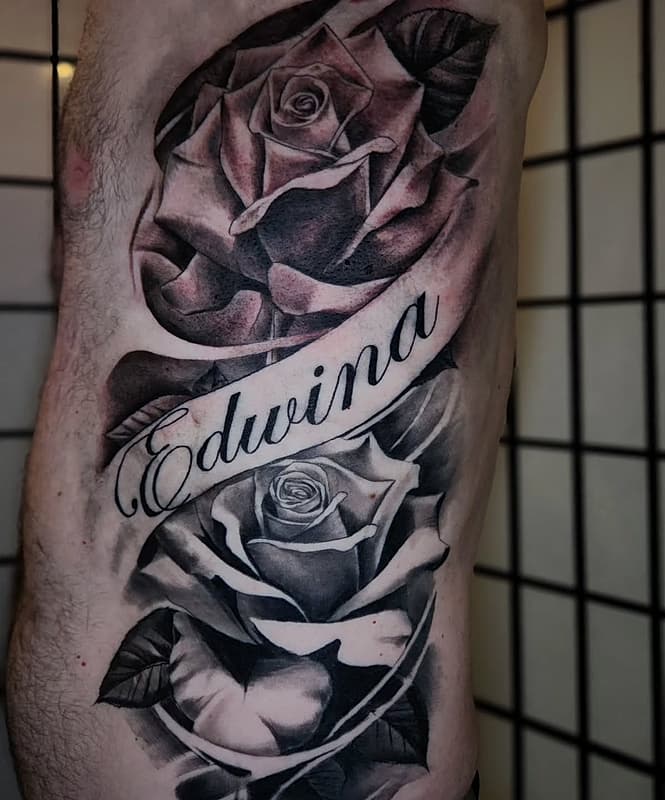

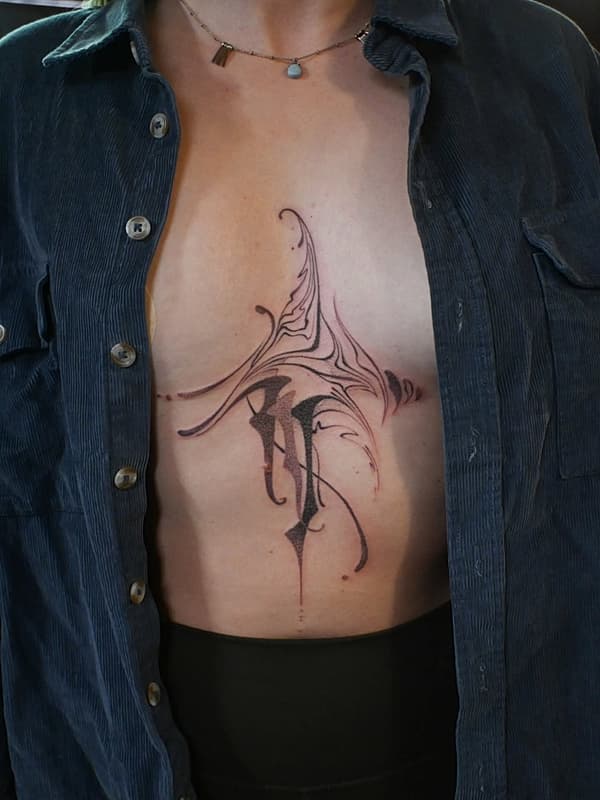
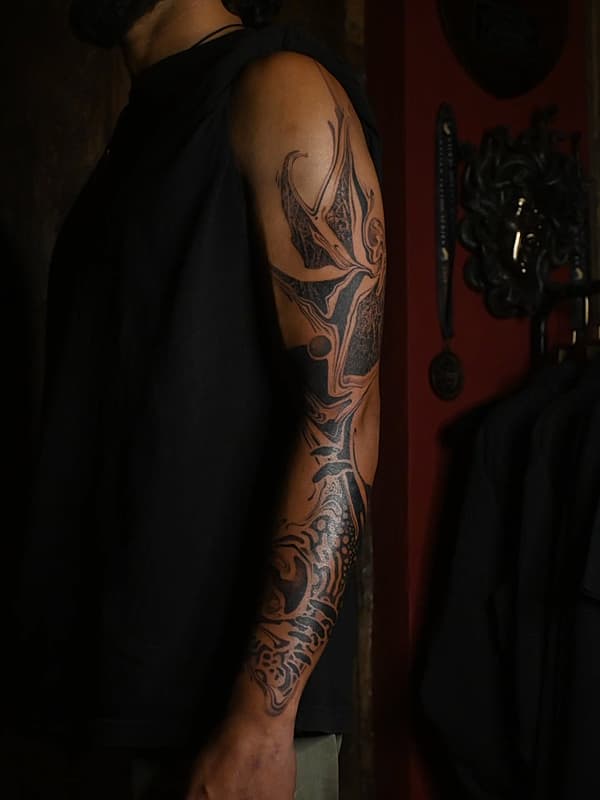
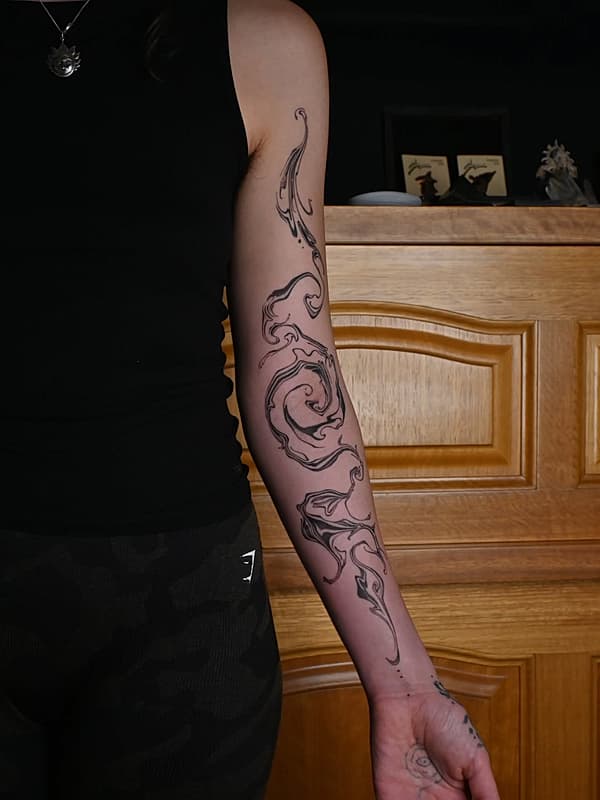
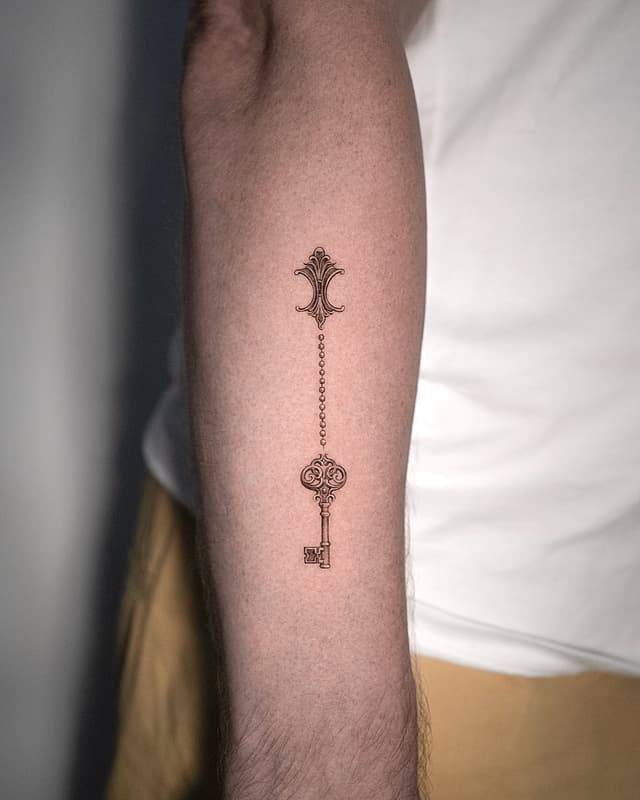
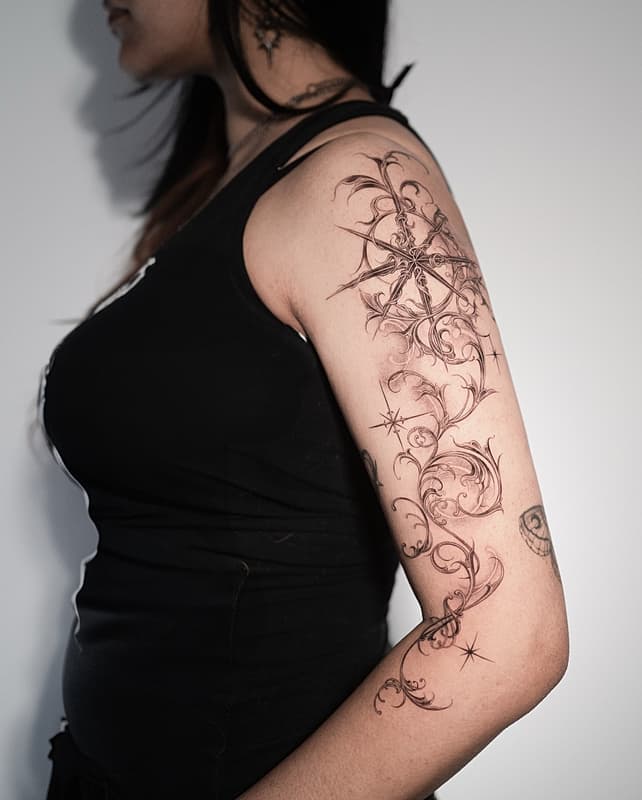
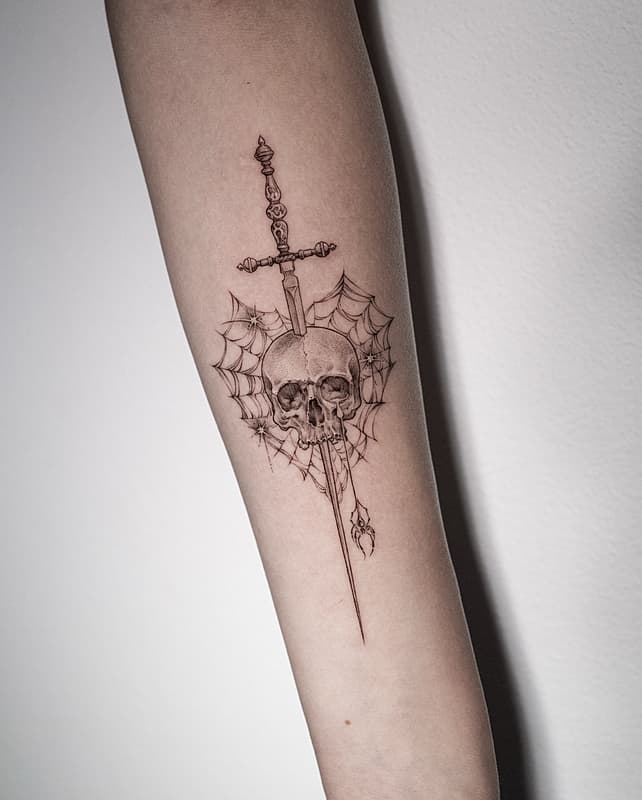

Artistic illustration-style tattoos that look like drawings on skin, often with sketch-like qualities and creative compositions.
Illustrative tattooing translates the aesthetics of illustration, drawing, and fine art onto skin. The style is intentionally broad, encompassing work that looks like book illustrations, sketches, etchings, paintings, or graphic art. What unites illustrative work is its artistic, often handcrafted quality. Rather than mimicking photography like realism or following strict traditional conventions, illustrative tattooing celebrates the artist's individual style and interpretation. This makes it one of the most diverse tattoo categories, with artists bringing backgrounds in fine art, graphic design, animation, and illustration to create genuinely unique work. Technically, illustrative tattooing might incorporate elements of other styles, including fine lines, bold outlines, detailed shading, and colour work, combined according to each artist's vision. The best illustrative artists develop distinctive personal styles that collectors seek out specifically. This is tattooing as genuine artistic expression, where the artist's creative voice is central to the appeal.
What to look for: Look for artists whose portfolio reflects a consistent personal style that resonates with your aesthetic taste. Technical skill matters, but so does artistic vision. Check that their illustrative approach suits the subject matter you want. Many illustrative artists have fine arts or design backgrounds, and this depth often shows in their work's sophistication and conceptual strength.
203 artists specialising in Illustrative across Australia
Illustrative tattoos vary enormously in time requirements depending on the specific approach and complexity. Simple sketch style pieces might take two to four hours, while detailed illustrative work with extensive shading or colour could require eight to fifteen hours or more. The diversity of the style means some illustrative work is relatively quick while other pieces are intensely detailed. Artists with particular illustrative approaches may work at different paces. Painterly techniques might be quicker than highly detailed etching styles. Discuss timing expectations with your chosen artist based on their specific approach. Larger illustrative projects like sleeves typically require multiple sessions and 20 to 50 hours of work.
The pain from illustrative tattoos correlates more with placement and session length than the illustrative style itself. Detailed illustrative work takes longer, meaning more cumulative time under the needle, which can be tiring. However, the techniques used in illustrative work, whether fine lines, shading, or colour packing, don't differ dramatically from other styles in terms of sensation. Lighter, sketchy illustrative work might feel less intense than heavily saturated styles. Very detailed pieces on sensitive areas will be challenging, as with any tattoo. The key is working with an artist who communicates well about session planning and understands pacing. Breaking detailed illustrative work into multiple sessions makes even complex pieces manageable.
Illustrative tattoo pricing depends heavily on the artist's experience and the complexity of their particular approach. Hourly rates range from $150 to $400, with well established illustrative artists often commanding premium rates reflecting their artistic reputation. Simple illustrative pieces might cost $200 to $600, while complex detailed work could run $800 to $3,000 or more. Illustrative sleeves from sought after artists can cost $5,000 to $15,000. Many illustrative artists have waiting lists and strong demand that influences their pricing. The style often attracts collectors seeking genuine artistic work, who understand that unique creative vision carries value. Commissioning from a distinctive illustrative artist is an investment in wearable art.
How illustrative tattoos age depends on the specific techniques used within the broad style. Bold illustrative work with strong lines and solid shading ages similarly to traditional or neo traditional tattoos, maintaining readability for decades. Delicate sketch style work or very fine detailed pieces may soften more noticeably, with thin lines spreading slightly over time. Colour work ages according to general principles, with bolder saturation lasting better than subtle gradients. The diversity of illustrative approaches means discussing longevity with your specific artist is important. Experienced illustrative artists design with ageing in mind, recommending appropriate sizing and technique choices for lasting results. Sun protection remains crucial for all illustrative work.