
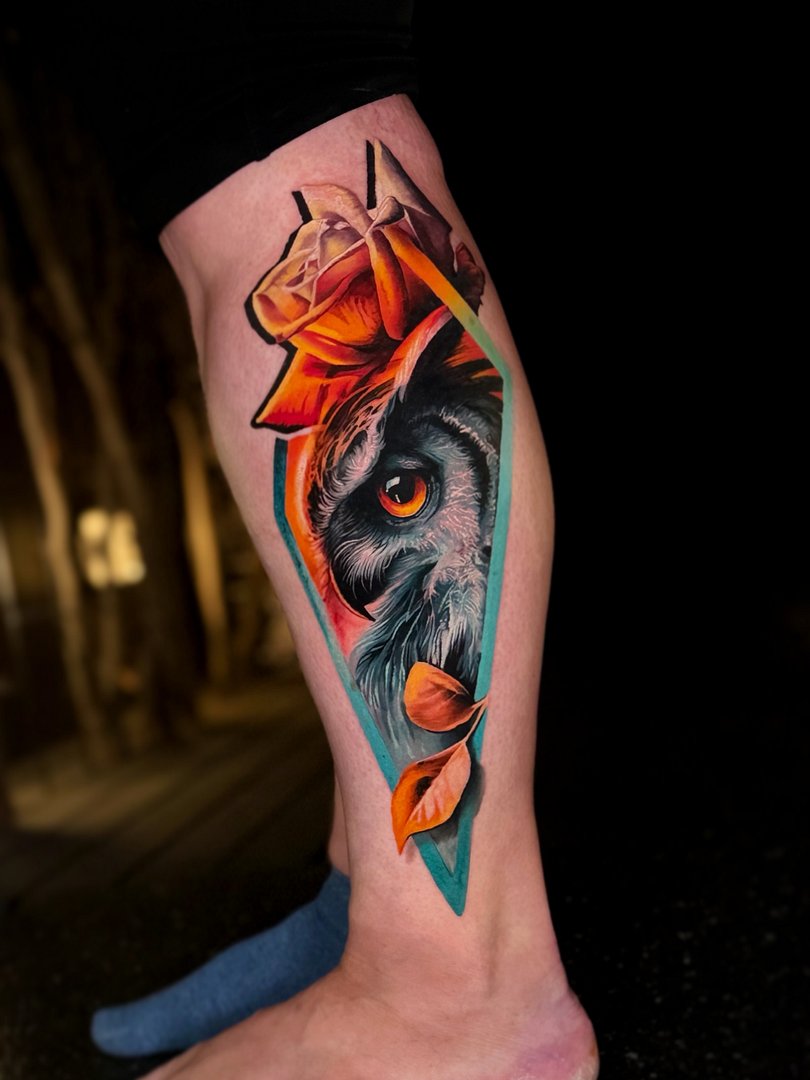
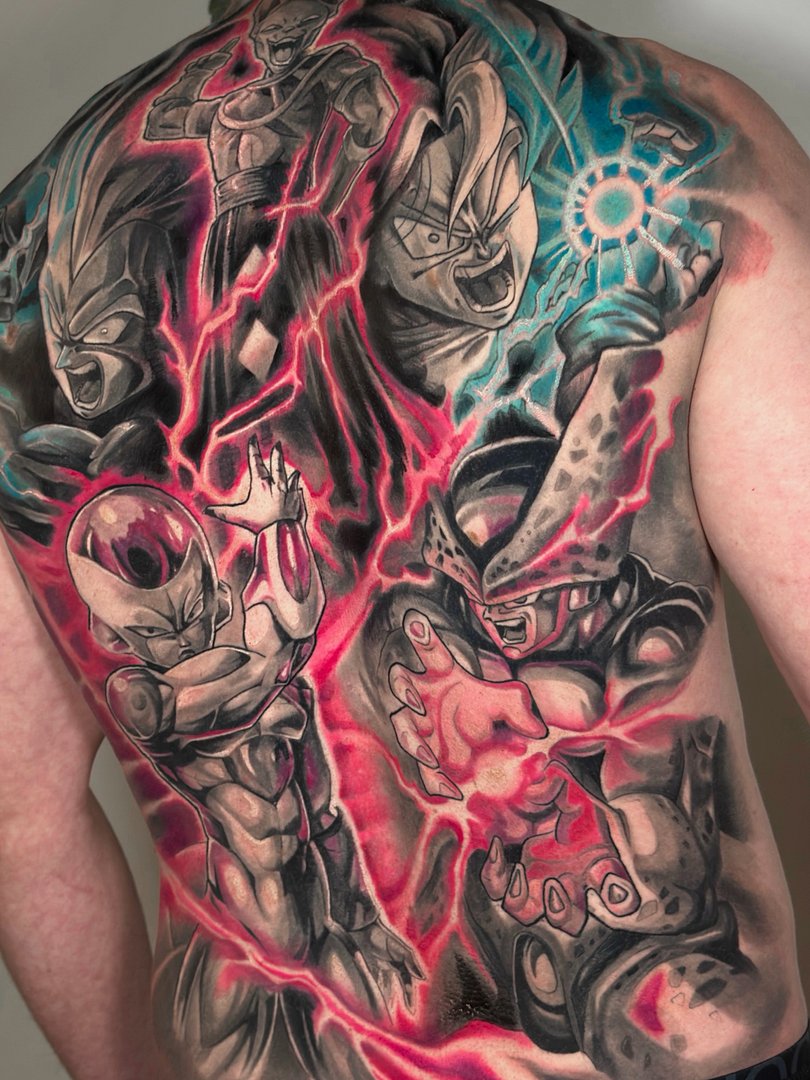
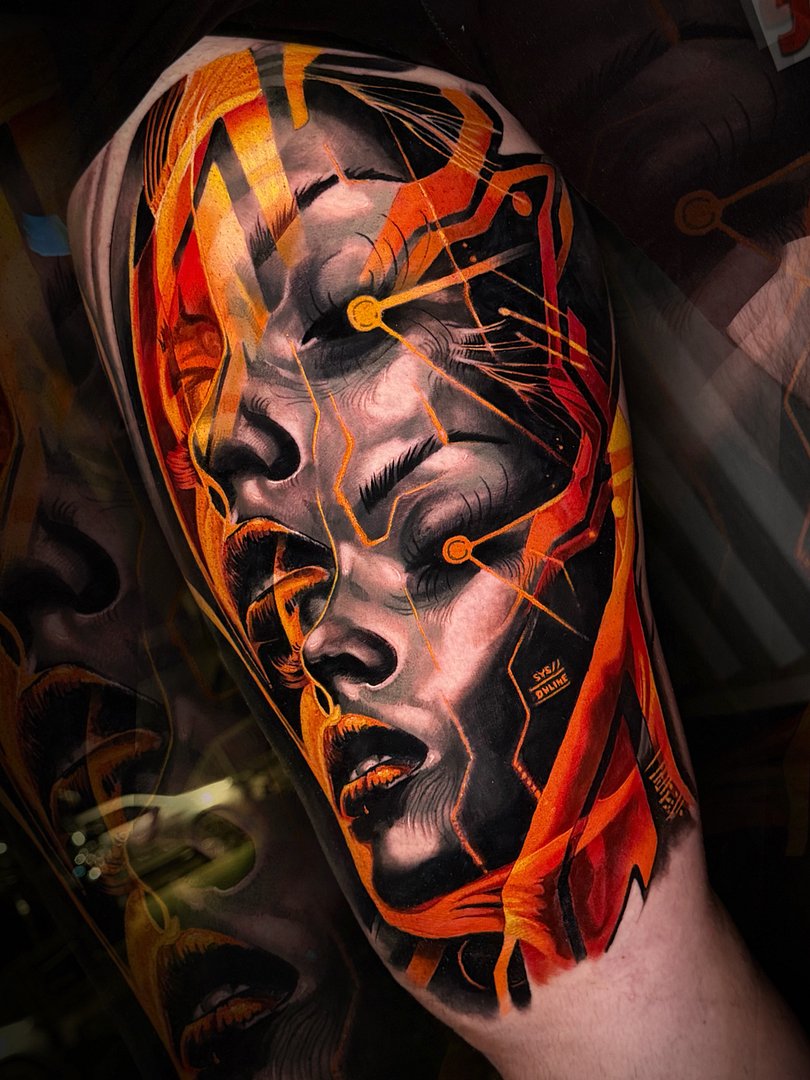
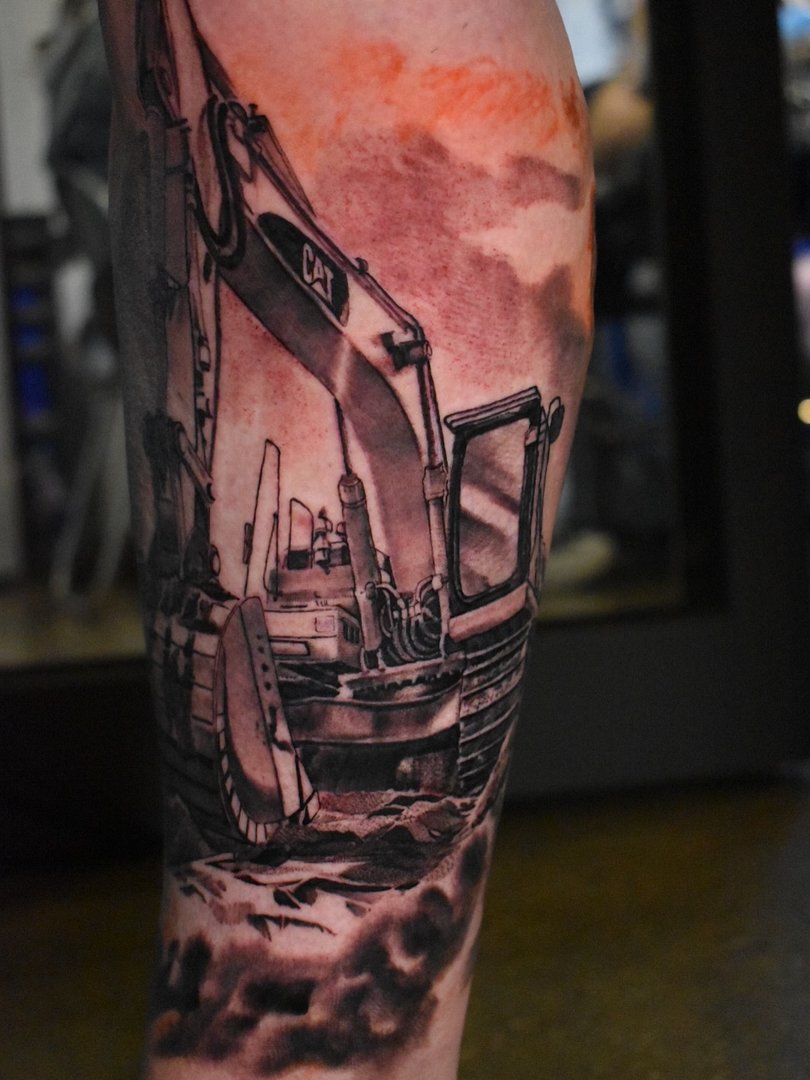
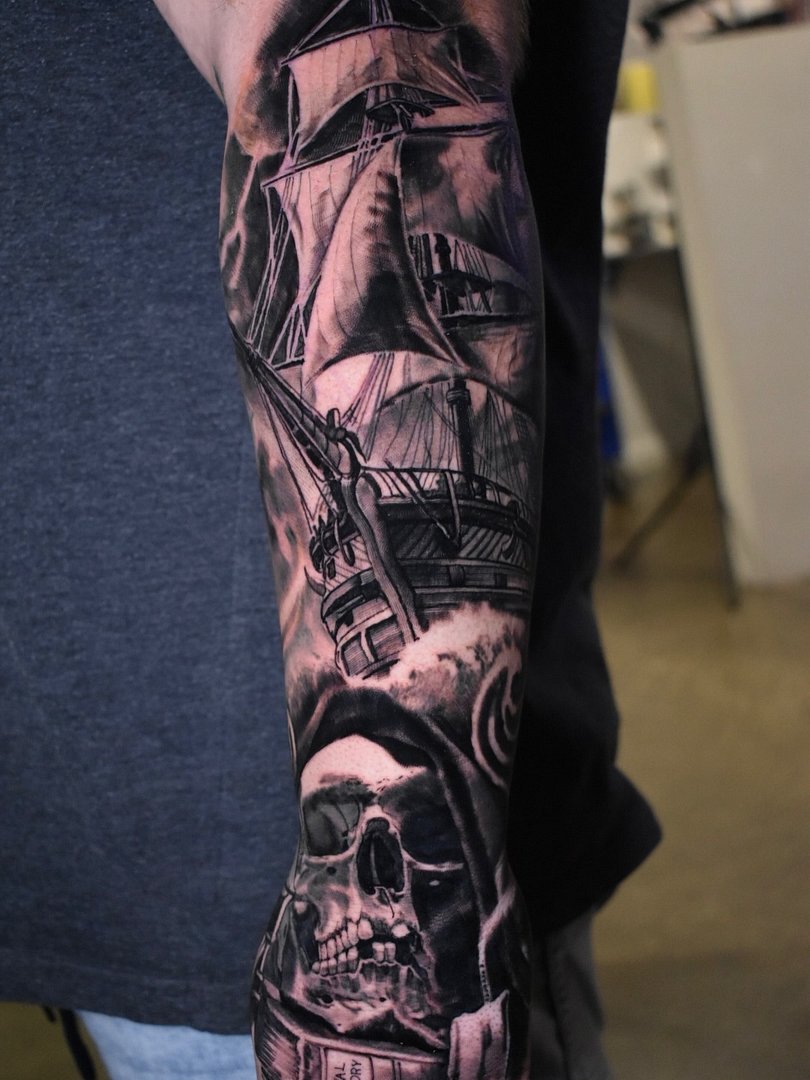
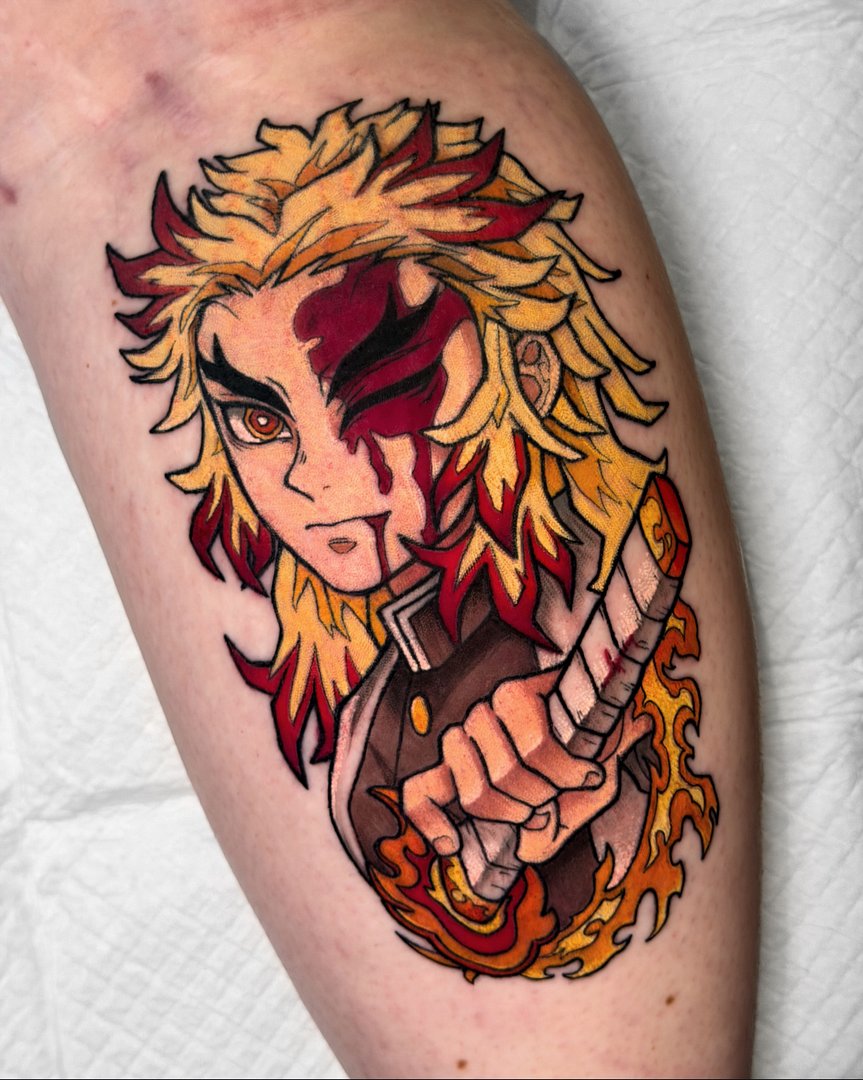
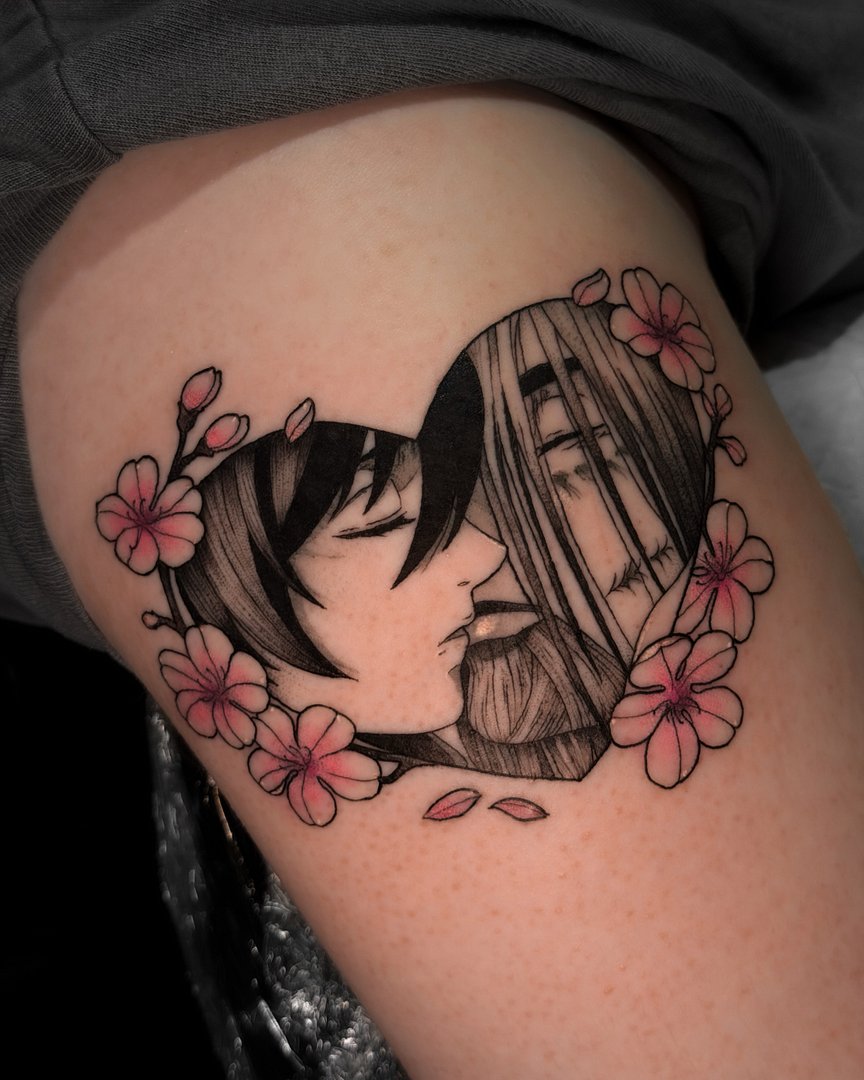
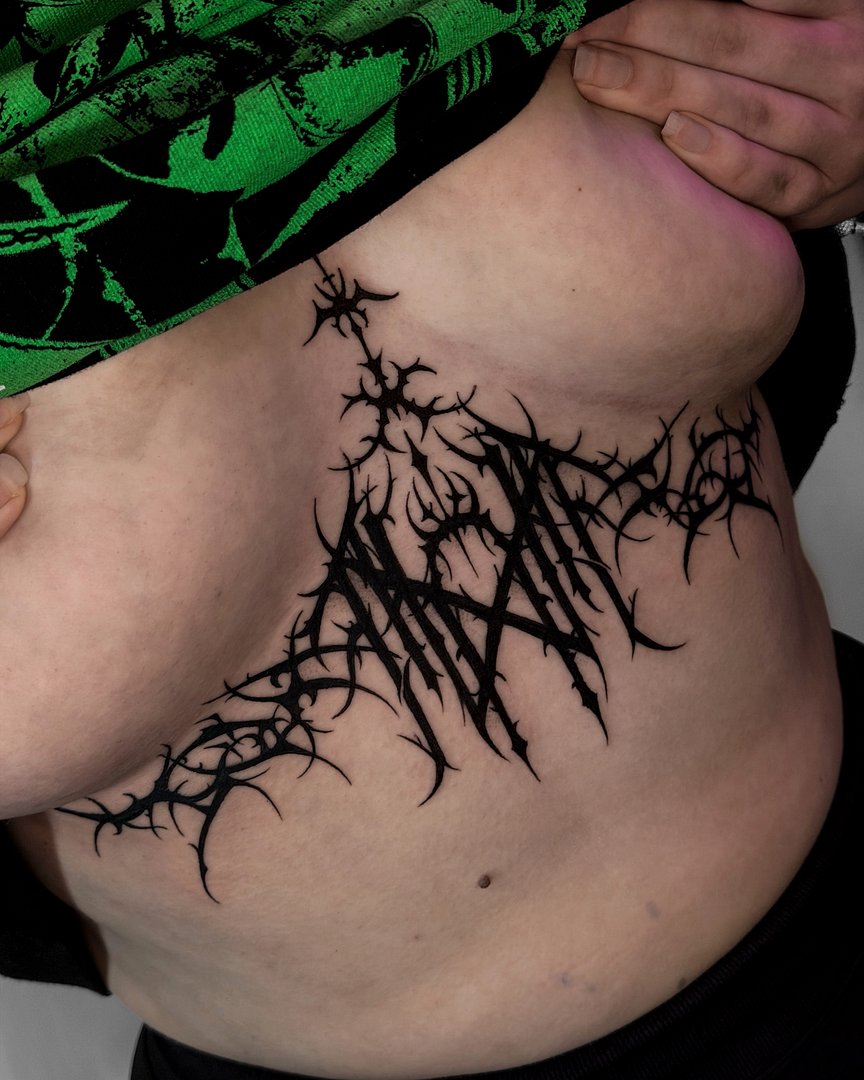
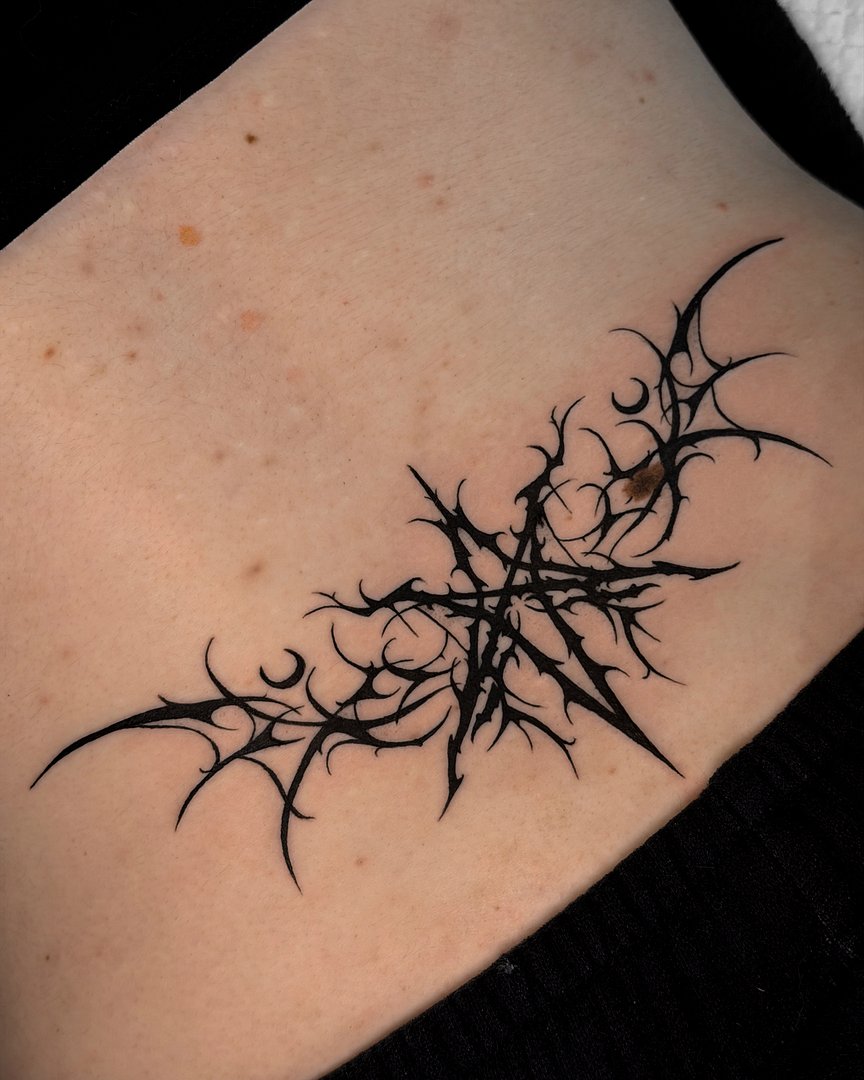
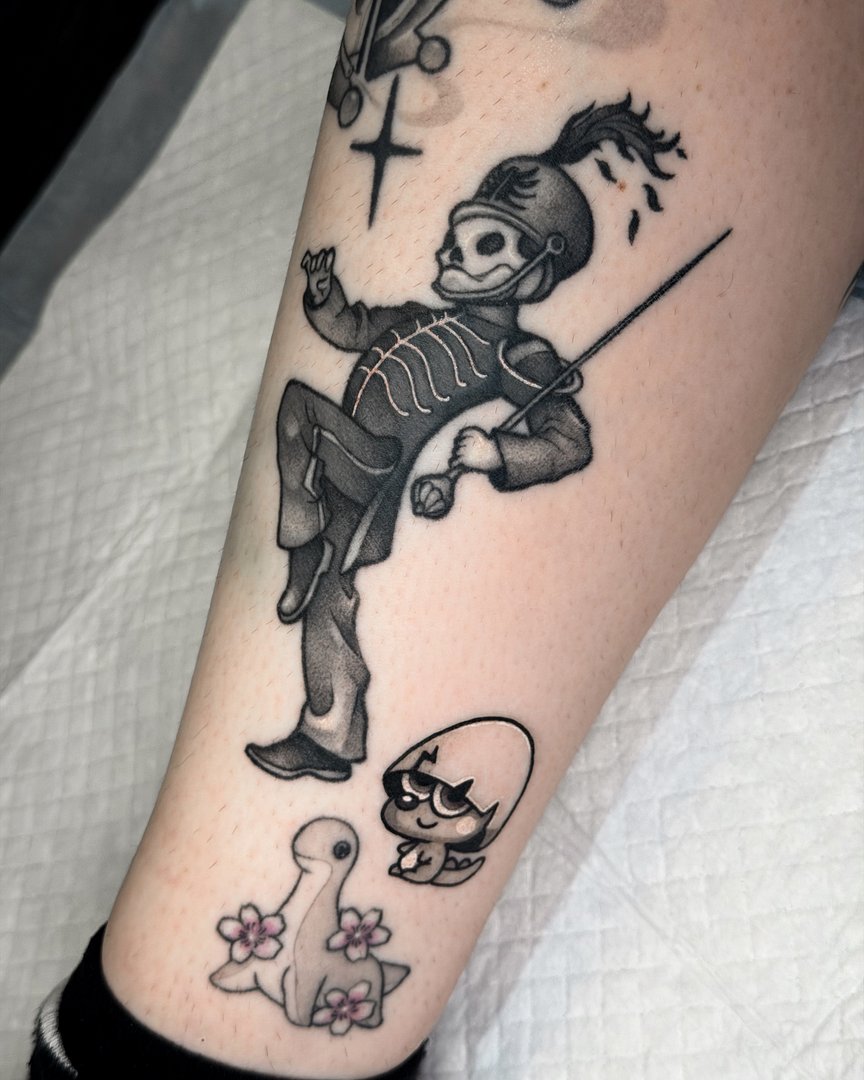
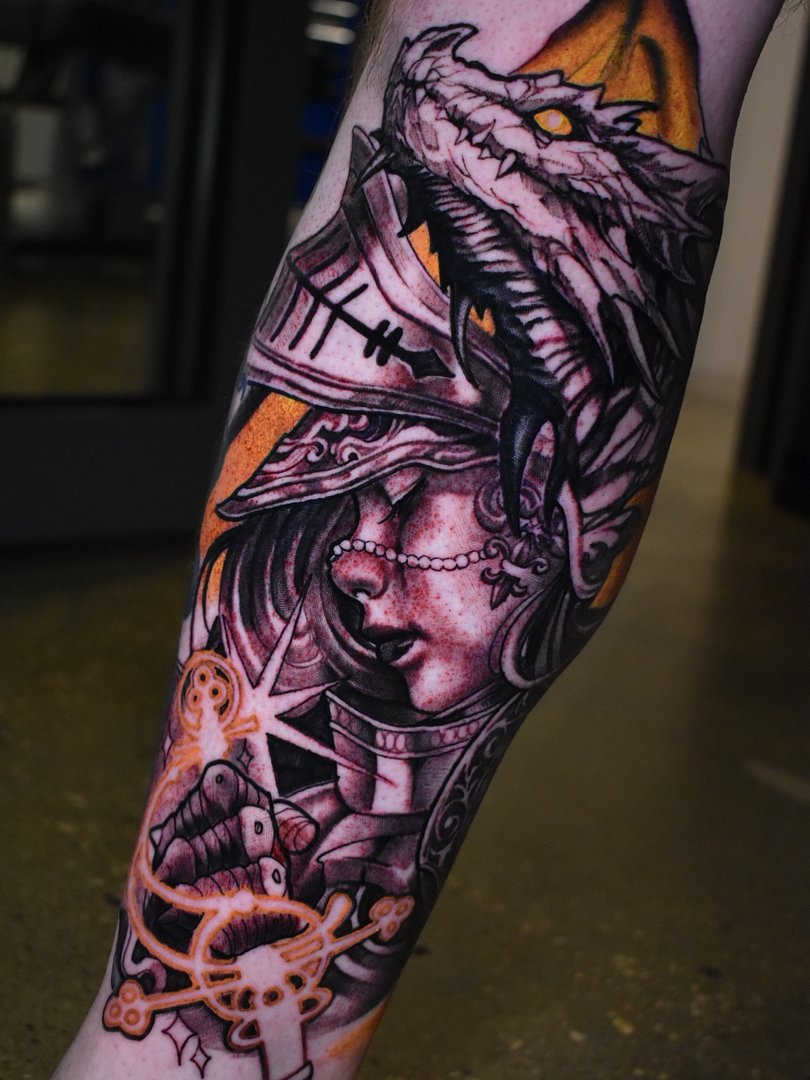
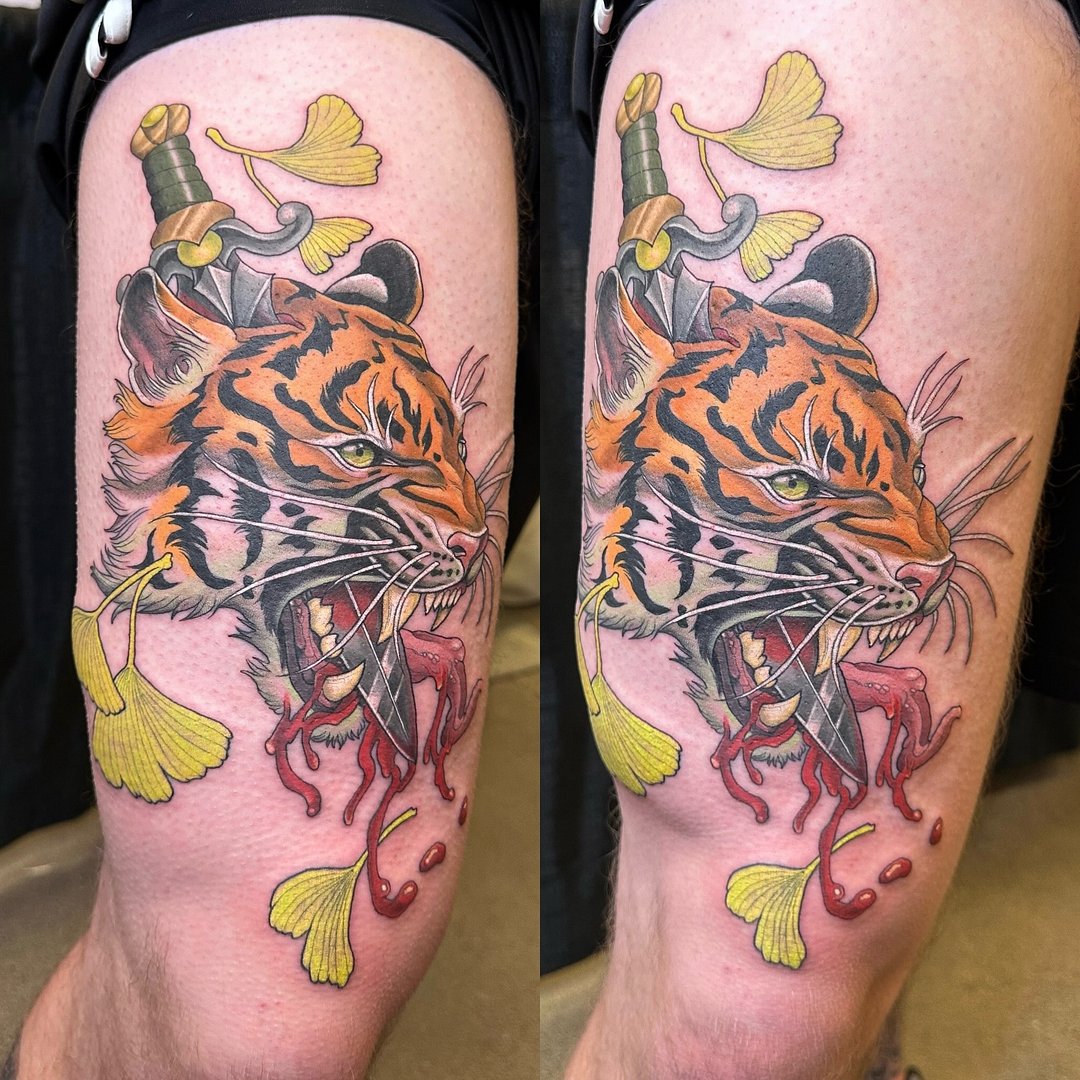
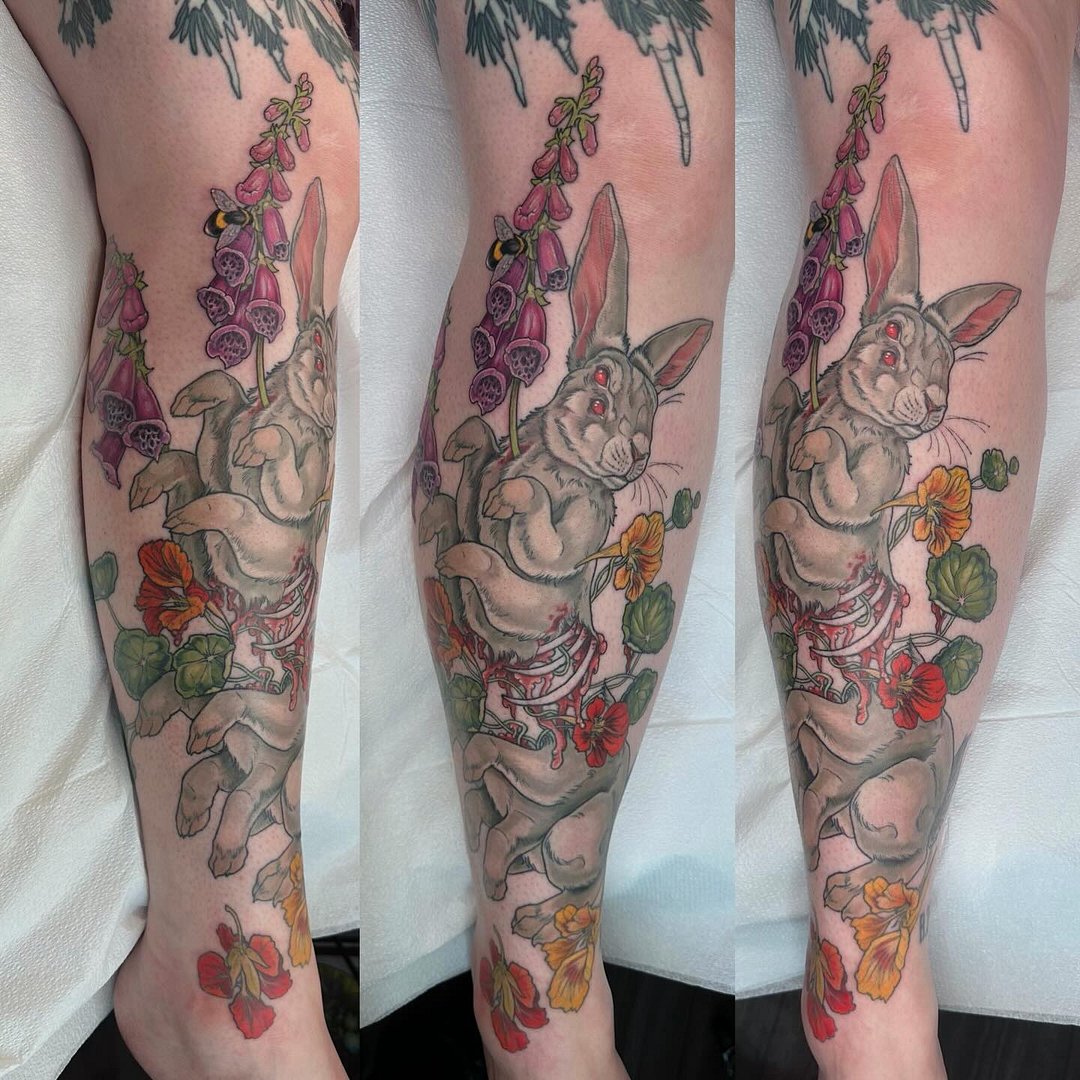
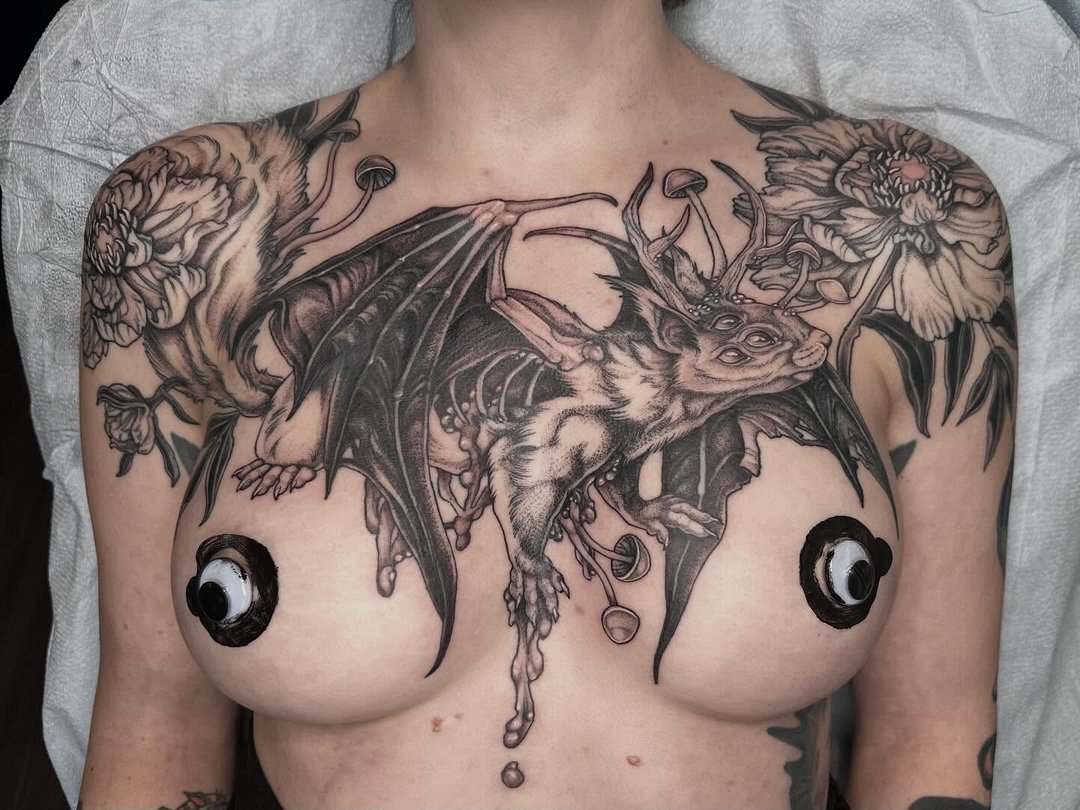
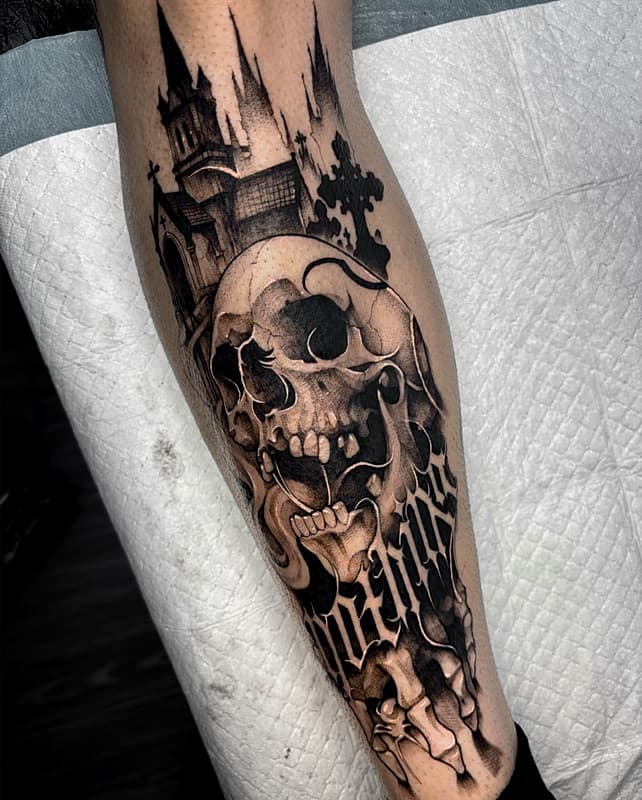
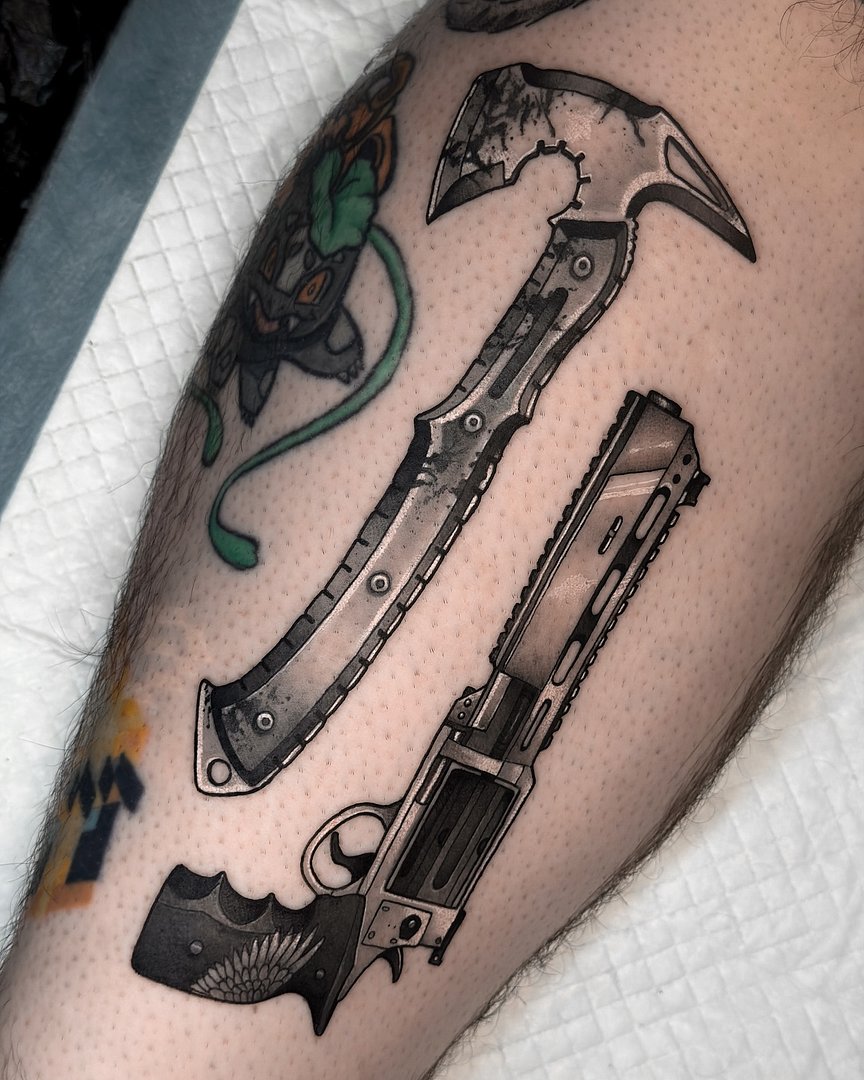
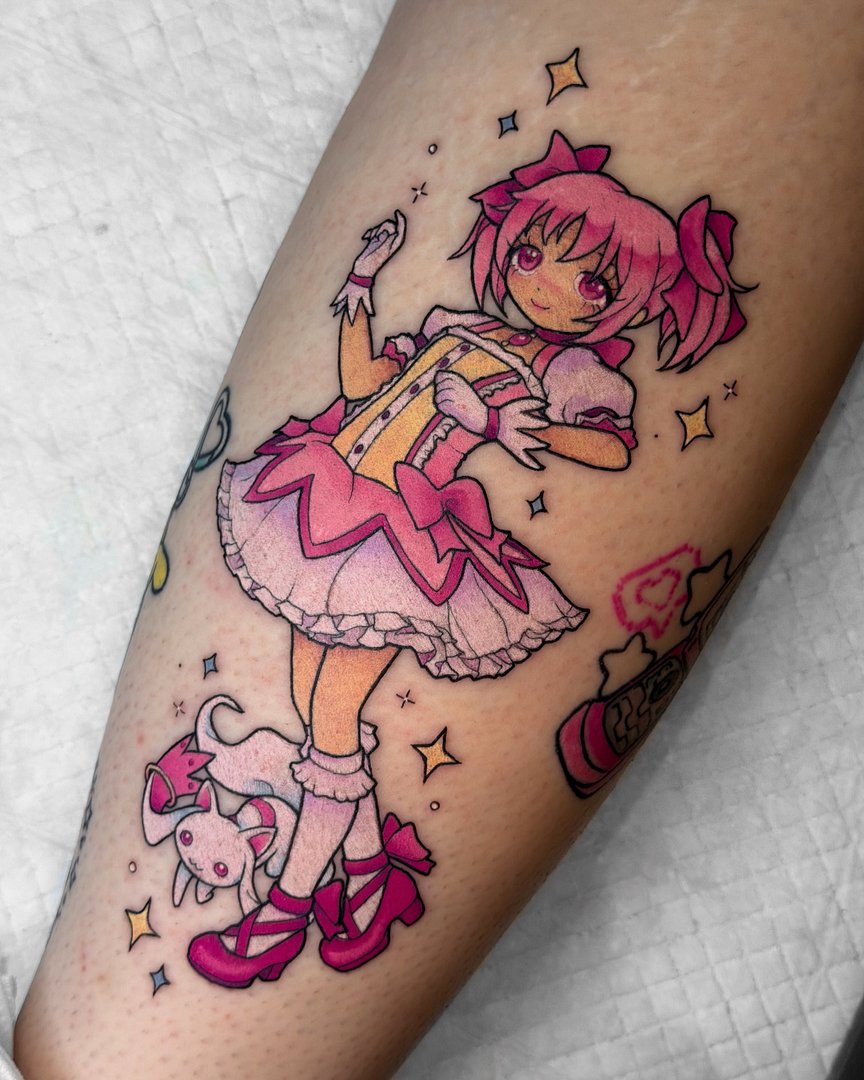


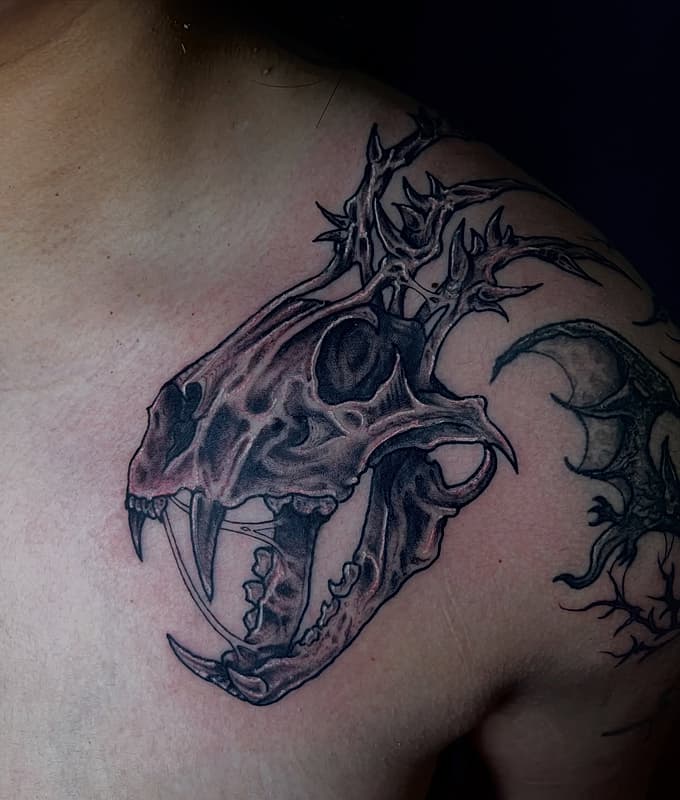
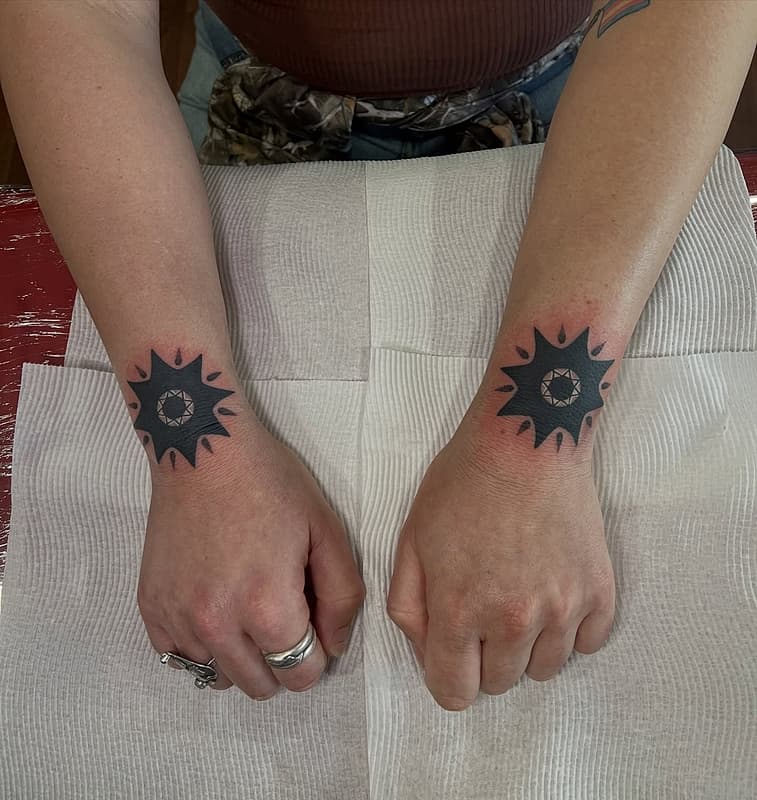
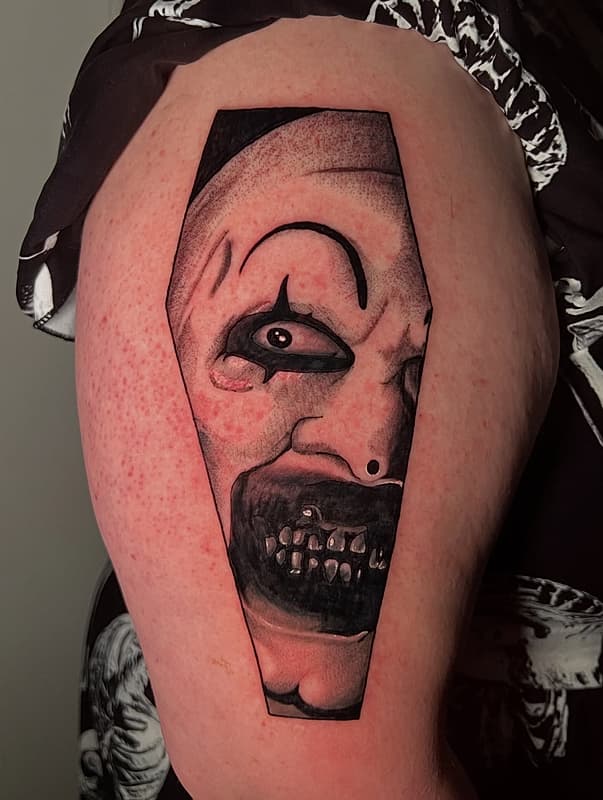
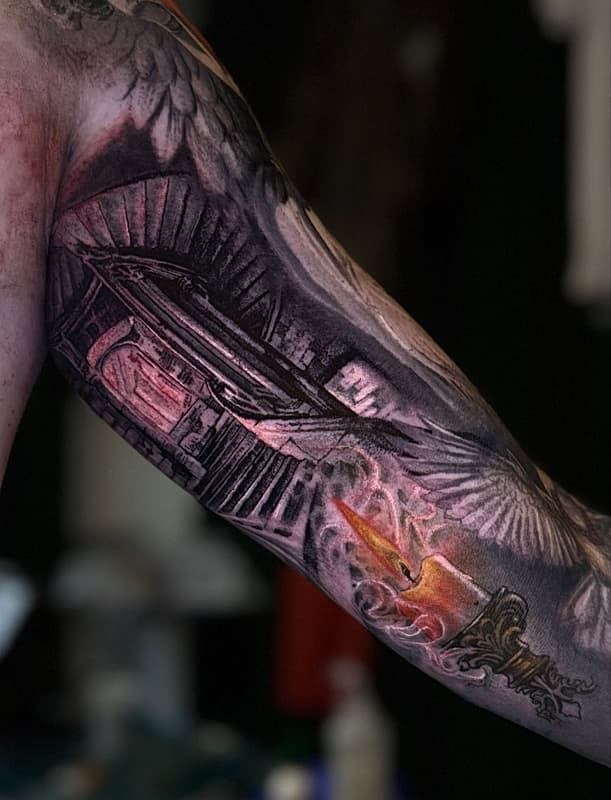
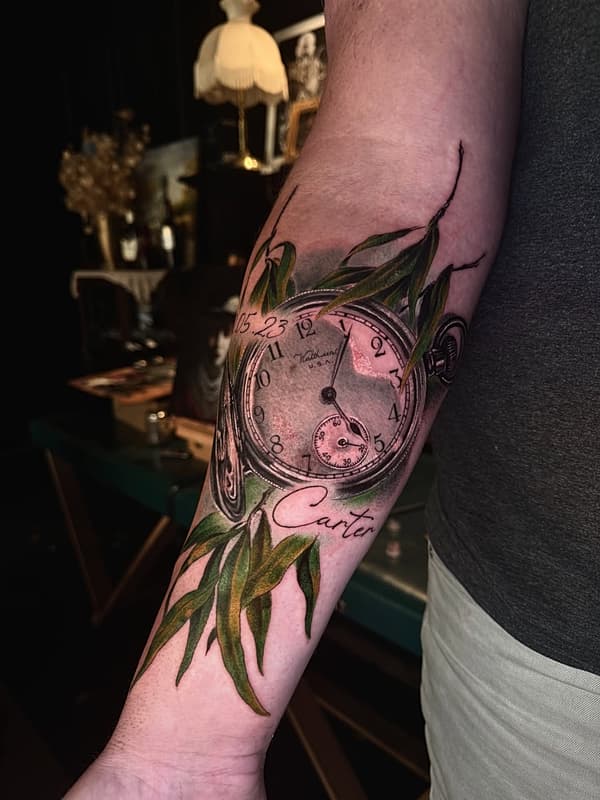
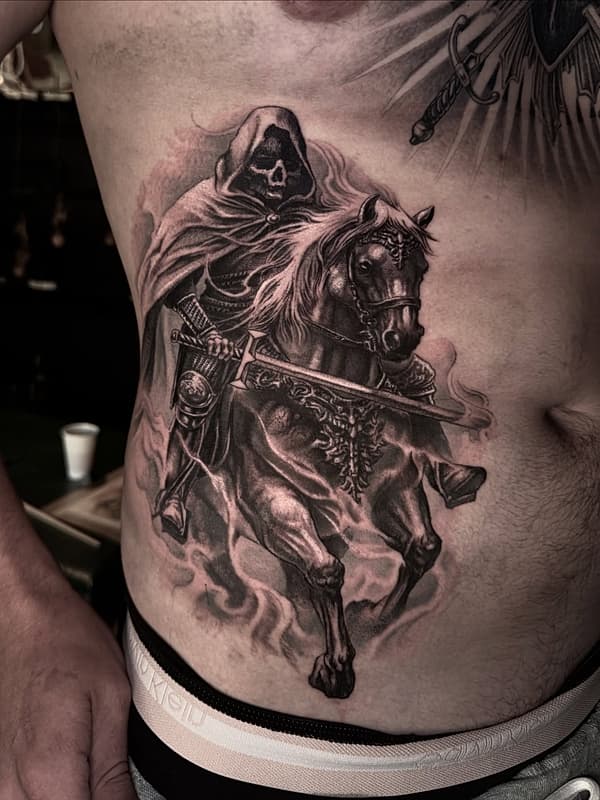
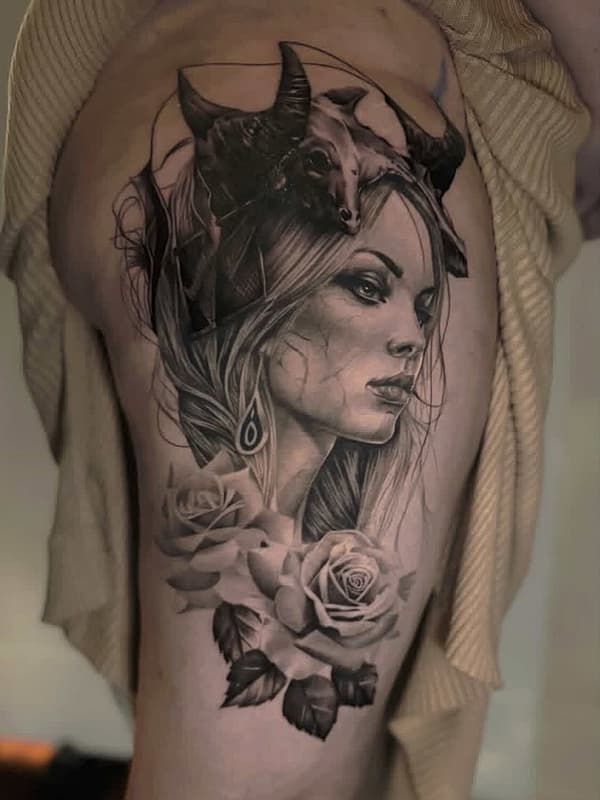
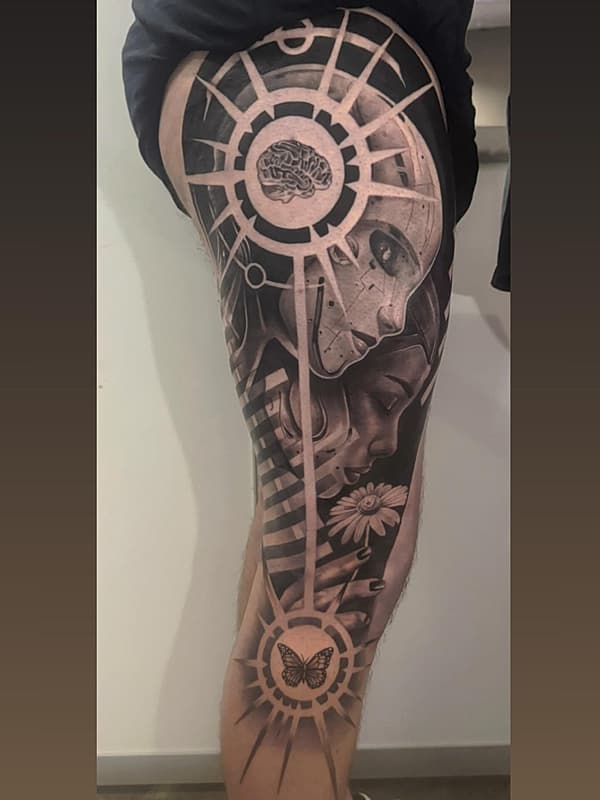

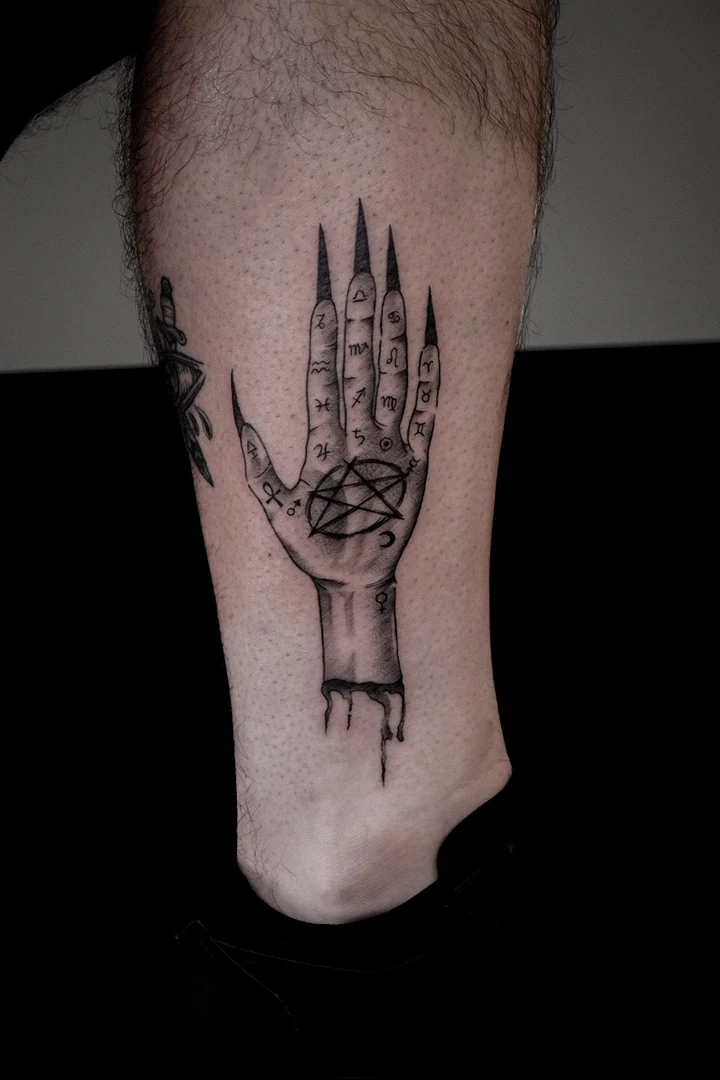
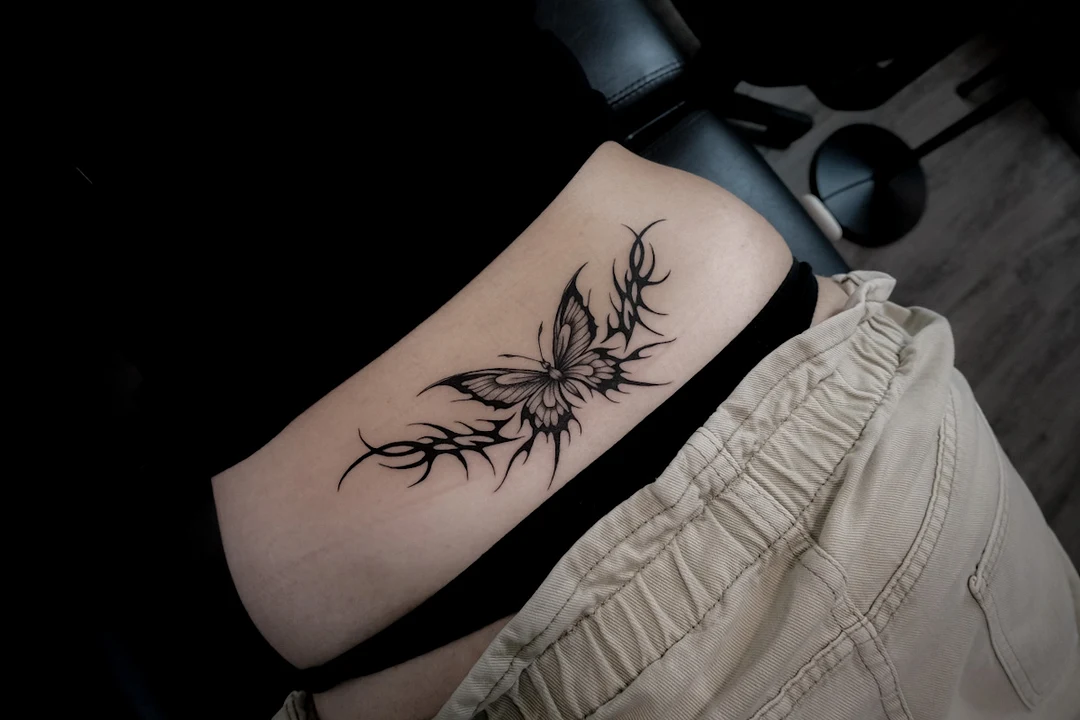
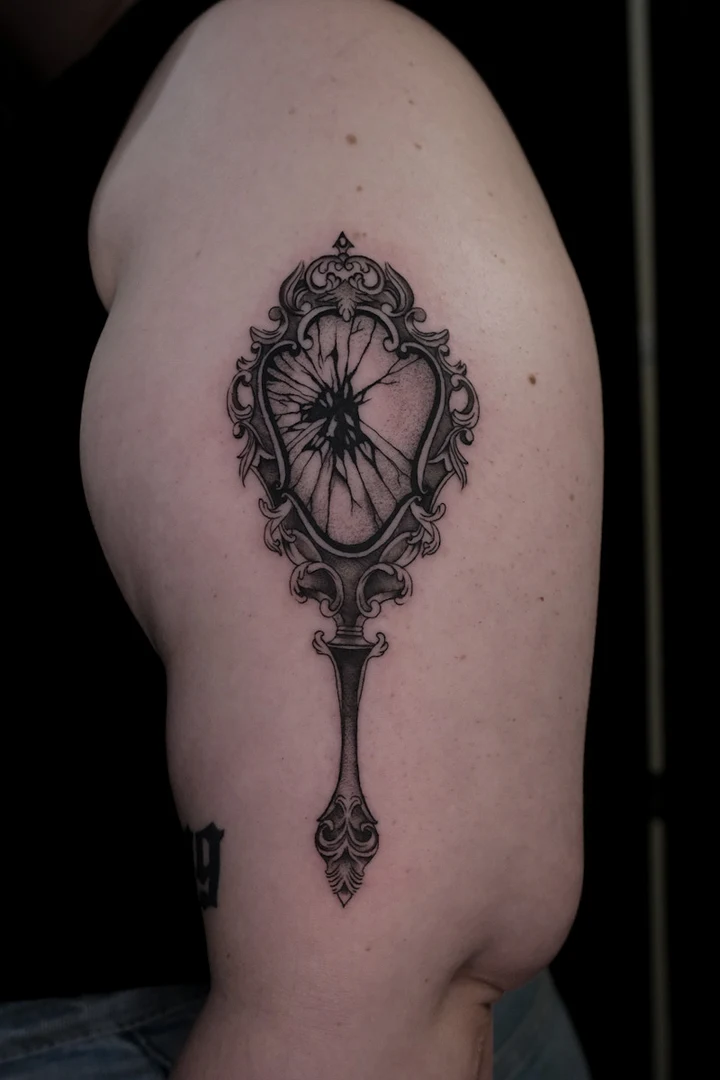
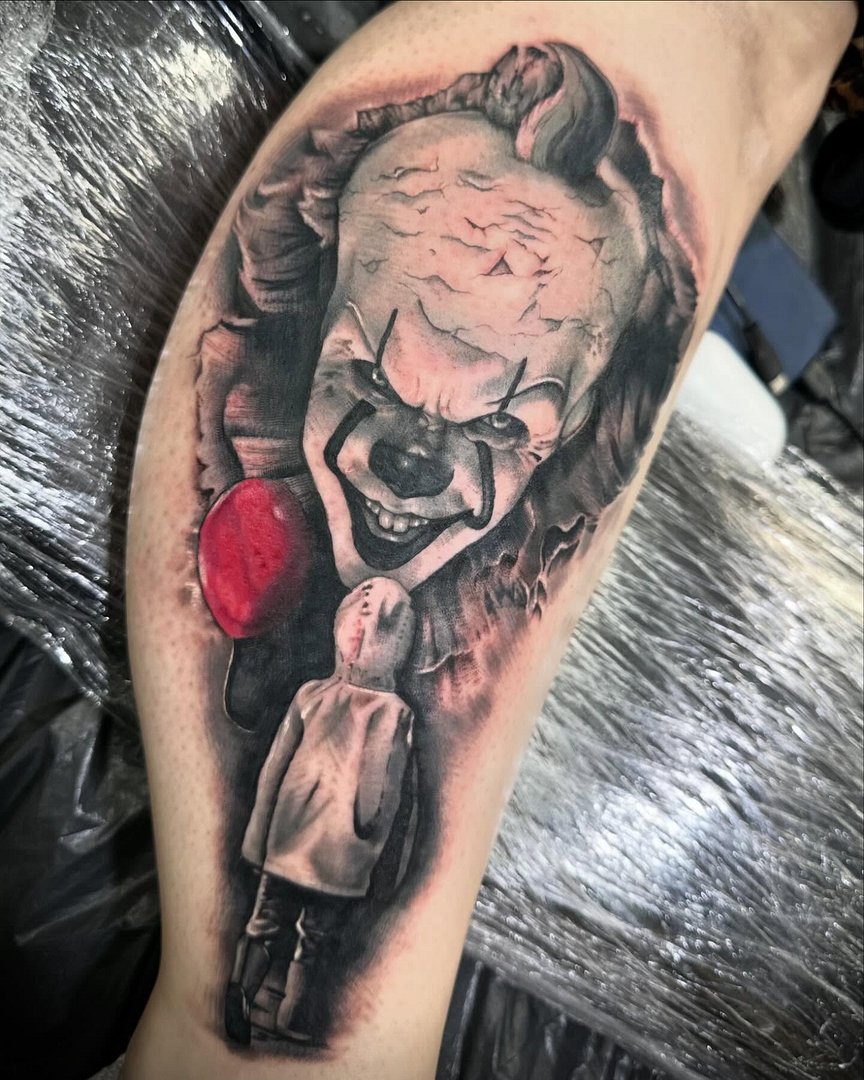
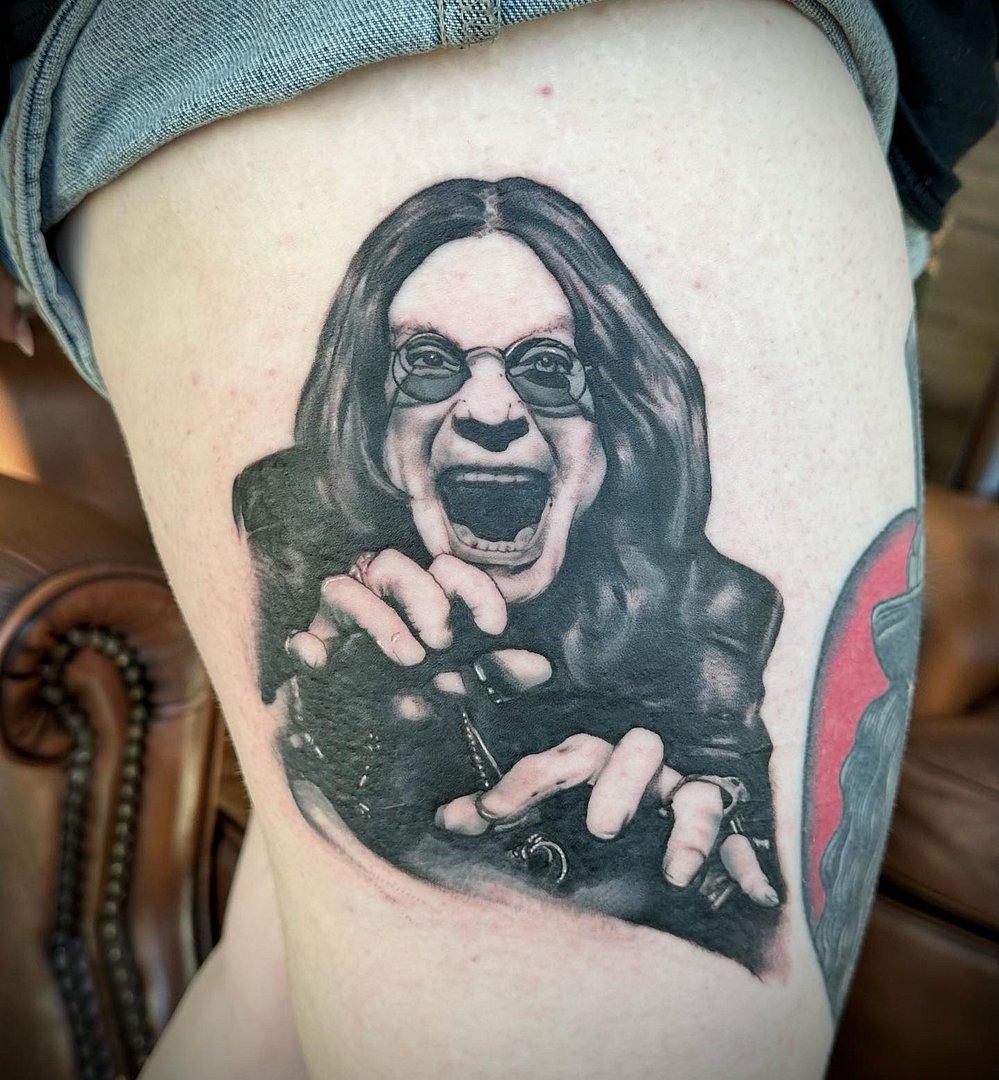
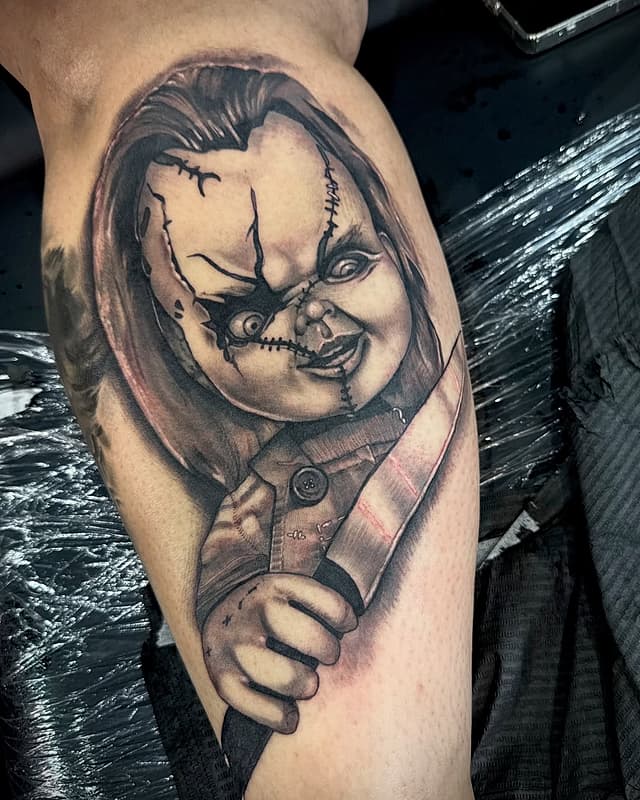
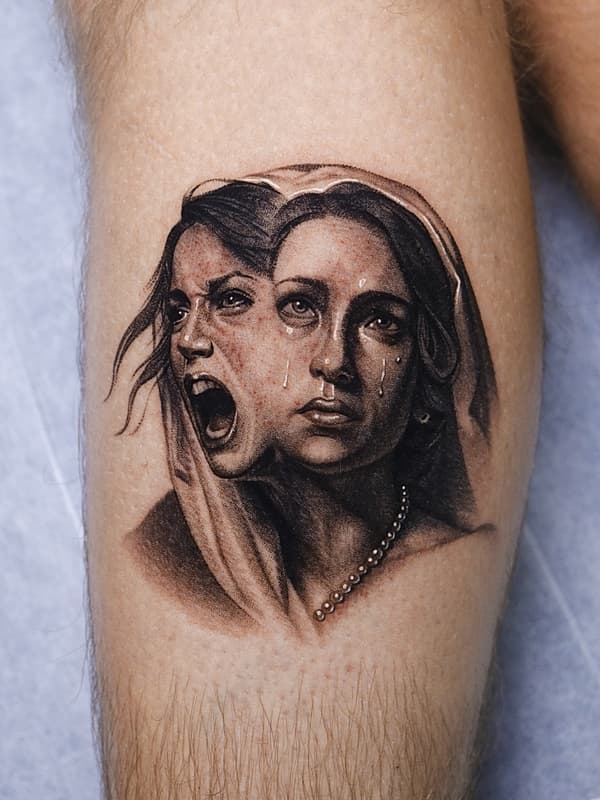
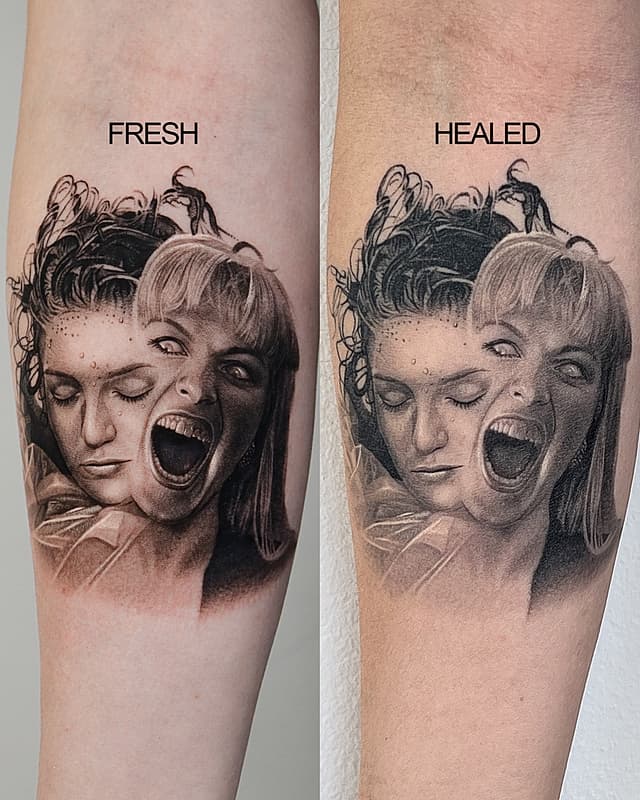
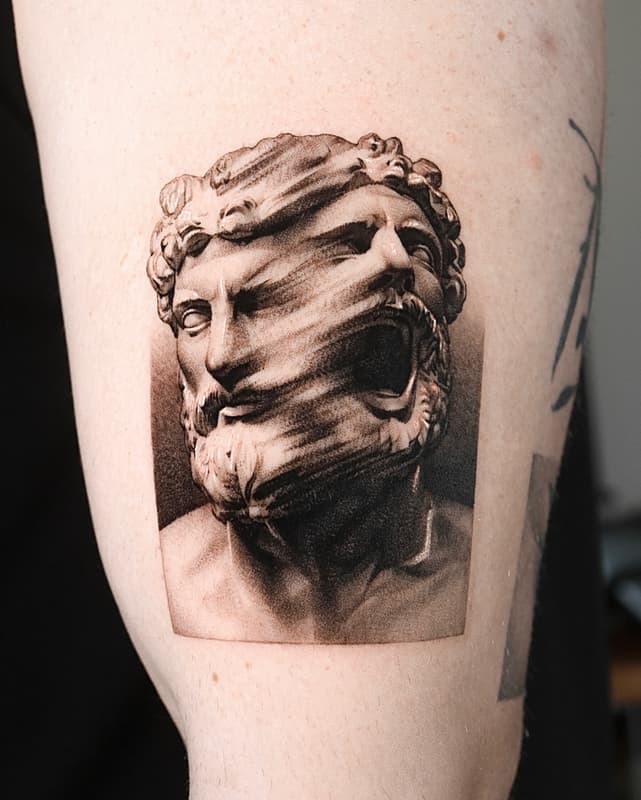
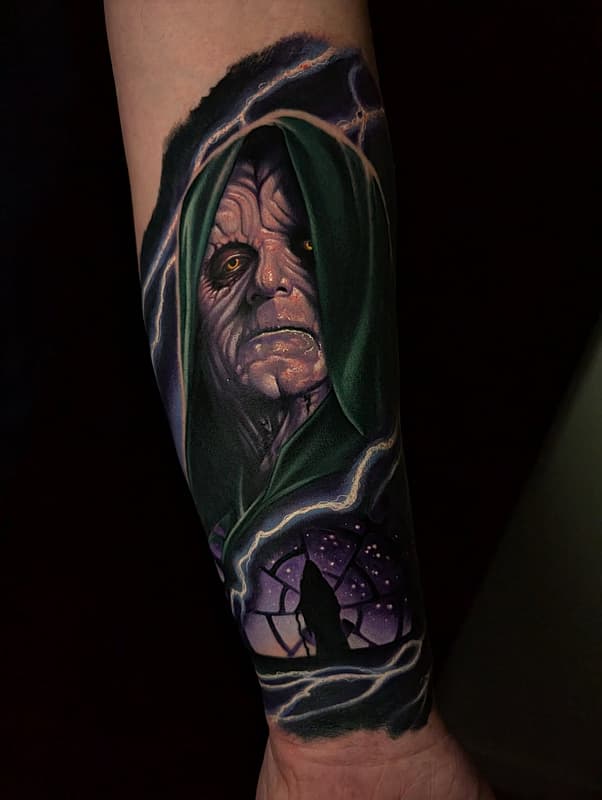
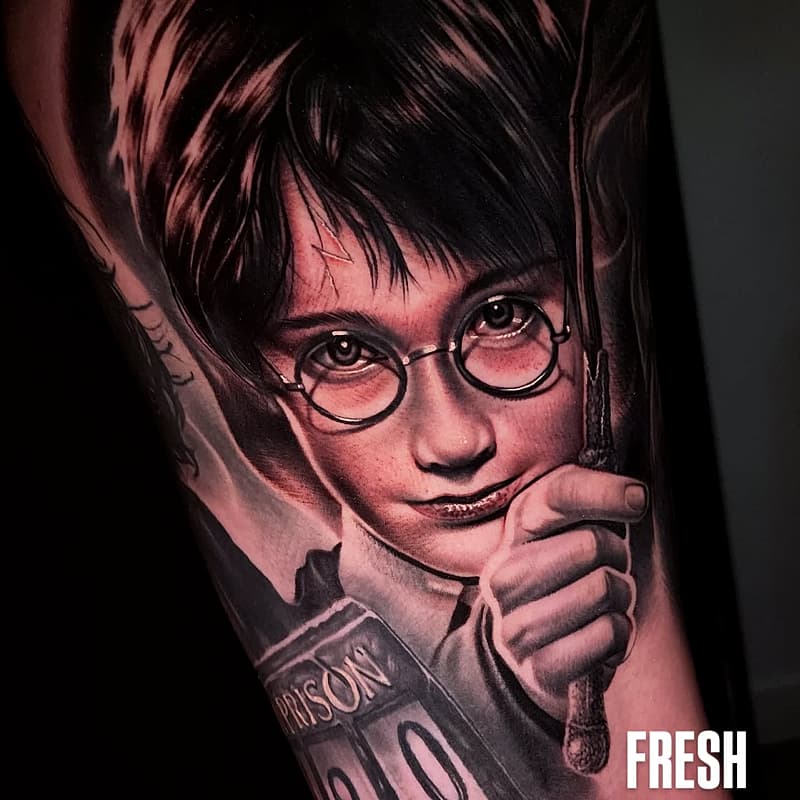
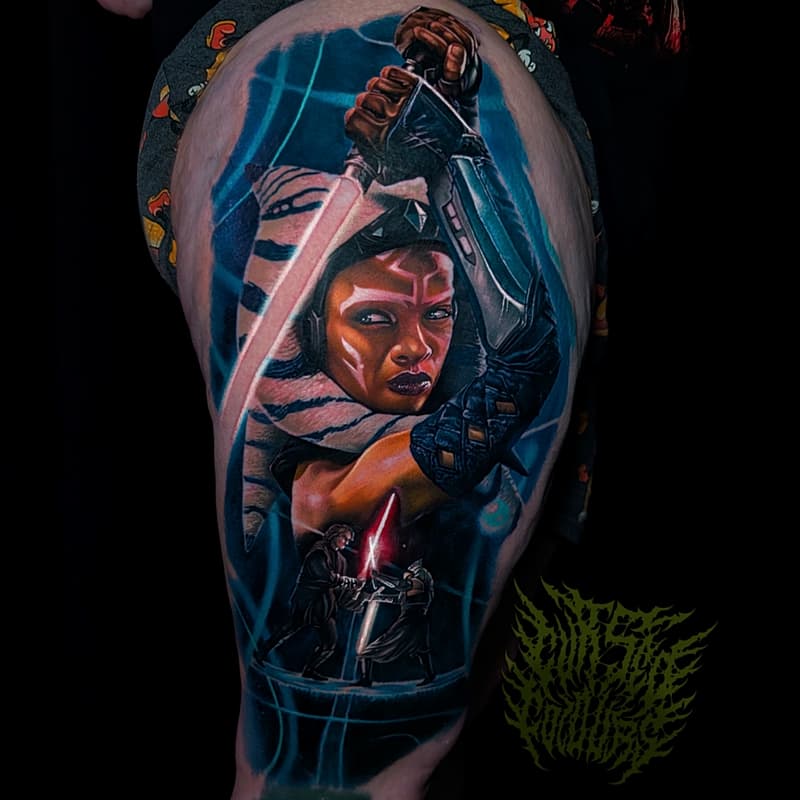
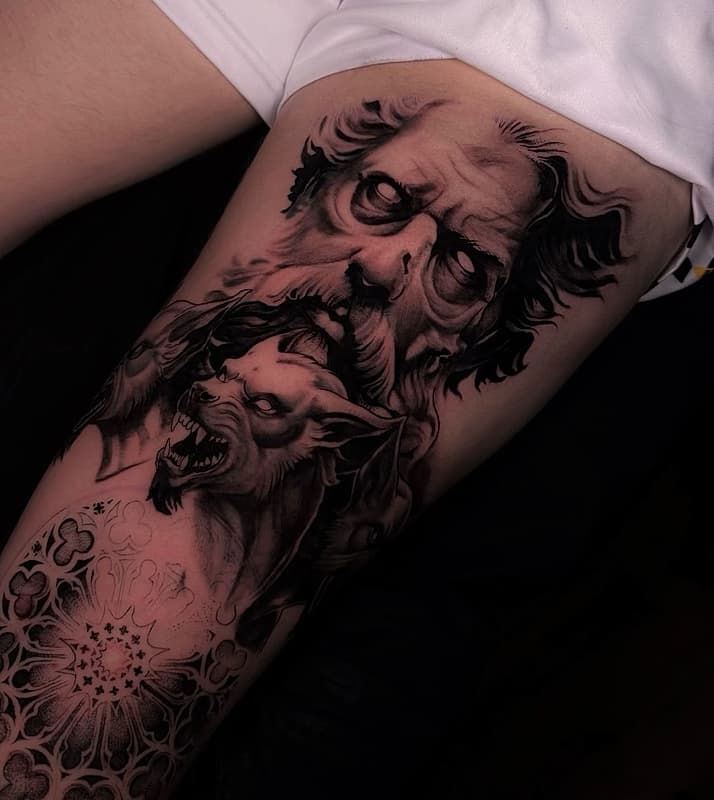
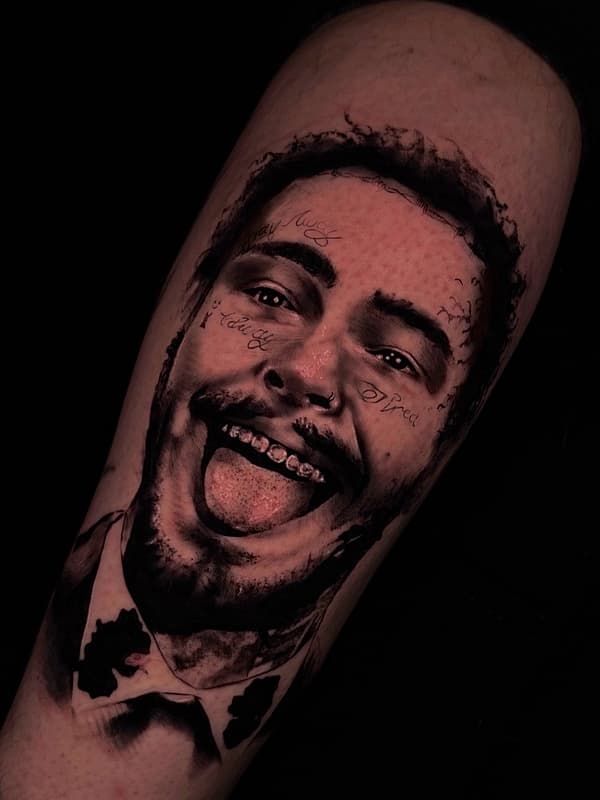
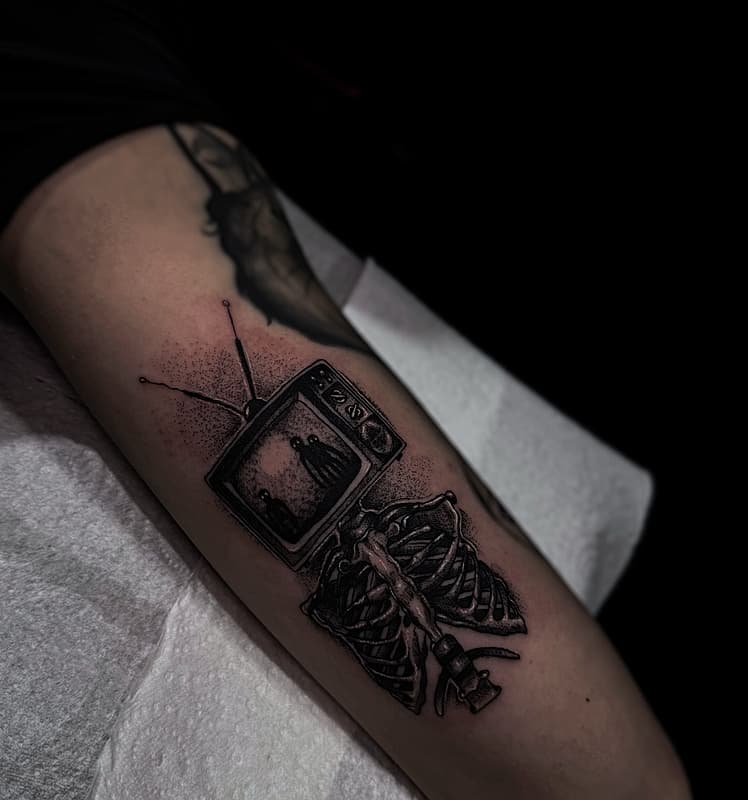
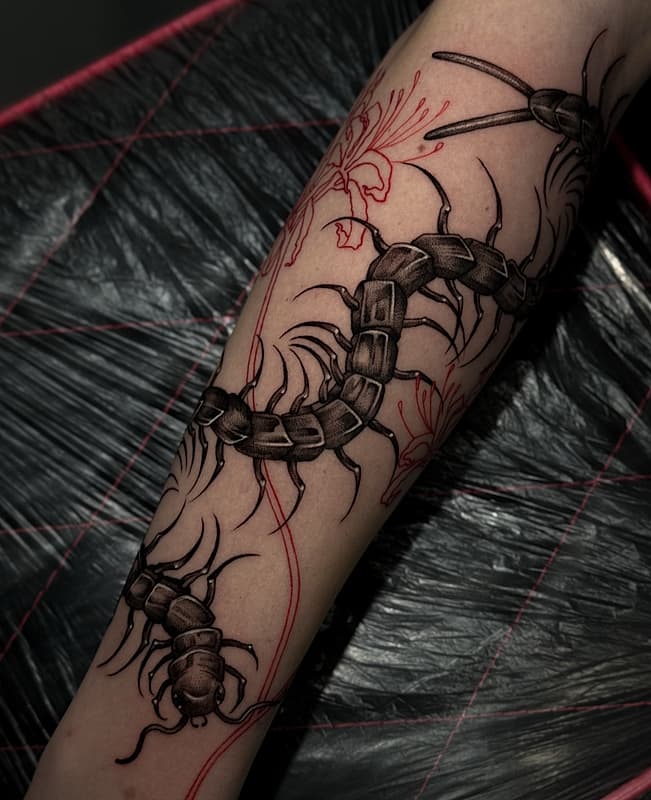
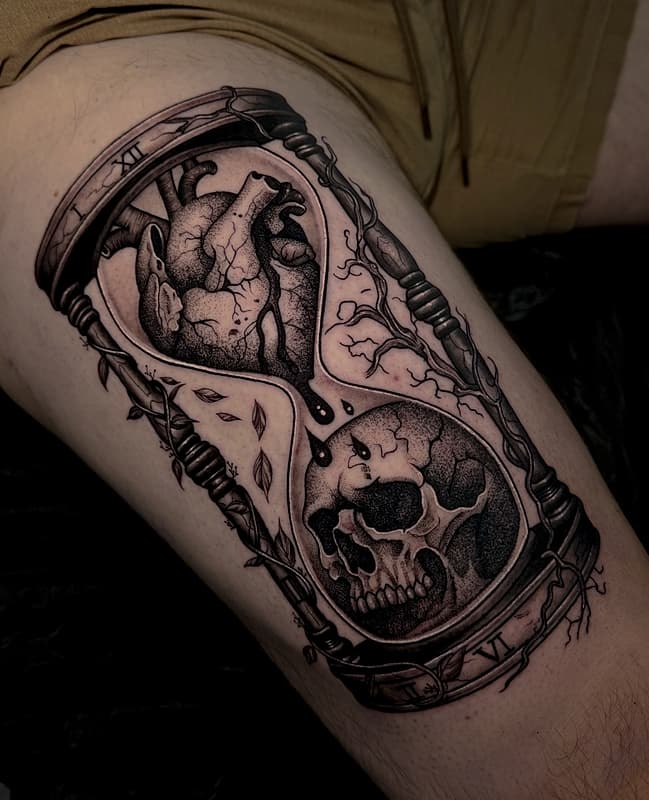
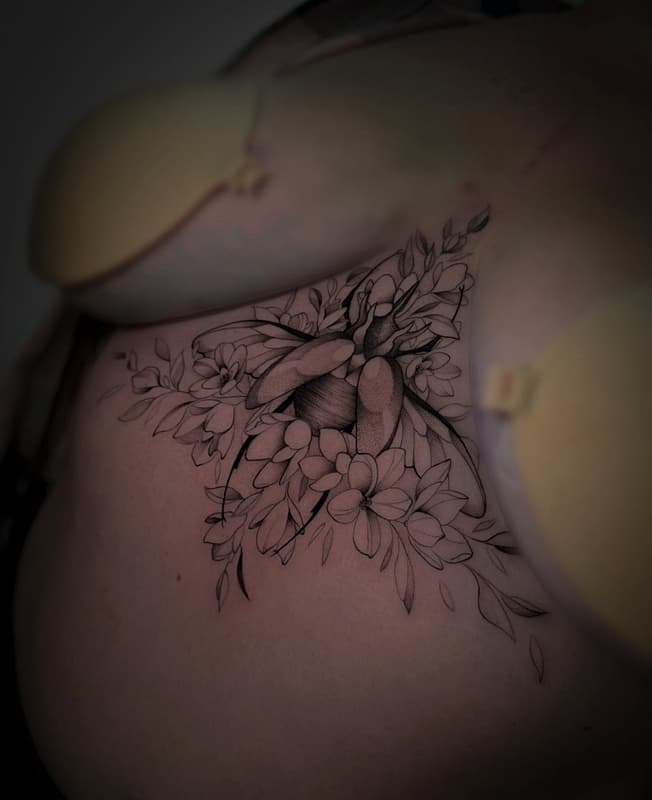

Horror tattooing celebrates the dark side of imagery: film icons, monsters, skulls, haunted scenes, and the unsettling territory between beauty and dread. The style leans heavily on black and grey realism, using deep contrast and dramatic lighting to create menace, though colour horror has its own following, particularly for slasher icons and vivid gore effects. Subject matter spans classic movie monsters, modern horror franchises, gothic imagery, occult symbolism, and original nightmare creatures invented between artist and client. Technically, horror is realism with the difficulty turned up. Convincing dread requires mastery of deep blacks, smooth gradients into shadow, and textures like torn flesh, bone, and aged wood that sell the atmosphere. Many horror specialists build entire careers on the genre, and their portfolios read like galleries of the macabre. Horror also composes brilliantly at scale, with full sleeves and leg sleeves weaving multiple scenes and faces into continuous nightmare landscapes connected by smoke, shadow, and texture. For collectors who grew up on horror films or feel at home in dark aesthetics, it's a deeply personal genre worn proudly.
What to look for: Deep, even blacks are the foundation of horror work, so study how an artist's darkest areas heal, looking for rich solid shadow rather than patchy grey. Faces of famous horror icons test likeness skills just like portraiture, and texture work on bone, flesh, and fabric shows technical range. Check that compositions read clearly, with focal points emerging from darkness rather than everything blurring into murk. A portfolio with healed large scale horror work is the strongest signal of all.