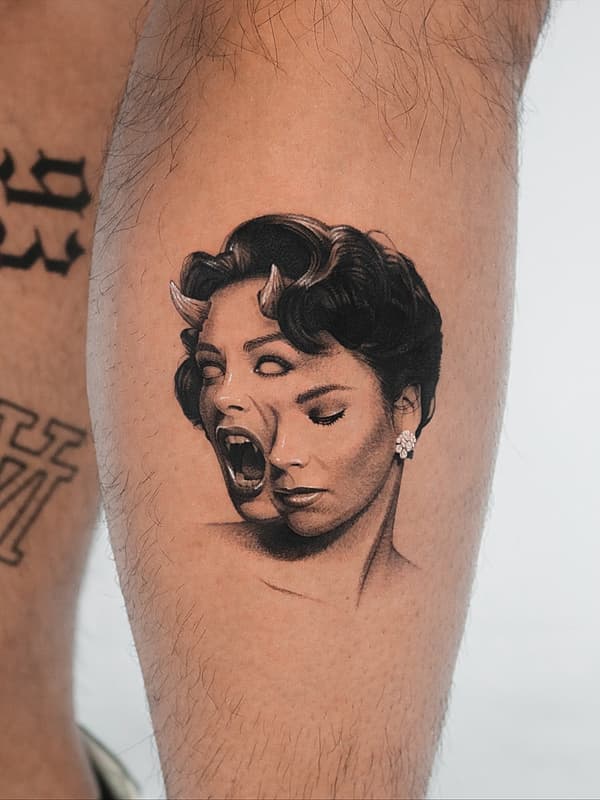
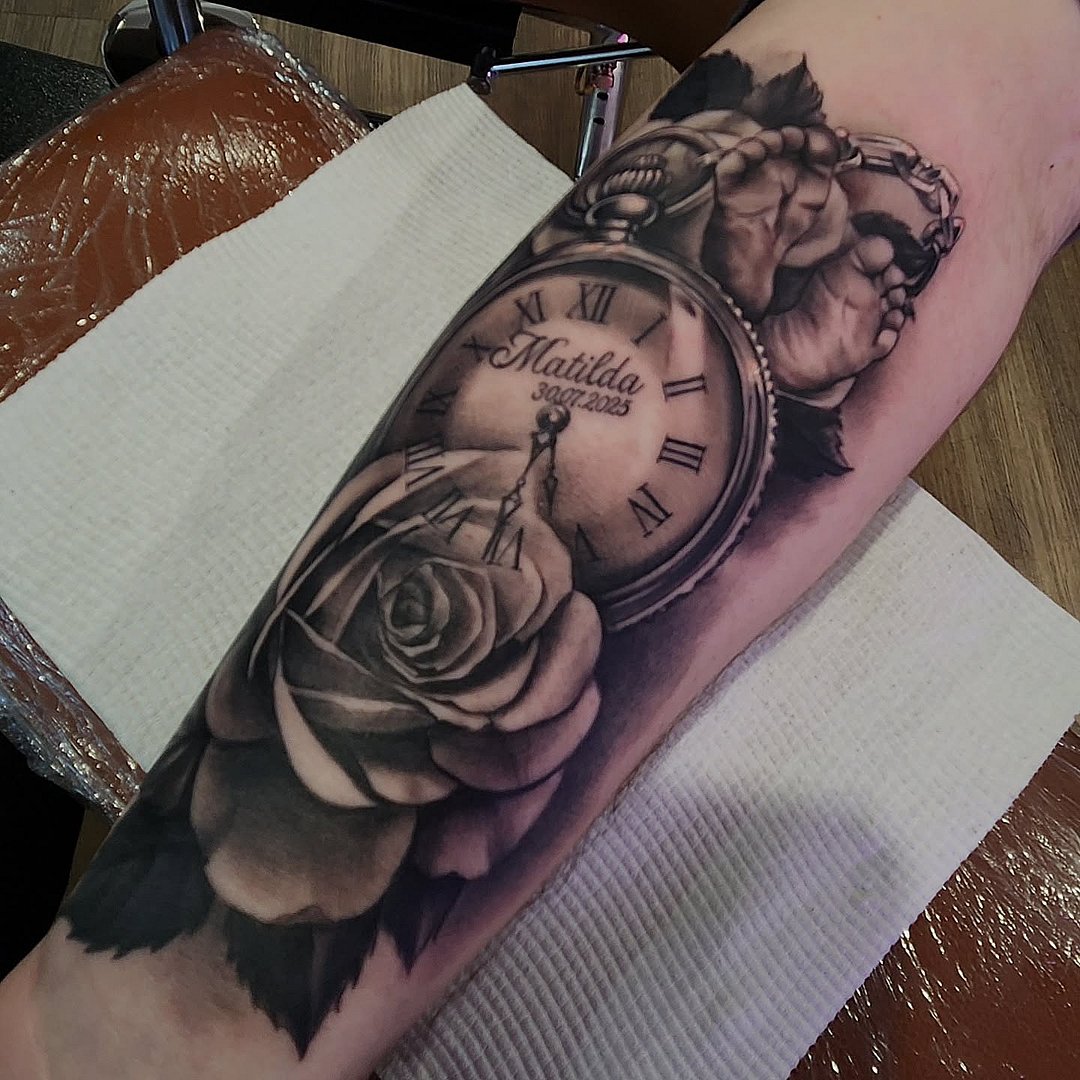
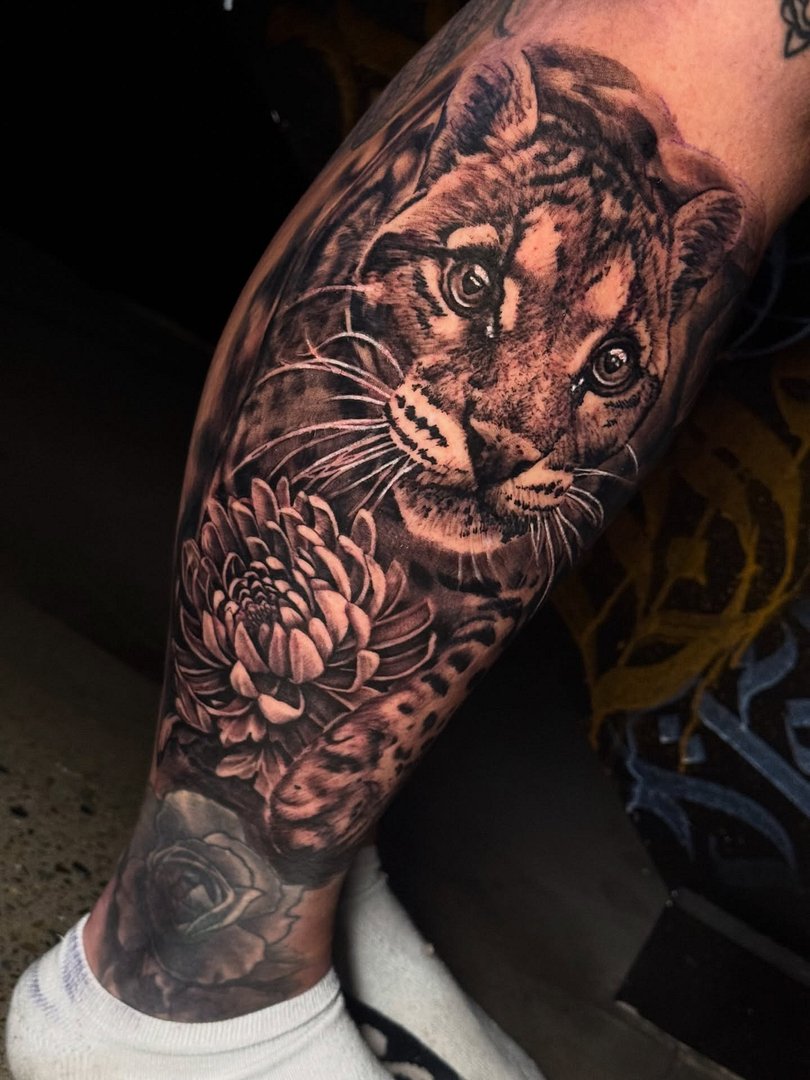


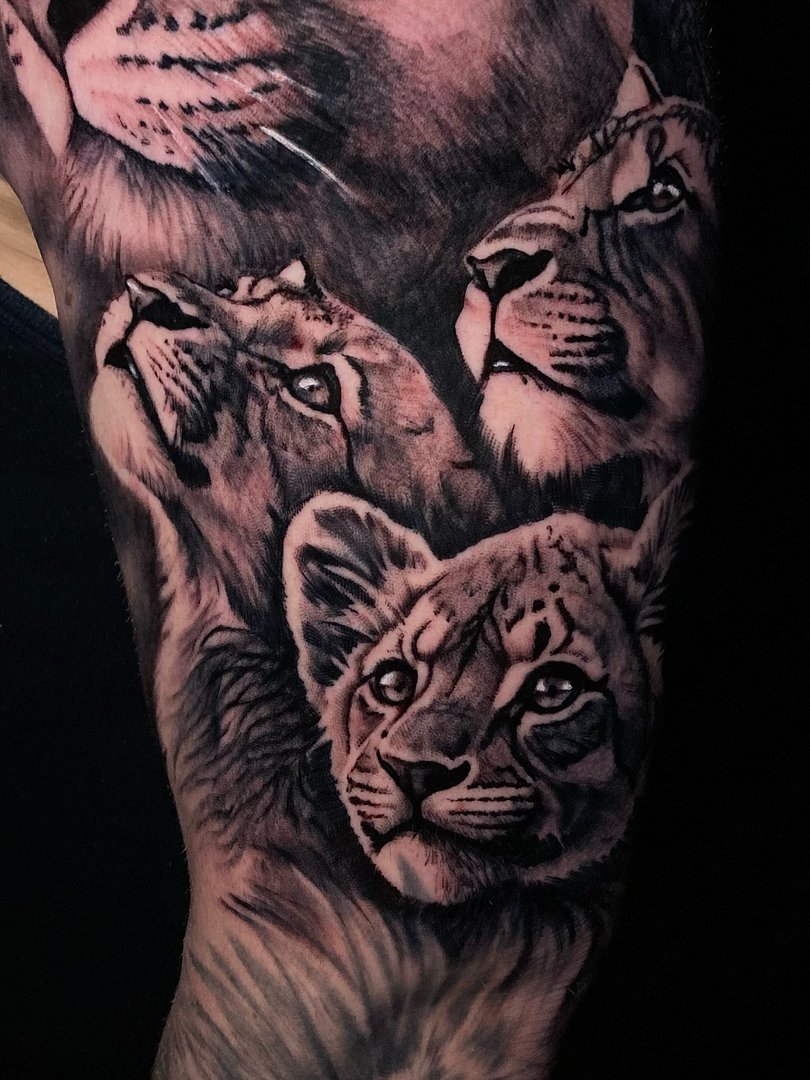
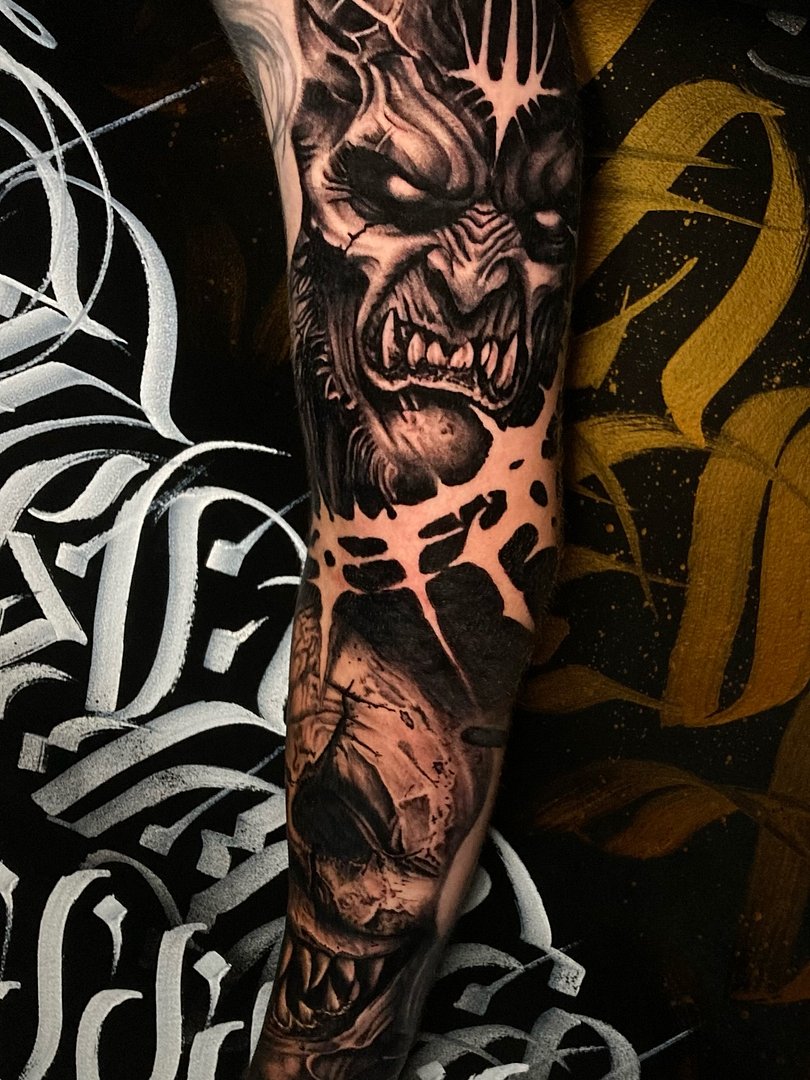
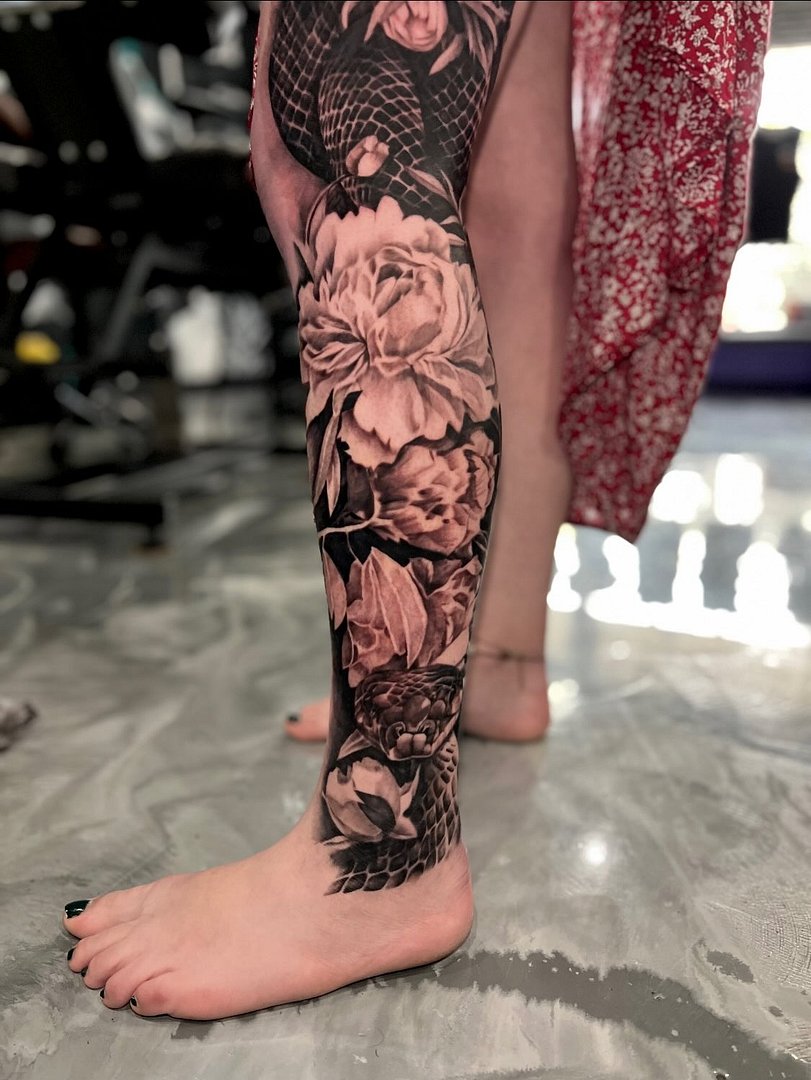
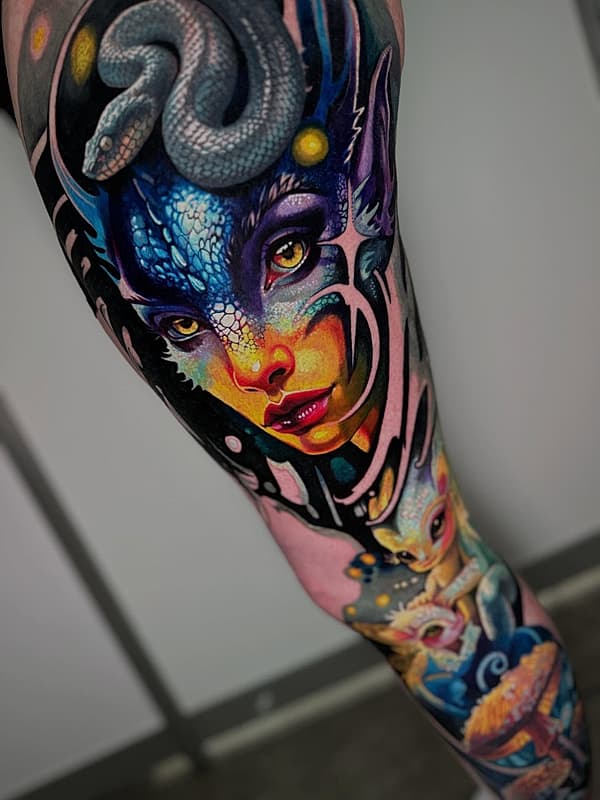
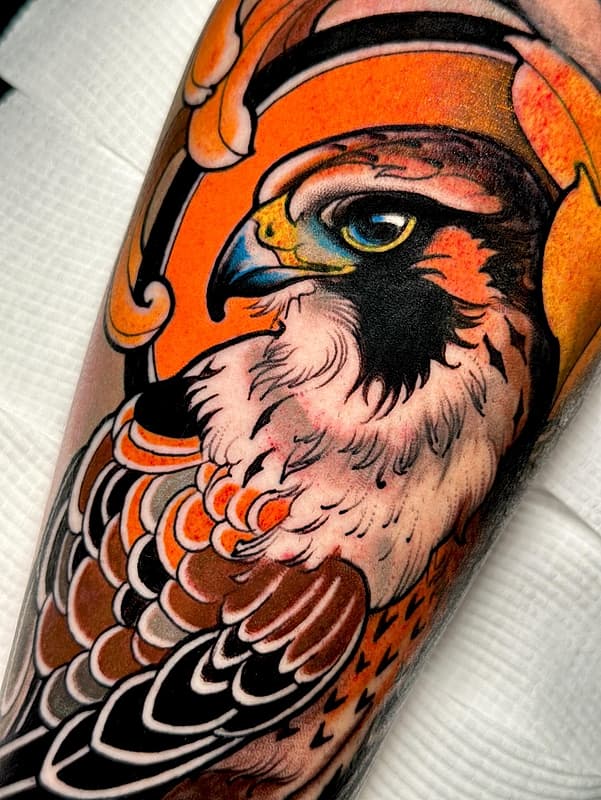
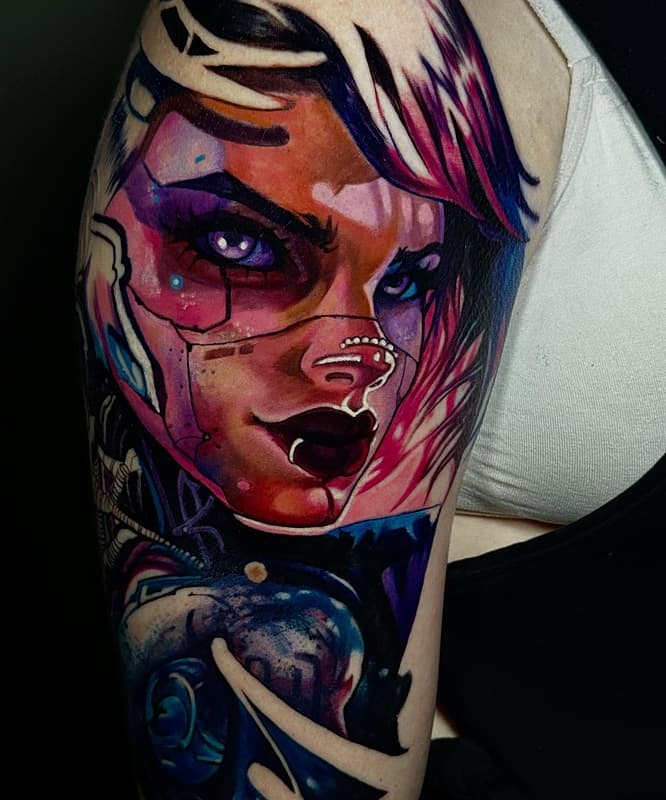

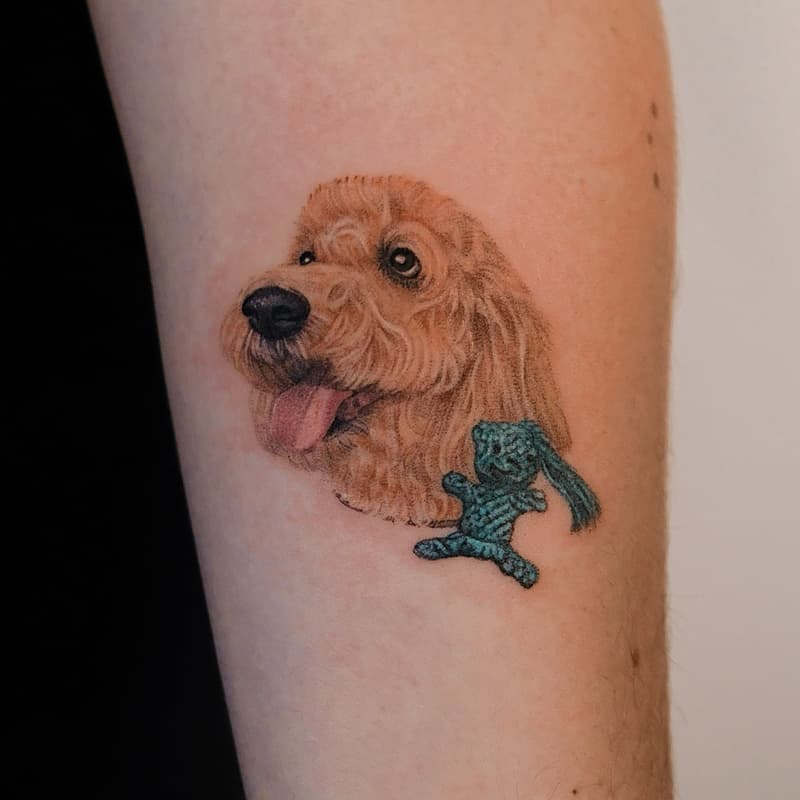
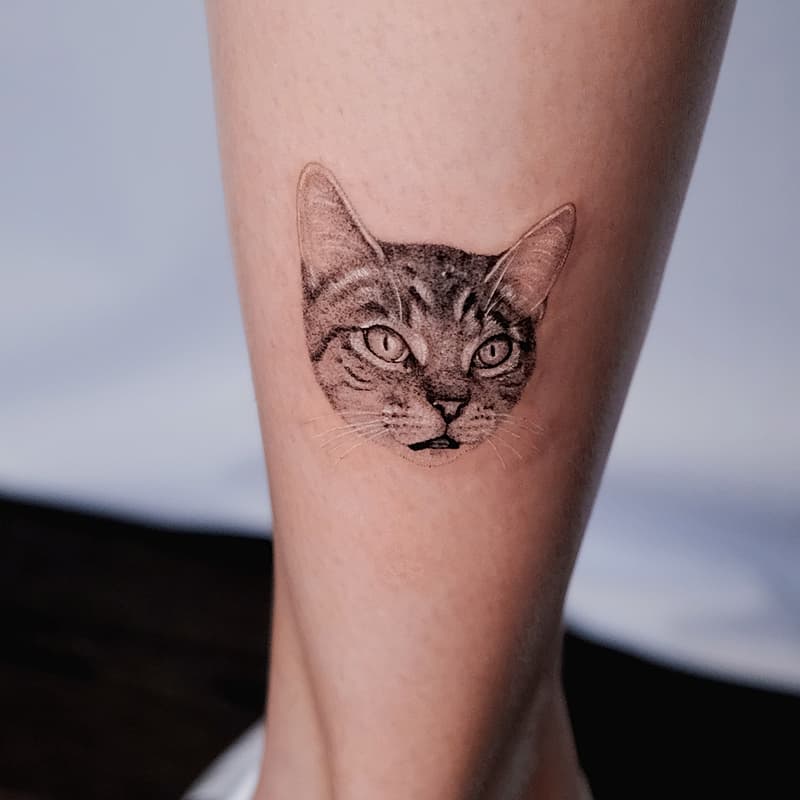
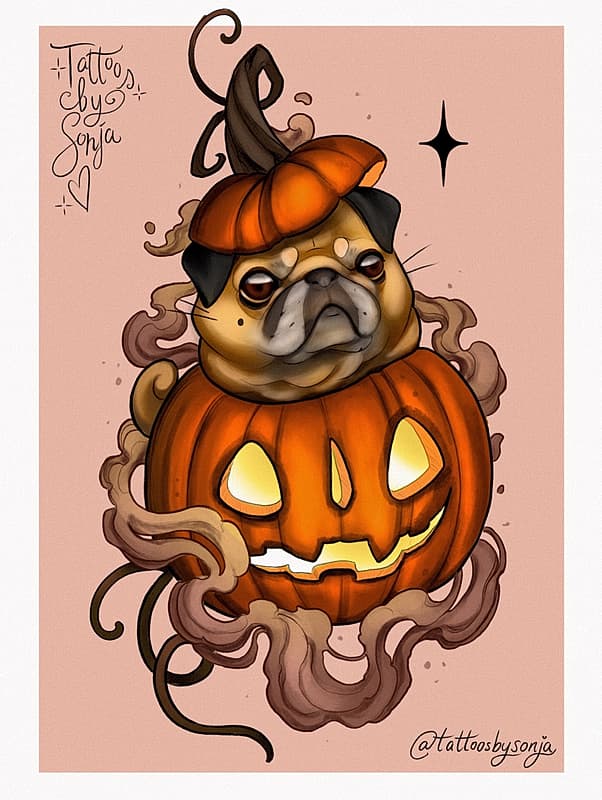

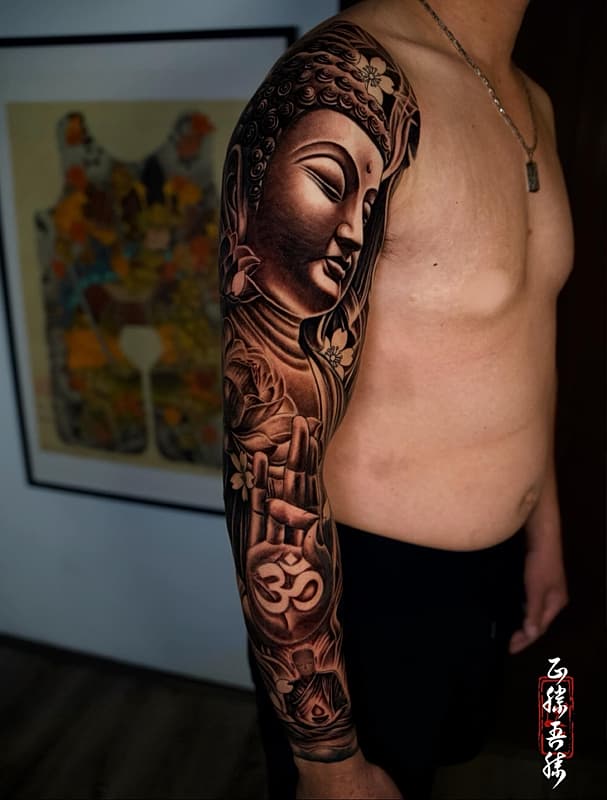

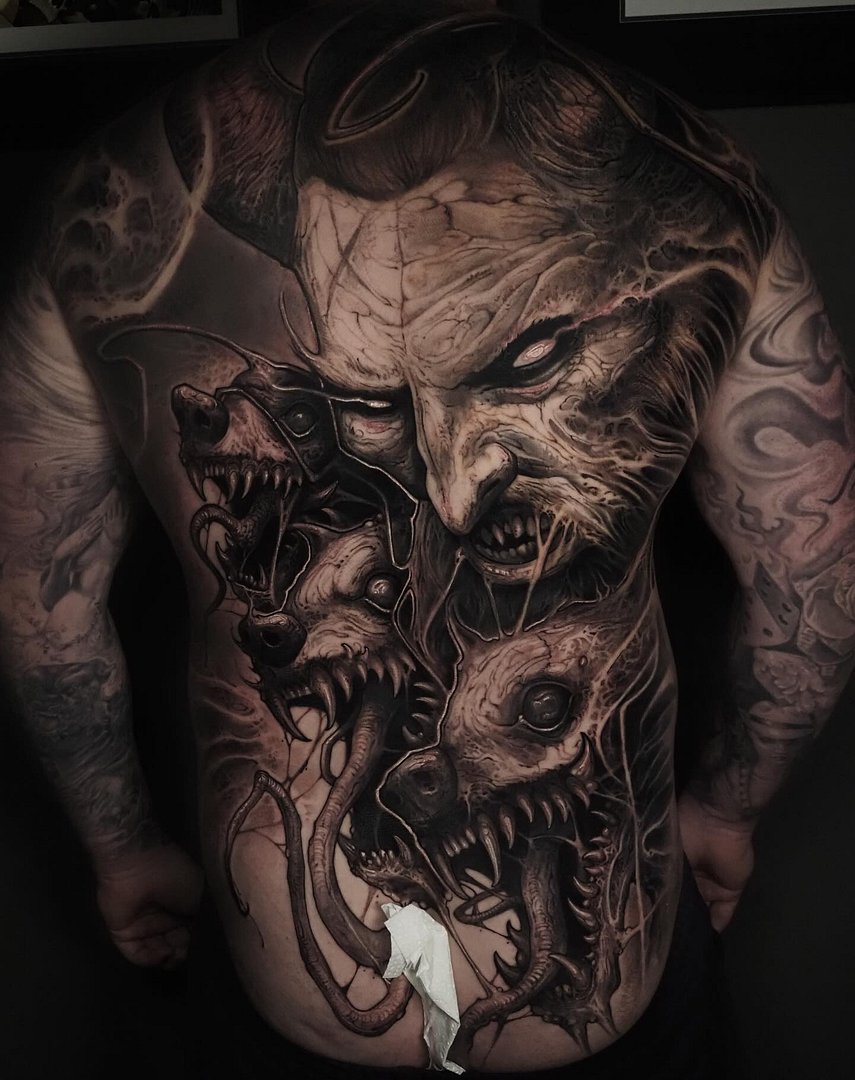
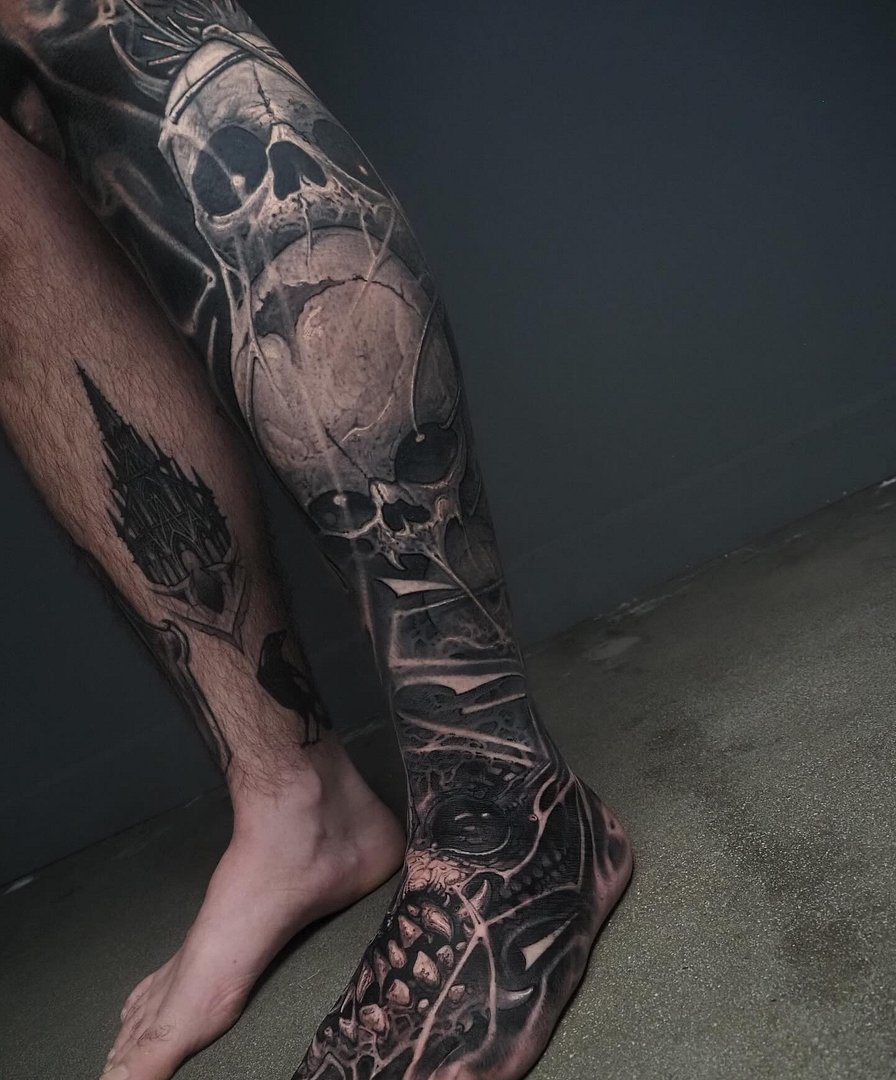
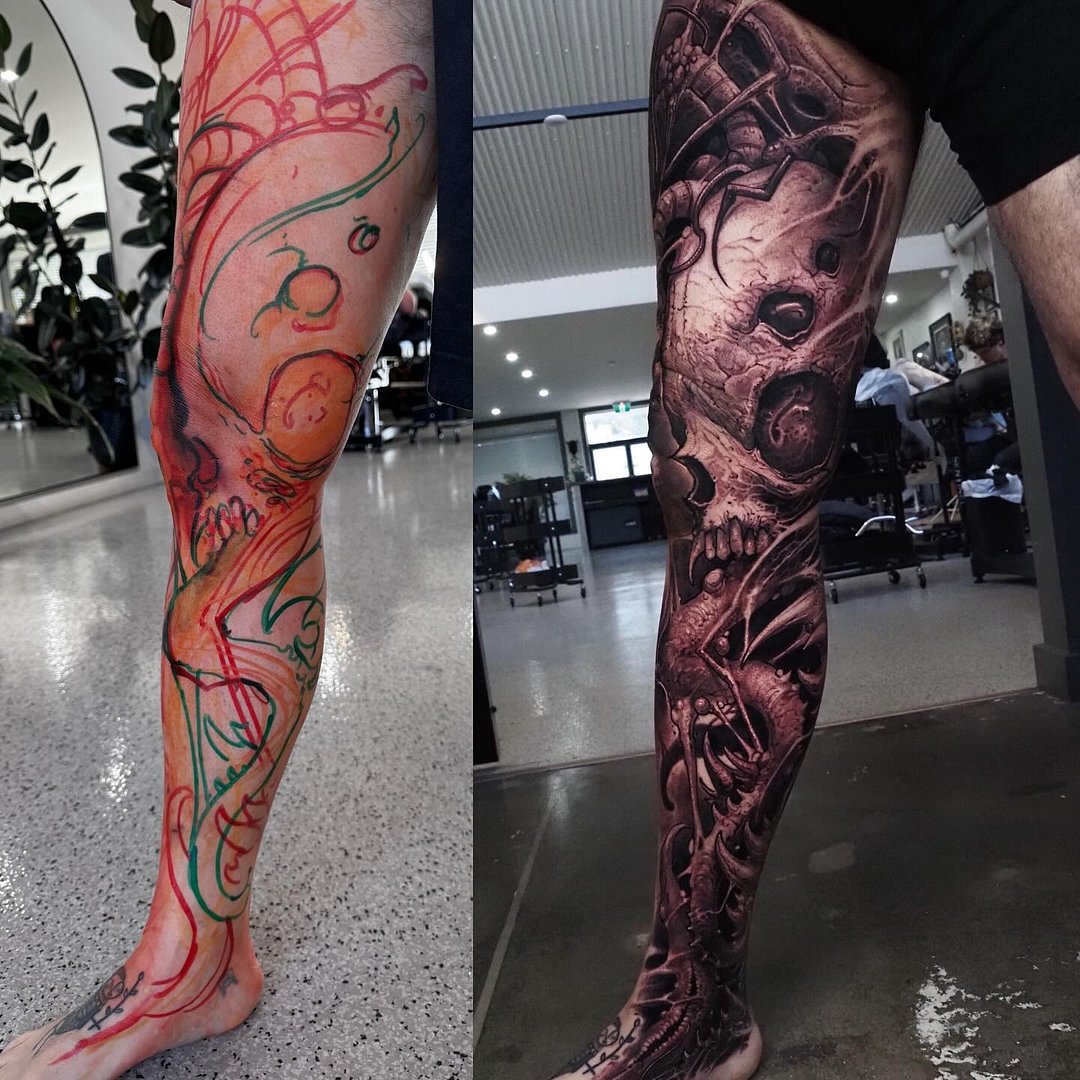

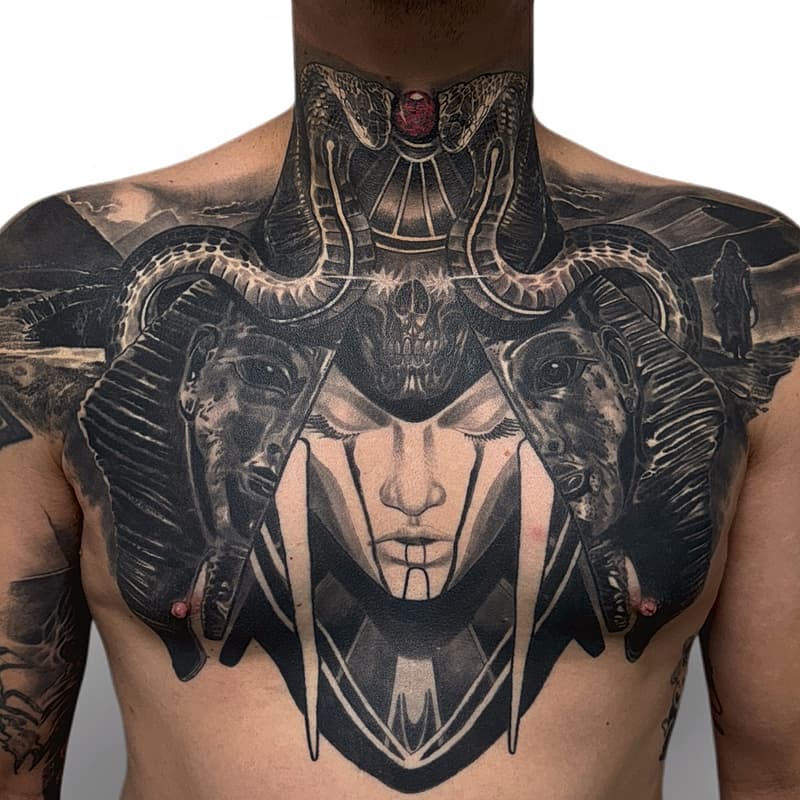
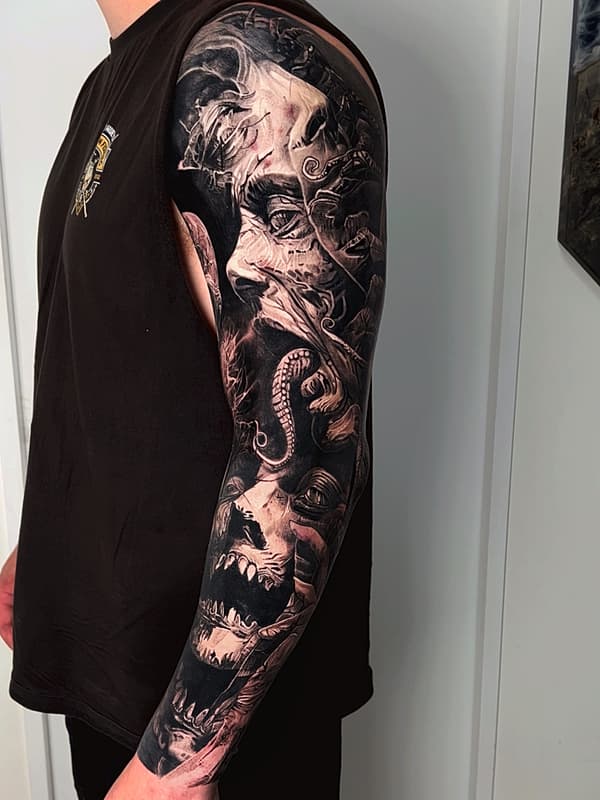
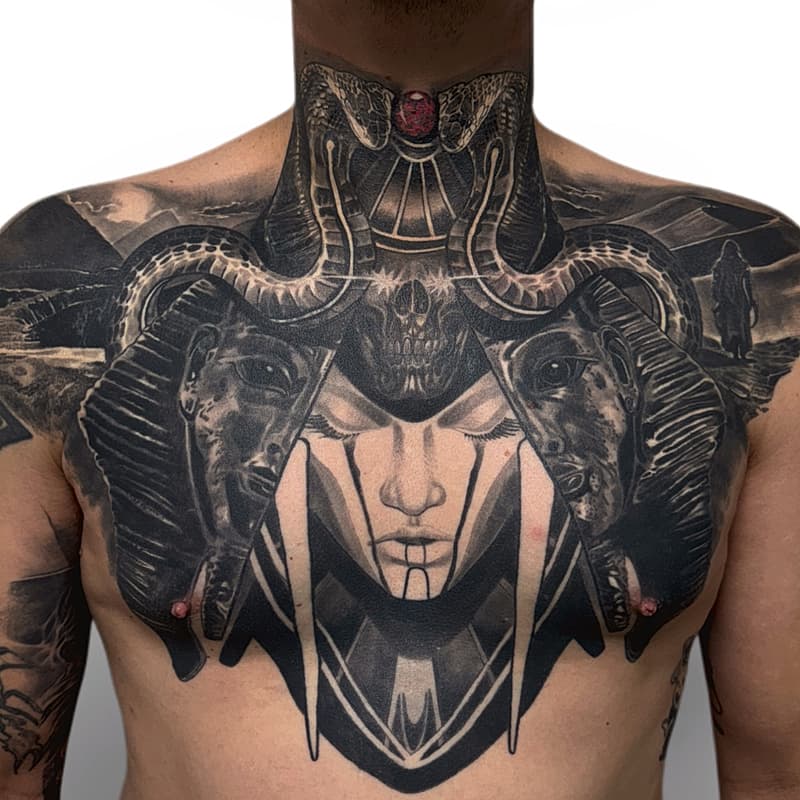
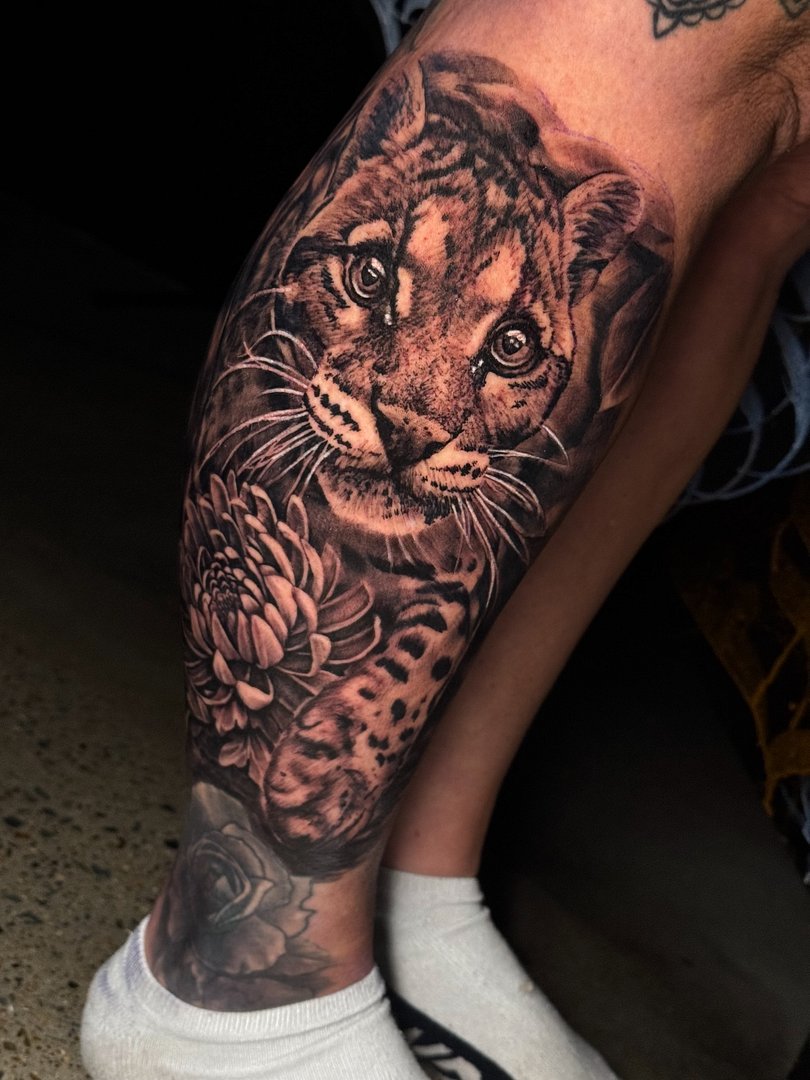

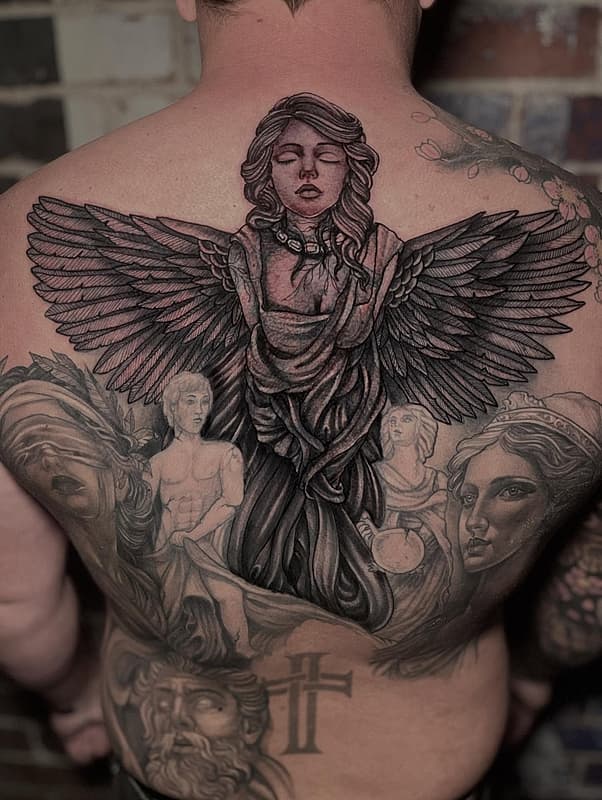
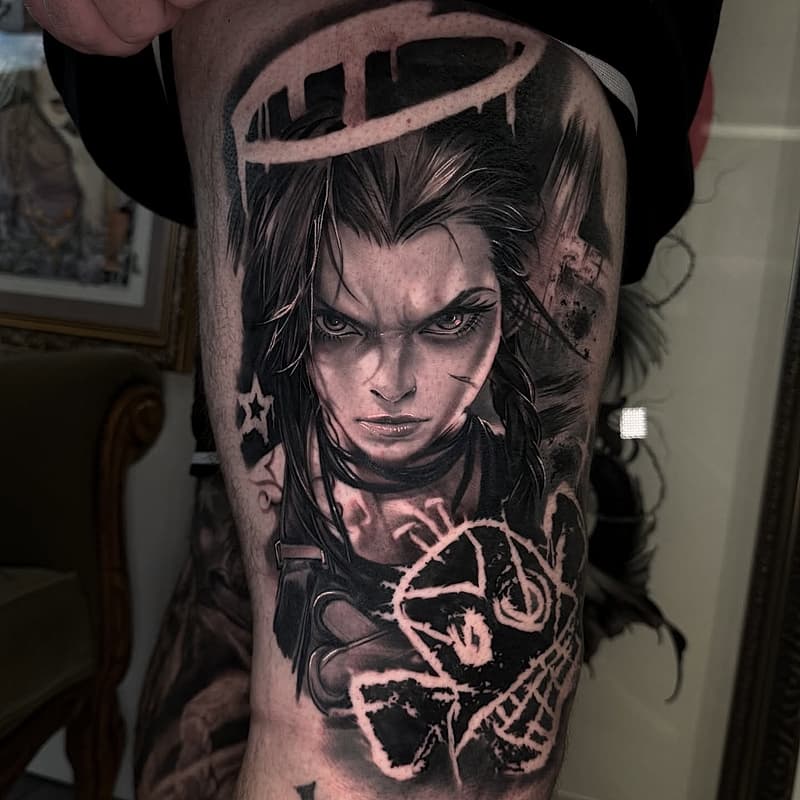
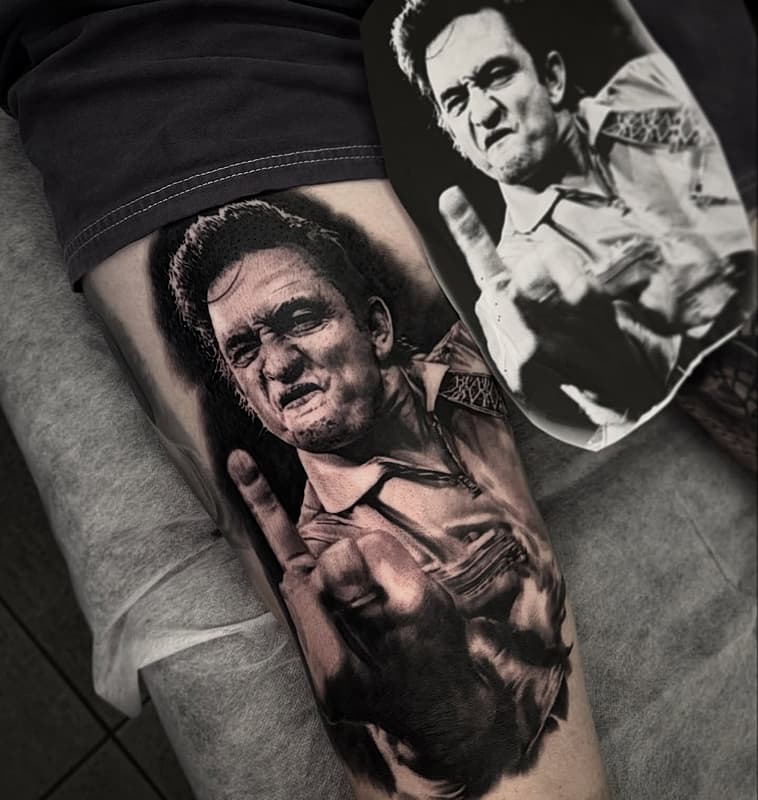
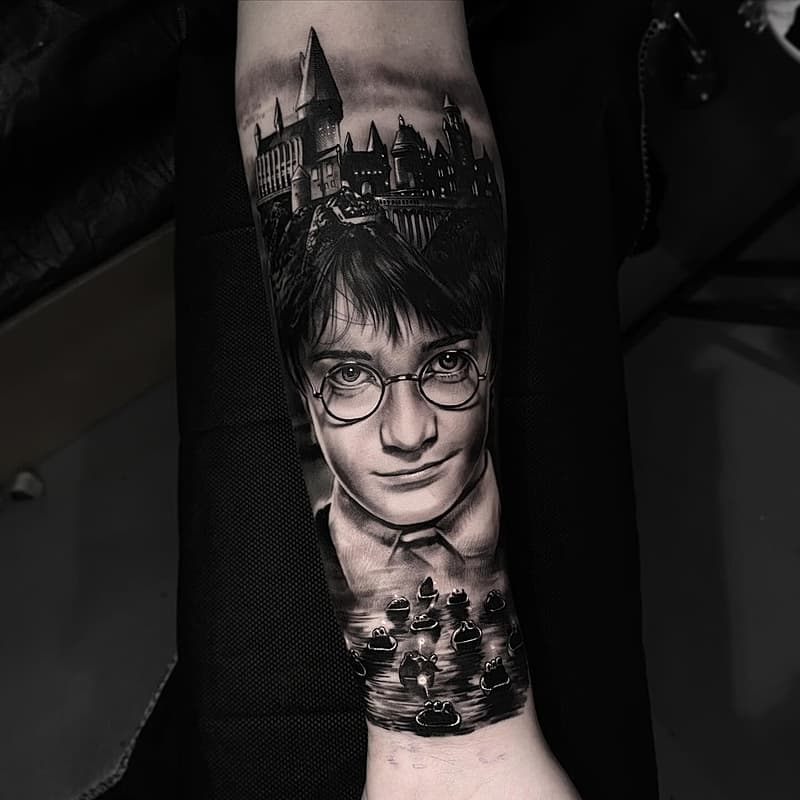
Portrait tattooing captures a specific face in skin, whether a family member, a lost loved one, a cultural icon, or a beloved pet. It is widely considered the most demanding discipline in realism, because success is binary in a way no other style faces: the portrait either looks like the person or it doesn't. Likeness lives in millimetres, in the precise distance between features and the exact shape of an eye, and there is no artistic licence to hide behind. Portraits are most commonly worked in black and grey, which ages gracefully and suits the memorial character of many pieces, though colour portraits are a striking alternative in the right hands. Reference quality matters as much as artist skill. A sharp, well lit photograph with clear detail in the eyes gives the artist what they need, while a blurry scan of an old print severely limits what's possible. Size matters too, since features need enough room to hold their detail over time. Pet portraits deserve a mention of their own, having become one of the most requested tattoo genres, with the same rules applying: good reference, adequate size, specialist artist.
What to look for: Only consider artists with a portfolio full of portraits, and judge likeness, not just rendering. Where the portfolio shows the reference photo beside the tattoo, study how faithfully features are captured. Eyes are the tell, as weak portrait artists consistently miss them. Healed portrait photos matter enormously, since fresh portraits always look their best. This is the one style where settling for a nearby artist over the right artist most often ends in regret and a cover up.